gCaptain.com

A Blog About Ships

Fastream Offshore Leaderboard


MARINER WAKE UP CALL - China’s Growning Submarine Fleet

May 13th, 2008 · Comments

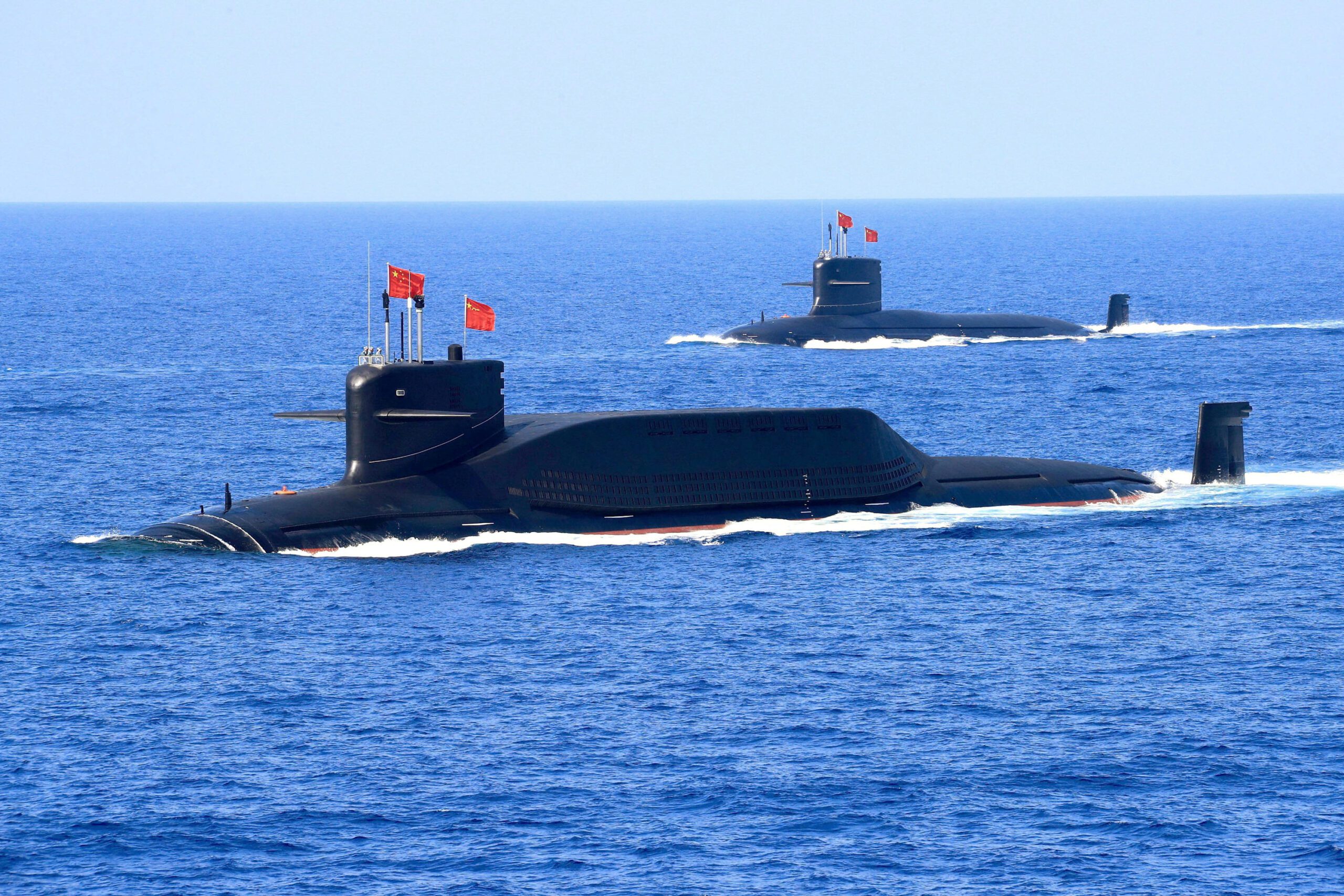
Experts attempting to understand the strategic aims behind China’s aggressive military expansion have generally focused on Taiwan. But a new naval base points at Beijing’s significant and growing interest in projecting power into waters far from the Taiwan Strait.

The new underground base for submarines and comfortable facilities that would attract technically proficient soldiers and sailors. Its location will allow China to exert greater dominance over disputed territories of the South China Sea; to place a much larger naval force closer to sea lanes crucial to Asia’s commercial lifeblood; and to exercise influence over the critical Straits of Malacca. (Source: Wall Street Journal - NPR Audio)

Australian Torpedo Test

If you think that it is no big deal that China is building submarines at an alarming rate take a look at this video of an Australian Navy torpedo test.

And if you think the US Navy has the ability to protect Merchant Shipping against this kind of attack first ask: can they protect themselves?

If not can they at least protect the US Mainland and that of our allies against China’s new boomers?

Details:

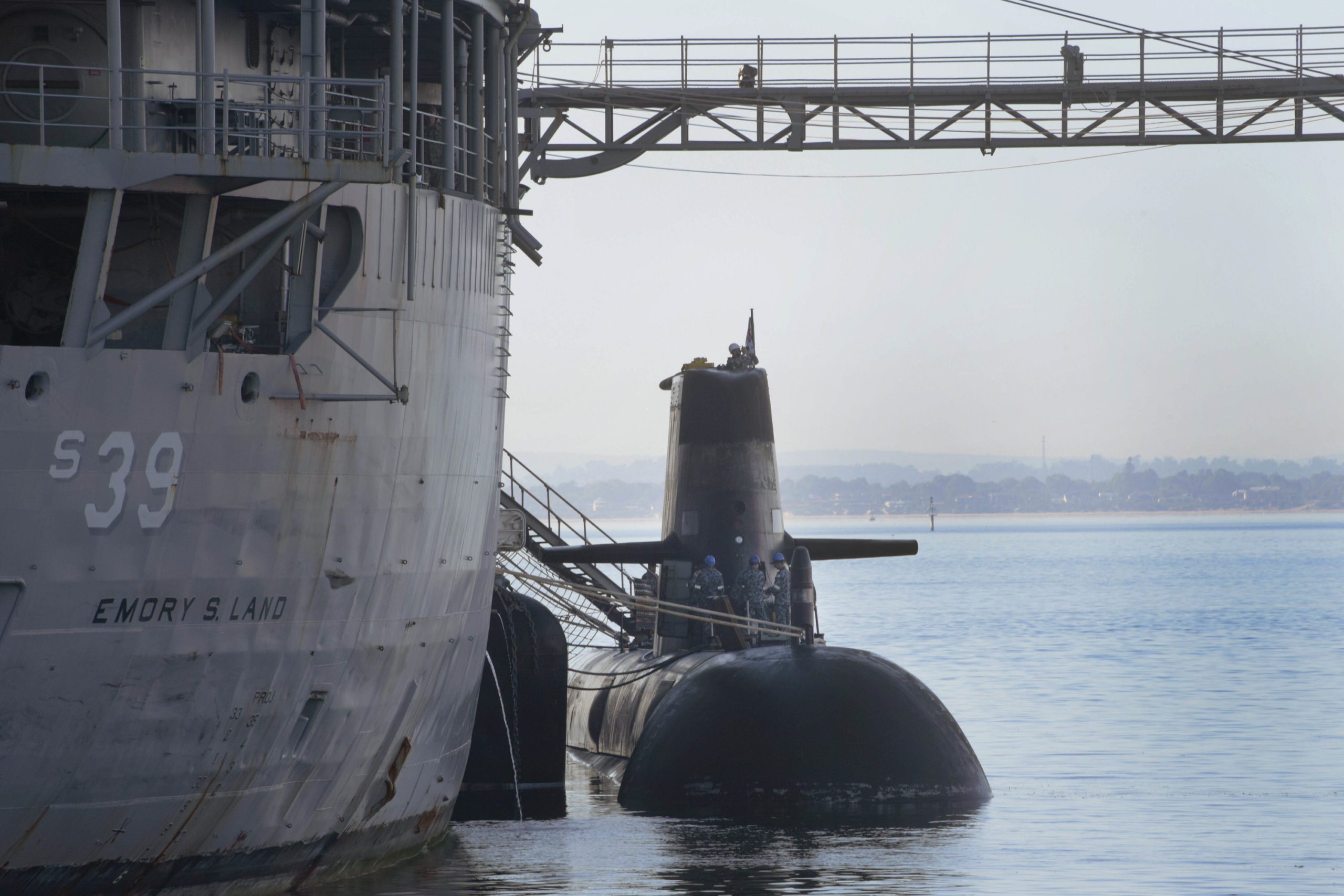
The Royal Australian Navy (RAN) sunk HMAS Torrens on June 14th 1999 with a single Mk48 wire guided torpedo fired from the Collins Class submarine Farncomb. Torrens was the last of six Australian ‘River Class’ Type 12 Destroyer-Escort, the others (Derwent, Parramatta, Stuart, Swan and Yarra) having been disposed of previously. Before the sinking Torrens had been thoroughly cleaned of all fuels, oils and potentially environmentally harmful substances. Her gun turret was donated to the South Western City of Albany. Torrens was then towed from Fleet Base West (HMAS Stirling) 90km out to sea, west of Perth. The submarine Farncomb fired the torpedo at the stationary target from a submerged position over the horizon . (Source: BTInternet)

For the science behind the explosion click HERE.

Video:

YouTube Preview Image

CommentsTags: · , , , , ,

Russian Nuclear Icebreakers: to the North Pole!

March 30th, 2008 · Comments

The Picture Blog, Dark Roasted Blend is featuring a series on Russian Nuclear Icebreakers.

Here’s a sample: The balance of the pics are here.

Paired up for the voyage

The Voyage Plan

Sunrise

The Reactor Control Room

The Reactor

Here’s the video version via Sea Fever.

Nuclear Icebreaker

for more Nuclear Goodness CLICK HERE or take our nuclear cargo quiz HERE.

Photos by Svetlana Bogdanova; seamen of the Murmansk Sea Shipping Company via Dark Roasted Blend. Blog post by gCaptain and Bitterend’s chief blogger Richard Rodriguez

CommentsTags: · , , ,

What If? Chemical, Biological, Radiation Attack San Francisco

March 28th, 2008 · Comments

Nuclear Ship warning

Photo by steven and darusha

Jeff Charlton of 911team.org in London asked a interesting maritime question on the IAEM list-serve the other day that Robin Storm thought we could answer.

Jeff’s question?

“What if the need arises to replace a master or pilot because the ship has been affected by plague, terrorism, CBRn incident? How many have the competence or training to work in level A or B PPE (personal protection equipment)?

How many crew could assist him if a vessel was out of control? What if a ship was utilized as a terrorist vector agent and required mobility rather than destruction?”

So here is the response by John Denham a former SF Bay Pilot.

First, who will be in charge. The COSCO BUSAN incident is a current example of the lack of a single responsible agent with authority to mobilize, coordinate, and direct a catastrophic event recovery operation in the San Francisco Bay area. The closest single authority to my knowledge is the Bay Area Conservation and Development Commission (BCDC) Yours truly a member of the Scientific and Technical Advisory Committee. As a state ( next level of responsible government) agency , BCDC has the civic and political sub-structure ( members from all contiguous communities) to organize, coordinate and direct what ever exists to respond, but lacks any experience. 9/11 experienced a similar problem to a lesser degree as only New York city was involved. Leadership is the critical survival element.

Second: Consider a nuclear weapons attack with CB fallout-out directed on the city of San Francisco. Without details consider San Francisco and the immediate 15 mile area is devastated. In such a scenario the leadership would probably come from out of the area. Sacramento would probably respond, and in so doing would call for federal assistance; that politically implies we can handle it but need help The federal government will probably respond with support, i.e. we will take charge and fix things as we see fit. And that may be worse than the bomb.

I have an ID card identifying me as a Department of Defense employee and shipyard pilot at the Mare Island Naval Ship Yard. I have no idea what program that was and I have no idea what I was to do; I left that job in 1981. But under the Civilian Defense organization, at one time there was a plan for identifying and organizing critical persons.

Some one (authority), will eventually make a decision that vessels must be moved, for some reason. Some to depart, some to arrive. Some just to be moved from A to B. The bay waters to my knowledge will be basically unaffected by the destruction and bad effects of man’s attempt to resolve a problem with explosives. Therefore it is considered safe to move about on the water if there are no navigation restrictions e.g., bridges blocking passages .

Case 1

[Continue Reading →]

CommentsTags: · , , , , , , , , ,

gCaptain Quiz - Unusual Cargo

March 13th, 2008 · Comments

What is it??

A free gCaptain t-shirt goes out to the first person who can correctly identify this cargo.

UPDATE:

We have a winner. Charlie of Sea Wolf Engineering correctly identified the cargo as nuclear fuel casks. The owner of the ship, Pacific Nuclear Transport Ltd tells us:

The special packages in which PNTL transports nuclear material are called “flasks” or “casks”. They are typically made from 25 cm thick forged steel and weigh around 100 tonnes. They can hold up to five tonnes of nuclear material.

The casks facilitate the movement of nuclear material by different modes of transport, protect workers from radiation, dissipate heat efficiently and are designed to withstand severe accidents.

BNFL Cask Maintenance Facility
Casks are monitored for radiation prior to loading onto PNTL ships and during transportation. They are thoroughly cleaned and inspected in maintenance facilities after each shipment.

Cask lids can only be attached and removed using specialist equipment at nuclear facilities.

The casks transported by PNTL belong to customers. Each cask design has to meet safety requirements established by the International Atomic Energy Agency (IAEA) in order to be licensed by national regulatory bodies.

Click HERE to find out more and HERE for video of these interesting nuvlear transport ships.

CommentsTags: · , , , , ,

The World’s First Nuclear Merchant Ship - N/S Savannah

September 19th, 2007 · Comments

The Nuclear Ship Savannah

Costing millions of dollars in 1969 America’s first and only Nuclear powered merchant ship was designed in hopes of finding peaceful uses for Nuclear energy. She was the pride of the fleet and designed with looks as powerful as her reactor. With a savings of over 29 million gallons of fuel oil during her short 5 year service life (1965-1970) she might have been a solution to present environmental and self-sufficiency problems. Her high maintenance cost however, led to her downfall. Since 1975 she has been sitting idle, left to rust, but this year post 9/11 security concerns have led the U.S. Government to budget 4.5 million for her restoration and conversion. Her new mission? She will be brought back to her cold war glory and re-activated as a museum ship offering future Americans a glimpse into the atomic age.

Our iPhone Contestant Capt.Billy submitted this article on the restoration of the famed nuclear ship N/S Savannah. Here is a brief look at her story:

The U.S. Maritime Administration said Friday that it has awarded BAE Systems Norfolk Ship Repair a $4.1 million contract to put the weathered ship into dry dock for a long-awaited blasting and repainting.

It is the next step in the agency’s plan to eventually donate the famous maritime relic as a museum or public attraction.

“We’re thrilled to death,” said Erhard Koehler, the maritime agency’s senior technical adviser for the Savannah project. “We’re moving forward.”

Designed with the sleek lines of an oceangoing yacht, the 596-foot-long vessel was launched in 1959 as the world’s first nuclear-powered cargo ship. President Eisenhower had the ship built to promote the peaceful use of atomic power. Read More…

Some photos of the beautifully designed ship:

N/S Savannah Underway

N/S Savannah with tugs [Continue Reading →]

CommentsTags: · , ,

Floating Nuclear Power Plants - Russia

September 1st, 2007 · Comments

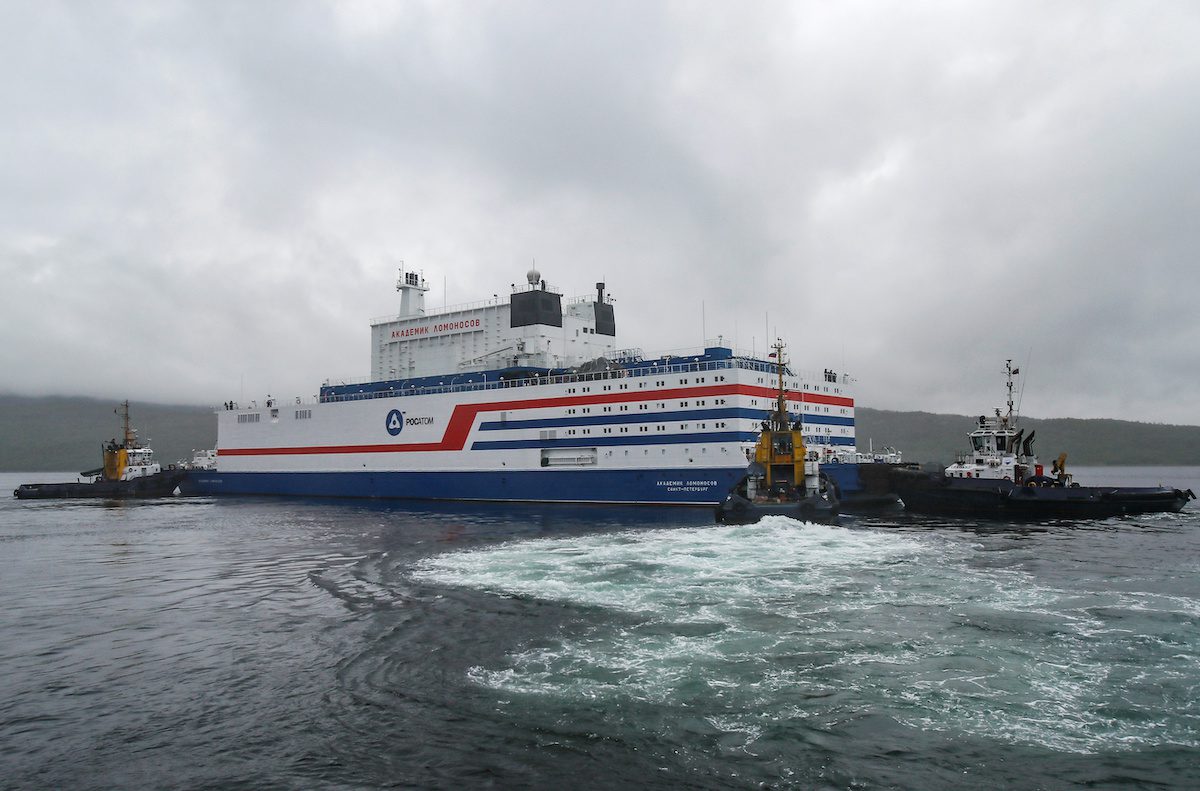
The Wall Street Journal brings us video on Russia’s newest idea, floating nuclear power plants.

sharedVideo(1152279023)

Thanks to Sea-Fever for the link.

CommentsTags: · , ,


Comments


Popular Topics


Sponsors


Maritime and Offshore Recruitment

Spurs

Mariner Taxes Logo

Mariner Taxes


The New Hawsepipe


The Maritime Executive Magazine


Your Ad Here


Authors


Follow Us


Categories


Recent Posts


Popular

Shipping Archives

Read A Random Story