gCaptain.com

A Blog About Ships

Fastream Maritime Leaderboard


A Viking Ship Redesigned for Modern Use

September 25th, 2008 · Comments

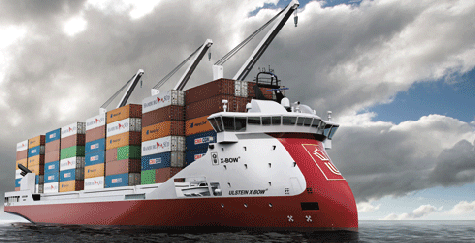
ULSTEIN X-BOW Container Ship

A vessel found in 700 AD, several centuries before the Vikings ruled Norway, Viking Ship Bowthe Oseberg ship from approximately 800 AD and the knarr from around year 1000 AD all have one thing in common; their rounded bows were the inspiration for Ulstein’s latest design, the x-bow container ship.

This design is not new, launched last year the Bourbon Orca was the first vessel launched with Ulstein’s revolutionary bow design. Now the company is set to incorporate this design into a new class of short-sea shipping vessels. A company press release: [Continue Reading →]

CommentsTags: · , , , , , ,

This Is My Job: Containership Captain

December 11th, 2007 · Comments

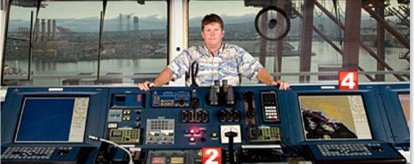
Captain Andy Merrill - Matson

Sea-Fever.org points us to Popular Mechanic’s feature “This Is My Job. World’s Coolest Professions“. This month’s feature; Captain Andy Merrill, master of Matson’s M/V Manulani. They write;

From sailing to surfing to piloting 32,000-ton container ships, Andy Merrill has always felt at home on the ocean. Today, the 42-year-old clocks 70-day shifts as captain of Matson Navigation’s MV Manulani—navigating the hauler to some of the busiest ports in the world. Shanghai, for instance, docked 55,000 vessels last year. “It’s like they’re lining up elephants out there,” he says. Continue Reading…

Also be sure to check out Maston’s M/V Manulani Multimedia page where you can find the following video and more.

 
icon for podpress  Online Video [0:15m]: Play Now | Play in Popup | Download

CommentsTags: · , , , , , , , , , ,

Proposed Bill Mandates An Increase Of VTS Authority

December 4th, 2007 · Comments

Representative Nacy Pelosi and Admiral Craig Bone, USCG
(Photo by PA2 Prentice Danner, USCG)

This morning Senator Barbra Boxer and Representative Nacy Pelosi, Speaker of the House, announced a bill giving the U.S. Coast Guard broader authority to direct the actions of ship masters in navigating inland waters. The San Francisco Chronicle tells us;

The Coast Guard would gain new authority to order ships to reduce speed or shift course during emergencies or hazardous conditions under new legislation that California Sen. Barbara Boxer is introducing this week.

The bill could increase the responsibilities of the Coast Guard’s Vessel Traffic Service, which helps guide ships in U.S. harbors. The measure would give it powers akin to those of air traffic controllers, who issue step-by-step directions to airplane pilots.

Boxer, a Democrat, said she believes the spill could have been prevented if the Coast Guard had ordered the ship to slow down or change course.

“I absolutely think it would have” prevented the spill, Boxer said. “Let’s say the conditions were fierce - and they were - (the Vessel Traffic Service) would have declared an emergency, and they would have taken over in guiding this ship.Continue Reading….

Regular readers of this bog already know my personal thoughts on the subject. In last week’s editorial, I wrote;

The problem with maritime incidents is the fix rarely address the true cause and often creates problems that contribute to future incidents.

Current technology is simply not capable of delivering real time tracking. Also, final say remains the responsibility of a ship’s captain because he is the one who knows the ship’s capabilities, it’s crew and he is stationed on the bridge. He is also the last one to abandon if the ship finds danger… and he knows it.

If the Coast Guard wants final say then they need to be aboard the vessel and if that happens they will be hard pressed to fill the position with anyone more qualified than the competent and experienced San Francisco Pilots.

My comments resulted in 5 emails, 2 phone calls and a, well written, personal response by our friend Bob Couttie of the Maritime Accident Casebook. Bob wrote;

MAC’s own informal think-tank of veteran master mariners, who aren’t tanked up when they think, finds the proposal less objectionable, the authority of the master will remain in force much as it does now, in their view. Continue Reading…

This comment cause me to invest more than a few hours in nocturnal contemplation. Had I overestimated the potential outcome of the Coast Guard’s overtly defensive and seemingly irrational stance or has Bob’s geographic location far away from our shores disconnected him from the current state of American politics?

Provided the Chronicle has accurately conveyed Senator Boxer and Representative Pelosi’s intent, gCaptain reader ACI’s comment most accurately portrays the sentiment of our master mariner think tank;

Keep on putting more constrains to the shipping business with your new ridiculous American fear to everything and we will end up with no business at all. I know of captains that are refusing to sail to your country.

I really loved the times when the US was leading the world towards modernity, now it seems you are too scared.

The likely impetus for drafting legislation that puts us in the ironic position of being more likely to have a future incident is the demand for quick answers. For this reason I can not form a personal opinion as to maritime pilot John Cota’s culpability, at least not until the NTSB report is published. I can, however, give an industry insider’s opinion on the safety of current operations in the bay… so I wish to reiterate my personal feelings that both the San Fransisco Bar pilots and local VTS operators are among the most capable and well trained in the world. This, coupled with the fact US Coast Guard and State pilot officials have not asked for these changes, is worrisome.

Regardless of the headlines Pelosi’s bill does contain some element of potential good. The Chronicle writes;

Boxer’s bill would authorize $20 million to upgrade the technology used by the Vessel Traffic Service. The measure also would require all pilots to have their own navigational laptop computers. Cota has said he was unfamiliar with the ship’s electronic charts. Many pilots bring their own laptops on board to make sure they have reliable navigational charts to steer the ship.

The state pilot commission suspended Cota’s license on Friday. Cota’s attorney, John Meadows, has said his client was given “wrong information” by the ship’s captain, Mao Cai Sun.

History has proven that safe operations in the bay are possible without advanced electronics and I will not be surprised if the NTSB’s report places some degree of blame on the rapid integration of new technology on the bridge, a problem only made worse by already burdensome training requirements. This, however, does not mean we can ignore technological improvements.

For an intelligent discussion of the topic I’ll point you to audio from Captain Kelly Sweeney’s recent interview with NPR (CLICK HERE). Boiled down he states that we as mariners love AIS, ECDIS and other technology that keep us safe but improvements (most notably in implementation and redundancy) are needed.

But I’m still an optimist. When this discussion fades into memory we may find Pelosi’s large investment propelled interesting technological improvements while our worries were mitigated by the level headed watchmen of VTS.

*We’d love to head your thoughts! Click here and leave a comment (bottom of page) or contact us with your message.

__________________________________________________

John A. Konrad, Master Mariner

John Konrad is a USCG licensed Master Mariner of Unlimited Tonnage. Since graduating from SUNY Maritime College he has sailed 4 of the world’s oceans and reports from his ship via satellite. John lives in Morro Bay, CA with his wife Cindy and son Jack.

__________________________________________________

VTS Links;

CommentsTags: · , , , , , , , , , , ,

Ship Launching on Yokohama Fenders?

December 4th, 2007 · Comments

Ship Launching on Yokohama Fenders

MarineBuzz brings us photos of the M/V Bohai Challenge, being launched on what appears to be Yokohama Fenders (official they’re not Yokohamas). They tell us;

Qingdao Yongtai shipping supplies co.,ltd has come out with a novel product called Intense pneumatic tire for ship lifting, loading and floating. These highstrength pneumatic tubes are useful in cargo boat launching and landing, clog lifting and moving, sunken ships salvaging and stranded boats saving. The product is suitable to launch ships up to 7000 tons.

CLICK HERE for more photos from Marine Buzz.

Also, in researching this post, I came across an excellent transcript from a Nautical Institute presentation by Captain Eric Southworth, Director of FenderCare. He tells us;

Originally, Japanese ships used dead whales as large fenders. They were replaced after WW2, when the Japanese tyre manufacturer ‘Yokohama’ was asked to come up with a suitable man made alternative, hence the birth of “‘Yokohama” fenders. Before 1975 wheel type fenders were commonly used in positions 2 & 3, with “Yokohama “pneumatic fenders in positions 1 & 4. (All four positions are along the parallel midbody). Smaller secondary fenders may be used to protect the bow and stern plating from inadvertent contact during mooring and unmooring.

Read Captain Eric’s full transcript on fender history, use and maintenance HERE.

CommentsTags: · , , , , , , , , , , , , ,

Preventing Future Cosco Busan Type Incidents - NPR Audio

November 23rd, 2007 · Comments

A gCaptain reader forwarded the following National Public Radio appearance by our friend Kelly Sweeney, author of the book “From the Bridge, Authentic Modern Sea Stories“.

Captain Kelly brings up some excellent point so be sure you get your pen ready, you’ll want to take notes.

NPR Show Notes:

A congressional hearing into the cause of the San Francisco Bay oil spill begins today at the Presidio in San Francisco. We’ll talk to a ship captain who says that kind of spill could happen in Puget Sound too.

From The Bridge - Captain SweeneyGuests:
Captain Kelly Sweeney is a Master Mariner, the highest Captain’s license the Coast Guard issues to commercial mariners. He has captained commercial vessels through San Francisco Bay and Puget Sound and writes a column for Professional Mariner. He is based on Whidbey Island.

 
icon for podpress  Standard Podcast: Play Now | Play in Popup | Download

CommentsTags: · , , , , , , , , , , ,

San francisco Oil Spill Hearings - A Response to Admiral Bone, USCG

November 20th, 2007 · Comments

Yesterday my comments were published on the front page of The San Francisco Chronicle in an article titled; “Hearing today at Presidio - tough queries for spill captain.”

Prior to being asked to comment the Chronicle’s lead maritime reporter contacted our friend Captain Kelly Sweeny who discussed industry wide problems with marine technology. The article states;

Sweeney said the AIS is “occasionally unreliable,” has blind spots such as when a ship is behind islands or structures, and is “antiquated” when compared with modern electronics.

Rewinding to my conversation with the reporters, the first question asked was; “Captain Sweeny believes the system used by San Francisco’s Vessel Traffic Service (VTS) is antiquated, do you agree?” After requesting further clarification I was asked why the pilot’s data on his Electronic Chart Display was trusted over VTS’s radar and AIS information.

My answer was “VTS’ AIS system is susceptible to the delay inherit in the VHF transmission of AIS data” BUT, to be honest my initial gut reaction was, “no AIS is not antiquated… it was fully implemented less then 3 years ago”, I quickly corrected myself. My second answer was quoted in the article and reads;

“The maritime industry is slow to act on electronic devices,” said Capt. John Konrad, who runs a Web site called gCaptain. “By the time they get approvals on electronics, they are obsolete.”

Why the quick change of opinion? It’s because I love AIS.

This technology, properly called Automatic Identification Systems, allows me to overlay important data on my radar displays. It also allows me to contact a ship with a zero cpa (collision course) with great ease. For example, prior to AIS I would have to say “Calling the vessel in position x.xx degrees N, x.xx degrees west on a course of 267 and speed of 6knots this is the xxx on channel 16″ where now I simply look up the ship’s name and say “This is the xxx calling yyy on channel 16″. Furthermore the AIS display gives me the vessels MMSI number which opens up new and creative ways to avoid collisions. Finally, my AIS digital read-out really saved the day (and my career?) when our radars, as the Cosco Busan’s Pilot John Cota said “conked out”.

That was not my only hesitation. San Francisco Pilots are some of the most respected individuals in our profession (a dream job for myself) and I only have positive things to say about my dealings with VTS. So could they be wrong in their choice of equipment? It seemed unlikely.

In defending VTS and the Coast Guard’s systems another respected expert, Rear Adm. Craig Bone - Coast Guard district commander, commented on questions raised by myself and others. In covering today’s hearing The Chronicle reports;

Bone said he could think of no excuse for the crash. He denied reports by maritime sources claiming the electronic systems the Coast Guard uses are out of date. The pilot equipment and onboard navigational equipment are some of the most advanced, he said.

“There is no basis in my mind for this to have ever occurred,” Bone said. “Something on that ship had to go terribly wrong. It was totally preventable.”

So the question becomes; “If AIS is a loved safety improvement endorsed by maritime experts worldwide why does Captain Kelly (and myself!) consider it antiquated?”

The reason is because we can do better! In the world of cutting edge technology solutions are available now that would have given Cota and VTS a much better chance of avoiding the incident. The problem, that I suspect is an industry wide tendency, is two fold. First we are so far behind the technology curve small improvements, like AIS, seem large and exciting. Second, most licensed captains are Luddites (my self included) who want to make sure a new system is reliable before implementing it aboard ships.

I come to this conclusion because, despite my writings on the need to improve shipboard technology (most notably HERE and HERE), I initially had the same reaction as Adm. Bone but quickly changed my mind. Why? Because Capt. Kelly is correct, our systems are antiquated and when new lifesaving improvements become available we must break away from the statement that has been rehearsed by ship captains for centuries; “Only history will tell if this is a good idea”. Exciting changes are happening worldwide and improvements in communications (the number one failure in all good incident chains) are leading the way. We must change with the times and embrace technology as the benefit is a reduction of incidents and a preservation of the environment and human life.

For more information on this topic visit our Archives.

Still agreeing with Admiral Bone? Take a look at technology used by Tampa Pilots or Maine Pilots, upcoming portable ECDIS units, the VTS tracking system in Valdez, well documented problems with AIS Ask yourself “Can I send an area specific sitor message via GMDSS” or “Why can my son video chat with a pen pal in China while I’m having trouble raising a vessel 1000 yards away… and closing?”

John A. Konrad, Master Mariner

Captain John Konrad is a USCG licensed Master Mariner of Unlimited Tonnage currently working aboard an 835′ship in the Gulf of Mexico. Since graduating from SUNY Maritime College he has sailed 4 of the world’s oceans and reports from his ship via satellite.

CommentsTags: · , , , , , , , , , , , , , , , , , , , , , , , , , ,

Shipping References - Cosco Busan Research Links

November 14th, 2007 · Comments

For those curious how the editors at gCaptain research maritime incidents like the Cosco Busan’s allision with San Francisco’s Bay Bridge, here are some of the websites that provide excellent reference material.

Maritime Industry Custom Search Engine

Maritime Industry Custom Search Engine CSE Logo

Our first stop in researching any maritime related topic is our own Maritime Industry CSE. It’s a powerful resource since it provides search results with the aid of google’s powerful search database and algarithims. Actually the only difference between it and google.com is the fact that our tool narrows the results down and only displays sites that pertain to large ships.

*Tip: Try the “incidents” refinement to narrow down the results even further.

The Maritime Incident Casebook

Maritime Incident Banner

If you are looking for trusted information on incidents as they happen then MAC should be your first stop. Be sure to visit their podcast section as well as their links page which contains a list of the best maritime resources for incident prevention.

Searates.com Container Shipping References

Preivew image of Shipping Container site searates.com

For those looking for data that specifically pertains to Container Ships, head over to Searates’ Container Ship Reference Book. Not only is it full of Web 2.0 eye candy, it also has some great hard data.

*Tip: Its shipping lines section has links to both Cosco and Hanjin. By visiting Cosco’s site you will quickly learn they have removed their official “Cosco Busan” statement from Nov 11th.


gCaptain’s Maritime News Mash-up

Maritime Tools Logo

For breaking news your first stop should be our Maritime News Discoverer but a close second is our Maritime News Mash-up which is automatically updated with the industry’s most trusted news sources.

*Tip - Also take a look at our gCaptain News and Maritime Blog Mash-ups


The Council of American Master Mariners

The Council of American Master Mariners - Header

For those looking for expert opinion from Ship Captain’s we hope you contact us… but your next stop should be CAMM. Contact them directly for contacts from the Maritime Expert Database.


Maritime Executive Magazine

Maritime Executive Magazine Header

Traditional media is know for making small errors when reporting maritime incidents. To obviate this problem subscribe to MAREX’s FREE weekly newsletter. It is published every Thursday and is written by professional journalists with maritime backgrounds. For past articles click HERE.

*Tip: If you are more interested in weekly blog postings check out Fred Fry’s Maritime Monday

_______________

If you have a reference site of interest please submit it to our Maritime News Discoverer under the category “Links

CommentsTags: · , , , , , , , , , , , , , , , , , , , , , , , , , ,

Cosco Busan - Questions For Investigators

November 12th, 2007 · Comments

Cosco Busan Damage

Chronicle photo by Michael Macor

After visits from California powerbrokers Arnold Schwarzenegger and Diane Feinstein yesterday the head of the US Coast Guard, Admiral Thad Allen, joined the inspection team.

Here news of his visit courtesy of the San Diego Tribune;

“They talk about the fog of war. I think we had the fog of navigation going on this day,”

Allen said he himself didn’t learn the full extent of the spill until around 9 p.m. the night it happened last Wednesday, around the same time as most everybody else.

“We know that a good deal of marine accidents and casualties are human error,” he said. Coast Guard officials investigating the incident said Saturday that they had ruled out mechanical error.

“You don’t turn 900-foot vessels on a dime and given the visibility at the time I think it would be difficult to assess whether or not the bridge itself was visible,” he said, adding that would be part of the investigation, along with the vessel’s speed, communications among the crew and other issues.

So what happened that day? Who knows… we do not expect an official investigation to be completed anytime soon (think the normal 6+ months!). We are, however, willing to write down a few questions we hope some intrepid reporters with access to Admiral Allen do ask.

Questions for investigators;

We have reviewed a few big incidents in the short life of gCaptain including the grounding of the Pasha Bulker on an Australian Beach and the grounding of the Alaska Cruise ship “Empress of the North” in waters close to Juenu Alaska. In both of those situations a breakdown in communications took place.

What is the level of English competency of the captain and mate on watch?

Did the assist tug notify the pilot of the problem?

Did the master, mate (Jr. officer), anchor watch, or helmsman notice the error?

Were any problems or concerns relayed to the pilot during the pre-voyage master-pilot conference or was critical information left out of the exchange?

The bridge of a merchant ship is full of electronic aids to navigation. These devices can help investigators determine the cause of an incident IF they are looked at in a timely fashion.

What does the course recorder, a device that records heading directly from the gyro compass, say and does it collaborate the pilot’s timeline of events?

Did the Cosco Busan have an ECDIS (an electronic chart display) or did it rely solely on paper plotting? If the answer is no, what was the interval between fixes? Was all the equipment properly set-up? Was parallel indexing used?

In the AIS plots (if they are determined accurate) we see strong use of right rudder at the time it should have been apparent they missed the turn.

Could the pilot have completed a 360 degree turn away from the bridge and make a second attempt at the correct angle?

In conclusion, investigators should shy away from providing quick answers despite media protests and avoid singling out an individual in this incident. An incident might occur because the helmsmen failed to take a required training course a year back or due to a improperly installed antenna 6 years back or a policy decision 15 years previous. Most likely it was caused by all of the above and 100 additional errors that combine to form what marine incident investigators call an error chain. Remove one error in the chain and the allusion would not have occurred.

CommentsTags: · , , , , , ,

Cosco Busan - Bridge Resource Management

November 11th, 2007 · Comments

First a note… I am publishing this short clip ahead of my next article because of its importance!

While preparing our upcoming “questions for investigators” article on the Cosco Busan incident we were asked by more than one party a question along this line; with communications failure being a leading cause of incidents and the crew of the Cosco Busan being Chinese of limited english skills (they required translators during the investigation) why do incidents of this type not happen more often?

The answer is Bridge Team Management.

Ok… so what is BRM?

Revisiting a previous post I state:

  • Bridge Team (or resource) Management (called BRM in the industry) is a process to use all of your available resources during critical operations. It came from the airline industry which found an alarming number of accidents happened despite prior warning from the equipment or crew…. mostly by captains with military backgrounds and a “I can do this” attitude who did not fully use critical information from either the equipment or junior personnel.Boiled down it’s a class all officers must take in both teamwork and processing the large amounts of data (lookout reports, radar, radio comms, gps charting, weather information….) that pours into the bridge.
  • Here’s a more official answer:The Bridge Team Management course introduces the concept of a navigation team to ship masters and watch officers and frames their decision making process toward establishing watch conditions during the course of the voyage. Bridge Team Management techniques will emphasize decision making based upon conditions related to workload and potential threat to the vessel. The intent of the program is to define the individual task and responsibilities of the various team members while developing a situational awareness to prevent individual errors.

In stating the importance of this post I am looking at the media reaction to the incident. In reporting disasters the public is often not satisfied until a single individual is blamed…. quickly. This was the case in the Exxon Valdez oil spill, Tampa Skyway Bridge Disaster and even in the early reports on the Empress of the North grounding where fault was placed on the Jr. Officer on watch who was only weeks out of the Maritime Academy. In the Empress of the North incident gCaptain broke from traditional media and laid the blame on management techniques rather than the “green” officer and we are happy to report he was recently clear of all charges (as was Capt. Hazelwood of the Exxon Valdez).

It is clear to us the Cosco Busan allided with the Bay Bridge because of a breakdown in Bridge Team Management. For example while VTS contacted the ship questing its course did the mate on watch, captain, helmsman or assist tug captain also voice concern? Was the equipment operational and set up properly? As the primary fault for the Exxon Valdez incident was not with Captain Hazelwood (he was cleared of charges and his license was reinstated) John Cota, Pilot aboard the Cosco Busan is not solely at fault for this incident.

The team failed the Cosco Busan not the ship’s Chinese Captain or American Pilot alone. Lets just hope the court of public opinion does not convict either person before the long and thorough investigation is completed. Otherwise they might stand the fate of Captain Hazelwood, cleared of charges and fully licensed to pilot a ship but unable to find a company willing to hire him.

________

Asking yourself how a ship 131 wide could have such trouble in a channel 737 metres wide? Read a more unbelievable story HERE then watch the amazing slideshow HERE.

UPDATE: Bob Couttie of the Maritime Accident Casebook has a very interesting article along similar lines. You can find it HERE.

UPDATE 2:
Criminal probe opened in Bay oil spill

The entire crew of the cargo ship that sideswiped a bridge, causing San Francisco Bay’s worst oil spill in nearly two decades, has been detained as part of a criminal investigation, a Coast Guard official said Sunday.

Capt. William Uberti said he notified the U.S. attorney’s office on Saturday about issues involving management and communication among members of the bridge crew: the helmsman, the watch officer, the ship’s master and the pilot.

CommentsTags: · , , , , , , , , , , , , , , , , , , , ,

errata and a look inside the mind of a ship’s captain.

October 22nd, 2007 · Comments

On a recent story I confused the Norwegian Dawn with the Norwegian Dream. The error itself is small but the implications are large and the reason for the error gives me the opportunity to shed light on the cause of so many maritime incidents. A short explanation might give you a look into the mind of a ship’s captain, so here it is;

Some articles are the result of hours spent researching, writing and editing while other posts are simply excerpts of stories found elsewhere on the web. My Norwegian Dream post was part of a general interest series we run called “Incident Photo of the Week“. These posts are designed to be short, interesting and easy to write and only require one line of explanation but, sufficient to say, I did not put much time into the “easy” job of posting the article.

Aboard ship 90% of the navigational jobs are easy. Some jobs, like departing Valdez Alaska, seem difficult to an outsider but are simple tasks for an experienced mate. This is the very reason Capt. Hazelwood of the Exxon Valdez left the 3rd mate in charge of the watch. These simple tasks, however, can result in tragedy caused by an even simpler mistake.

Moving large ships is not the only profession requiring complicated mathematical calculations, little room for error and disastrous consequences but marine navigation differs from professions like structural engineering because we have no brakes. The time is ticking on a large ship and errors are often not seen until after the danger has passed. During the incident you can not stop the job and spend hours reassessing the hazards, Newton’s law of motion doesn’t allow it. This is why my error in reporting the story is significant and had it been made aboard ship would be cause for alarm.

So how does a captain prevent the simplest mistakes from becoming catastrophic incidents?

The first is training. While a brilliant structural engineer could be given the top spot at a young age this is not the case with ship captains. At the minimum regulations require 10 years of sea time in addition to hundreds of hours of course work and multiple levels of testing prior to being allowed by the Coast Guard to sit for the Master Unlimited exam. This method of advancement prevents a shining star from rising quickly but not for his lack of knowledge, rather from his lack of experience. This is required to give an officer the time not only to learn the theory and application of job specific tasks or even to give the time required to actually witness the full gamut of possible situations, although both are important. The primary reason is to a mate the time needed to feel the ship and understand/compensate for his limitations. The ability to master this is the mark of good captain and one reason companies prefer promoting older chief mates and rarely hire someone based solely on his qualifications (note: this is changing).

The best captains can identify instability by the feeling the roll of a ship, correlate the simplest annoyance with a larger problem (e.g. a sticky door caused by hogging) or recognize the tone of an officers voice that masks concern. They not only can identify but also have developed processes for solving problems. Last they know their own shortcomings and have built a system to identify and manage them.

In my case I have the occasional tenancy to correlate similar information so in this case my mind failed to separate the Norwegian Dream from the Norwegian Dawn. Aboard ship I would combat the problem by writing down each name on opposing sides of a yellow note pad and keeping relevant notes separated by space.

Second I am careful to listen for the voice in the back of my head that whispers “Something Is Wrong”. I have found this voice to be present 90% of the time prior to identifying a problem. It is important to note that incidents are not caused by single failures they are always the result of what our industry refers to as an error chain. The clearest example of this chain would be a catastrophic cylinder failure in the main engine. To most this type of failure would be classified as bad luck but mariners are trained to realize this is not the case. I use the following example because I recently read an incident report on a cylinder failure that was ten pages long and took 6 months to complete. The findings were nothing spectacular, rather they described many small problems dating back decades. The findings included an overworked engineering officer in charge of lubrication (days before the incident), the supplier substituting lubricants not ideal for that particular lube oil pump (the previous year) and even the designers failure to relate this seemingly small problem to the manufacturer 15 years prior to the failure. In this case all seemed well but I would bet heavily on the presence of a voice in back of the Chief Engineer’s mind calling out “I can’t identify it but we have a problem” his daily routine simply drowned it out. If he had identified just one of the links (minor causes identified in the report) in the error chain and removed it the incident would not have occurred.

Last I always step back and take a “time out”. This simple and effective technique taught in Major Emergency Management, an optional class in managing nightmare situations, closely resembles something we learn at a young age; step back, take a deep breath and ask yourself “what doesn’t make sense here?”

So putting it all together I could have avoided the mistake by first writing the key points down on a note pad and separating similarities (the ship names). Then I could have actively listened for the voice whispering (or in this case shouting) “something is wrong” and finally, if I had failed to identify the difference in the first step, I should have called a personal time out, stepped back and asked myself “does this make sense.” If I had done this I would have quickly realized the obvious fact that containers do not belong on a cruise ship.

Why didn’t I? …well this is just a blog, right?

Many thanks to our loyal readers for finding the error, especially Perry. Despite my initial annoyance from his repeated corrections a good captain must always smile when a concern is related (even when woken at 0400) and hopes all of his makes are just as diligent and persistent. It’s the “easy” posts, after all, that often results in longest incident reports.

Stay Safe,

John

___________________________________________________

John A. Konrad, Master Mariner

John Konrad is a USCG licensed Master Mariner of Unlimited Tonnage and the editor in chief of gCaptain.com. Since graduating from SUNY Maritime College he has sailed 4 of the world’s oceans and reports from his ship via satellite.

Interested in writing for gCaptain? Contact us today.

CommentsTags: · , , , , ,


Comments


Popular Topics


Sponsors


Maritime and Offshore Recruitment

Spurs

Mariner Taxes Logo

Mariner Taxes


Spot Messenger Contest


Win a Spot Satellite Messenger

The Maritime Executive Magazine


Your Ad Here


Authors


Follow Us


Categories


Recent Posts


Popular

Shipping Archives

Read A Random Story