Bizarre Maritime Technology – A Desalination Plant From The Future

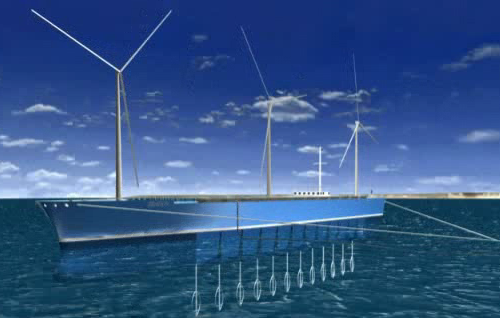
Seadov - Wind Powered Ship

From our bizarre ideas file comes the M/V Seadove or “Sustainable Energy and Desalination on Vessel” The ship is an Australian invention that hopes to cost-effectively solve coastal region water shortages around the world using “green marine technology”. The company tells us:

Seadov technology uses a combination of renewable energy and marine technology. Its reverse osmosis (RO) desalination plant is installed and powered by green energy produced on board the vessel, which is typically positioned 10 kilometres offshore. The potable water produced on the vessel is pumped to shore for final treatment before being injected into the local water grid or reservoir.
The project is a planned joint venture between Gold Coast-based technology developer Seadov Pty Ltd and a North American marine consortium.

Seadov chairman Peter Parker says the innovative project will provide a perfect addition to existing desalination plants stating; “The breakthrough with Seadov is the effective adaptation of renewable energy devices within a marine environment to cost-effectively produce potable water for coastal regions in most parts of the world.”

You can read more about Seadov and watch the company’s video by visiting their website at Seadove.com.

Tags: ·


Bill Gates Turns to Fighting Hurricanes

Visit msnbc.com for Breaking News, World News, and News about the Economy

So what does a semi-retired mega-billionaire philanthropist do with his spare time?

Fight some of the strongest forces mother nature has to produce, of course. NBC’s Today Show did a segment on Friday (clip above) explaining Bill Gates’ patent-pending idea to tame hurricanes before they make landfall.  The project will run on a system of barges planted into the paths of brewing hurricanes. Each barge will pump cold water up from the bottom of the ocean and warm water down from the surface.  In theory, this will cool the surface temperature of the ocean, thus reducing the intensity of the hurricane.

So what do you think? Could this actually work?  Join in on the conversation on the forum HERE or by commenting on this post.

Thanks to gCaptain member, weathersnm, for starting us off!

Tags: · , ,


Cities at Sea: A look at some possibilities

seasteading - andras-gyorfi-the-swimming-city

The Seasteading Institute, a non-profit organization dedicated to creating permanent cities at sea as a way to experiment with building new societies without government intereference (as I understand it anyway), has just released the winners from their first 3-D Design Competition.  The winner was 27 year architectural graphic designer from Eger, Hungary named András Gyõrfi for his design called “The Swimming City”, geared toward “wellness,” sports, entertainment, and “whatever you can imagine,” according to a statement by its creator.
In a press release from The Seasteading Institute, they tell us;

We had a great level of participation, with 41 entries being submitted.  More importantly, the quality of the entries was generally very impressive and the competition was very close, as several of the winners won by the smallest margin possible. Participants succeeded indeed in capturing the pioneering spirit of seasteading and expressing a vibrant, lively feeling through beautiful architecture!

Check out this LINK for a full list of winners, including high-res images of the entrants, or take a look at the Seasteading Institutes website HERE for more information surrounding these communities at sea.

Tags: · ,


Tubes In The Ocean → Bizarre Marine Technology

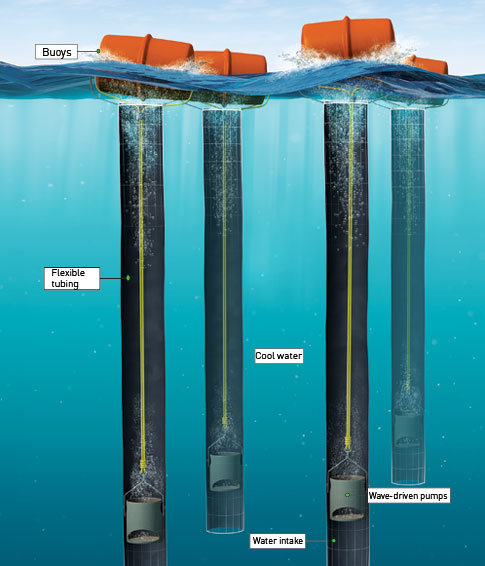
Ocean Straws - Graphics By Popscience

For this week’s pick of Bizarre Marine Technology we wanted to go with Glacier Blankets but, although they would likely be transported to the Artic on ships, the relationship to marine transport is thin. But don’t worry, we have an equally interesting technology for you today… ocean tubes. We’ll let Atomocean, the company developing this technology, explain: [Continue Reading →]
Tags: · ,


Bizarre Marketing – LG’s Unusual Launch of New Eco-Friendly Fridge

lg eco refrigerator thumb 450x300 Bizarre Marketing   LGs Unusual Launch of New Eco Friendly Fridge

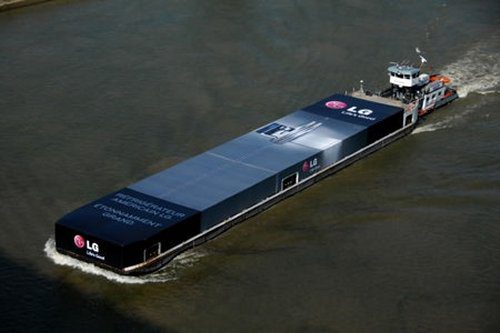
LG, the global manufacturer of electronic products and home appliances, has converted a 70-meter long push barge into a large, floating advertisement for the launch of their new eco-friendly refrigerator.  The football field sized vessel/refrigerator sailed up the Seine from Le Havre to Paris between June 22 and June 25.
The new refrigerator uses LG’s “Linear Compressor” technology requiring 20 percent less energy than conventional refrigerators.  While I have no idea exaclty what the new model is that LG is promoting with this unique marketing gimmick, here is a link to the LG’s refrigerator page just for their efforts and creativity. LINK

[Continue Reading →]

Tags: · ,


Aquapod Subsea Fish Farms – Bizarre Maritime Technology

Aquapod Fish Farm

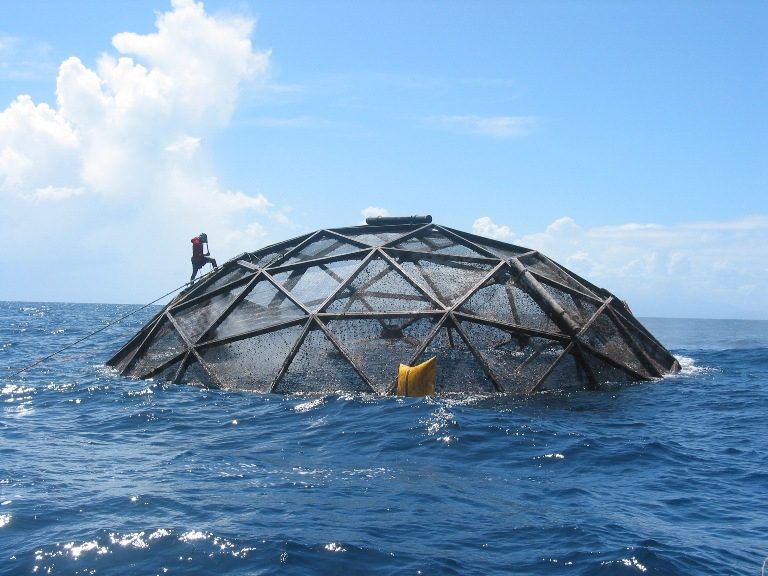
This week’s Bizzare Maritime Technology is Aquapod Fish Farms. After frustrations in the Maine salmon farming industry, Steve Page spent two years creating a galvanized steel wire structure aimed at growing the offshore aquaculture industry. Last month, his Maine-based company, Ocean Farm Technologies Inc., installed a new “AquaPod” steel-and-wire mesh net pen for Snapperfarm Inc. to raise cobia in deep water off Culebra, Puerto Rico.

[Continue Reading →]

Tags: · ,


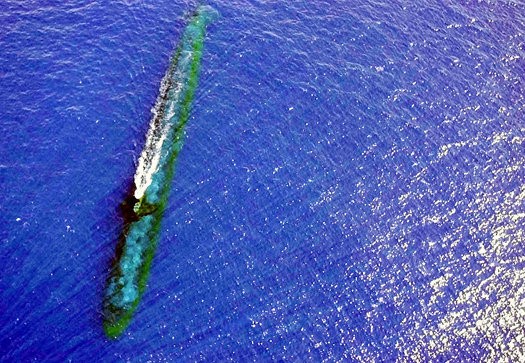
Russian Cargo Submarine – Bizarre Maritime Technology

Russian Cargo Submarine

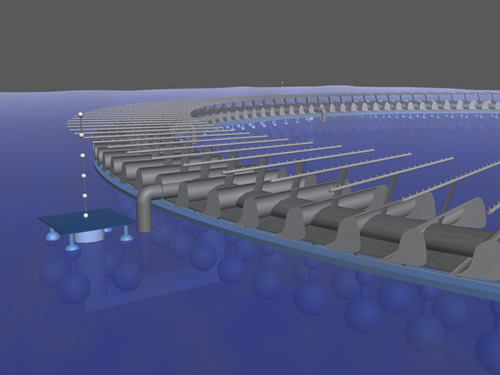
In 1942 the U.S. Navy used submarines run the Japanese naval blockade and bring munitions and supplies to the beleaguered soldiers on Corregidor. Shortly after this event President Roosevelt ordered the Navy to begin developing plans for a cargo carrying submarine. Three WW1 era, V-class submarines were soon brought to Philadelphia and converted to carry military cargo (source).
[Continue Reading →]

Tags: · ,


Bizarre Maritime Technology – The Anti-Hurricane Technology Wheel

Anti-Hurricane Wheel designed to reduce the strength of hurricanes at sea

From the Anti-Hurricane Technology Fund in Slovakia comes this invention for mitigating the effects of cyclone damage. The invention is called “The Anti-Hurricane Technology Wheel” and (if they find funding to build it) would be towed out to sea to be left in the path of an approaching storm. Here are the details from the patent filing:

Said task is dealt with according to the present invention, the principle of which is to reduce the ascendant speed of a tropical cyclone by the sea water pumped on site from under the sea surface above the sea surface and dispersed in the wind at the bottom of such tropical cyclone in/near its eyewall and then drifted to the heights by the kinetic energy of this strong wind. [Continue Reading →]

Tags: · , , ,


Hong Kong Ship Shopping Mall – Ship Docked In The Middle Of City Pleases Shoppers

picture 1 Hong Kong Ship Shopping Mall   Ship Docked In The Middle Of City Pleases Shoppers

whampoagdn site5 Hong Kong Ship Shopping Mall   Ship Docked In The Middle Of City Pleases Shoppers

Is it just me, or does something seem out of place here?

Located in the middle of Hong Kong’s largest private housing estate, Whompoa Garden, this cruise ship is  actually a huge shopping center.  Within it is more than 200 shops and restaurants, making it one of Whompoa Garden’s premier shopping locations.

On a side note, Whompoa Garden, including the shopping mall, was built by Huchtinson Whompoa Property on the former site of Kowloon Dock, or Whompoa Dock for short, previously the Hong Kong and Whompoa Dock Company Limited.  According to their website:

The company was established in 1863 to acquire docks and repair yards at Whampoa, on the Canton River in China, and the then newly constructed dry docks at Aberdeen on Hong Kong Island. In 1866, the company became the holder of the first Hong Kong business registration certificate issued under the new Companies Ordinance.

The company ran one of the largest dry-docking, ship repair and shipbuilding operations in the Far East for over a century, survived two World Wars and, at its peak, handled an average of 25 vessels per week. In 1960, it was servicing the ships of no fewer than 23 nationalities and 9 navies.

Check out the rest of its interesting history HERE.

Via Gizmodo

Tags: · , , ,