Updated: May 24, 2019 (Originally published September 11, 2014)
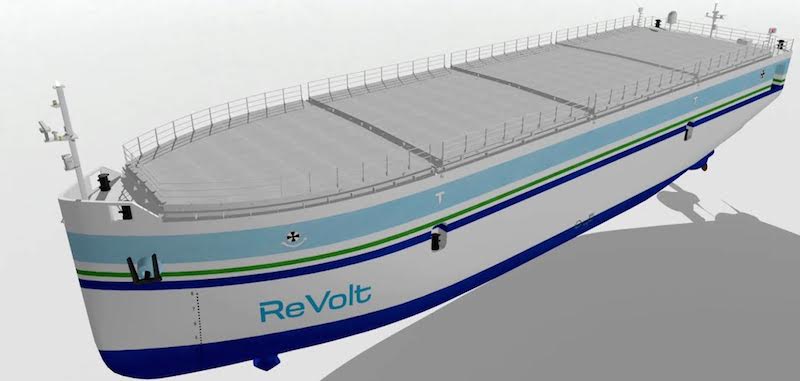
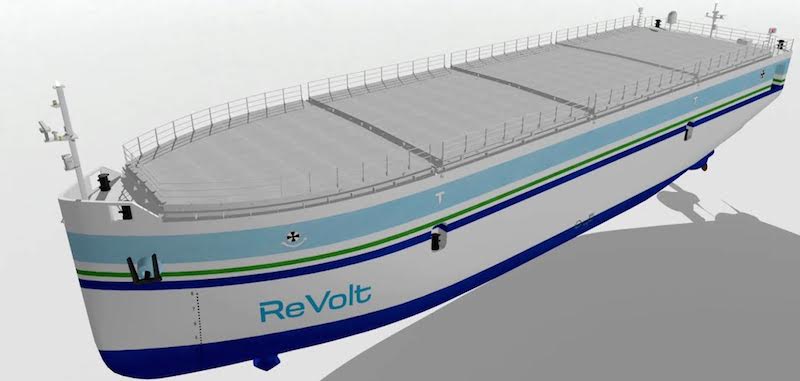
Image courtesy DNV GL
World’s largest classification society DNV GL has released details of a new concept ship design for the short sea shipping market which is battery powered, highly efficient, and, you guessed it, unmanned.
Details of the “ReVolt” concept were released this week at SMM Hamburg, one of the world’s leading maritime trade fairs. DNV GL says the ReVolt is a vessel that is greener, smarter and safer than conventionally fueled and operated vessels, offering a possible solution to the growing needs of marine transport.
Instead of using diesel fuel or even LNG, ReVolt is fully powered by a 3000 kWh battery, thus reducing operating costs by minimizing the number of high maintenance parts such as rotational components. DNV GL says that, at least in concept, the vessel has a range of 100 nautical miles before a recharge is needed and if the energy required is harnessed from renewable sources, this would eliminate carbon dioxide emissions.
The ReVolt could achieve even greater efficiency by slowing to an average operating speed 6 knots, leading to less water resistance compared to traditional vessels, which usually travel at about 8.7 knots, DNV GL says. The slower speed allowed DNV GL engineers to fit the concept with a straight vertical bow, further reducing water resistance along the ship’s entire profile and ultimately saving energy.
In order to tackle one of the shipping industries’ “weakest links”, safety will be enhanced through an autonomous navigation system that requires no crew, and therefore eliminates the risk of human error and makes the concept more cost-efficient to operate. DNV GL says that with an average of 900 fatalities per year, the mortality rate in shipping is 90 percent higher than in comparable land-based industries, primarily due to the human factor when it comes to accidents.
With no crew, there is also no need for crew facilities such as the superstructure, DNV GL says. This results in an increase in loading capacity and low operating and maintenance costs. Compared to a diesel-run ship, DNV GL says that ReVolt could save up to 34 Million USD during its estimated 30-year-life-time.
DNV GL notes that while the ReVolt concept ship is currently still being tested and will not be built until all the required technologies have matured, it should serve as example of what is conceivably possibly given today’s technology and what could also be in store for the future.
“Building and operating this vessel would be possible with today’s technology,” says Hans Anton Tvete, Senior Researcher at DNV GL. “‘ReVolt’ is intended to serve as inspiration for equipment makers, ship yards and ship owners to develop new solutions on the path to a safe and sustainable future.”
Hanwha Defense USA and maritime autonomy startup HavocAI have formalized a strategic partnership to jointly develop and potentially mass-produce 200-foot autonomous surface vessels for the U.S. Navy, a move that...
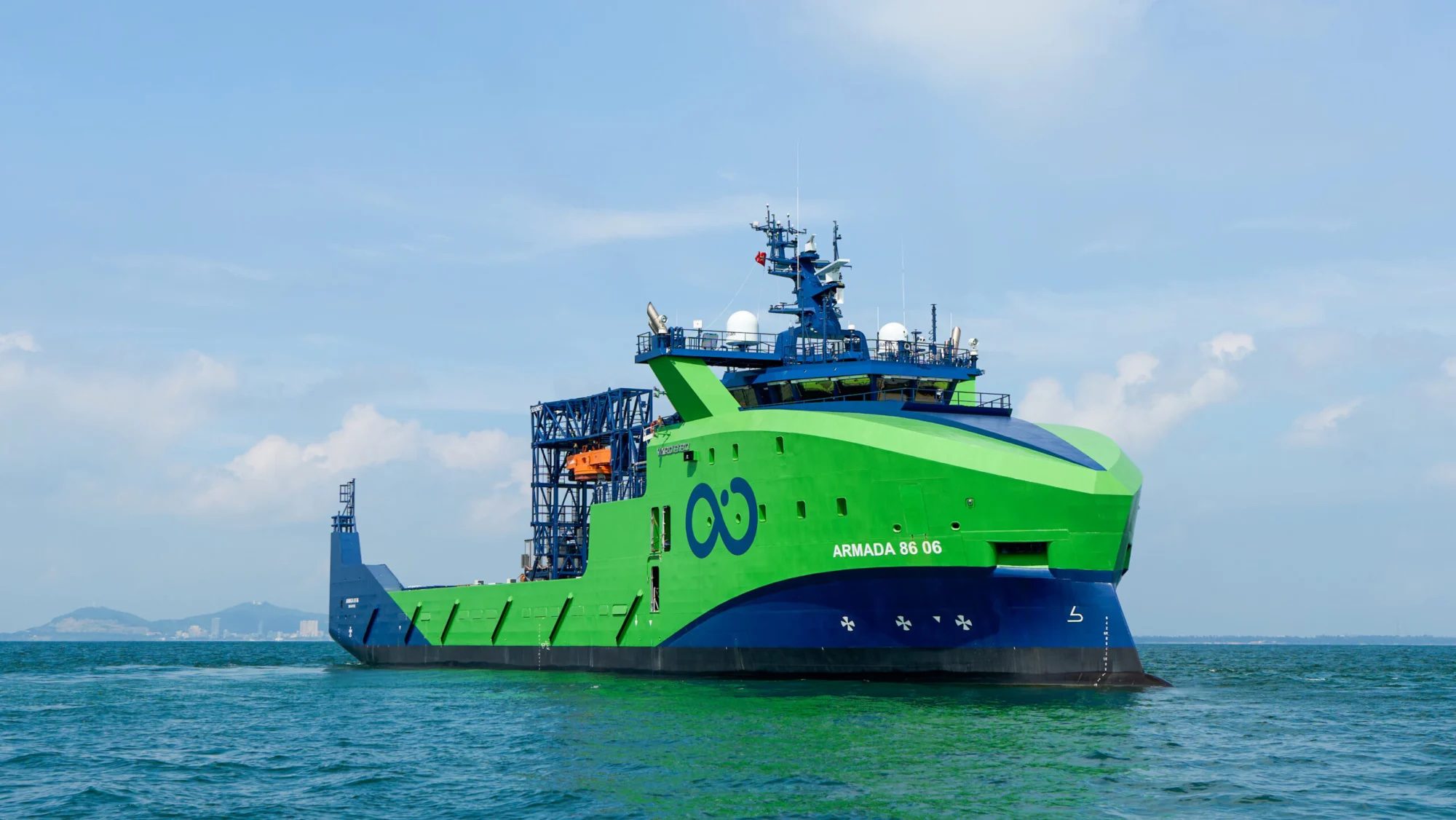
Ocean Infinity has delivered the final vessel in its groundbreaking 14-ship Armada fleet, marking the completion of an ambitious transformation project that began in 2020 to revolutionize offshore operations through...
Saronic Technologies and Vigor Marine Group announced today a strategic partnership aimed at accelerating the delivery of autonomous maritime capabilities while strengthening operational support for defense and commercial customers. The...
July 14, 2025
Total Views: 3132
Get The Industry’s Go-To News
Subscribe to gCaptain Daily and stay informed with the latest global maritime and offshore news
— just like 107,230 professionals
Secure Your Spot
on the gCaptain Crew
Stay informed with the latest maritime and offshore news, delivered daily straight to your inbox
— trusted by our 107,230 members
Your Gateway to the Maritime World!
Essential news coupled with the finest maritime content sourced from across the globe.

 Join The Club