The Office of the U.S. Trade Representative has opened a one-day public comment period and provided more clarity on the proposed one-year suspension of port entry fees and tariffs imposed under the Section 301 investigation targeting China’s dominance in maritime, logistics, and shipbuilding sectors.
The comment period, announced today, comes on the heels of a trade deal reached between President Trump and Chinese President Xi Jinping on November 1.
The port fees originated from a Section 301 petition filed in March 2024 by the United Steelworkers and a coalition of labor organizations, which accused China of using non-market industrial policies and massive state subsidies to dominate global shipbuilding.
Under the proposed suspension, which would run from November 10, 2025, through November 9, 2026, “no party would accrue liability for or be required to pay the fees on maritime transport services under Annexes I, II, or III of the April 23 notice, as modified by the October 16 notice. Further, during the suspension period, no party would accrue liability for or be required to pay the duties provided in Annex V.A of the October 16 notice,” according to the USTR notice.
The three annexes targeted different segments of maritime trade: Annex I imposed per-net-ton fees on vessels owned or operated by Chinese entities; Annex II levied either net-tonnage or per-container fees (whichever was higher) on operators of Chinese-built ships not owned by China, with carve-outs for U.S. national security fleets and specialized vessels; and Annex III charged per-net-ton fees on foreign-built vehicle carriers, with targeted coverage for Maritime Security Program and U.S. Government operators. Further, Annex V.A defined when an operator or owner is “of China” based on beneficial ownership, control, and state influence—triggering the higher Annex I rates.
The fees began on October 14, 2025 following months of planning and year-long investigation by the U.S. Trade Representative. China immediately responded with similar reciprocal fees on U.S. ships. The standoff ended quickly following the trade agreement announced on October 30. Under the deal, China has also committed to removing retaliatory measures and sanctions imposed on various shipping entities, including units of Korean and U.S.-allied shipbuilder Hanwha.
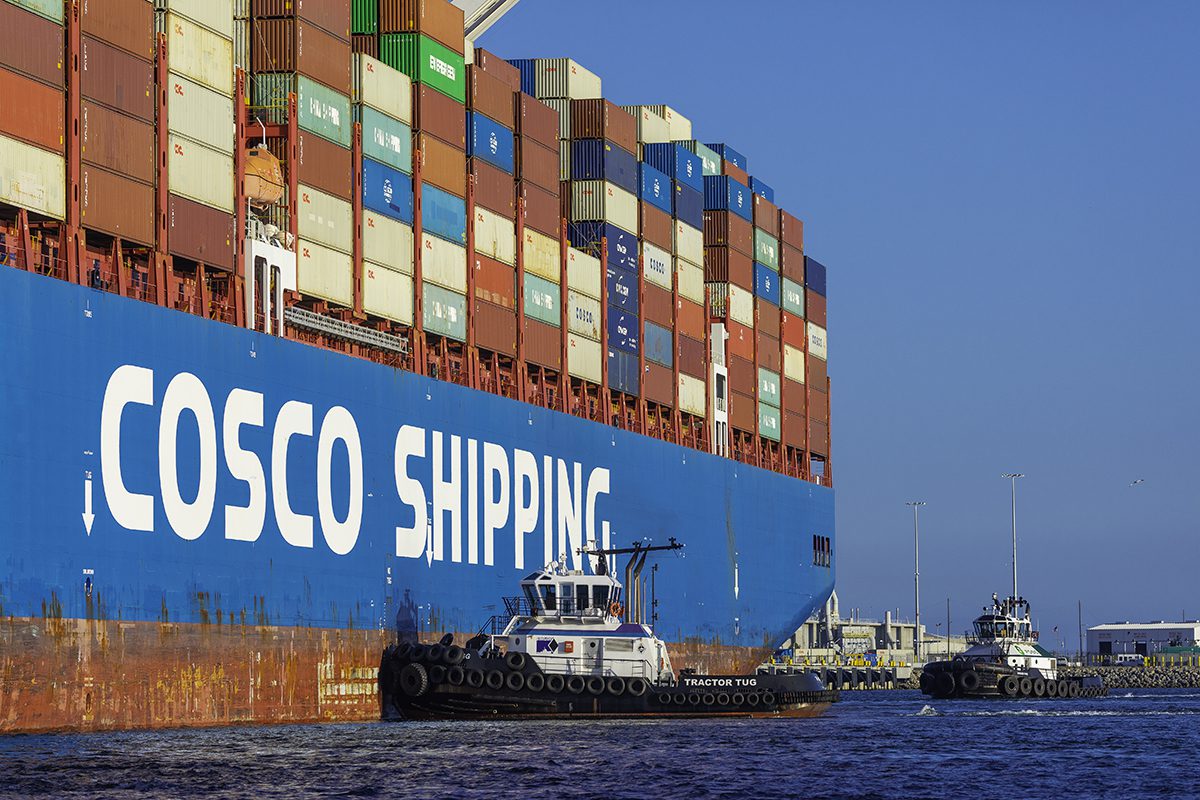
The tit-for-tat fees have upended global shipping networks—driving up freight costs and forcing fleet reshuffles. Chinese carriers were expected to face far more severe impacts. China’s state-owned COSCO would have been the hardest hit, facing an estimated $1.5 billion in annual port fees. Meanwhile, U.S. carrier Matson, the most exposed to China’s reciprocal fees, reported incurring $6.4 million in port fees during the program’s first three weeks.
The shipping industry welcomed the suspension. World Shipping Council President and CEO Joe Kramek commented: “Global trade flows best when it flows freely, and a suspension of ship fees by the United States and China is a win for farmers, exporters, and consumers. Avoiding additional costs helps keep trade competitive and maintains access to critical shipping lanes.”
However, labor groups remain cautious. Roy Houseman, legislative Director for the United Steelworkers, noted that the “truce” leaves “a lot of unanswered questions on how the U.S. will address the need to reinvigorate its domestic commercial shipbuilding base.”
Houseman pointed out that “53% of all global ship orders by tonnage during the first eight months of 2025 are currently going to just one country, the People’s Republic of China. This level of market concentration is not healthy for an industry which has such a dramatic impact on global trade.”
The tit-for-tat fees have upended global shipping networks—driving up freight costs, forcing fleet reshuffles, and even prompting boardroom shakeups.
Interested parties have until November 7, 2025, at 5:00 p.m. Eastern Standard Time to submit written comments.
U.S. and China Suspend Port Fees Central to Trump’s Shipbuilding Strategy

 Join The Club