Don’t Miss Your Daily Briefing for the Maritime Industry
Join the leading maritime news network
— trusted by our 107,080 members
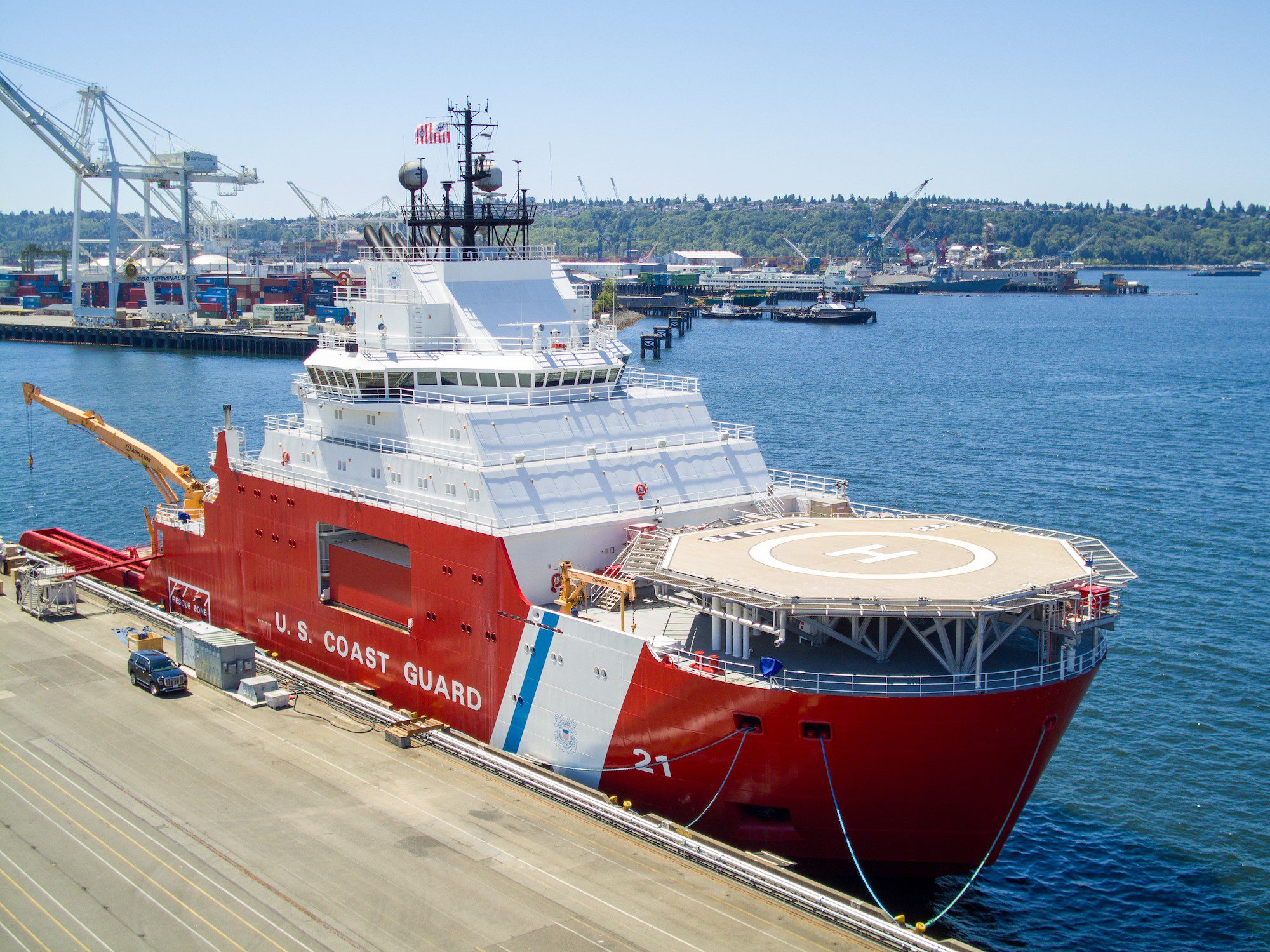
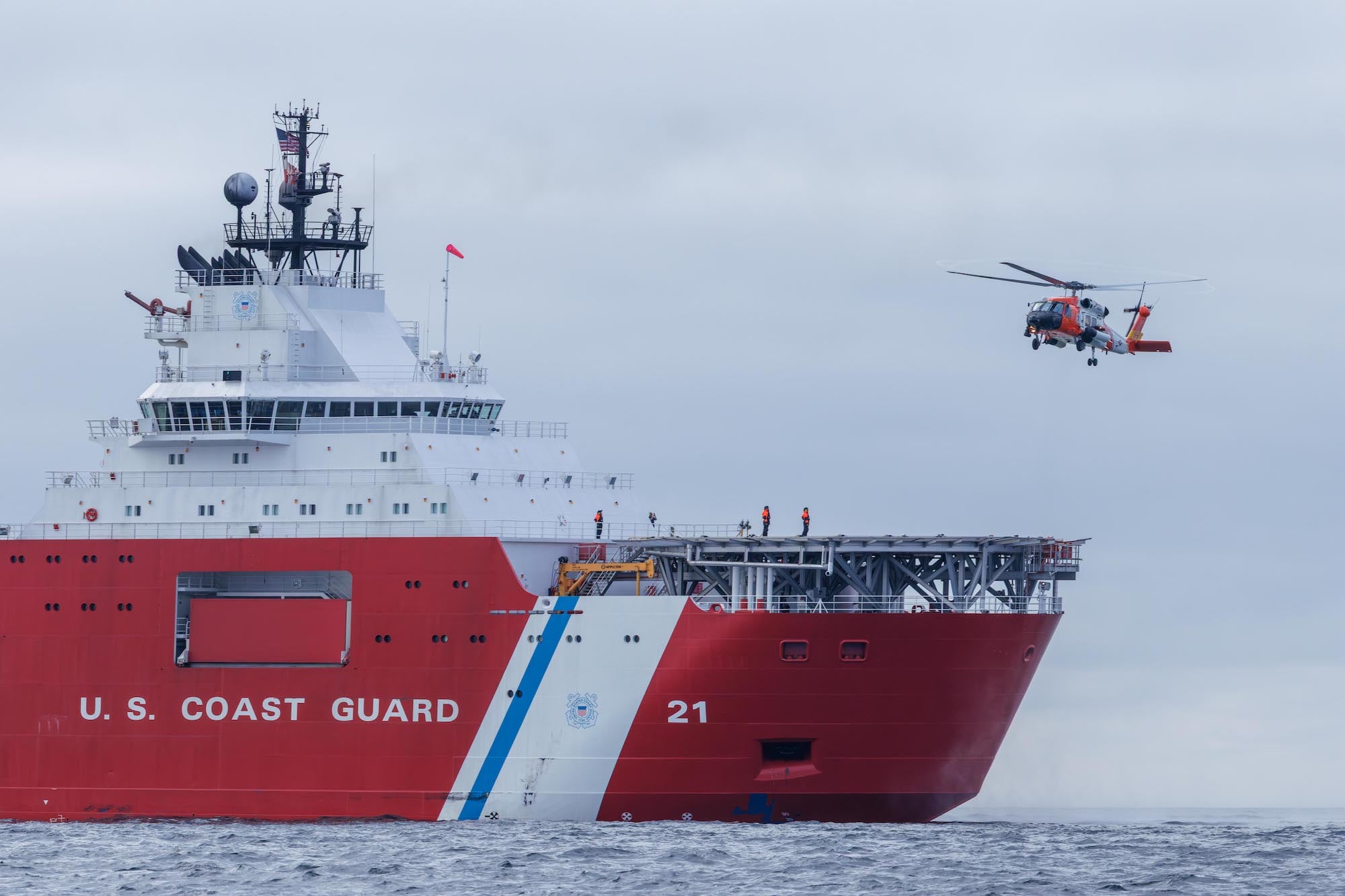
U.S. Coast Guard Cutter Storis (WAGB 21) is moored at Coast Guard Base Seattle in Seattle Washington on July 11, 2025. Storis is the first polar icebreaker acquired in more than 25 years by the Coast Guard with its mission to assure access to the polar regions to protect U.S. sovereignty. (U.S. Coast Guard photo by Petty Officer 3rd Class Nathanial Frazier)
USCGC Storis: A Look at America’s Newest Arctic Icebreaker
The U.S. Coast Guard officially commissioned the USCGC Storis (WAGB 21) in Juneau, Alaska on August 10, marking a significant addition to America’s icebreaker fleet amid growing Russian and Chinese activity in Arctic waters.
The vessel, formerly the motor vessel Aiviq, was acquired on December 20, 2024, and underwent modifications to enhance its communication and defense capabilities before being renamed Storis. This marks the second vessel in Coast Guard history to bear the name, with the original “Galloping Ghost of the Alaskan Coast” having served 64 years of icebreaking operations in the Arctic.
“The commissioning of Storis marks a new beginning for the U.S. Coast Guard,” said Deputy Secretary of the Department of Homeland Security Troy Edgar. “President Trump’s One Big Beautiful Bill has recapitalized USCG with $25 billion – the largest single investment in the Coast Guard.”
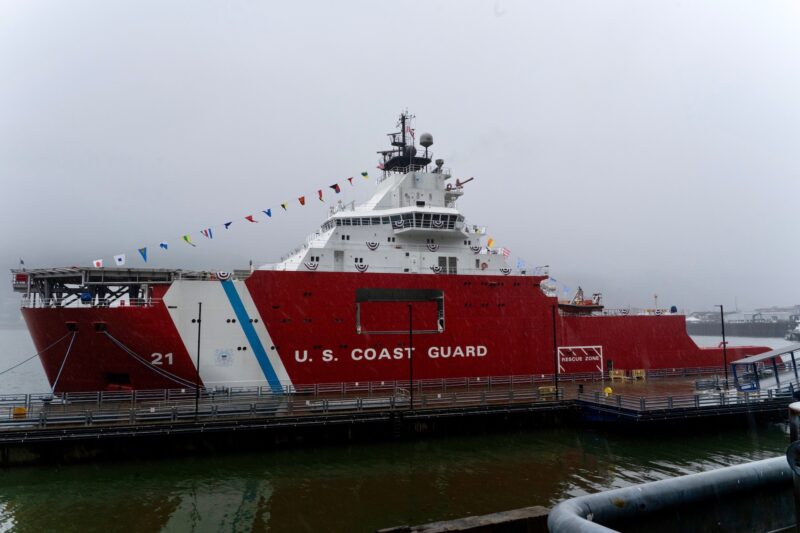
U.S. Coast Guard Cutter Storis (WAGB 21) is moored during the Storis commissioning ceremony at Juneau, Alaska, August 10, 2025. U.S. Coast Guard Photo
Storis is the Coast Guard’s first polar icebreaker acquired in over 25 years and will expand U.S. operational presence in the Arctic while supporting Coast Guard missions as the service awaits delivery of the new Polar Security Cutter class.
Admiral Kevin Lunday, Acting Commandant of the Coast Guard, emphasized the vessel’s strategic importance: “USCGC Storis immediately strengthens our ability to control, secure, and defend the U.S. border around Alaska and maritime approaches in the Arctic. Storis is the first step of a historic investment in the Coast Guard to add critical capacity to our polar icebreaker fleet to protect U.S. sovereignty and counter malign influence throughout the Arctic”.
U.S. Coast Guard Adm. Kevin Lunday, Acting Commandant of the Coast Guard, speaks during the Storis commissioning ceremony at Juneau, Alaska, August 10, 2025. U.S. Coast Guard
The timing is particularly significant as the Coast Guard is currently monitoring five Chinese research vessels operating in or near U.S. Arctic waters. This follows a pattern of increasing Chinese activity in the region, including last year’s three Chinese vessels conducting research operations north of the Bering Strait and the first-ever joint Chinese-Russian coast guard Arctic patrol in October 2024.
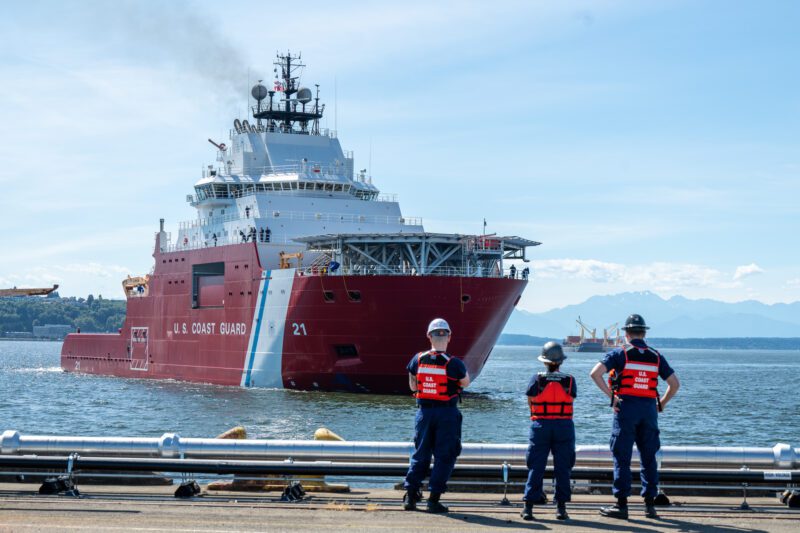
A linehandler aboard the U.S. Coast Guard Cutter Storis (WAGB 21) prepares to moor at Coast Guard Base Seattle, July 11, 2025. U.S. Coast Guard Photo
The 360-foot, 4,129 dwt Storis is approximately two-thirds the size of the Coast Guard’s medium icebreaker Healy. Classified as a polar class 3-equivalent vessel, it can break through one meter of ice continuously at five knots. The vessel was originally built for Shell’s Arctic drilling operations in 2012.
Following the commissioning ceremony, Storis is departing immediately on patrol in the Coast Guard Arctic District area of operations. The vessel will be temporarily based in Seattle alongside the Service’s two other polar icebreakers until necessary infrastructure improvements are completed in Juneau.
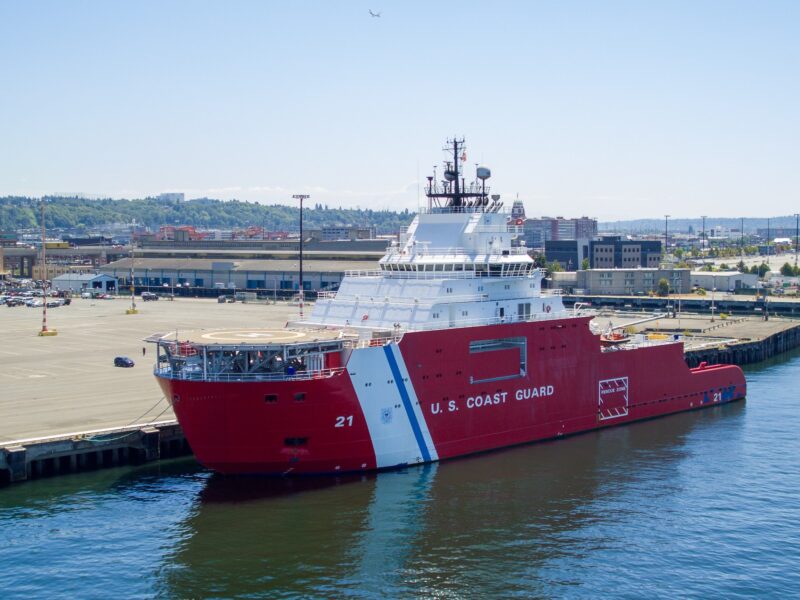
U.S. Coast Guard Cutter Storis (WAGB 21) is moored at Coast Guard Base Seattle in Seattle Washington on July 11, 2025. Storis is the first polar icebreaker acquired in more than 25 years by the Coast Guard with its mission to assure access to the polar regions to protect U.S. sovereignty. U.S. Coast Guard Photo
The acquisition of Storis is part of broader Coast Guard fleet modernization efforts funded through the One Big Beautiful Bill Act, which includes $4.3 billion for Polar Security Cutters, $3.5 billion for Arctic Security Cutters, and $816 million for light and medium domestic icebreaking cutters.
The U.S. Coast Guard Cutter Storis is shown here underway, June 3, 2025. U.S. Guard Coast
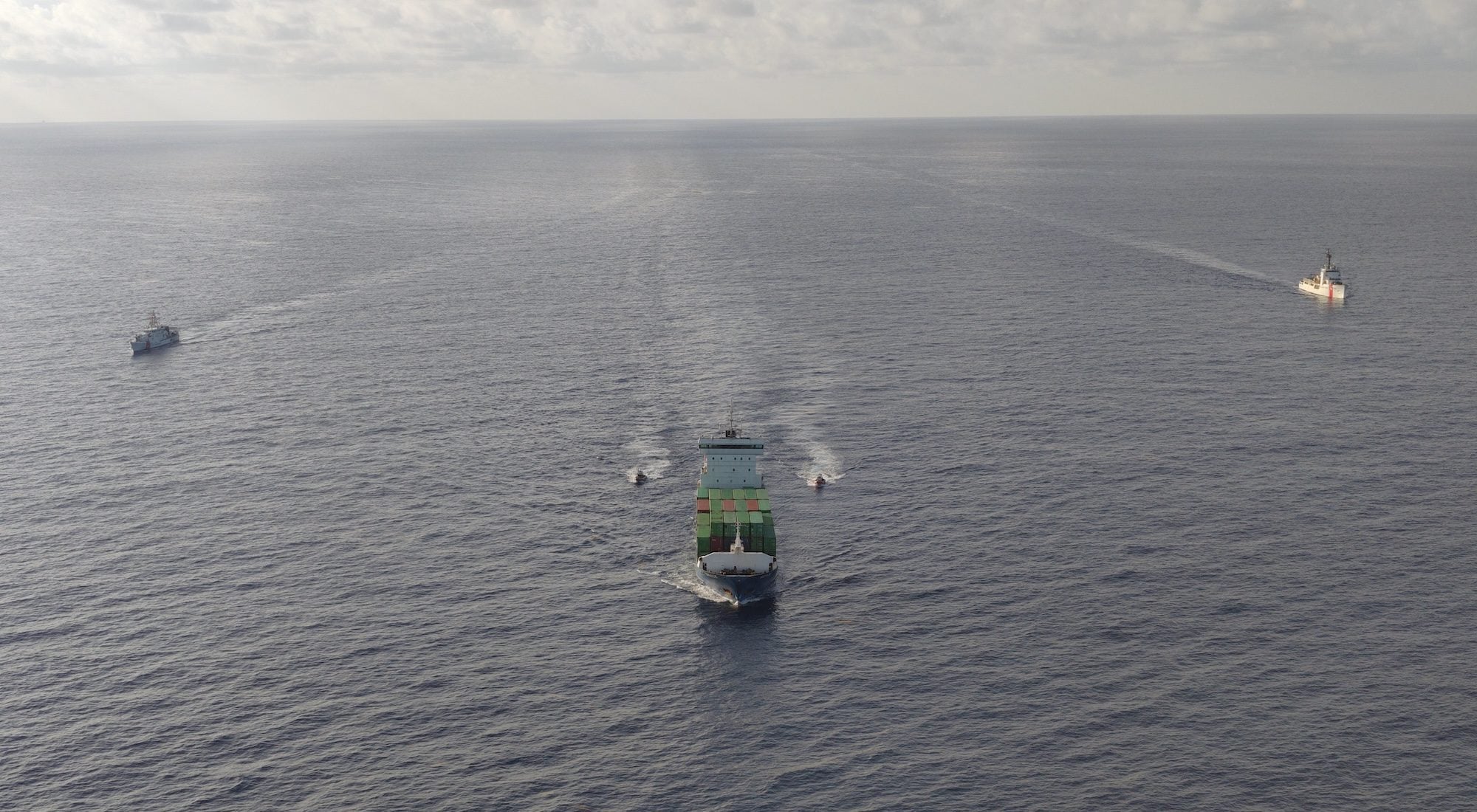
The U.S. Coast Guard has intercepted a vessel carrying fuel to Cuba after an international enforcement operation found large quantities of fuel concealed inside the ship’s ballast tanks. The Coast Guard...
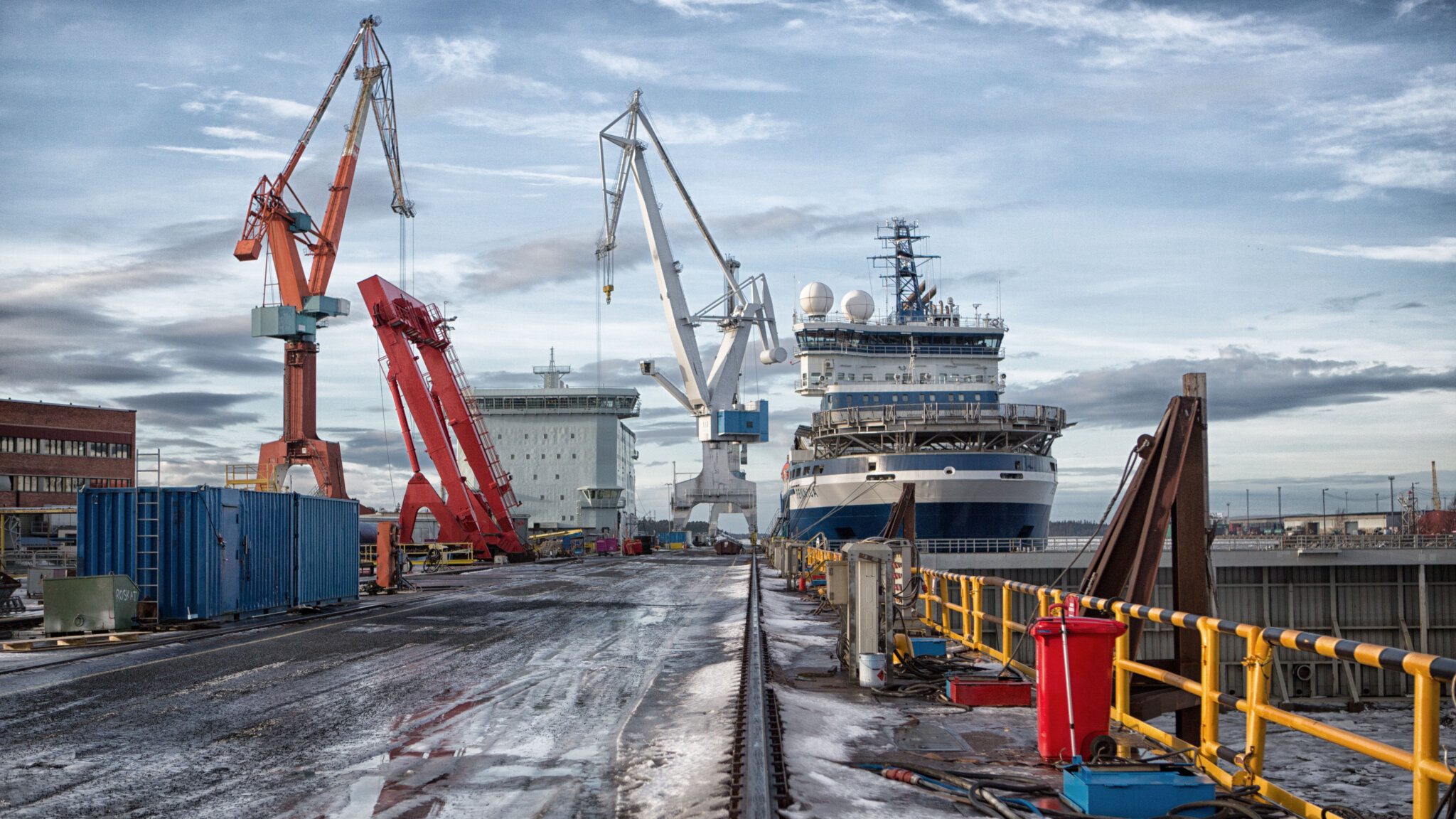
Rauma Marine Constructions in Finland has made rapid progress on the first of two Arctic Security Cutters it is building for the U.S. Coast Guard, with almost half of the vessel's blocks already launched and construction of the second ship approaching, according to the Finnish shipbuilder's chief executive.
The U.S. Coast Guard has awarded a $315 million contract to Tutor Perini Corp. to build a new fuel pier and major cutter mooring at Base Kodiak, Alaska, as the service prepares...
September 23, 2026
Total Views: 1742
Get The Industry’s Go-To News
Subscribe to gCaptain Daily and stay informed with the latest global maritime and offshore news
— just like 107,080 professionals
Secure Your Spot
on the gCaptain Crew
Stay informed with the latest maritime and offshore news, delivered daily straight to your inbox
— trusted by our 107,080 members
Your Gateway to the Maritime World!
Essential news coupled with the finest maritime content sourced from across the globe.

 Join The Club