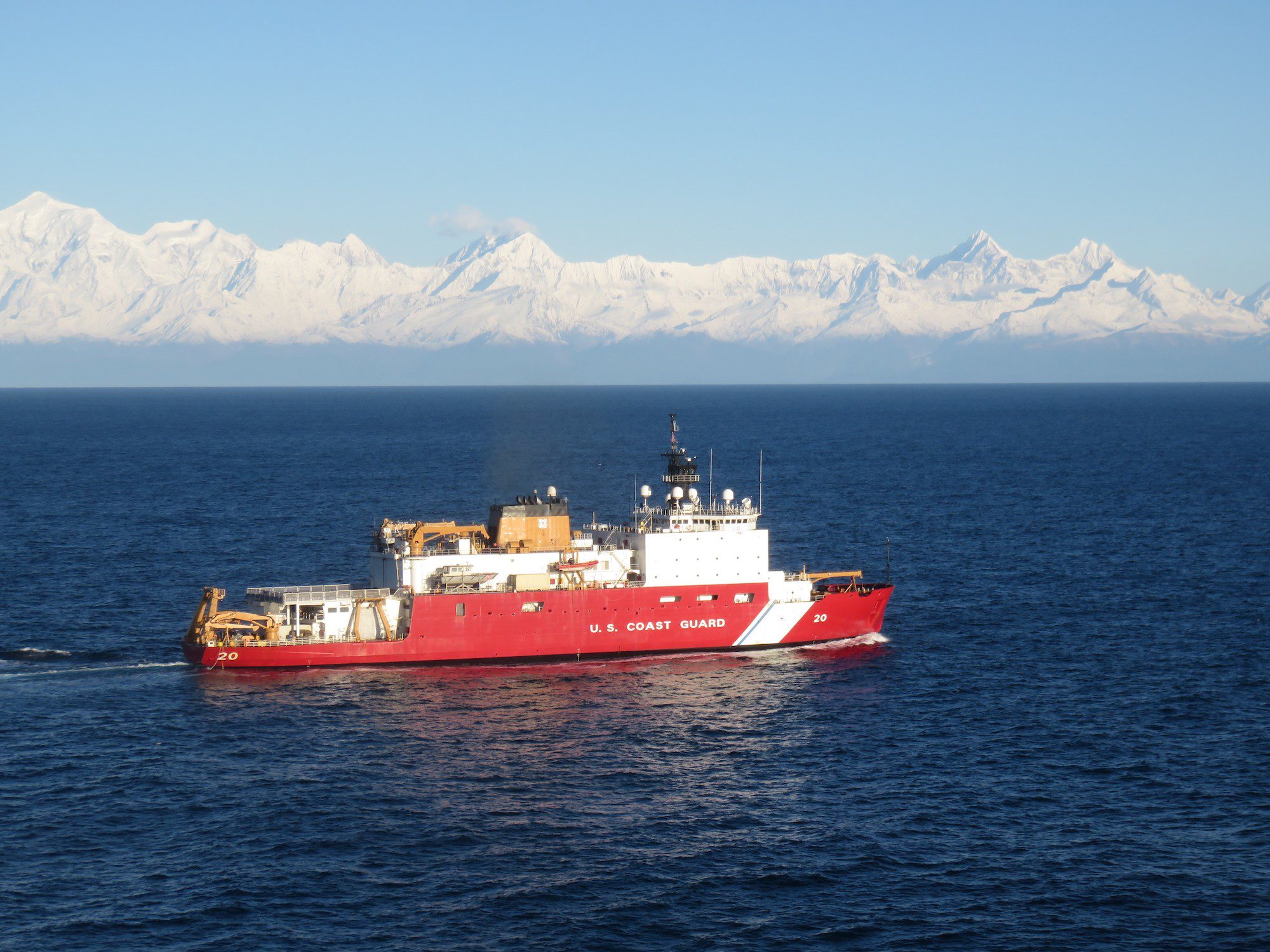
Two and a half months after suffering from an engine room fire, the U.S. Coast Guard icebreaker Healy is back in action. The vessel set sail from its homeport Seattle late on October 1st.
It is expected to reach its area of operation in the Arctic Ocean around October 25 for a 10-week mission. Healy will return to Seattle no later than December 15.
With continuous ice coverage in parts of the western Chukchi Sea near the terminus of Russia’s Northern Sea Route, Healy will likely stay in the waters of the Beaufort Sea to the north of Alaska and Canada.
It was here, near Banks Island, that the vessel suffered an engine room fire in July forcing it to return to Seattle on half power. Repairs took around three weeks.
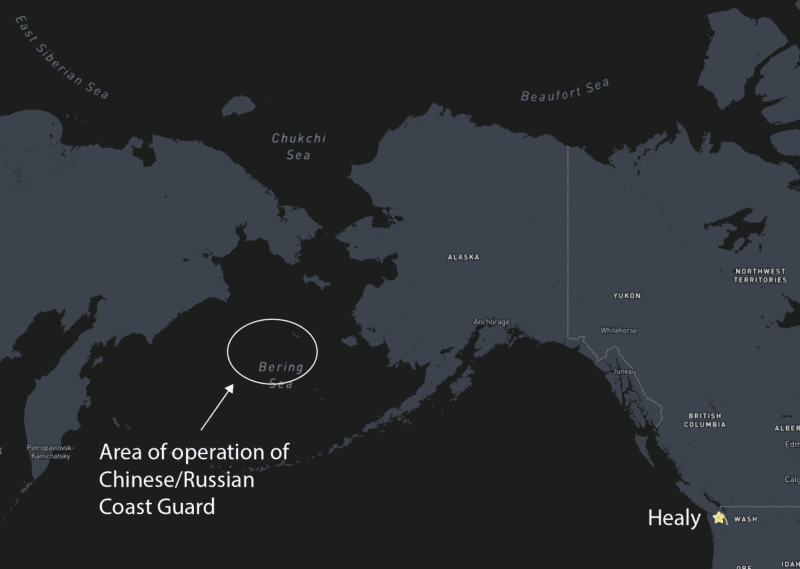
Last week China dispatched two Coast Guard vessels, Meishan and Xiushan, to meet up with Russian border patrol counterparts. Following a patrol in the sea of Japan the vessels ventured into the North Pacific taking the small fleet into the Arctic.
This is the furthest north the USCG has ever observed Chinese coast guard activity.
Map showing location of Healy after departing from Seattle and area of operation of the Chinese and Russian Coast Guard vessels. (Source: Shipatlas)
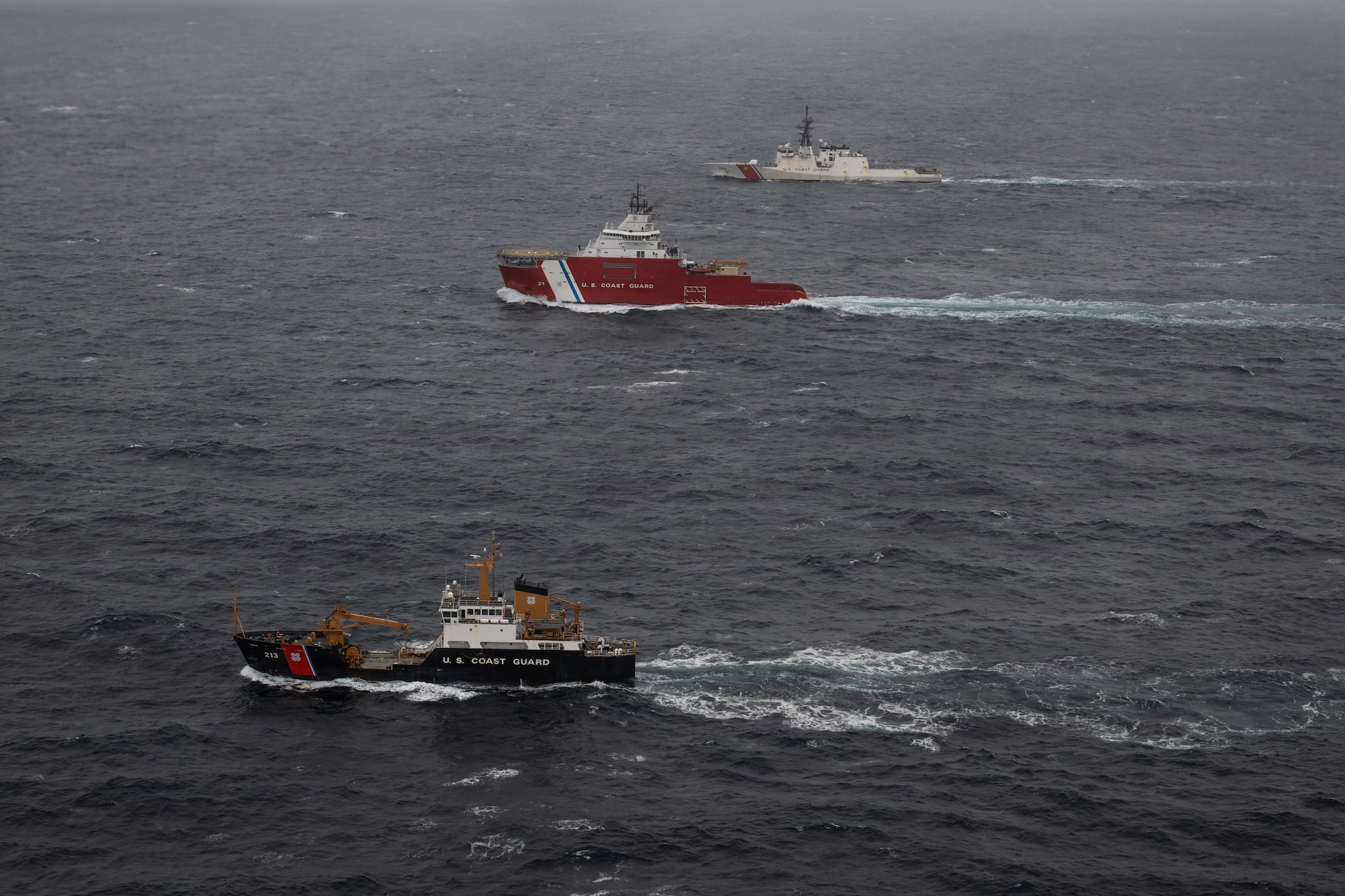
“While patrolling the maritime boundary between the United States and Russia on routine patrol in the Bering Sea, a HC-130J Super Hercules airplane crew from Coast Guard Air Station Kodiak observed two Russian Border Guard ships and two Chinese Coast Guard ships approximately 440 miles southwest of St. Lawrence Island,” the U.S. Coast Guard confirmed.
The U.S. Pentagon has expressed concerns about the “growing alignment” between China and Russia in parts of the world, including in the Arctic.
China has long pursued an interest in what it calls the Polar Silk Road. In recent weeks a number of Chinese container ships traveled across the Arctic, including the first two Panamax vessels successfully transiting Russia’s Northern Sea Route. The route is a short cut for merchant vessels between Europe and Asia.
“This recent activity demonstrates the increased interest in the Arctic by our strategic competitors,” said Rear Adm. Megan Dean, commander of the 17th Coast Guard District.
“The demand for Coast Guard services across the region continues to grow, requiring continuous investment in our capabilities to meet our strategic competitors’ presence and fulfill our statutory missions across an expanding operational area.”
It will be at least another five years until the USCG receives its first new icebreaker in nearly 30 years. The Polar Security Cutter continues to face ongoing delays, with construction expected to finally start before the end of this year.
The Coast Guard’s new credentialing portal promises complete applications and faster processing. One American ship captain tested it. What he found raises serious questions about automation, accountability, and whether Washington...
The U.S. Coast Guard Cutter Munro has returned to its homeport in Alameda, California, following a 112-day patrol across the Bering Sea and Arctic Ocean that included monitoring Chinese research...
The crew of a merchant ship was missing on Tuesday after the vessel sank in the Black Sea off NATO member Bulgaria following a drone strike that Prime Minister Rumen Radev described as a gross violation of international law.
October 6, 2026
Total Views: 1687
Get The Industry’s Go-To News
Subscribe to gCaptain Daily and stay informed with the latest global maritime and offshore news
— just like 106,406 professionals
Secure Your Spot
on the gCaptain Crew
Stay informed with the latest maritime and offshore news, delivered daily straight to your inbox
— trusted by our 106,406 members
Your Gateway to the Maritime World!
Essential news coupled with the finest maritime content sourced from across the globe.

 Join The Club