(Bloomberg) — The US trade deficit widened in December, capping a turbulent year of erratic tariff policy.
The goods and services trade gap expanded from the prior month to $70.3 billion, Commerce Department data showed Thursday. The shortfall culminated in a full-year deficit of $901.5 billion, still one of the largest in data back to 1960.
“After all the tariff headlines and swings in the data, the trade deficit barely budged in 2025,” Nationwide Financial Market Economist Oren Klachkin said in a note. “With the peak tariff drag now likely behind us, we expect trade to settle into a more predictable rhythm.”
The trade data were notably volatile in 2025 from month to month as US importers reacted to a persistent drumbeat of tariff announcements from President Donald Trump. Gold and pharmaceutical imports were particularly choppy as companies raced to beat higher duties.
The December deficit — which was wider than all but one estimate in a Bloomberg survey of economists — reflected a 3.6% increase in the value of imports, including gains in computer accessories and motor vehicles. Exports of goods and services declined 1.7%, largely reflecting fewer outbound shipments of gold.
After the report, several economists estimated trade would provide a smaller boost, or even a drag on fourth-quarter gross domestic product, which is due Friday. The latest GDPNow forecast from the Federal Reserve Bank of Atlanta reflected as much, predicting net exports will barely add to fourth-quarter growth, now estimated at 3%.
Once adjusting for changes in prices, which filters into the real GDP measurement, the merchandise trade deficit widened to $97.1 billion in December, the most since July. Trade in gold, unless used for industrial purposes such as in the production of jewelry, is excluded from the government’s GDP calculation.
Trump has leaned on tariffs as part of his strategy to reduce reliance on foreign goods, encourage domestic investment and correct decades of declines in manufacturing employment. He and his economic team have criticized research concluding that Americans have borne the costs of tariffs.
One of the biggest wild cards for trade is whether the Supreme Court will uphold Trump’s authority to impose sweeping tariffs through an emergency law. A ruling could come as soon as Friday, though the court never says in advance which opinions are coming.
Last year, US companies imported nearly $145 billion worth of computers and accessories more than they did in 2024. The acceleration in demand reflected the massive investment underway in artificial intelligence.
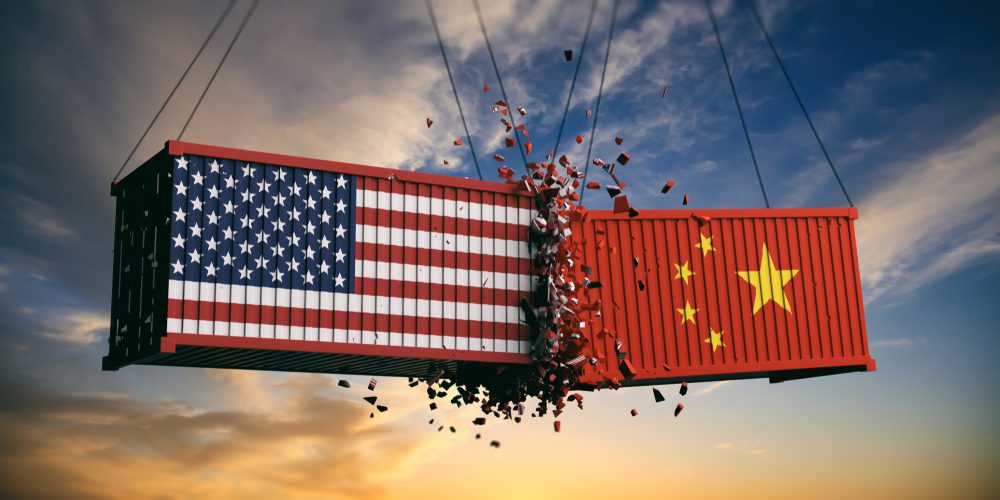
By country, the shortfall with China narrowed sharply — reaching about $202 billion, the smallest in more than 20 years and a reflection of the higher tariffs Trump put on Chinese imports. Trade has instead been largely rerouted through other countries like Mexico and Vietnam, where deficits widened to respective records.
Meantime, the gap with Taiwan last year widened to a record $146.8 billion, while the annual shortfall with Canada narrowed.Play Video
Separate data Thursday showed US initial jobless claims fell last week by the most since November.
© 2026 Bloomberg L.P.
Editorial Standards · Corrections · About gCaptain
This article contains reporting from Bloomberg, published under license.

 Join The Club