The U.S. Coast Guard’s sole heavy icebreaker, the Polar Star, has returned to its homeport of Seattle after completing a months-long Antarctic deployment supporting critical resupply operations for U.S. research stations.
The 399-foot vessel returned following a 146-day mission as part of Operation Deep Freeze 2026, the annual U.S. military-led effort to sustain the National Science Foundation’s Antarctic program.
The Polar Star departed Seattle in November and traveled more than 20,000 nautical miles during the deployment, operating for over two months in Antarctic waters.
“I am so proud of how this crew worked together through every single challenge this year’s mission presented,” said Capt. Jeff Rasnake, the ship’s commanding officer.
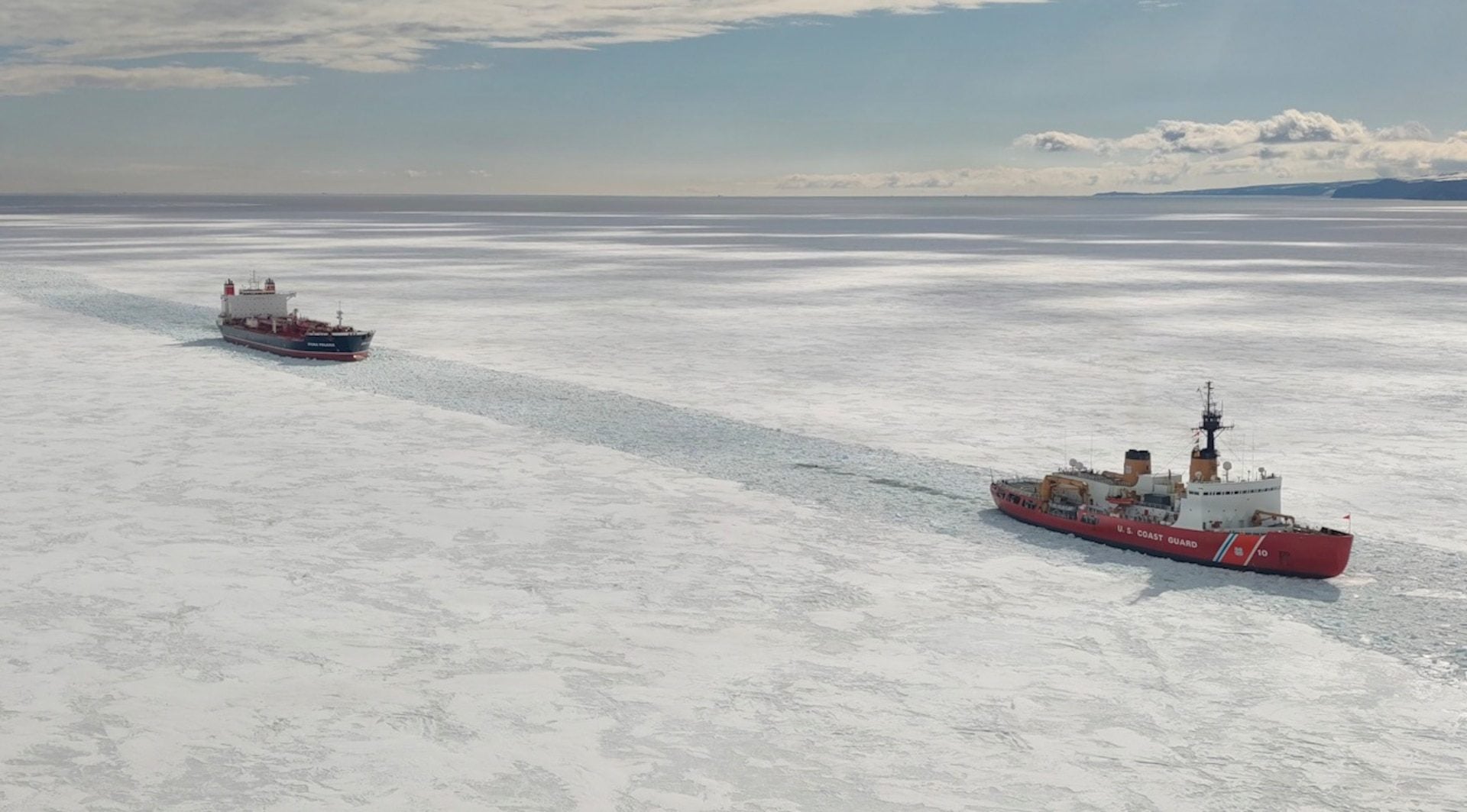
While in the Ross Sea region, the crew carved a roughly seven-mile (11-km) channel through fast ice up to eight feet thick to enable fuel and cargo ships to reach McMurdo Station, the largest U.S. base on the continent.
The cutter escorted multiple vessels through the channel, including a fuel tanker delivering millions of gallons of fuel and cargo ships carrying supplies essential for year-round scientific research.
It also supported the installation of a new National Science Foundation pier, a “landmark achievement” expected to improve logistics for years to come, according to Coast Guard officials. Polar Star escorted the tug carrying the 330-foot-long NSF Discovery Pier.
“The delivery of the new NSF Discovery Pier is a landmark achievement that will significantly enhance the logistical support for the U.S. Antarctic Program for years to come,” said Cmdr. Samuel Blase, the Polar Star‘s executive officer.
“This multi-year effort culminated this year with the remarkable trek of the pier from Oregon to the McMurdo Sound, and teamwork between the Coast Guard, National Science Foundation, U.S. Navy Seabees, U.S. Army Corps of Engineers, the New Zealand Antarctic Program, and Tug Rachel for its installation.”
Operation Deep Freeze is one of the most demanding peacetime missions conducted by the U.S. military, requiring icebreaking, escort operations and logistics support in some of the harshest conditions on Earth. This year’s deployment also included assisting a cruise ship beset in Antarctic ice and conducting five separate vessel escorts.
The Polar Star, commissioned in 1976, is the United States’ only operational heavy icebreaker and has now completed its 29th Antarctic deployment. Over nearly five decades, it has been a cornerstone of U.S. presence in polar regions, enabling access to remote research sites and supporting national interests.
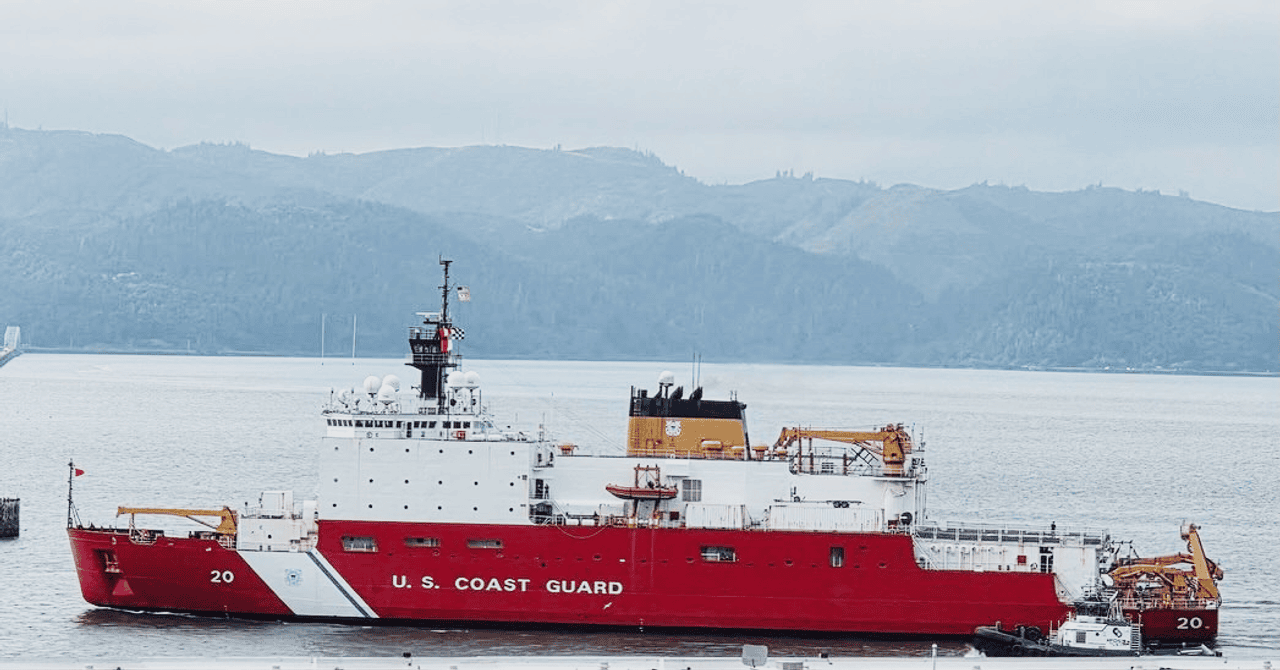
However, the vessel is operating well beyond its intended service life, underscoring the urgency of the Coast Guard’s efforts to build a new generation of icebreakers under the Polar Security Cutter program. The new ships, larger and more capable than Polar Star, have faced delays but are expected to replace and expand U.S. polar capabilities.

 Join The Club