U.S. container imports are finally beginning to slow after an unusually long peak shipping season that stretched through the summer and into early fall, according to the latest Global Port Tracker report from the National Retail Federation (NRF) and Hackett Associates.
The slowdown comes after months of stronger-than-expected cargo volumes at major U.S. ports, as retailers continued bringing in merchandise despite tariffs, inflation and higher transportation costs.
Ports covered by Global Port Tracker handled 2.3 million twenty-foot equivalent units (TEUs) in August, up 0.4% from July but down 0.7% from a year earlier. August now appears to have been the busiest month of 2026, marking a shift from last month’s forecast that September would take the top spot.
“Even with any fluctuations in final data, we’re likely past the busiest part of the year,” said Jonathan Gold, NRF vice president for supply chain and customs policy.
“The truth is that the peak season started early and was stretched out through the summer and early fall, with the difference from month to month often amounting to little more than a rounding error,” Gold said.
The latest forecast puts September imports at 2.28 million TEUs, down from the 2.31 million TEUs projected a month ago. October is expected to ease further to 2.25 million TEUs before volumes fall to 2 million TEUs in November.
Despite the expected slowdown, imports are still running well ahead of last year in some months. September volumes are forecast to rise 8.2% year over year, followed by an 8.5% increase in October.
The revised outlook follows a peak season that has repeatedly defied expectations.
Retailers moved merchandise into the country earlier this year to get ahead of tariff changes and supply chain uncertainty, initially raising expectations that imports would peak early and decline through the summer.
Instead, volumes remained elevated, with shipping delays and resilient consumer demand helping extend the traditional peak season.
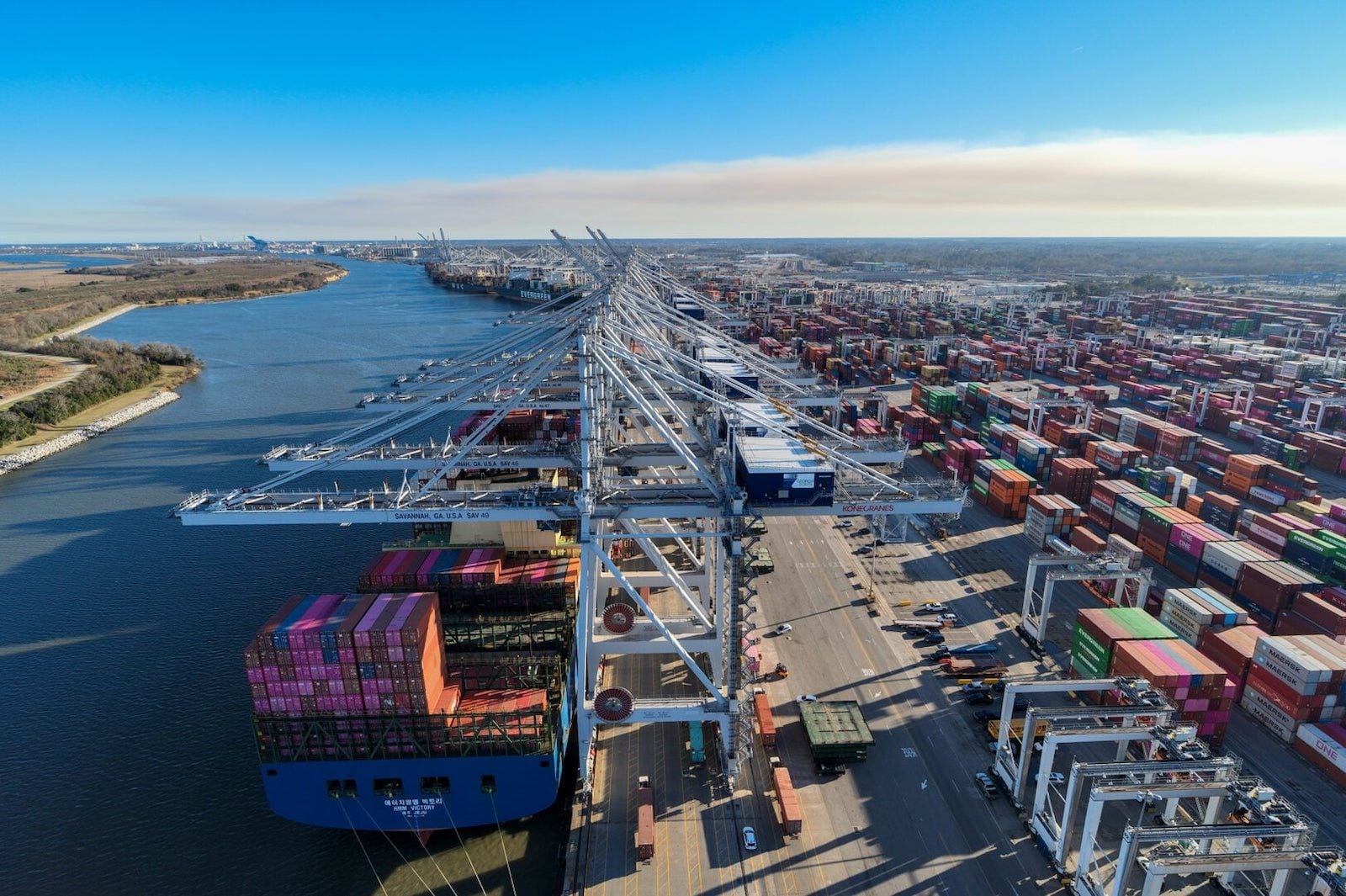
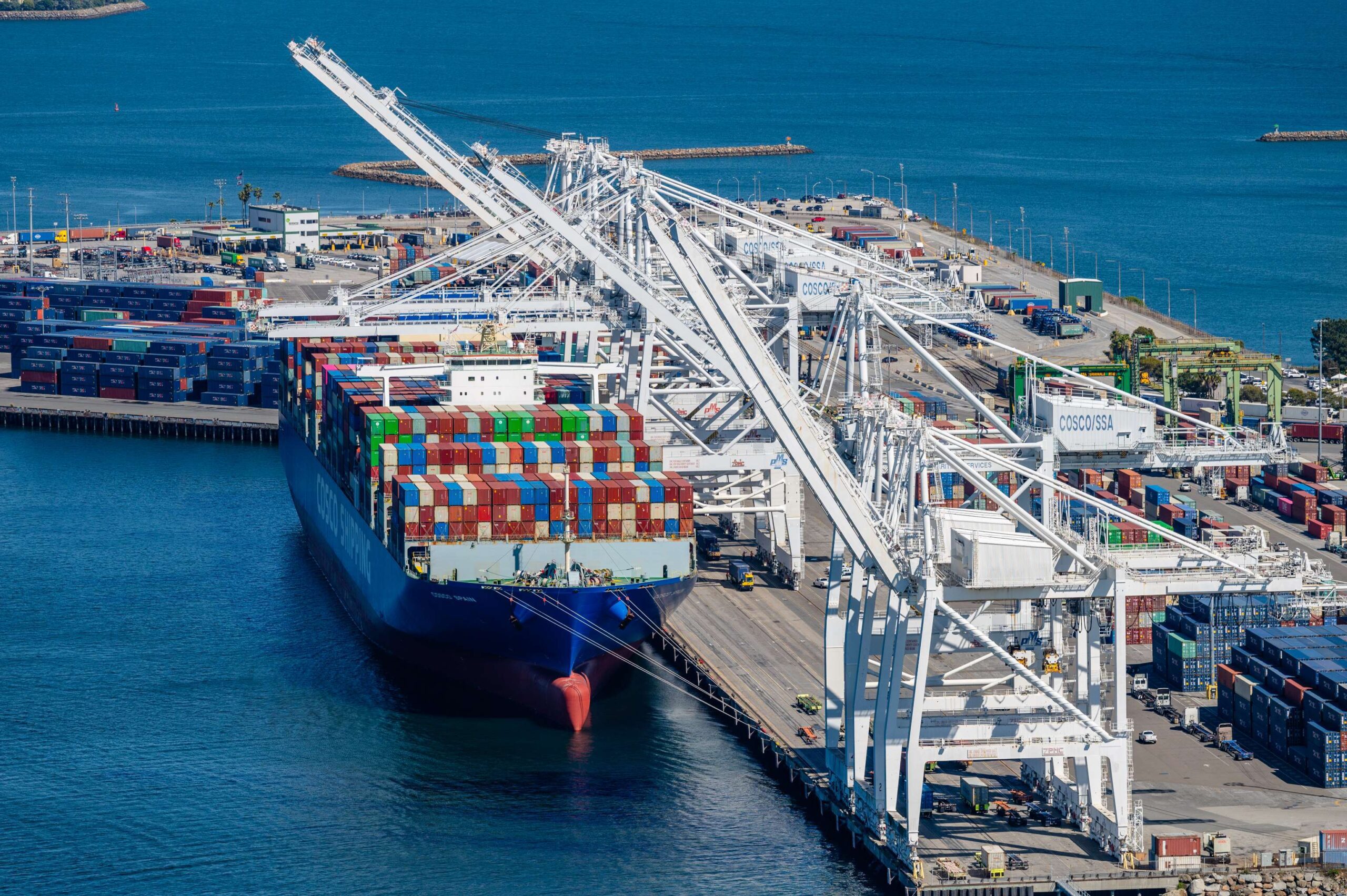
The strength has been evident at individual ports. The Port of Los Angeles recorded its busiest three-month stretch on record during June, July and August, while the Port of Savannah reported a record September earlier this week, handling 504,015 TEUs, up 3.7% from a year earlier.
Hackett Associates founder Ben Hackett said the economic outlook remains mixed, with consumers continuing to spend despite signs of weakening confidence.
“Despite this, consumers appear to remain confident and cautious at the same time, with consumer confidence indexes sliding to multi-year lows while consumer spending continues to be robust in the face of increasing inflation,” Hackett said.
For the full year, Global Port Tracker now expects imports at major U.S. container ports to reach 25.8 million TEUs, up 1.4% from 25.4 million TEUs in 2025. That is slightly above last month’s forecast of 25.7 million TEUs.
Looking ahead, January 2027 imports are forecast at 2.07 million TEUs, down 1.9% year over year, followed by 1.92 million TEUs in February, up 1%.
For retailers, the extended shipping season means much of the merchandise needed for the holidays is already in the country, reducing the need for another major import surge before year-end.
“Most holiday merchandise has arrived, and the remainder of the year is just a matter of last-minute replenishment and preparation for early 2027,” Gold said.

 Join The Club