The United States is moving to blockade maritime traffic tied to Iran, marking a sharp escalation in the Strait of Hormuz crisis and introducing a new layer of risk for global shipping.
Following the collapse of weekend negotiations in Islamabad, President Donald Trump announced that U.S. forces would begin blockading maritime traffic tied to Iran, including vessels entering or exiting Iranian ports, while warning that ships paying “tolls” to Iran could face interdiction on the high seas.
“No one who pays an illegal toll will have safe passage on the high seas,” Trump said on social media, adding that U.S. forces would also begin destroying mines in the waterway.
By Sunday, U.S. Central Command confirmed the plan, stating that U.S. forces will begin enforcing the blockade at 10:00 a.m. ET on Monday, April 13.
“The blockade will be enforced impartially against vessels of all nations entering or departing Iranian ports and coastal areas,” CENTCOM said, adding that the order applies across the Persian Gulf and Gulf of Oman.
Crucially, CENTCOM emphasized that U.S. forces “will not impede freedom of navigation” for vessels transiting the Strait of Hormuz to and from non-Iranian ports.
Late Sunday, Trump reiterated the timeline, signaling the shift to active enforcement.
On Monday, U.S. Central Command clarified that the blockade will applyi to “all vessel traffic regardless of flag,” according to a notice to mariners. The directive warns that “any vessel entering or departing the blockaded area without authorization is subject to interception, diversion, and capture,” while clarifying that neutral transit through the Strait of Hormuz to non-Iranian destinations will not be impeded.
The blockade spans “the entirety of the Iranian coastline…including ports and oil terminals,” though humanitarian cargoes such as food and medical supplies will be allowed subject to inspection.
The U.S. move stops short of a full closure of Hormuz—but for shipping markets, the distinction may be more technical than practical.
In effect, Washington is drawing a line around Iranian trade rather than the waterway itself. Ships can still transit the strait—but not if their voyage involves Iranian ports or cargoes tied to Iran.
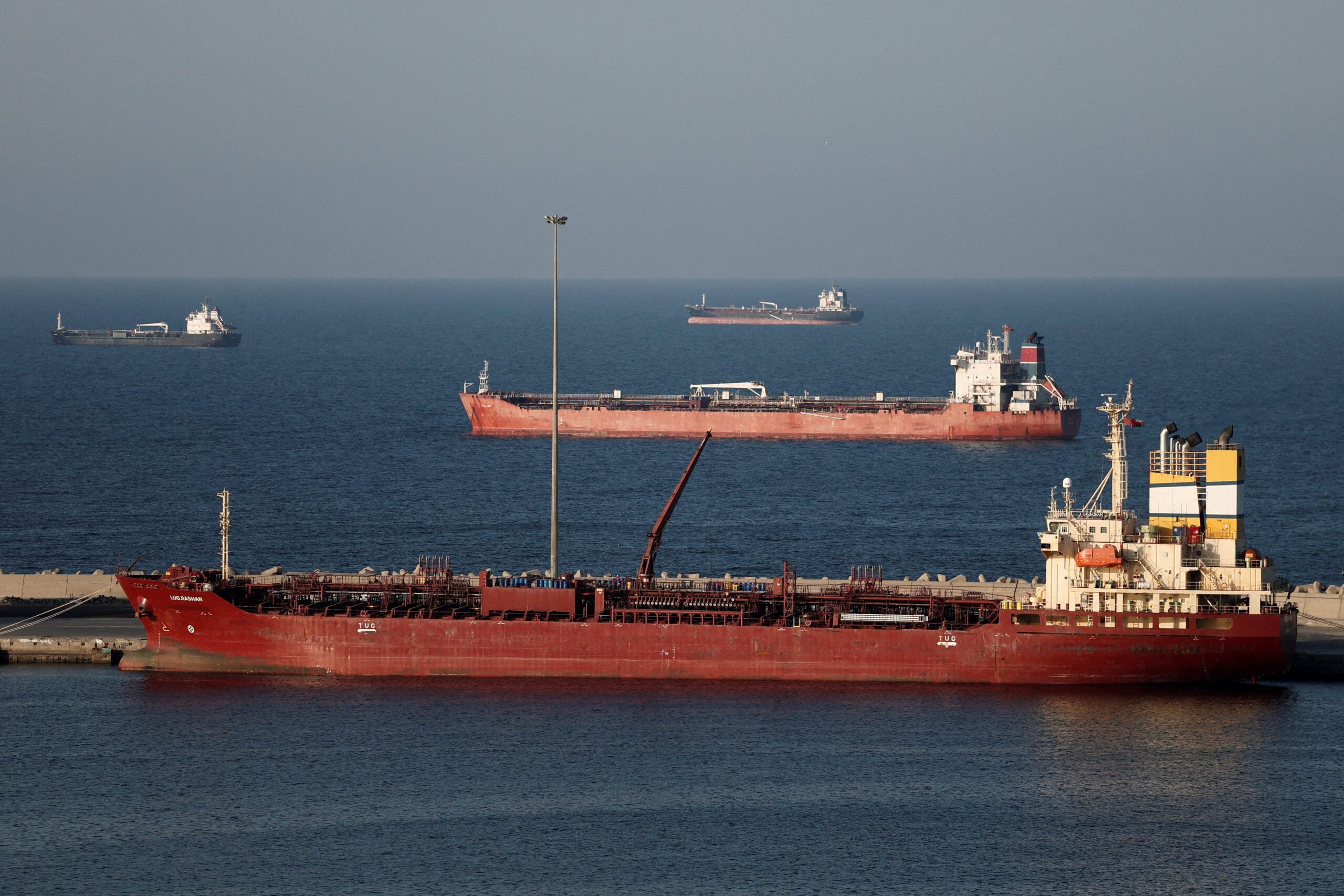
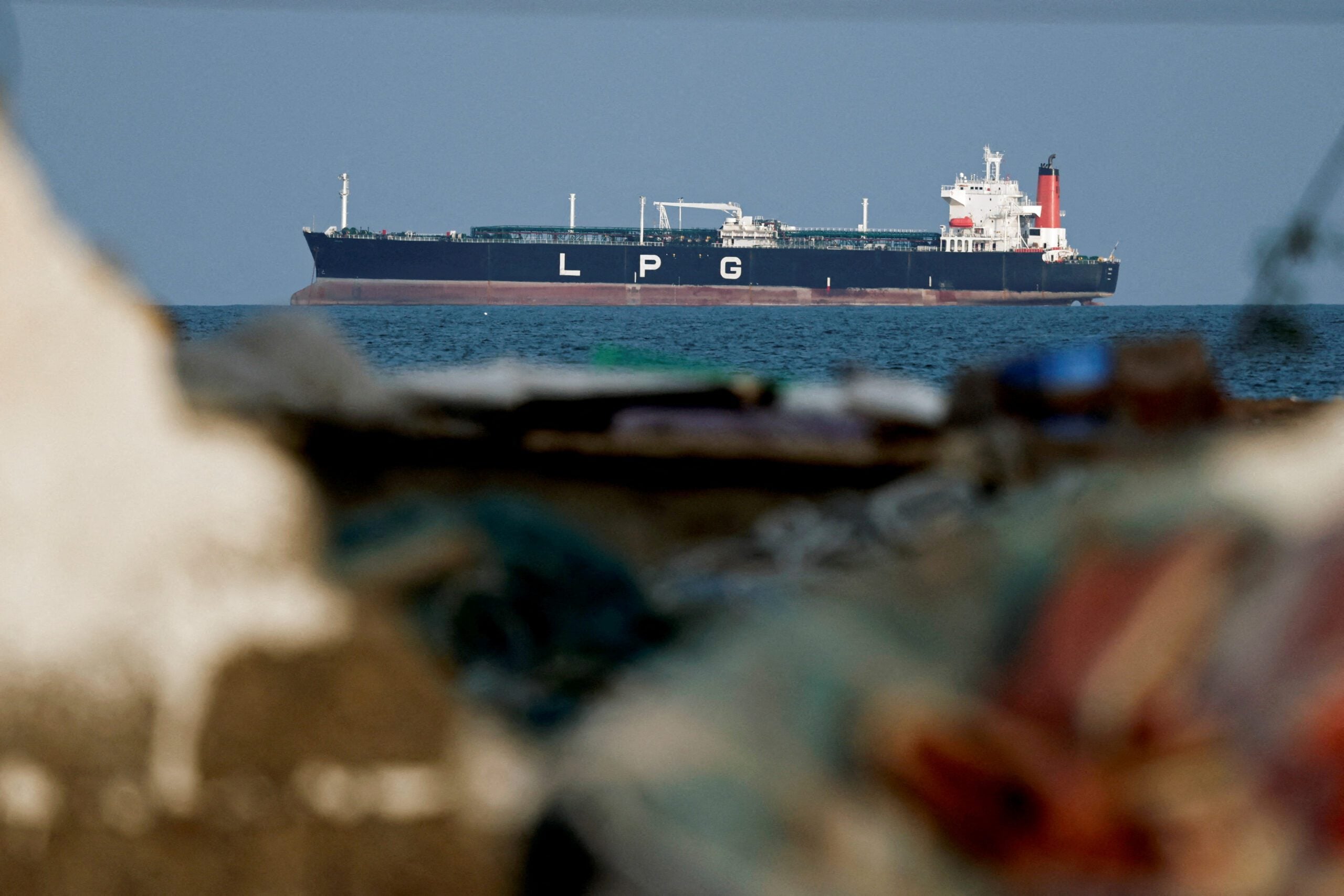
That nuance introduces a new layer of uncertainty. A vessel lifting crude from Iraq or the UAE may face no formal restriction. But a tanker calling at an Iranian terminal—or even perceived to be linked to Iranian trade—could now face the threat of U.S. interception.
The blockade lands on top of an already fragile operating environment shaped by Iranian actions inside the strait. Iran has continued to influence routing decisions, with vessels advised to use alternative corridors near Larak Island amid concerns over potential sea mines. At the same time, Tehran has warned that foreign military presence near the waterway could be treated as a ceasefire violation.
For shipowners, that creates heightened risk. On one side, Iranian control over routing and the lingering threat of mines continue to deter traffic. On the other, U.S. enforcement introduces the risk of interdiction tied to port calls, cargo origin, or compliance with Iranian directives.
The result is not clarity, but more uncertainty.
The blockade also marks a notable shift in U.S. policy. In March, the U.S. Department of the Treasury authorized the sale of sanctioned Iranian oil already in transit, unlocking an estimated 140 million barrels in an effort to stabilize global markets.
That move followed a separate waiver allowing Indian refiners to receive Russian crude cargoes already at sea—another targeted step aimed at keeping supply flowing despite disruptions tied to Hormuz.
Both measures reflected a consistent strategy to prevent a supply shock by keeping barrels moving. The new blockade seems to contradict that approach.
Rather than facilitating flows, Washington is now preparing to restrict them, raising the stakes for traders and complicating already strained supply chains.
Mine Clearance Signals Deeper Risk
At the same time, U.S. naval forces are moving to address the physical risks that continue to deter shipping, notably mines placed by Iran earlier in the conflict.
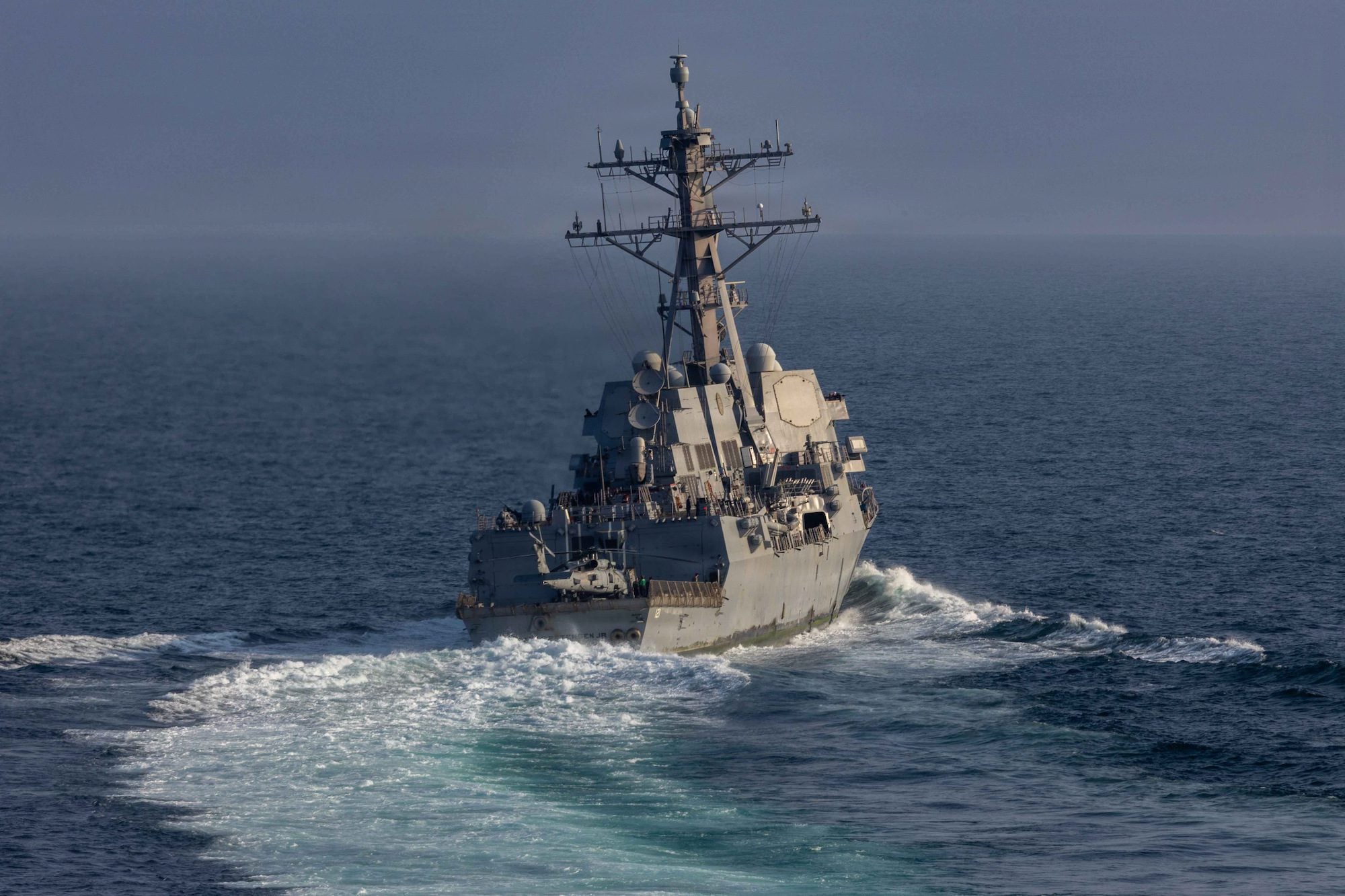
Guided-missile destroyers USS Frank E. Peterson (DDG 121) and USS Michael Murphy (DDG 112) have begun operations to set conditions for mine clearance in the strait, with additional unmanned systems expected to follow.
“Today, we began the process of establishing a new passage,” CENTCOM commander Adm. Brad Cooper said, adding that a safe pathway would be shared with the maritime industry.
The move seems to reinforce mounting claims that Iran has mined the world’s most critical energy chokepoint, but in many ways, confirmation is beside the point. The threat alone has been enough to paralyze shipping. And the need to carve out a “safe pathway” only highlights the deeper issue that even if a channel can be cleared, confidence in the route is still gone.
Despite the ceasefire, shipping activity through Hormuz remains sharply reduced. Only a handful of vessels have transited in recent days, and even as some tankers began exiting the Gulf over the weekend, many operators continue to hold back amid uncertainty over routing, enforcement, and risk.
Meanwhile, oil prices pushed back toward $100 per barrel following the breakdown in talks, reflecting growing concern over supply disruptions tied to the strait, which carries roughly 20% of global seaborne energy flows.
For the shipping industry, the question is no longer simply whether Hormuz is open. It is whether it can function as a predictable commercial corridor under the current conditions.
The U.S. blockade of Iranian ports does not close the Strait of Hormuz, but it changes how it works. What was once a single chokepoint shaped by disruption is becoming a controlled corridor defined by enforcement, alignment, and risk.
Ships can still pass, but not freely and not without consequence. Until that changes, the world’s most important energy artery will remain open in theory, but still severely disrupted and nowhere near normal.
Editorial Standards · Corrections · About gCaptain

 Join The Club