Don’t Miss Your Daily Briefing for the Maritime Industry
Join the leading maritime news network
— trusted by our 106,509 members
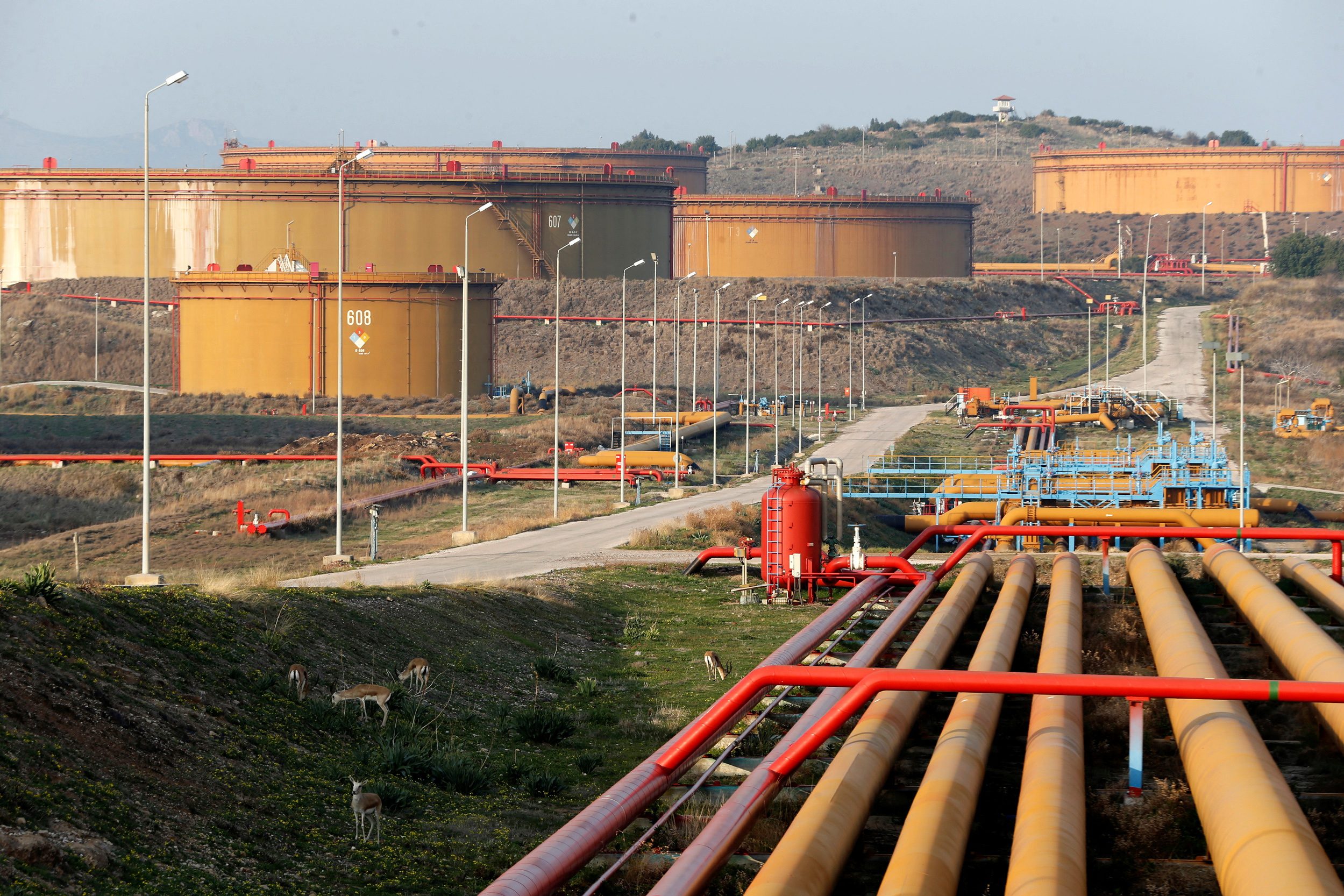
A general view of oil tanks at Turkey's Mediterranean port of Ceyhan, which is run by state-owned Petroleum Pipeline Corporation (BOTAS), some 70 km (43.5 miles) from Adana February 19, 2014. REUTERS/Umit Bektas
Turkey Said To Extend Iraq Oil Pipeline Deal By One Year
By Firat Kozok, Patrick Sykes and Khalid Al-Ansary
Aug 1, 2026 (Bloomberg) –Turkey reached an agreement with Iraq to extend an expired oil pipeline deal by one year and increase flows through it, ensuring supply through an exports route that bypasses the Strait of Hormuz.
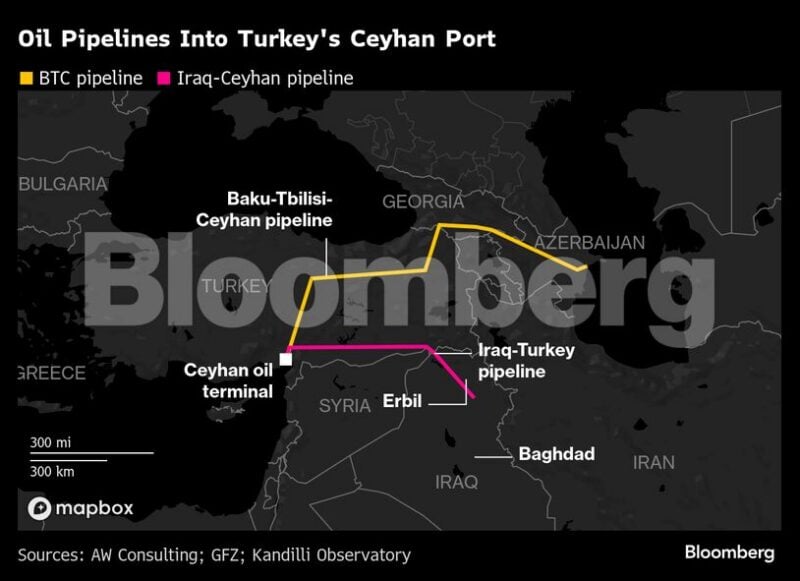
Iraqi exporters will continue to ship crude oil through the 986-kilometer (613-mile) pipeline from Kirkuk to Turkey’s Mediterranean port of Ceyhan.
The interim agreement allows for a “reserved” export capacity of as much as 750,000 barrels per day, Iraqi Oil Ministry Spokesman Salim Al-Rikabi told Bloomberg by phone. He added that such flows are contingent on security improvements, full production in Iraqi Kurdistan oil fields and the completion of infrastructure to transport larger volumes of crude oil from southern to northern Iraq.
The Turkish Energy Ministry declined to comment. Minister Alparslan Bayraktar confirmed the flow capacity in an X post on Saturday.
The extension secures supply for oil markets that have been rattled by the Iran war’s disruption of exports through the Strait of Hormuz.
It is expected to be backdated to July 27, the expiry date of the previous deal, which had been in place for 53 years. Flows continued uninterrupted this week as negotiations proceeded.
The interim agreement comes after Ankara invested in upstream production in Kirkuk. State oil company Turkiye Petrolleri AO announced, as negotiations between Turkey and Iraq were ongoing, that it would take a 15% stake in BP Energy Company of Kirkuk Limited, a consortium redeveloping oil and gas fields in the region. Financial terms for the deal weren’t disclosed.
Al-Rikabi said that a new pipeline extending from Basra, Iraq’s southern oil hub, to Kirkuk and connecting to the Ceyhan pipeline is underway and will increase Iraq’s export capacity through the pipeline.
The pipeline’s technical capacity is 1.5 million barrels per day, though it’s long been underutilized. Exports were running at about 180,000 barrels per day in June, the director general of Iraq’s State Oil Marketing Organization said at the time.
Flows along the Kirkuk-Ceyhan pipeline were previously disrupted by a long-running legal dispute between the two countries.
In 2023, the International Court of Arbitration ordered Turkey to pay Iraq $1.5 billion for shipping Iraqi Kurdish oil without the approval of the central government in Baghdad. Turkey rejected the ruling and sought to negotiate a broader deal with Baghdad.
Oil resumed flowing last September after a two-and-a-half-year pause, before a brief interruption in March due to the war.
ANKARA, Oct 18 (Reuters) – Turkey will take some of the diesel Russia is supplying to global markets under its agreement with US President Donald Trump, Energy Minister Alparslan Bayraktar said on...
Accelerating crude exports through the Strait of Hormuz aren’t translating into higher production of a dirty shipping fuel, according to a top Vitol Group executive, tightening supplies and sending prices soaring.
Saudi Arabia is looking at ways to expand its oil pipeline capacity to destinations outside the Persian Gulf to 10 million barrels a day within two to three years, said Energy Minister Prince Abdulaziz bin Salman.
October 12, 2026
Total Views: 2027
Get The Industry’s Go-To News
Subscribe to gCaptain Daily and stay informed with the latest global maritime and offshore news
— just like 106,509 professionals
Secure Your Spot
on the gCaptain Crew
Stay informed with the latest maritime and offshore news, delivered daily straight to your inbox
— trusted by our 106,509 members
Your Gateway to the Maritime World!
Essential news coupled with the finest maritime content sourced from across the globe.

 Join The Club