Don’t Miss Your Daily Briefing for the Maritime Industry
Join the leading maritime news network
— trusted by our 106,492 members
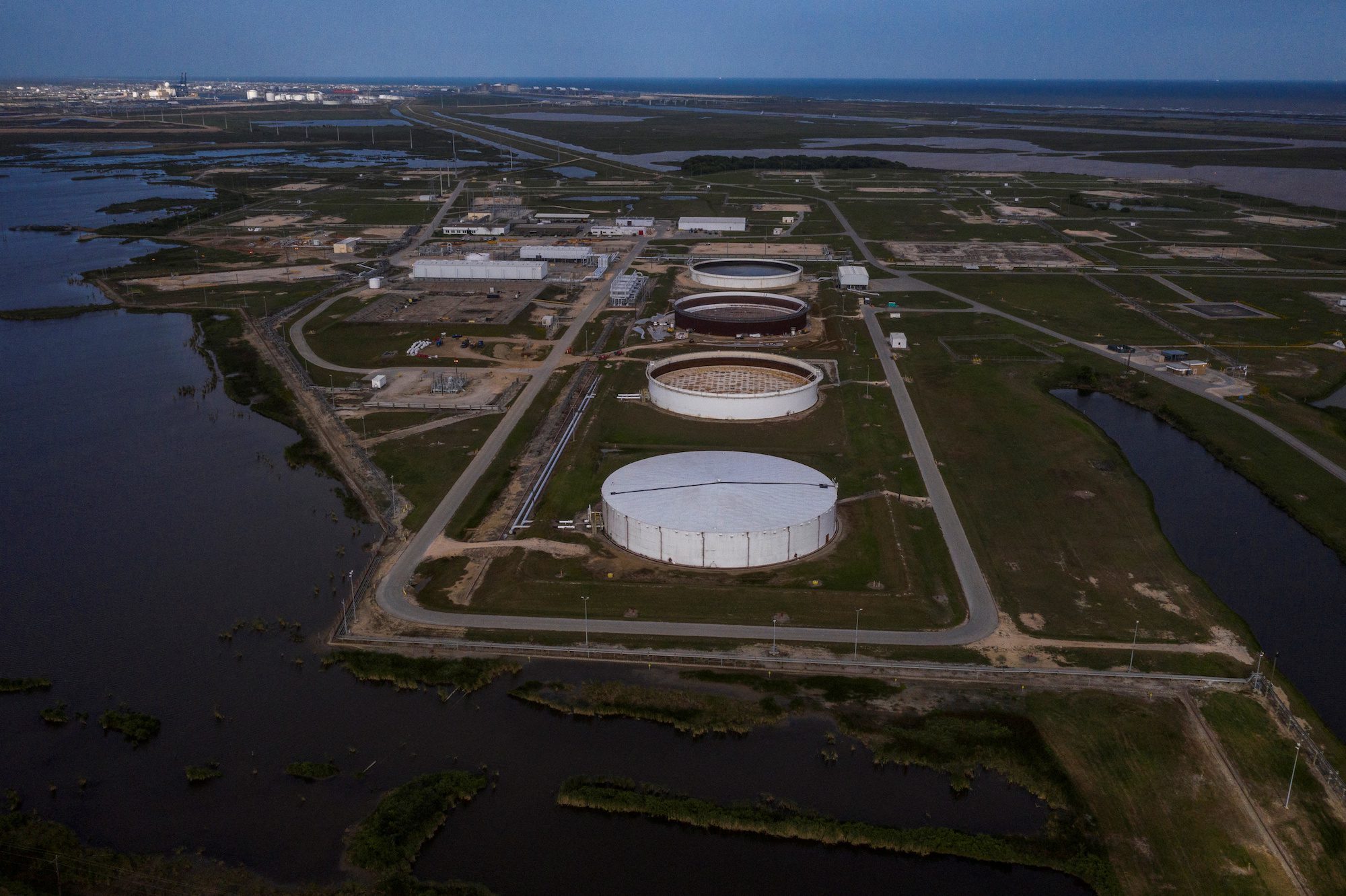
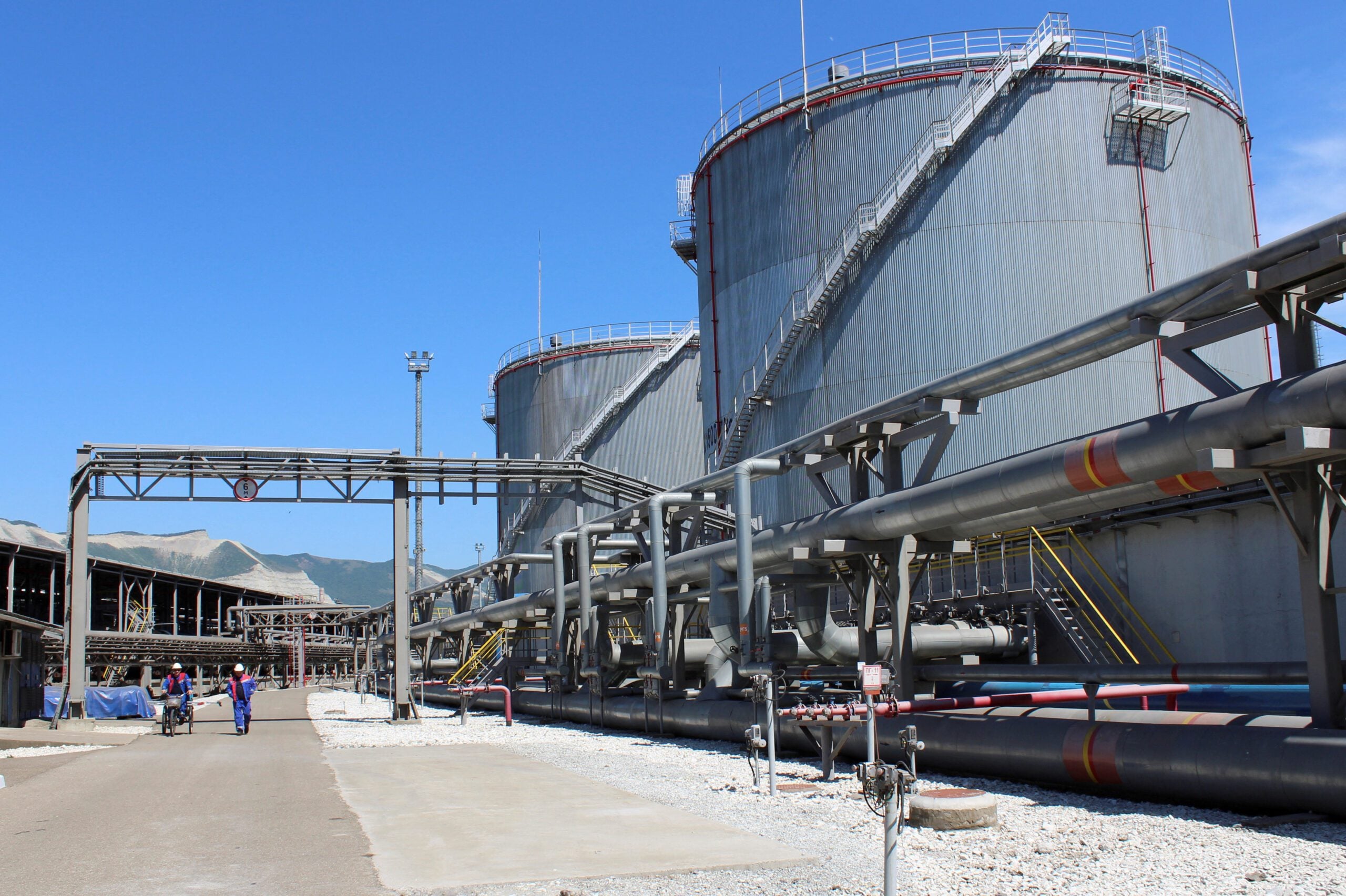
The Bryan Mound Strategic Petroleum Reserve, an oil storage facility, is seen in this aerial photograph over Freeport, Texas, U.S., April 27, 2020. REUTERS/Adrees Latif/File Photo
‘Significant Shrinking’ in Crude Cushion In Coming Months – Vortexa
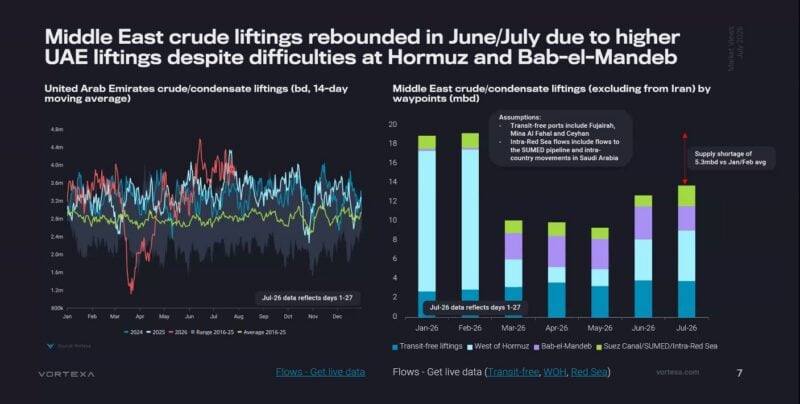
By Lori Ann LaRocco – New energy data shows the crude cushion that has been built up will be shrinking in the next 2-3 months unless geopolitics improve.
In a webinar, Vortexa explained, with Atlantic Basin inflows already slowing and China drawing inventories at up to ~1 mb/d, they see a high risk of significant tightening within the next 2–3 months and estimate that China’s extra crude buffer built since 2025 could be largely worked down within about four months if current draw rates persist.
“Everything looks very well supplied, but there is simply no warranty that it will happen in exactly the same way down the line,” said David Welch, chief economist for Vortexa. “I do see increasing risk that the market could tighten significantly. That will not happen from today to tomorrow, but two or three months down the line, I think this is very well possible unless we see a significant turnaround in the geopolitical events.”
The new normal for oil trade in 2026 is adapting, but Vortexa experts say it’s coming at a cost.
“The key distinction is that the strait is not simply open or closed, explained Claire Jungman, director of maritime risk and intelligence at Vortexa. “It is operating selectively, and vessels that are crossing are increasingly doing so with limited visibility. We’re seeing reduced visibility through Hormuz, greater reliance on ship-to-ship transfers and pipelines, longer alternative routes, and more crude accumulating near the end buyer. But each workaround introduces additional cost, delay, and operational risk.”
Vortexa analysts said ship-to-ship transfers dominated the July oil trade, with 57% of Gulf crude exports involved in a ship-to-ship transfer, compared with just 12% a year earlier. STS is no longer just a concealment tool; it’s a logistics backbone.
“While absolute STS volumes reached an unprecedented level, the number of shuttle vessels may look relatively small, but their impact is significant. A single VLCC can carry roughly 2 million barrels, so even a handful of crossings can materially support regional exports. Recent reports also suggest that a major UAE producer has added five VLCCs and chartered around 25 crude carriers, with some being used for shuttle movements and others for direct deliveries,” said Jungman.
This activity remains very visible in the current Vortexa data. Just yesterday, analysts observed five dark crude ship-to-ship transfers taking place in the Pujara transfer zone.
“The UAE origin volumes are particularly important,” said Jungman. “ STS activity in the region has traditionally been associated with sanctioned Iranian trade or efforts to disguise cargo origin. Its growing use for the mainstream UAE barrels, as well as Kuwaiti and Iraqi, shows that it’s becoming a much broader logistical tool.”
Vortexa analysts said ferrying the cargo to another vessel for the longer voyage may reduce the final carrier’s exposure, but it adds cost, time, counterparties, and documentation risk.
“The continued exports should not be interpreted as a return to normality. The barrels are moving, but normal shipping practices are not,” said Jungman.
While Gulf exporters are adapting through dark transits and ship-to-ship transfers, Jungman said Saudi and other Red Sea origin barrels have another potential workaround of moving north rather than south.
Red Sea crude has responded to the Houthi announcement on July 20th that Saudi shipping would be targeted at Bab al-Mandab.
Saudi Arabia is in talks with foreign governments to give state-owned Aramco access to their strategic oil storage, as the kingdom seeks to make its supplies to customers more resilient during disruptions, Chief Executive Officer Amin Nasser said.
Accelerating crude exports through the Strait of Hormuz aren’t translating into higher production of a dirty shipping fuel, according to a top Vitol Group executive, tightening supplies and sending prices soaring.
Shipowners are facing an increasingly fragmented fuel market as disruptions triggered by the Middle East conflict raise concerns about the availability and quality of supply.
October 15, 2026
Total Views: 380
Get The Industry’s Go-To News
Subscribe to gCaptain Daily and stay informed with the latest global maritime and offshore news
— just like 106,492 professionals
Secure Your Spot
on the gCaptain Crew
Stay informed with the latest maritime and offshore news, delivered daily straight to your inbox
— trusted by our 106,492 members
Your Gateway to the Maritime World!
Essential news coupled with the finest maritime content sourced from across the globe.

 Join The Club