Photo: Evgeny Shulin / Shutterstock
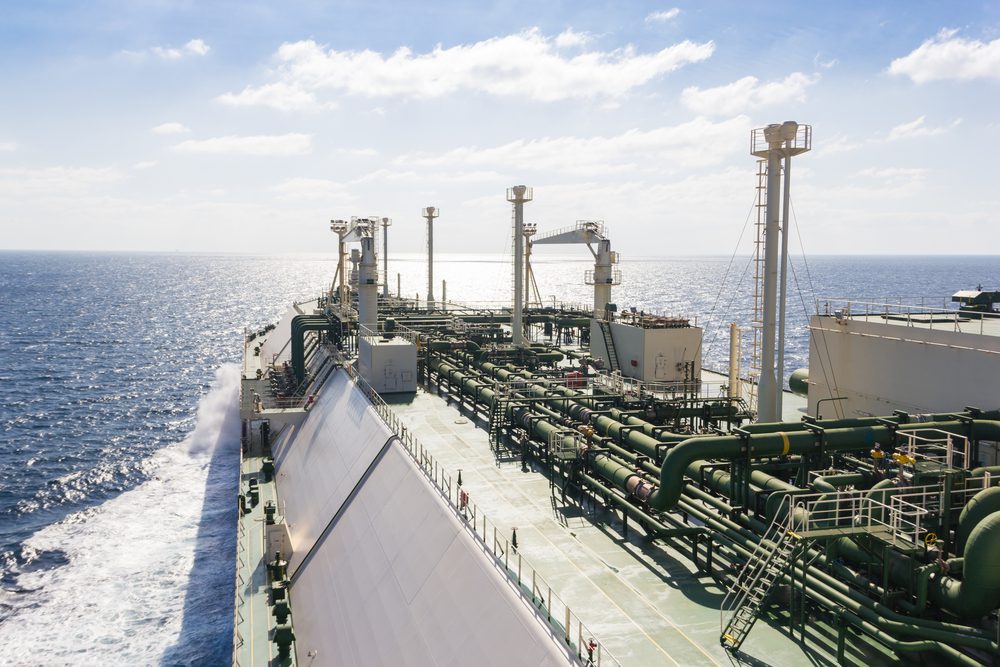
 Jan 9 (Reuters) – The number of U.S. liquefied natural gas vessels that went to China in 2018 fell by around 20 percent from the prior year as the trade war between Beijing and Washington heated up.
In recent weeks, however, that dispute has cooled somewhat with talks in China this week between Chinese and U.S. trade teams raising hopes additional tariffs can be avoided.
As the trade war escalated during the last six months of 2018, only six LNG vessels went from the United States to China, down from 25 during the same period in 2017. China imposed tariffs on U.S. LNG in September.
That happened even though Chinese LNG purchases last year reached all-time highs and the United States sold record amounts of the fuel.
China, the fastest growing consumer of the fuel, became the world’s second biggest LNG buyer in 2017 as the government weans the country off dirty coal to reduce pollution. The United States, meanwhile, is on track to become the world’s third biggest LNG exporter by capacity in 2019 as additional export terminals enter service.
In total, 24 U.S. vessels went to China in 2018 – mostly during the first half of the year – versus 30 in 2017.
Companies proposing new U.S. LNG export terminals expressed optimism a new U.S.-China trade agreement could help advance their projects.
The U.S. LNG export industry has been particularly vulnerable to the U.S.-China trade war, Mike Sommers, head of the American Petroleum Institute industry group, said on Tuesday, adding that he hopes negotiators will soon resolve the dispute.
China imported about $447 million of LNG from the United States in 2017, about 15 percent of the LNG the U.S. shipped that year, making it the third biggest buyer of the fuel from the United States.
Prior to the slowdown, China was on track to import 141.6 billion cubic feet (bcf) of U.S. LNG in 2018, up from 103.4 bcf in 2017 and 17.2 bcf in 2016. It imported no LNG from the United States in 2015.
One billion cubic feet of gas is enough to fuel about 5 million U.S. homes for a day.
China likely bought less than 90 bcf of U.S. LNG in 2018.
To be sure, some of the handful of vessels that left the United States in December are still sailing across the Pacific and could stop in China.
In addition to the trade war, LNG analysts noted the slowdown in U.S. vessels going to China last year was also due to milder winter weather and an increase in exports from Australia and other LNG exporting countries closer to China.
(Reporting by Scott DiSavino Editing by Phil Berlowitz )
(c) Copyright Thomson Reuters 2019.

 Join The Club