By Chris Servello (OpEd) After years of testing and debating how unmanned surface vessels fit into the fleet, the Navy is starting to show what these systems can do. And there’s a lot to like.
Recent operations in the Persian Gulf have demonstrated their value. The USS Theodore Roosevelt Carrier Strike Group has deployed with a medium unmanned surface vessel. Industry is delivering increasingly capable platforms. And senior leaders in the Department of War and Department of the Navy are talking less about the promise of unmanned warfare and more about making it part of everyday operations.
That’s progress, and the Navy, its sailors and industry partners deserve credit.
But now comes the harder part.
The Navy needs to decide how it intends to fight with unmanned vessels, what missions they’ll perform and how it will organize, train and sustain the forces operating them. It’s time to move from proving these systems work to making them a routine part of fleet operations.
Experimentation got us here. It remains important and should never stop. But experimentation alone isn’t a strategy, and continuing to treat it as one wastes time and money.
The Right Signals From Leadership
At this month’s Association of the United States Army conference, Secretary of War Pete Hegseth put autonomous warfare squarely on the department’s agenda. His Project Agincourt initiative and plans for an Autonomous Warfare Command are intended to accelerate how the military develops, buys and employs unmanned capabilities.
Hegseth also emphasized something often overlooked in discussions about new technology: the need to change organizations, training and acquisition practices, not just buy equipment.
The military has never lacked interesting technology. The challenge is turning it into something commanders can reliably use.
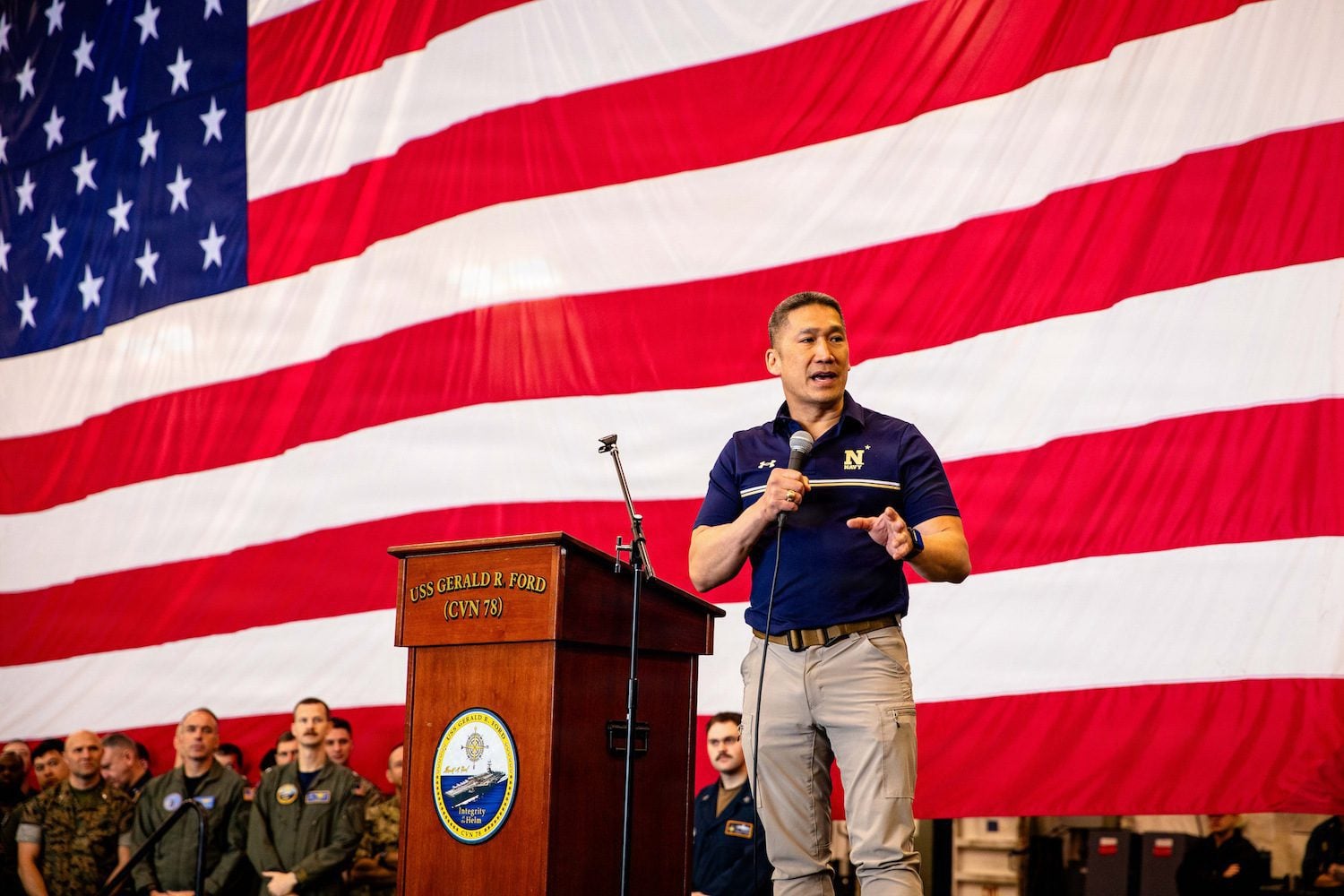
Acting Secretary of the Navy Hung Cao offered examples of where that transition is happening.
At AUSA, Cao highlighted an unmanned surface vessel that helped recover two downed Army Apache aviators near the Strait of Hormuz. He also pointed to unmanned underwater systems supporting mine clearance and announced that the Theodore Roosevelt Carrier Strike Group had deployed with a medium unmanned surface vessel.
These are meaningful developments. They show unmanned systems moving beyond demonstrations and into real missions.
Cao described the technology as a force multiplier. That’s the right way to think about it.
The goal isn’t simply more unmanned vessels in the water. It’s giving commanders more options, extending the fleet’s reach, reducing risk to sailors and freeing manned warships for missions that require them.
The Persian Gulf Is Teaching Us Something
Fifth Fleet deserves considerable credit for getting unmanned maritime operations to this point.
For years, Task Force 59 worked with industry and regional partners to introduce unmanned systems into one of the world’s toughest maritime environments. Not every experiment succeeded, but the Navy learned how to operate these systems alongside manned forces, integrate their sensors and improve maritime awareness.
That work is paying off.
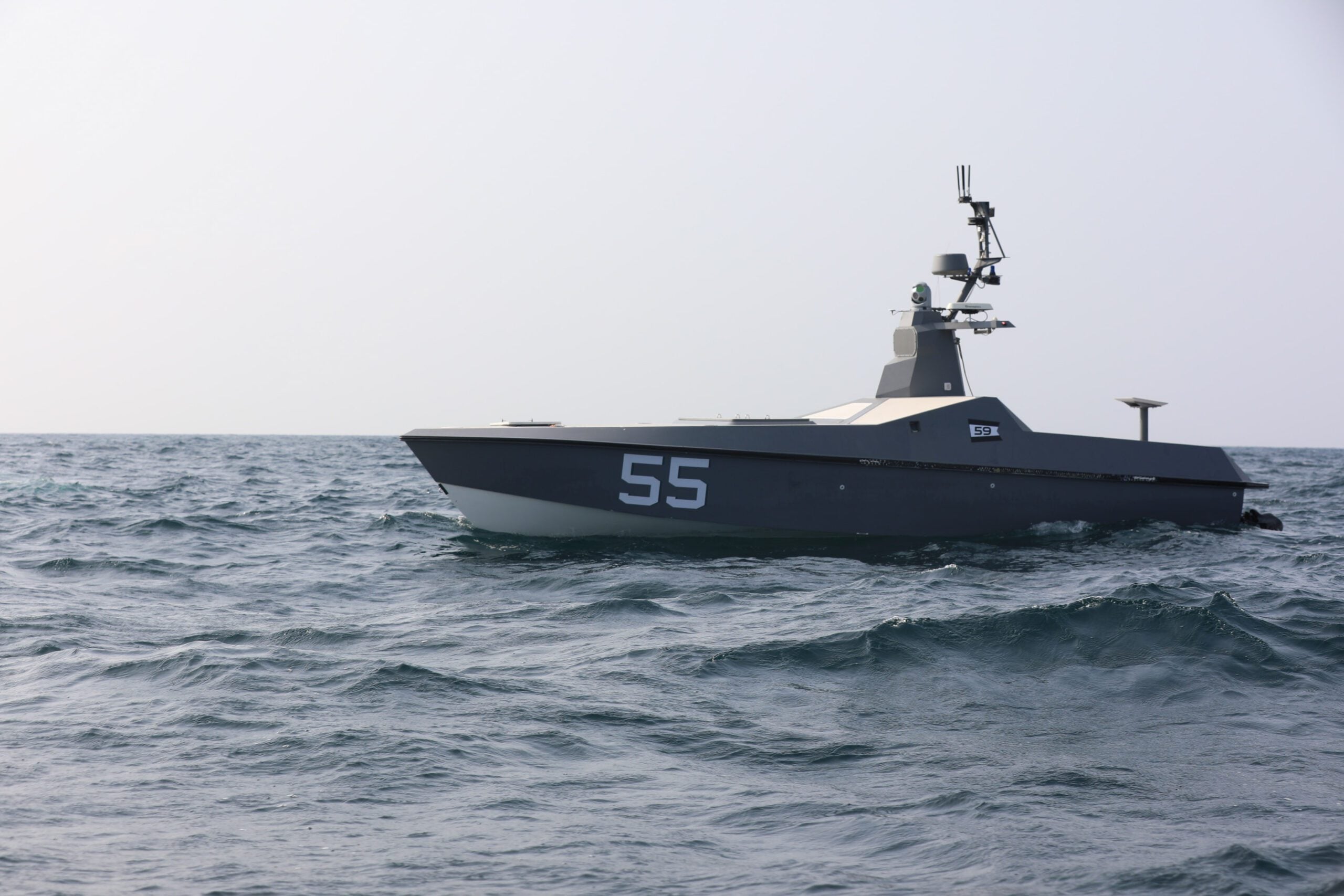
In June, when two Army aviators went down near Oman, a 24-foot Saronic Corsair unmanned surface vessel helped rescue them. The vessel recovered both soldiers and transported them to a location where they could be evacuated by helicopter. This wasn’t a demonstration. It was a real rescue, and two Americans came home because the Navy had the right capability in the right place.
BlackSea Technologies, now part of AEVEX, offers another example. Its Global Autonomous Reconnaissance Craft, or GARC, extends surveillance and reconnaissance without requiring a manned warship for every mission.
BlackSea also responded to an emerging operational requirement for unmanned mine countermeasure capabilities in the Persian Gulf. With mines threatening shipping through the Strait of Hormuz, the Navy needed ways to address the danger without unnecessarily exposing sailors and expensive ships. BlackSea’s response illustrates the relationship the Navy needs with industry: identify an urgent problem, communicate the requirement and give companies an opportunity to deliver quickly.
These examples matter for different reasons. Saronic showed what happens when an unmanned vessel is available for an unexpected emergency. BlackSea demonstrated how industry can respond to an emerging operational need.
The Strait of Hormuz is an ideal place to learn. It’s crowded, geographically constrained and strategically important. Commercial shipping mixes with military operations, and threats can emerge quickly.
It also reinforces a lesson worth remembering: unmanned vessels don’t have to be large, expensive or capable of doing everything. Sometimes a small platform performing one mission well is exactly what the fleet needs.
But these lessons shouldn’t stay in the Persian Gulf. Fifth Fleet’s experience should help shape how the Navy employs unmanned vessels everywhere.
Once a system demonstrates it can perform a useful mission, the next question should be how quickly we can get it to more commanders.
Not how many more demonstrations we can schedule.
The Theodore Roosevelt Deployment Matters
The deployment of the Leidos-built Seahawk medium unmanned surface vessel with the Theodore Roosevelt strike group is another important step.
Seahawk and its sister vessel, Sea Hunter, have spent years helping the Navy develop autonomous navigation, collision avoidance, communications and manned-unmanned operations.
Now Seahawk is operating with a deployed carrier strike group.
A carrier strike group isn’t a laboratory. It has missions, schedules and commanders who need equipment that works. An unmanned vessel must contribute without creating more problems than it solves.
How does the commander employ it? Who controls it? What happens when communications are degraded? Who maintains it? How does it integrate with aircraft and surface combatants? What missions can it perform that free a destroyer, helicopter or aircraft for something else?
Those questions matter. But they’re only the ones we know to ask today.
One of the greatest benefits of this deployment may be discovering uses nobody anticipated. Put a new capability in the hands of experienced sailors and commanders, and they’ll find ways to employ it that engineers and requirements officers never considered.
Maybe it’s an unexpected surveillance mission, a new way to extend the strike group’s reach or a task that would otherwise consume valuable flight hours or tie up a manned combatant.
Some of the best ideas may emerge simply because Seahawk is available when an unexpected problem arises.
The deployment will reveal problems, too. That’s fine. Better to find them during real operations than spend another five years trying to anticipate everything in a test environment.
The Navy needs to capture both the expected and unexpected lessons and apply them quickly.
Success shouldn’t simply mean Seahawk completes its deployment. It should mean the Navy comes away with a workable model for employing unmanned vessels across other formations, along with a better understanding of missions nobody originally envisioned.
That’s how an experiment becomes a capability. And sometimes, how a new way of fighting begins.
The Navy Needs a CONOPS It Can Man, Train and Equip To
Chief of Naval Operations Adm. Daryl Caudle has emphasized building a hybrid fleet that combines manned ships and unmanned systems. His fighting instructions identify scouting, screening and striking as important missions for medium unmanned surface vessels.
That’s a good start. But the Navy needs to turn those broad missions into concepts of operations that commanders can execute and the service can organize around.
Start with missions where the technology is reasonably mature: surveillance, scouting, screening, electronic warfare and selected logistics tasks. Continue developing more demanding missions, including strike and sea denial, as the technology and tactics improve.
And resist the temptation to build one vessel that does everything.
We’ve seen where that leads in traditional shipbuilding. Requirements grow, costs rise, schedules slip and the Navy waits years for a platform designed to solve every problem.
Unmanned vessels offer a chance to do things differently.
Establish common standards, define the missions and let industry compete to deliver solutions. Companies like Leidos, HII, Saronic and BlackSea bring different capabilities. That’s a strength, provided the Navy gives them clear requirements and a path to production.
But the bigger challenge may be inside the Navy.
Who owns these vessels? Who operates them? What training is required? How are crews certified? Who handles maintenance, spare parts and repairs? How does the Navy measure readiness?
These questions aren’t as exciting as artificial intelligence or autonomous navigation, but they’re the difference between an operational capability and a science project.
The Navy has started addressing some of this through dedicated unmanned organizations, personnel specialties and acquisition reforms. Now those efforts need to connect to actual force structure and deployment requirements.
The service should be able to tell Congress how many vessels it needs, what missions they’ll perform, where they’ll be based, how they’ll deploy and what it costs to keep them operational.
That’s what it means to man, train and equip a force.
Keep Experimenting. Just Don’t Confuse It With a Strategy.
None of this means slowing innovation.
Technology is moving too quickly for the Navy to stop experimenting. Ukraine’s operations in the Black Sea have shown how relatively inexpensive unmanned systems can threaten much larger naval forces. The Middle East is producing its own lessons.
Artificial intelligence, sensors, communications and autonomy will keep improving. The Navy must keep learning.
But experimentation should improve an operational force, not substitute for one.
We don’t stop deploying aircraft because better radars are being developed. We don’t keep destroyers in port while waiting for new missiles.
We field what works, learn from operating it and make improvements.
Unmanned vessels should be no different.
Some systems will fail. Others won’t fit particular missions. Commanders will discover problems nobody anticipated. That’s part of developing capability.
What’s harder to defend is spending another decade and billions of dollars experimenting without making the decisions needed to put these systems into routine service.
At some point, experimentation without an operational plan becomes wasteful. And with the demands facing today’s Navy, wasted time may be more costly than wasted money.
It’s Time to Make Some Decisions
Secretary Hegseth, Acting Secretary Cao and Admiral Caudle have an opportunity to build on real momentum.
The department is prioritizing autonomous warfare. The Navy is changing how it acquires unmanned systems. Fleet commanders are gaining experience, and industry is delivering capable platforms.
Now the Navy needs a focused implementation plan.
Within the next year, it should identify which missions are ready for routine operations, establish the organizations responsible for them and put the training, maintenance and sustainment systems in place to support deployment.
Acquisition decisions should follow those operational requirements, not another round of disconnected demonstrations.
Congress should support the effort while holding the Navy accountable for delivering usable capability.
This doesn’t mean betting everything on today’s technology or choosing one company to build every vessel. It means making reasonable decisions with what we know and improving as we learn.
The Navy has spent years working toward a hybrid fleet. Much of that work has been worthwhile, and recent developments suggest we’re closer than ever.
The Persian Gulf has provided valuable experience. Seahawk’s deployment with Theodore Roosevelt offers another opportunity to learn. Industry continues to innovate, and senior leaders appear determined to move faster.
That’s a good place to be. But the Navy can’t afford to stay there.
We’ve spent enough time asking whether unmanned surface vessels have a place in the fleet. They do. The question now is how quickly we can make them a dependable part of it.
The sooner the Navy makes those decisions, the sooner commanders will have the additional capability they need.
Strengthen the operational decision framework
Chris Servello is the co-founder of Provision Advisors PR and Government relations firm, as well as the co-host of the award winning maritime podcast CavasShips.

 Join The Club