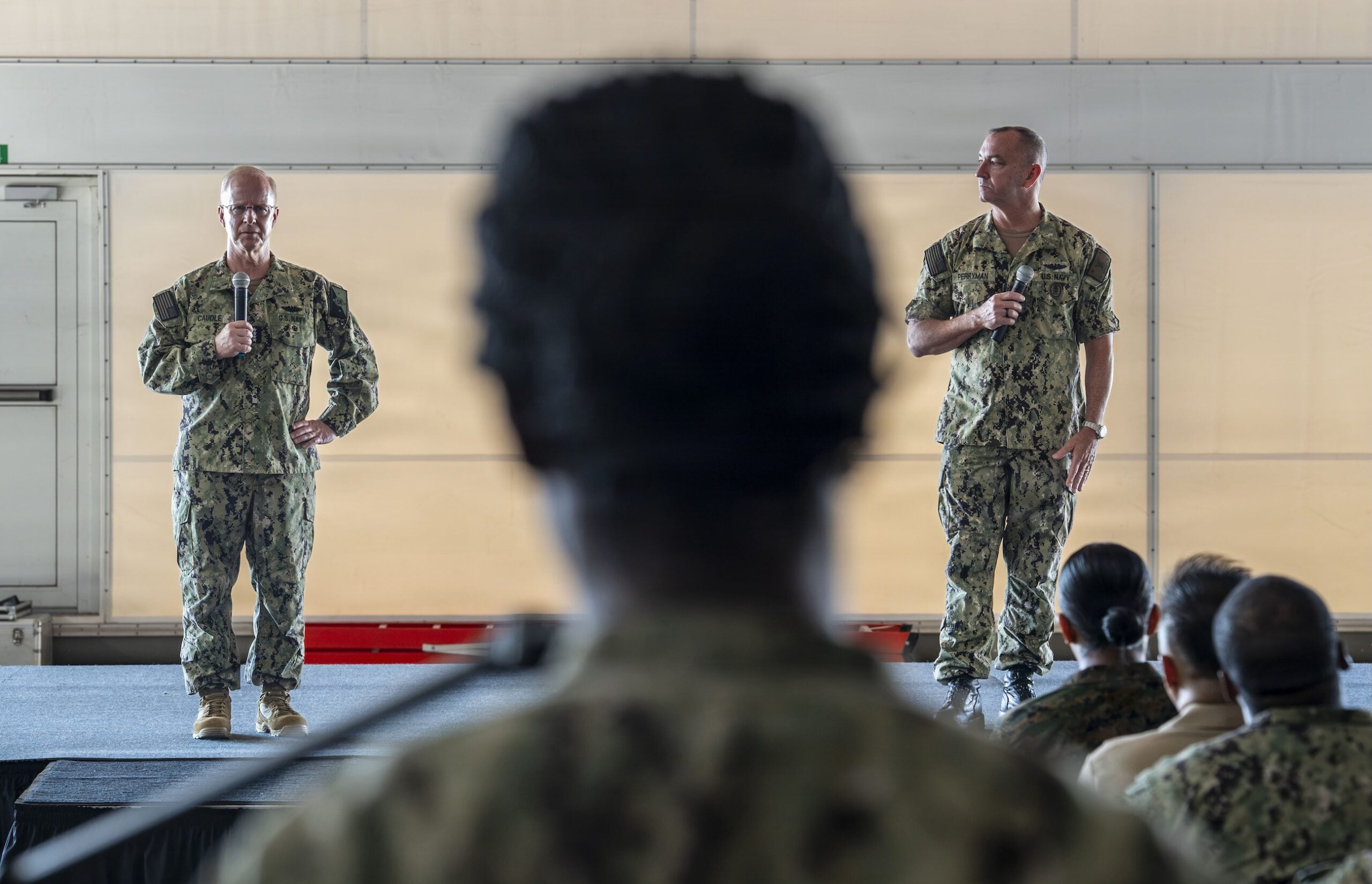
By Chris Servello (OpEd) Ten and eleven month Navy deployments may become the norm for the next couple of years. That’s the message Chief of Naval Operations Admiral Daryl Caudle and Master Chief Petty Officer of the Navy (MCPON) John Perryman delivered this past week. It’s not particularly good news, but it’s news that Sailors and their families deserve to hear.
Credit to both leaders for being upfront about it.
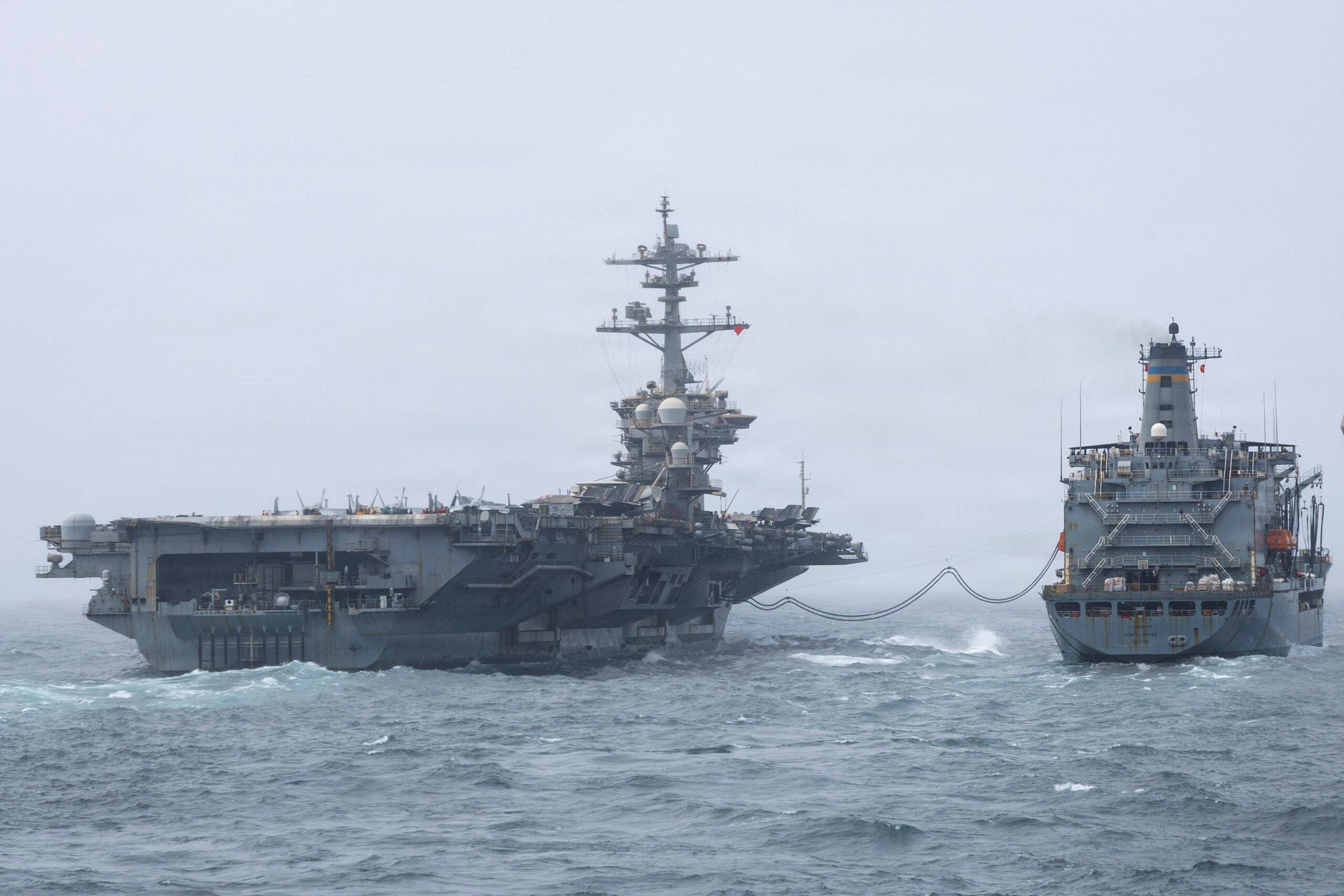
For years, the Navy has struggled to meet growing operational demands with too few ships. Deployments get extended, maintenance schedules slip and crews spend more time away from home than anyone originally planned. None of this is new, but hearing the Navy’s senior leadership acknowledge that longer deployments may be the standard rather than the exception is important.
As MCPON Perryman pointed out, uncertainty is often what makes these deployments especially hard. A family can prepare for ten months apart. It’s much harder to prepare for seven months that becomes eight, then nine, then ten, with each extension arriving just as homecoming seems within reach.
Admiral Caudle is also right that the lasting solution is a bigger Navy with more capacity and flexibility. We’ve needed that for years, and the urgency has only grown.
But building ships takes time. So does expanding shipyard capacity, working through maintenance backlogs and growing the number of qualified Sailors. Even if the Navy makes all the right decisions today, meaningful relief is years away.
That leaves an immediate question: What can the Navy do right now to make this new deployment reality more manageable?
Retired Admiral Bill Moran, who served as Chief of Naval Personnel and later Vice Chief of Naval Operations, used to emphasize three principles when discussing how the Navy should manage its people: Trust, Balance and Stability.
It’s a pretty good way to think about what needs to happen next.
Start With Trust
Trust begins with being straight with people, especially when the news isn’t good.
If a deployment is likely to last ten or eleven months, say so. Don’t build expectations around seven months when everyone knows there’s a good chance the ship will be extended. And when plans change, explain why as soon as operational security allows.
Families make real decisions based on deployment schedules. Childcare, jobs, finances, school calendars and family obligations all depend on knowing when someone will be home. Repeated extensions make an already difficult situation considerably worse.
Of course, the Navy can’t predict every crisis or operational requirement. Nobody expects it to. But there’s a difference between uncertainty that comes with military operations and uncertainty created by poor communication.
Trust also means listening. Navy families know where support systems work and where they don’t. Commanding officers and senior enlisted leaders should have the flexibility to address those problems without turning every reasonable request into a bureaucratic exercise.
Find Some Balance
Nobody joins the Navy expecting an easy life. Long deployments, missed birthdays, holidays and anniversaries come with the profession. Sailors understand that, and their families generally do too.
But accepting sacrifice doesn’t mean the Navy gets a pass on making life harder than it needs to be.
If ten and eleven month deployments become routine, the Navy should be looking at everything within its authority to offset the additional burden.
At sea, that means protecting port visits when possible, improving communications home, ensuring crews get decent food and mail, and finding opportunities for rest. These things may seem small compared with the operational mission, but anyone who’s spent time deployed knows how much they matter.
At home, it means making existing family support programs work better. Childcare, emergency assistance and spouse employment support shouldn’t require families to navigate a maze of offices and paperwork. The Navy has programs and resources available. The question is whether they’re easy to access and responsive when people need them.
And when ships return, commanders should have the flexibility to ease off requirements that can wait. Not every inspection, training event or administrative task needs to happen immediately after a crew has spent nearly a year at sea.
Readiness matters. So does recognizing when people need a break.
Give Navy Families Some Stability
This may be the toughest part.
Operational schedules change. Ships break. Crises happen. Combatant commanders need forces. No one is suggesting the Navy can eliminate those realities.
But families need some ability to plan their lives. When deployment schedules, transfers and post-deployment requirements are constantly shifting, even routine decisions become difficult.
The Navy should be looking for more flexibility in permanent change of station timing, better coordination between operational and personnel commands, and greater protection for post-deployment recovery periods.
That last point deserves particular attention.
A Sailor coming home after eleven months at sea doesn’t simply pick up where things left off. Children have grown and changed. Spouses have spent nearly a year handling everything themselves. Families need time to get back into a routine.
Giving them that time isn’t a favor. It’s part of keeping Sailors and families healthy enough to continue serving.
Toughness and Compassion Can Coexist
There’s sometimes a tendency in the military to treat discussions about quality of life as if they’re somehow at odds with warfighting toughness.
They aren’t.
The Navy needs tough Sailors. It needs people who can endure hardship, operate under pressure and accomplish difficult missions. That’s never going to change.
But it also needs leaders who recognize the toll those missions take.
A commanding officer who makes communications home a priority isn’t weakening a crew. A senior enlisted leader who helps resolve a family problem isn’t lowering standards. And a fleet commander who protects recovery time after a long deployment isn’t compromising readiness.
That’s simply good leadership.
There’s also a very practical reason to get this right. The Navy cannot afford to lose experienced Sailors because their families decide that another deployment, another extension or another disrupted year is simply too much.
Replacing those Sailors takes time and money. More importantly, the experience they take with them cannot be quickly replaced.
Take Care of the Fleet We Have
The Navy needs more ships, more repair capacity and a stronger maritime industrial base. Admiral Caudle is right to keep pushing those priorities, and Congress and the administration need to help deliver them.
But the Sailors deploying today can’t wait for the fleet of the 2030s.
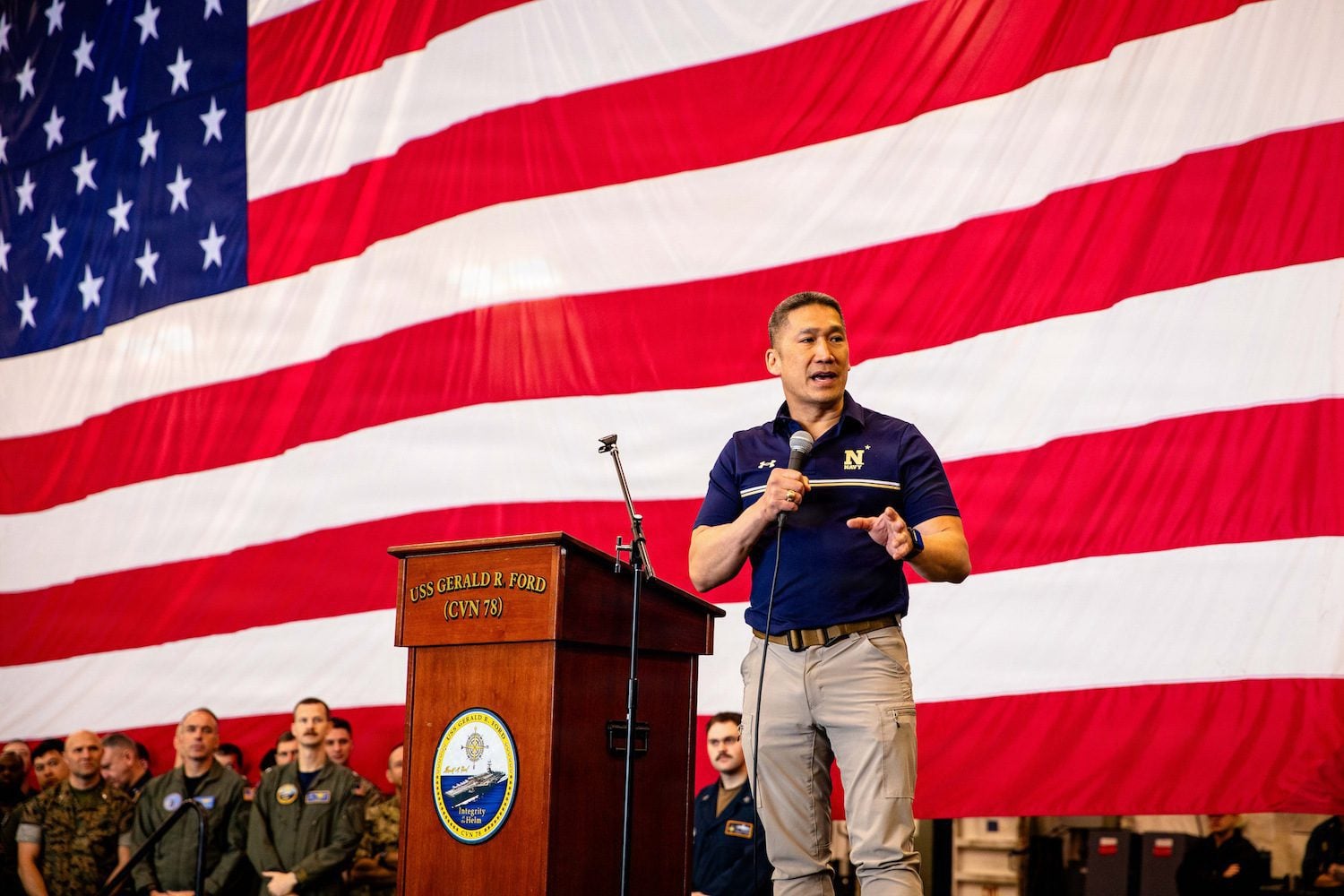
There are encouraging signs from Navy leadership. Acting Secretary of the Navy Hung Cao has demonstrated a willingness to engage directly with Sailors and put people at the center of his leadership approach. That example matters, particularly when the demands on the force are growing.
Combined with the candor shown by Admiral Caudle and MCPON John Perryman, there’s an opportunity to make real progress. The challenge is ensuring that attention at the top translates into meaningful changes throughout the Fleet.
Moran’s Trust, Balance and Stability framework provides a useful test. Are we being straight with Sailors and families? Are we doing what we can to ease the burden? Are we giving people enough predictability to manage their lives?
These aren’t complicated questions. But answering them honestly, and acting on the answers, takes leadership.
The Navy can’t control every operational demand, and it certainly can’t produce new ships overnight. But it has considerable control over how it manages the people it already has.
If longer deployments are going to be the norm, then the Navy needs to adjust how it supports the Sailors and families being asked to live with them.
We need tough warfighters and resilient families. We also need compassionate leaders who understand that taking care of people is part of maintaining a combat-ready Navy.
The Navy can’t build its way out of this problem overnight. But it can lead its way through it, starting now.
Chris Servello is co-founder of Provision Advisors and co-host of the CavasShips podcast. He writes frequently about naval readiness, maritime strategy and the defense industrial base.

 Join The Club