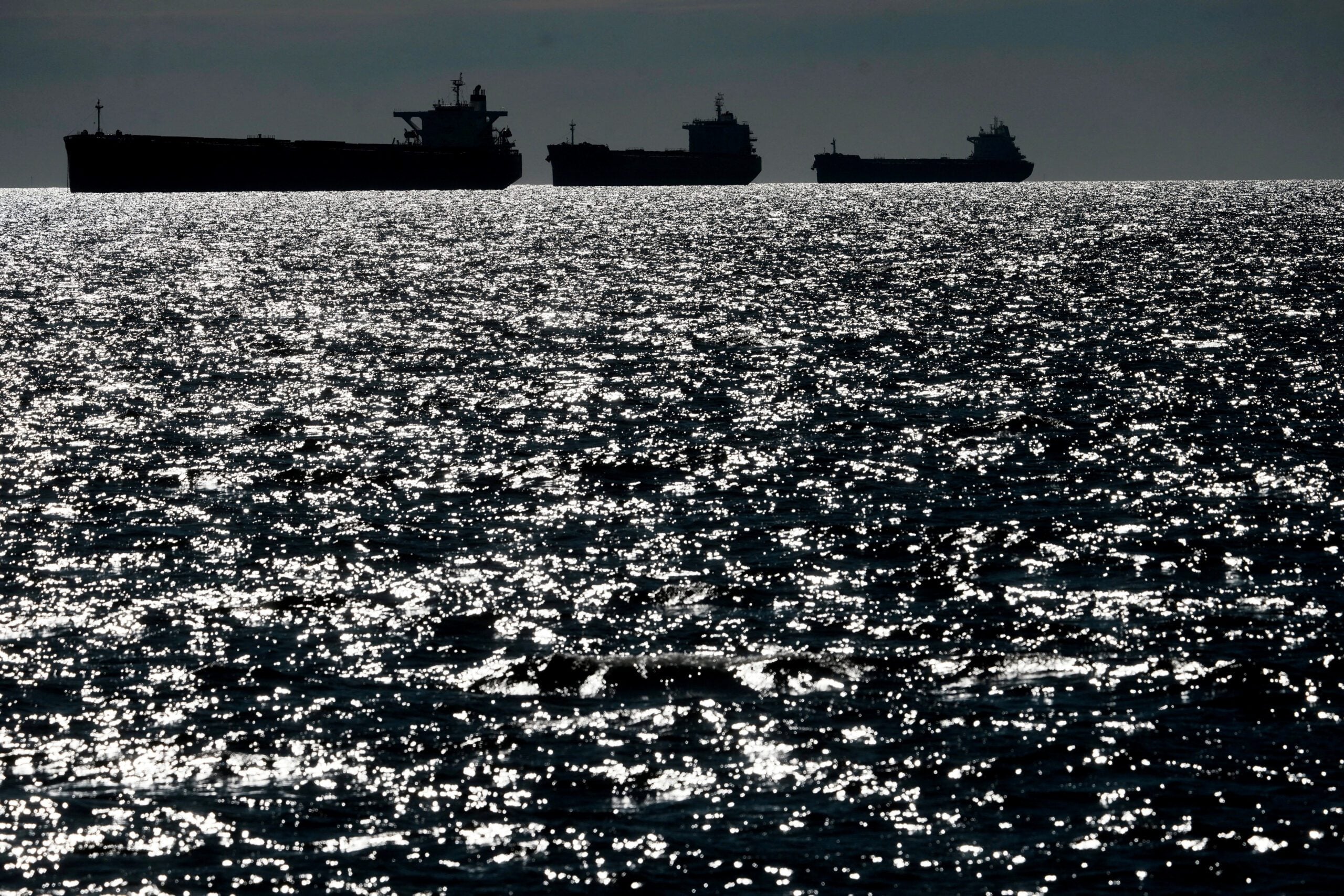
An Iranian supertanker at anchor. File photo. (c) REUTERS/Tim Chong
By Jonathan M. Epstein and Farid Hekmat, Holland and Knight
HIGHLIGHTS:
- On July 14, 2015, the United States, France, China, Russia, the United Kingdom, Germany and the European Union entered into the Joint Comprehensive Plan of Action (JCPOA) with Iran after years of difficult negotiations.
- On July 20, 2015, both the United Nations Security Council and the Council of the European Union took action to endorse the JCPOA.
- Assuming the accord is implemented as planned, the lifting of European Union and most U.S. secondary sanctions will, as a legal matter, largely normalize maritime-related transactions between non-U.S. companies and Iran.
- However, even after implementation, most of the prohibitions on U.S. companies doing business directly or indirectly with Iran and Iranian entities will remain in place.
On July 14, 2015, the U.S., France, China, Russia, United Kingdom, Germany and the European Union (EU) entered into the Joint Comprehensive Plan of Action (JCPOA) with Iran after years of difficult negotiations. Iran agreed to a number of restrictions and oversight on its nuclear activities in return for the rollback of certain United Nations (U.N.), EU and U.S. sanctions. Companies in a range of industries are eager to understand the implications of the JCPOA. While official briefings have done little to clarify the JCPOA, this alert provides a high-level analysis of the JCPOA’s potential impact for the maritime community.
Implementation of the JCPOA
The United Nations Security Council passed a resolution on July 20, 2015, affirming the JCPOA and prospectively authorizing the removal of most U.N. sanctions on Iran upon implementation. On the same day, the Council of the European Union also affirmed the JCPOA. However, actual implementation of sanctions changes are likely several months away, as a number of implementation steps must occur. In particular, the International Atomic Energy Agency (IAEA) must verify that Iran has met certain nuclear-related commitments. For the U.S. to implement the JCPOA, in addition to the 60-day U.S. congressional review period, the Obama administration will need to issue implementing orders/regulations. In the interim period, all U.S. sanctions will remain effective, including the limited sanctions suspensions under the current interim Joint Plan of Action (JPOA).
Limited Lifting of Sanctions for U.S. Maritime Companies and Their Foreign Subsidiaries
Even after implementation, most prohibitions on U.S. companies doing business directly or indirectly with Iran and Iranian entities will remain in place (e.g., those relating to terrorism, human rights violations and ballistic missile development), although, the import of Iranian carpets and foodstuffs including pistachios and caviar into the U.S. will be allowed (likely under a licensing regime).
In 2012, the U.S. expanded sanctions to include non-U.S. companies owned or controlled by U.S. persons (foreign subsidiaries), and these restrictions are not being expressly lifted. However, the JCPOA does provide for licensing foreign subsidiaries of U.S. companies to engage in activities with Iran “that are consistent” with the JCPOA. From early statements, the U.S. government itself may not yet have decided how to implement this provision of the JCPOA. A liberal approach would be for the Office of Foreign Assets Control (OFAC) to issue general licenses allowing foreign subsidiaries of U.S. companies to engage in transactions with Iran subject to certain limitations. This would be in some ways a reversion back to the pre-2012 rules. A more conservative approach would involve requiring U.S. companies to obtain specific licenses, though this could prove unwieldy. Clear guidance is important, as foreign subsidiaries of U.S. companies play significant roles in international maritime shipping and insurance. For example, clarification may:
- reduce the difficult coverage issues when there is participation by insurers ultimately owned by U.S. parent companies
- allow third-country flag vessels indirectly owned by U.S. investors to participate in pools that allow voyages to Iran or otherwise trade with Iran
- license energy companies and oil services firms owned by U.S. parent companies to re-enter the Iranian offshore drilling market
Impact for Non-U.S. Owned Maritime Companies
The U.S. has agreed to remove most of the “secondary” sanctions imposed on non-U.S. companies that are not owned or controlled by U.S. persons. These sanctions have had a profound effect on international maritime trade with Iran. Of particular importance to the maritime industry are the following:
- secondary sanctions relating to the carriage of oil, petrochemicals and most other cargoes to/from Iran will be lifted
- secondary sanctions for engaging in transactions with the energy, shipping, shipbuilding and port sectors of Iran will be lifted
- secondary sanctions on non-U.S. insurers for insuring certain voyages to Iran will be lifted, providing substantially more certainty to vessel owners and operators that coverages are in effect to voyages to Iran carrying most cargoes
- secondary sanctions on foreign financial institutions for facilitating transactions with Iran will be lifted
- most of the Iranian shipping, banking and energy companies designated as Specially Designated Nationals (SDNs) will be removed from the SDN list – including the National Iranian Oil Company (NIOC), the Islamic Republic of Iran Shipping Lines (IRISL) and the National Iranian Tanker Company (NIOC) – and it appears that most Iranian vessels listed in rem as SDNs also will be removed from the SDN list
- while Tidewater Middle East Company (Tidewater) will remain an SDN, the U.S. has clarified that secondary sanctions are not in effect for activities in the port of Bandar Abbas with port operators that are not controlled by Tidewater
European Union Sanctions Being Lifted
The EU is removing most of the sanctions that significantly impacted the international maritime community including those in the energy, financial, shipping and transport, and insurance sectors. In addition, the EU is delisting a large number of Iranian entities. For a more detailed analysis regarding the EU sanctions being lifted, see “Sanctions Relief Agreed Under Joint Comprehensive Plan of Action” issued by Ince & Co LP.
Restrictions and Practical Considerations
There are a number of practical issues and potential risks in potential transactions with Iranian entities.
It appears that U.S. dollar (USD) clearing transactions will remain prohibited. This means that USD payments for cargos and charters hires for voyages to Iran will remain prohibited, except where such activity falls under an OFAC general or special license.
The JCPOA has “snap back” provisions that would allow the U.S. or EU to re-impose sanctions quickly if Iran does not meet its commitments. (These provisions are in found in the expedited dispute resolution provisions of the JCPOA). There is a “contract sanctity” provision for contracts entered into with Iran in accordance with the JCPOA. However, it is unclear whether this applies only to the U.N. Security Council resolutions, or whether it also would be binding on a U.S. unilateral snap back of sanctions.
As a practical matter, major banks may be reluctant to allow transactions, even once the law allows such activity, because of risk management concerns.
Given the years of increasing sanctions, many ship mortgages, charter-parties and other agreements have strict sanctions clauses that in some cases may need to be modified.
This article was originally published by Holland and Knight, LLP

 Join The Club