As governments push to protect the world’s oceans, regions that have already adopted stringent environmental regulations could serve as templates for sustained change, Thordon Bearings observes.
After years of negotiation, the High Seas Treaty officially entered into force on 17 January 2026, marking a new era of protection for Earth’s oceans. As the first global, legally binding framework dedicated to safeguarding marine biodiversity in international waters, the treaty – also known as the Biodiversity Beyond National Jurisdiction (BBNJ) Agreement – has set new rules for environmental impact assessments and the creation of marine protected areas, in a committed effort to support sustainable development goals.
While this effort is to be applauded, many governments have already taken decisive action to protect biodiverse and sensitive marine areas at both national and regional levels. One notable example is the Great Lakes, which straddle the border between the US and Canada and hold approximately one-fifth of the planet’s total surface freshwater. These eco-sensitive lakes have been subject to stringent environmental regulations for decades, providing a blueprint that has helped to shape larger international initiatives like the High Seas Treaty.
Other regional rules also impose conditions on operations in the Great Lakes. In 2013, for instance, the US Environmental Protection Agency (EPA) introduced the Vessel General Permit (VGP) regulations, a comprehensive set of requirements for commercial ships trading in US waters. Designed to minimize environmental impacts and promote sustainability, the VGP rules cover a wide range of “discharges incidental to normal vessel operations”, from ballast water, bilge water and grey water run-off to hull coatings leaching into the water. Because the waters of the Great Lakes, spanning some 244,106 km2 (94,250 m2), come under the jurisdiction of both the US and Canada, vessels operating in the region must comply with VGP rules.
Among their key requirements, the VGP regulations impose strict controls on oil-to-sea interfaces, including stern tubes, bearings and seals, to prevent oil pollution during routine vessel operations. The rules state that vessels sized 79ft (24m) and larger navigating the Great Lakes must use environmentally acceptable lubricants (EALs): in other words, lubricants that are biodegradable, minimally toxic and, most importantly, non-bioaccumulative, meaning they do not accumulate in the tissues of aquatic organisms. This last point is crucial because even minor oil leaks from vessels’ bearings could lead to long-term contamination of the Great Lakes food chain.
An “annual Amoco Cadiz”
As a result, many ship and boat operators have come to investigate and adopt seawater-lubricated bearing systems, attracted by the opportunity to completely eliminate the risk of oil leakage. As well as being good for the planet, these systems can save money because they enable significantly longer maintenance intervals and reduce the number of inspections and documents needed to demonstrate compliance. The latter benefits have even encouraged vessel operators exempt from VGP to voluntarily switch to water-lubricated bearing systems.
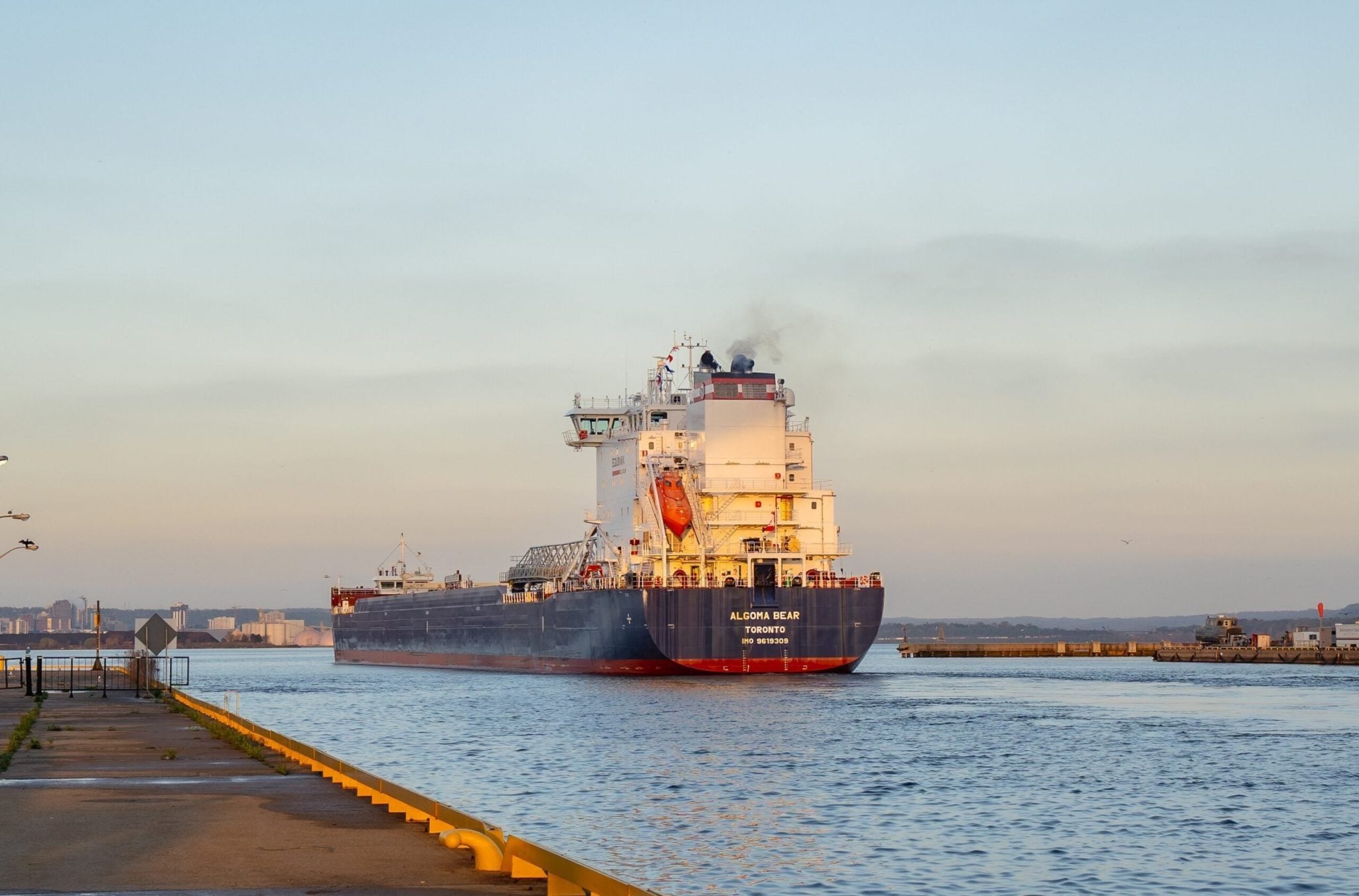
The Great Lakes hold special importance for Canadian company Thordon Bearings, whose headquarters is located in Burlington, on the shores of Lake Ontario. While Thordon has clients worldwide, the Great Lakes remain particularly significant to the company; its water-lubricated bearing systems are now installed on more than 120 vessels operating in these waters, predominantly bulk carriers (known as ‘Lakers’) carrying raw materials but also including larger US vessels and smaller Canadian self-unloaders. Early adopters of self-lubricating bearings include Algoma Central, American Steamship, Lower Lakes Towing, Canada Steamship and Interlake Steamship.
Craig Carter, Vice President of Business Development, Thordon Bearings, explains: “Our polymer bearing systems reduce operating costs, extend service life, perform well in abrasive conditions, and eliminate the risk of oil and grease discharges into our rivers, lakes and oceans. The economic and environmental benefits are compelling.” According to research presented at the IMO, conventional oil-lubricated propeller shafts release approximately 80 million litres (21 million US gallons) per year of oil pollution into the oceans and lakes.
In fact, that volume may well be much higher, because crew members tend to regularly top up the oil in the header tanks – the reservoirs that feed the metal bearing. “Oil-lubricated propeller shafts are often considered to be sealed systems, but they don’t always work at 100% leak free. If they were, then a ship’s oil header tank, containing 2,000-3,000 litres (528-792 US gallons) of oil, wouldn’t need topping up with oil every year,” Carter explains.
Carter also points to the maritime industry’s strange propensity to focus heavily on curbing air emissions such as CO2, NOx and Sox while largely ignoring the effects of ‘invisible’ leaks from oil-lubricated propeller shaft bearings and stern tubes beneath the waterline.
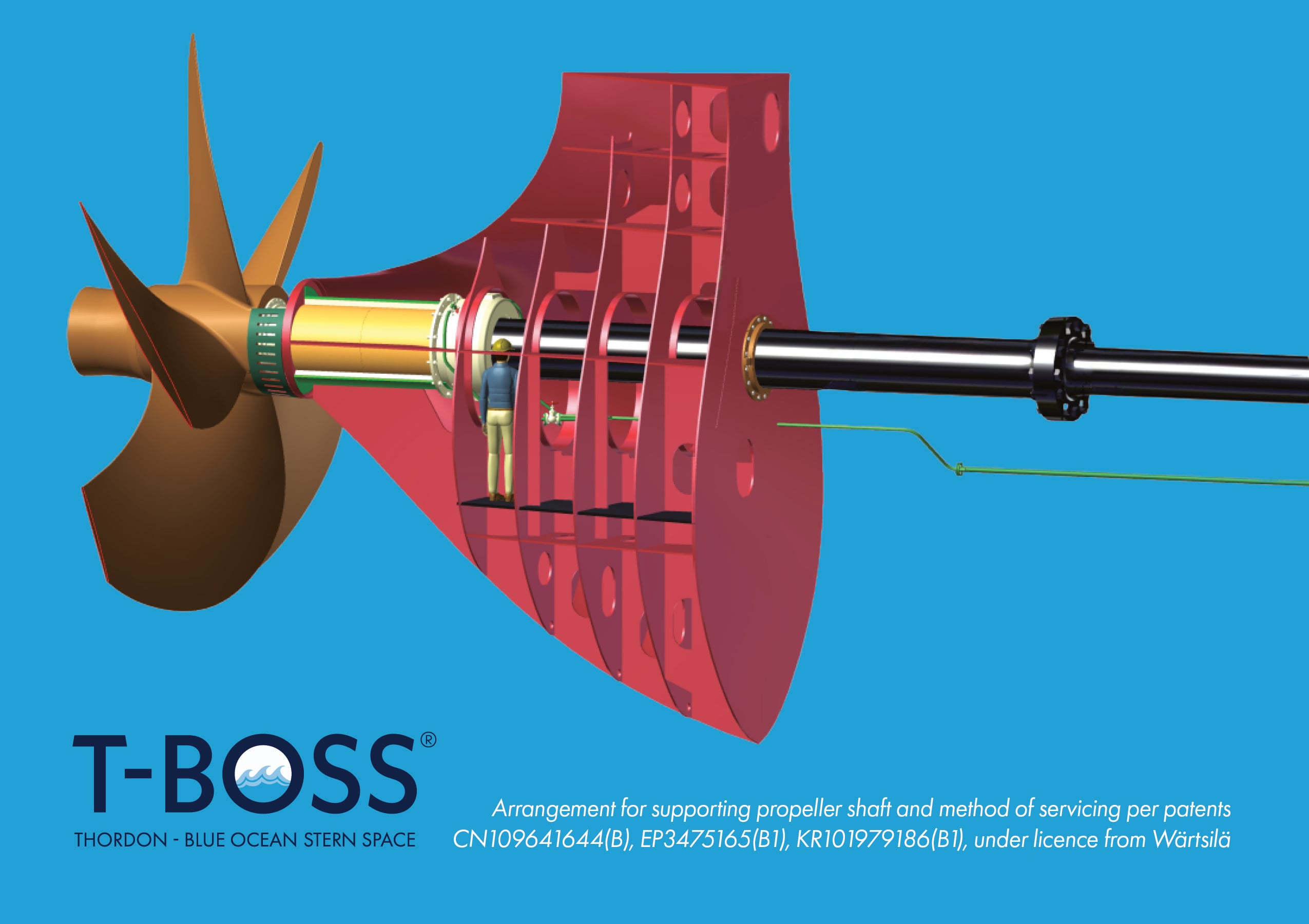
“To advance ocean sustainability and enable truly zero-emission ships, the industry must replace oil-lubricated shaft lines with seawater-lubricated systems,” Carter warns. “From well to wake, the environmental impact of oil-lubricated stern tubes requires serious attention.”
Tightening regulations
The environmental rules affecting the Great Lakes go far beyond the VGP regulations, including oversight from the US Coast Guard (USCG) and Canadian Coast Guard (CCG) and bodies like Environment Canada (now part of Environment and Climate Change Canada) and Transport Canada. The Fisheries Act is a powerful Canadian federal law that prohibits anyone from depositing a “deleterious substance” (such as oil, grease, or even treated water containing pollutants) into any water frequented by fish (or any place where it could reach such water). Even a small stern tube oil leak counts as depositing a deleterious substance and can lead to heavy fines, even prosecution.
It is, therefore, no wonder that many Great Lakes operators are also adopting water-lubricated bearings. For example, long-time Thordon customer Lower Lakes Towing replaced an existing oil-lubricated system on board its bulk carrier Kaministiqua with Thordon COMPAC water-lubricated propeller shaft bearings, a Water Quality Package (which supplies water from the sea chest to the propeller shaft bearings) and SXL grease-free rudder bearings.
Similarly, Algoma Central Corporation’s 225m (738 ft.) bulk carriers Captain Henry Jackman and Algoma Bear, which entered service on the Great Lakes-St. Lawrence Seaway in 2021 and 2024, respectively, have been equipped with Thordon’s COMPAC stern tube bearings, ThorShield shaft corrosion protection, and Water Quality Packages.
The environmental protections pioneered in the Great Lakes, particularly the transition to water-lubricated bearings, have shown that proactive regional regulation can drive real technological adoption and economic benefit without compromising safety or commerce. As the High Seas Treaty and future international frameworks seek to safeguard the world’s oceans, the Great Lakes example is a powerful reminder that sustained, enforceable local action can set the standard for meaningful, scalable global change.
An in-depth evaluation study based on reference data from a Suezmax crude oil tanker has demonstrated the benefits of using Thordon Bearings’ innovative T-BOSS® shaftline solution instead of a conventional oil...
Thordon Bearings, the market leader in environmentally safe, water-lubricated and grease-free bearing and seal solutions, has welcomed marine engineering and naval architecture firm SAI Engineering to its growing global network...
August 6, 2026
Total Views: 964
Get The Industry’s Go-To News
Subscribe to gCaptain Daily and stay informed with the latest global maritime and offshore news
— just like 106,969 professionals
Secure Your Spot
on the gCaptain Crew
Stay informed with the latest maritime and offshore news, delivered daily straight to your inbox
— trusted by our 106,969 members
Your Gateway to the Maritime World!
Essential news coupled with the finest maritime content sourced from across the globe.

 Join The Club