Don’t Miss Your Daily Briefing for the Maritime Industry
Join the leading maritime news network
— trusted by our 106,723 members
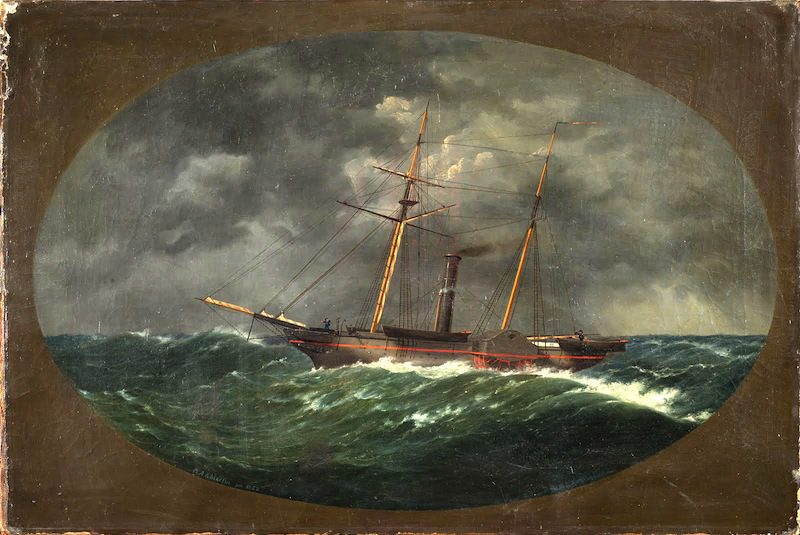
In 1852, W.A.K. Martin painted this picture of the Robert J. Walker. The painting, now at the Mariner's Museum in Newport News, Va., is scheduled for restoration. Image credit: The Mariners' Museum
The 19th-Century Maritime Superstitions That Were Believed To Protect Men At Sea
Karl Bell-(The Conversation)– Maritime folklore has long been shuffled to the margins of nautical history, presented as the quaint, colourful oddities of a former age. Yet this body of beliefs, practices and stories can offer important insights into how seafarers of the 19th century viewed and understood their working environment.
Beneath the dominant histories of European exploration, heroic naval battles and imperial claims to mastery of the seas, there was the daily reality of working, living and, not uncommonly, dying in a dangerous marine environment.
This folklore – which was exchanged between multinational crews of mariners and carried across the oceans – provides a way into appreciating their everyday fears, longings and hopes. It reveals a rich emotional and psychological engagement with the ocean, a history of sea fearing that does not sit easily with the stereotypical macho image of mariners.
Much of maritime folklore spoke to anxieties about the temperamental ocean and storms, which boiled down to a fear of disaster and drowning.
The Shipwreck by Joseph Mallord William Turner (1805). Tate
To protect themselves from such a fate, 18th- and 19th-century sailors went to sea armoured with magical charms. A popular one was a caul. It was believed owning a caul – the membrane that protects a baby in the womb – would protect a seafarer from drowning.
Such items were openly sold in newspaper advertisements in the 19th century. Three advertised in the Liverpool Mercury in 1873 were priced from 30 shillings to four guineas, no small amount for a common mariner to pay for an idle “superstition”.
Nineteenth-century sailors and fishermen also developed a rich system of omens and predictions. They were attentive to their behaviour and even words (“pig” and “rabbit” being among the worst) that might provoke the ocean or attract bad luck.
One such example was whistling aboard ships, which was believed to stir winds or gales. The idea that the temperamental winds could be provoked by the smallest actions of the tiny human beings who passed over the ocean’s surface spoke to both mariners’ vulnerability at sea, but also a sense of personal responsibility for the good or bad fortune of their voyage.
That concerns about death haunted seafarers is also seen in a superstitious reluctance to have coffins, dead bodies or clergymen (associated with funerals) aboard ship. As the author and critic William Jones wrote in Credulities Past and Present(1880), the sailor who was fearless in battle or in the face of physical danger, often “shrinks with indescribable apprehension … at the sight of a coffin”.
This was reinforced by maritime ghost stories. Numerous tales of ghost ships, most famously The Flying Dutchman, served as a reminder of the haunting prospect of death at sea.
In telling stories of those who had been lost, seafarers could also express concerns about their present circumstances and future travails. Aboard ships, such tales could also serve as reminders of health and safety concerns. Stories about ghostly crew members who had fallen from the rigging or been washed overboard served as cautionary tales.
The decline and return of maritime folklore
Nineteenth-century critics of mariners’ “superstitions” attempted to debunk their ideas. They pushed the idea that this body of folklore was fading out with the transition from sail to steam power.
No longer reliant on the winds, the steamship symbolised a more rational, mechanical world that had no time for the supernatural whimsy of the age of sail. Yet, indicating its ongoing importance as a way of addressing seafarers fears and concerns, such ideas did not simply disappear. Rather they adapted to the modern world.
While the price of cauls had dropped in the late 19th century, suggesting declining belief in their protective power, there was a sudden revival in their trade when submarine warfare became a feature of the first world war. Accounts of ghost ships were updated to include steam and later diesel vessels in the 20th century.
Maritime folklore history reminds us that our proclaimed “mastery of the waves” has always been built on rhetoric as much as reality.
In an age of mounting concern about our relationship with the oceans, in which we are having to radically reassess our control over and influence on the natural world, it is perhaps time for this history to resurface.
By Will Dunham June 25 (Reuters) – Our species arose in Africa roughly 300,000 years ago and later trekked worldwide, eventually reaching some of Earth’s most remote places. In doing so, our ancestors surmounted geographic barriers including...
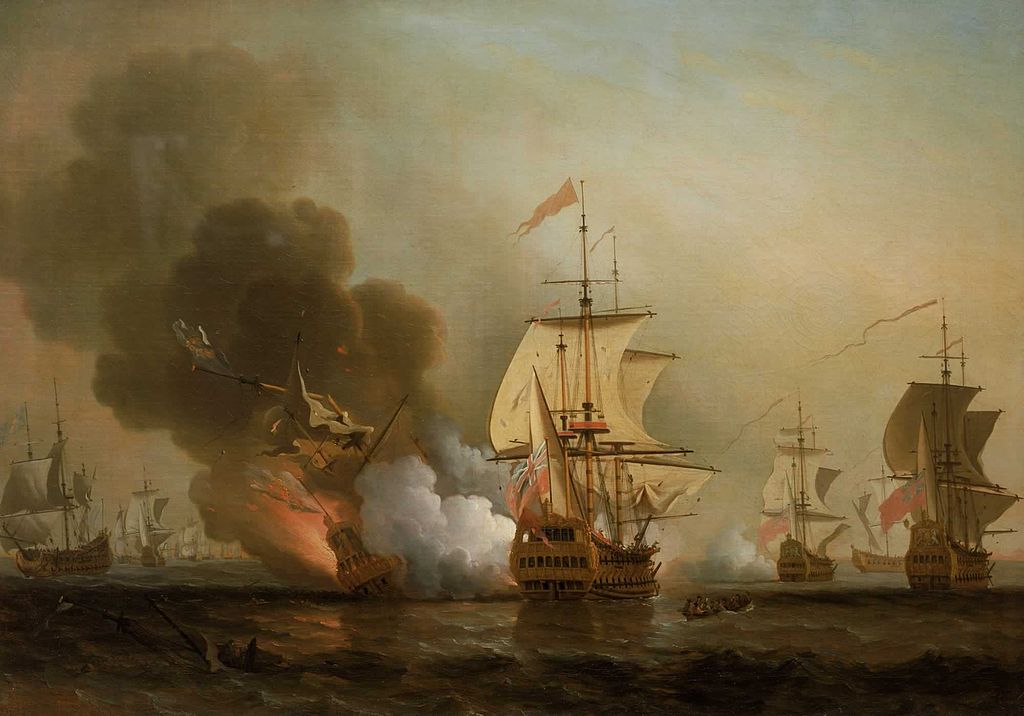
By Emma Pinedo MADRID, May 10 (Reuters) – Members of three South American indigenous communities have asked Spain and UNESCO to declare a Spanish galleon that sank 300 years ago with a...
National Maritime Day has been celebrated on May 22 across the United States since its creation in 1933, making 2023 the 90th annual celebration. May 22 was chosen to honor...
May 22, 2023
Total Views: 1391
Get The Industry’s Go-To News
Subscribe to gCaptain Daily and stay informed with the latest global maritime and offshore news
— just like 106,723 professionals
Secure Your Spot
on the gCaptain Crew
Stay informed with the latest maritime and offshore news, delivered daily straight to your inbox
— trusted by our 106,723 members
Your Gateway to the Maritime World!
Essential news coupled with the finest maritime content sourced from across the globe.

 Join The Club