Swedish prosecutors have formally charged both the master and pilot of the Norwegian cargo ship Misje Verde over last month’s collision with a pleasure boat near Tjörn that killed two people.
The charges mark a significant development in the investigation into the July 28 accident, particularly for the Swedish pilot, whose prosecution authorities described as unusual.
Both men have been charged with causing death through negligence, causing bodily injury through negligence and negligence in maritime traffic. Both deny wrongdoing.
The charges follow an investigation that prosecutors say has established that the pleasure boat was clearly visible on the cargo ship’s radar before Misje Verde overtook and struck it.
According to the indictment, the master and pilot failed to maintain a proper lookout as required under Rule 5 of the International Regulations for Preventing Collisions at Sea (COLREGs), resulting in Misje Verde failing to keep clear of the slower pleasure boat. Rule 13 requires an overtaking vessel to keep out of the way of the vessel being overtaken.
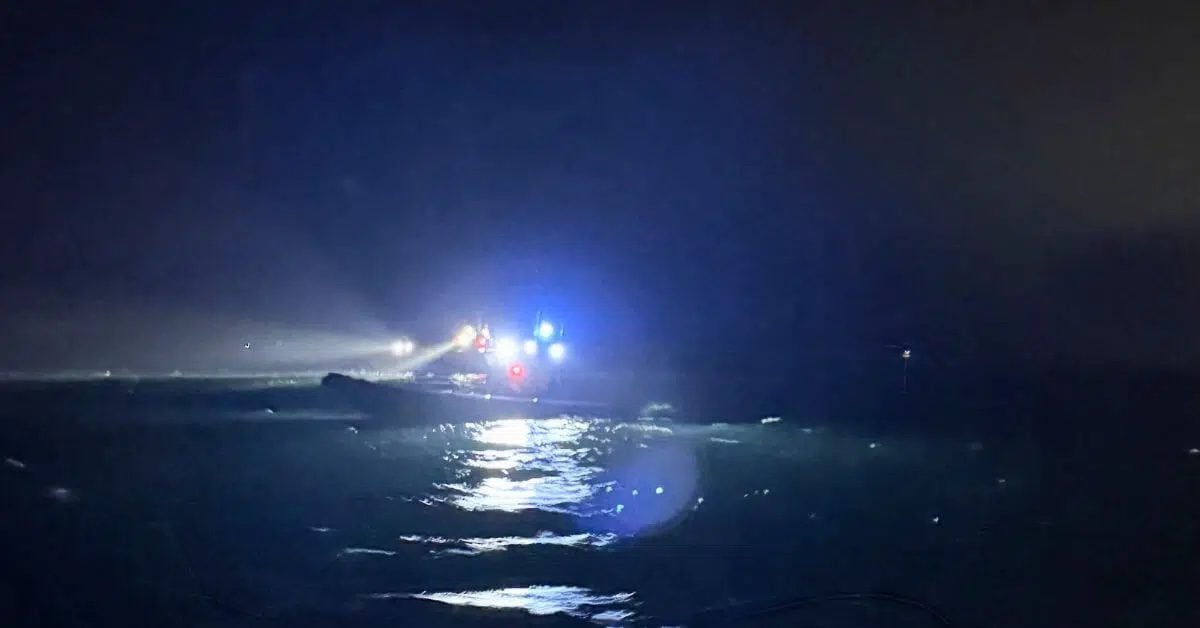
The accident occurred in Hakefjord, southwest of Gothenburg, as Misje Verde and the 7-8 meter cabin motorboat were traveling in the same general direction. The cargo ship approached the smaller vessel from astern and struck it, pulling the boat beneath the ship before it flooded and sank in approximately 20 meters of water between the islands of Katten and Lövön.
Four people were aboard the pleasure boat. An adult and a child escaped and were rescued by nearby boaters, while another adult and child were killed.
VDR Reveals What Happened on Bridge
The charges come after investigators analyzed Misje Verde‘s Voyage Data Recorder, providing prosecutors with a detailed picture of what was happening on the bridge in the period leading up to the collision.
Senior Prosecutor James von Reis said investigators now know what was visible on the ship’s radar displays in real time, what was said on the bridge and how responsibilities were divided between the master and pilot.
Most importantly, prosecutors say the pleasure boat was clearly visible as a radar target but was missed by both men.
“Therefore, we now know for certain what could be seen in real time on the radar screens on the bridge and what was said by those who were there,” von Reis said. “The division of responsibilities between the master and the pilot has emerged, and not least the important circumstance that the overtaken and struck pleasure boat was clearly visible as a radar echo on displays on the bridge, information that was missed by both defendants.”
The VDR evidence appears to have helped resolve questions investigators were still examining earlier this month, including the respective responsibilities of the master and pilot.
Pilot Took ‘Very Active Role’
Misje Verde was operating under compulsory pilotage at the time of the accident, with a pilot assigned through the Swedish Maritime Administration.
Prosecutors named the pilot as a criminal suspect on August 6 after determining that he had played a sufficiently active role in navigating the ship to potentially bear responsibility for the collision.
Von Reis said the subsequent investigation supported bringing the case against both men.
“It is unusual for a pilot to be prosecuted for having played a part in a maritime accident involving the vessel being piloted,” von Reis said.
“In this case, the police investigation found that the pilot had assumed a very active role in navigating the vessel and accepted that the master was occupied on the bridge with matters unrelated to the vessel’s navigation, such as maintaining a lookout,” he added. “It is therefore reasonable that the pilot’s responsibility for the accident should also be examined by a court.”
At the time of the collision, prosecutors previously said only the master and pilot were on the bridge.
The investigation initially considered several potential COLREG violations, including whether heavy rain had reduced visibility enough for Rule 19, governing navigation in restricted visibility, to apply. Authorities had also examined Rule 35 after establishing that Misje Verde had not sounded the prescribed signals for restricted visibility.
The indictment, however, focuses on Rules 5 and 13 and prosecutors’ allegation that the bridge team failed to detect and avoid a vessel they were overtaking.
Prosecutors said the investigation was completed unusually quickly given the seriousness and complexity of the accident, crediting early access to AIS and GPS tracks as well as the cargo ship’s VDR.
The trial is scheduled to begin September 10.
Editorial Standards · Corrections · About gCaptain

 Join The Club