The U.S. Supreme Court delivered a landmark 6-3 ruling on Friday striking down President Donald Trump’s sweeping tariffs imposed under the International Emergency Economic Powers Act (IEEPA), setting off a wave of reactions across the maritime industry as ports, carriers, and logistics providers prepare for both relief and renewed uncertainty.
Writing for the majority, Chief Justice John Roberts ruled that IEEPA does not grant the president authority to impose tariffs, emphasizing that the Constitution reserves the power to levy taxes and duties to Congress. The decision casts doubt over roughly $175 billion in tariffs collected under Trump’s emergency authority and has triggered immediate calls for swift refunds to importers.
Ports Signal Readiness Amid Uncertainty
Gene Seroka, Executive Director of the Port of Los Angeles, acknowledged the ruling impacts about two-thirds of tariffs collected to date but warned that uncertainty remains. “There is not yet clarity on whether there will be refunds from the U.S. Treasury Department on tariffs already paid,” Seroka said. “Second, the administration has already announced a new 10% global tariff in the wake of the ruling with no indication as to when that will take effect.”
The timing adds complexity, as the ruling comes during Lunar New Year, when most factories across China and Asia remain closed and aren’t expected to reopen until next week. Still, Seroka emphasized preparedness: “The Port of Los Angeles and its network of supply chain partners stand ready to manage any fluctuation in cargo and get it through the system swiftly without delay.”
Craig Fuller, CEO and Founder of FreightWaves, predicted dramatic market impacts. “All hell is about to break loose in the global freight market as importers surge imports,” Fuller stated. “The ports have been silent, that is about to change. Transborder shipping is about to go nuts as well.”
Industry Analysts Warn of Prolonged Uncertainty
While the ruling provides legal clarity on presidential powers, maritime industry observers caution that the path forward remains murky. Jonathan Todd, vice-chair of the Transportation & Logistics Practice Group at Benesch, emphasized that the decision doesn’t eliminate tariff exposure. “Only the IEEPA-based tariffs are affected. Section 232, Section 301, anti-dumping, and countervailing duties remain fully intact,” Todd said.
On the question of refunds, Todd noted significant uncertainty ahead. “We’re potentially looking at $130 to $170 billion in duties collected under IEEPA. The mechanics of how and when refunds occur will now move to the Court of International Trade and Customs and Border Protection — and that process could be complex.”
Moody’s Supply Chain Industry Practice Lead Andrei Quinn-Barabanov warned that the administration may simply shift tactics. “Following the Supreme Court ruling against country-based tariffs, the administration may impose additional commodity-based tariffs. This could trigger another round of exemption requests and international trade negotiations, potentially prolonging the tariff rate uncertainty and resulting sourcing paralysis well into 2026.”
Business Groups Push for Swift Action
Throughout 2025, Trump’s IEEPA tariffs severely disrupted global supply chains. Tariff rates fluctuated wildly (25% to 170% to 55%), making sourcing decisions impossible and creating “sourcing paralysis” that strained supplier relationships. Ports and logistics providers faced uncertainty affecting import volumes and planning all year.
The National Retail Federation welcomed the decision and called for immediate refunds. “The Supreme Court’s announcement today regarding tariffs provides much-needed certainty for U.S. businesses and manufacturers,” said David French, Executive Vice President of Government Relations. “We urge the lower court to ensure a seamless process to refund the tariffs to U.S. importers.”
Neil Bradley, Executive Vice President and Chief Policy Officer at the U.S. Chamber of Commerce, echoed that sentiment. “Swift refunds of the impermissible tariffs will be meaningful for the more than 200,000 small business importers in this country and will help support stronger economic growth this year.”
The small business coalition We Pay the Tariffs launched a national sign-on letter campaign calling for “full, fast and automatic” refunds. Executive Director Dan Anthony argued that bureaucratic delays would be devastating. “Small businesses cannot afford to wait months or years while bureaucratic delays play out, nor can they afford expensive litigation just to recover money that was unlawfully collected from them in the first place.”
International Reactions
William Bain, Head of Trade Policy at the British Chambers of Commerce, expressed concern that the ruling provides little practical relief. “While this decision gives clarity on the President’s executive powers to raise tariffs it does little to clear the murky waters for business,” Bain said, noting that Trump has other legal options at his disposal, including the 1974 Trade Act which could allow even higher tariffs.
Trump Vows to Continue Tariff Campaign
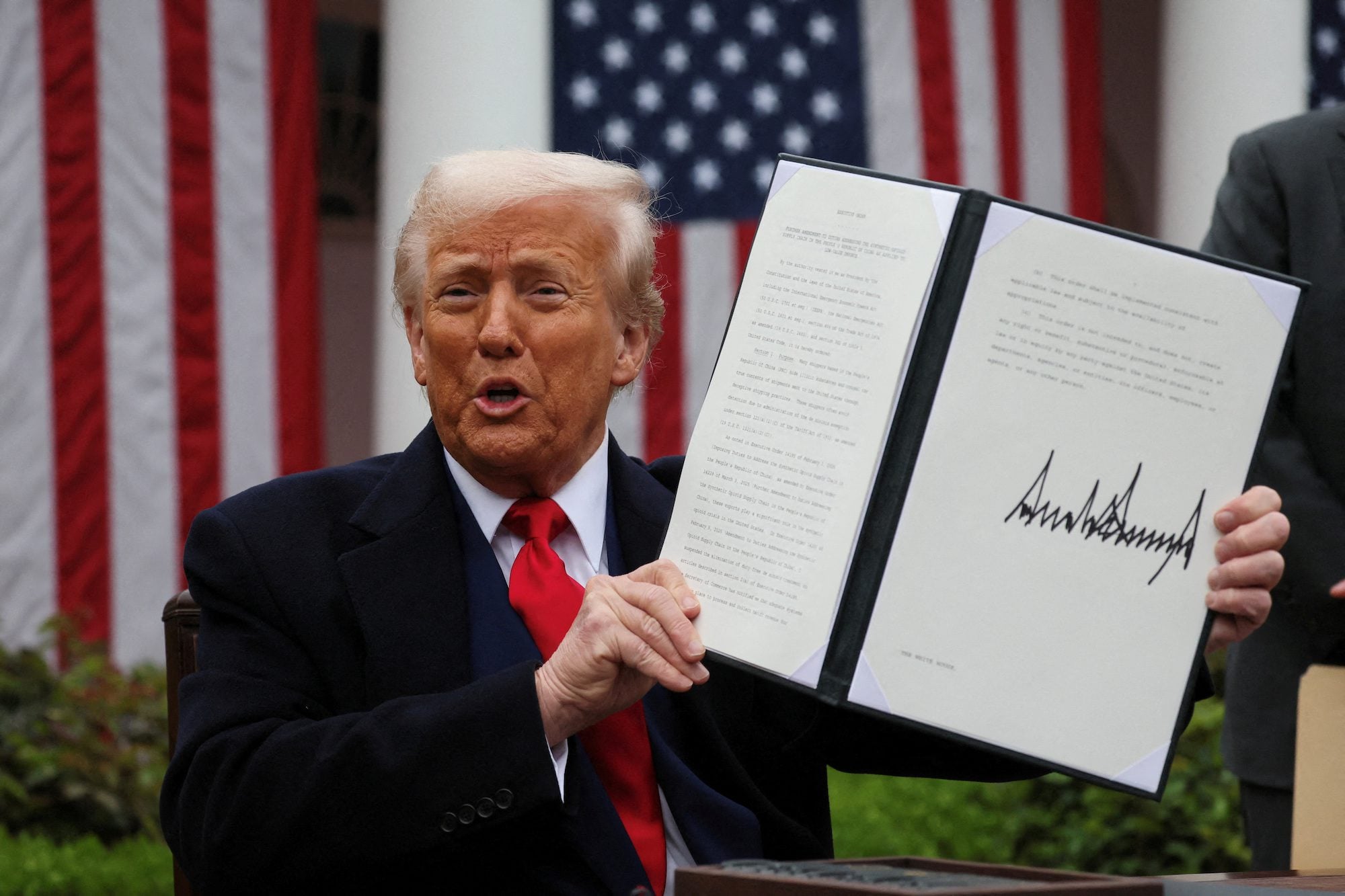
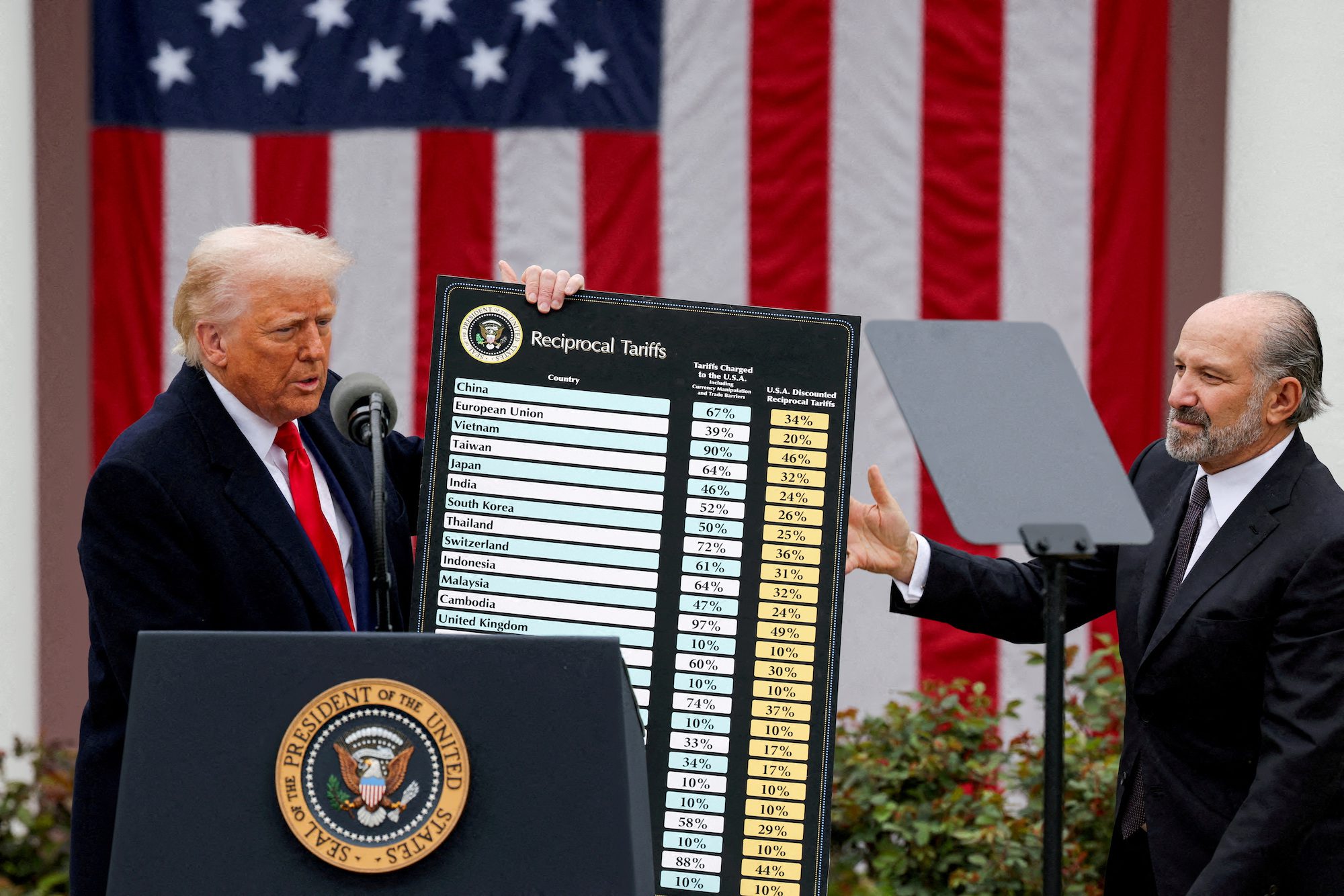
President Trump immediately announced a new 10% tariff on imports from all countries, invoking Section 122 of the Trade Act of 1974. That statute allows tariffs of up to 15% for 150 days to address balance-of-payments issues, though extensions require congressional approval. Trump also signaled plans to revive Section 301 investigations targeting unfair trade practices.
Markets initially surged on the ruling before settling modestly higher, as analysts warned that renewed legal maneuvering could prolong trade uncertainty for the maritime supply chain.
Editorial Standards · Corrections · About gCaptain

 Join The Club