The Trump administration has insisted the Strait of Hormuz is open following the ceasefire, but early shipping data suggests otherwise. Vessel movements remain extremely limited, with no meaningful return to normal traffic and energy shipments notably absent as shipowners await clarity on how transits will be conducted.
Analysis from EOS Risk Group’s Head of Advisory, Martin Kelly, indicates that Iran’s latest directives—issued hours after a U.S.–Iran ceasefire—are already reshaping how vessels transit one of the world’s most critical chokepoints.
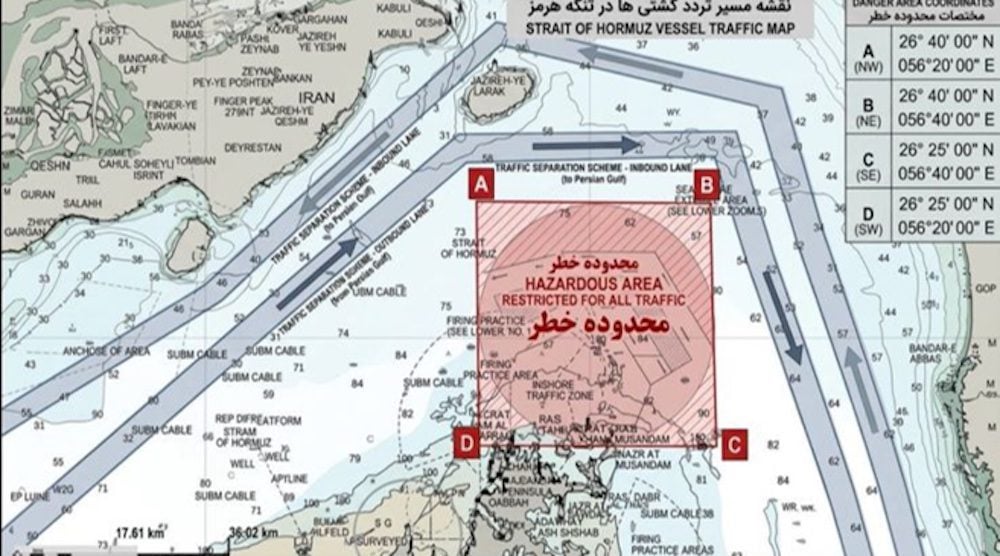
According to Kelly, Iranian authorities have instructed commercial vessels to avoid traditional Traffic Separation Scheme (TSS) lanes and instead use alternative corridors near Larak Island that have become a hallmark of the crisis so far, citing the risk of sea mines deployed during the conflict. Inbound traffic is reportedly being routed north of the island, with outbound vessels directed south, effectively shifting traffic closer to Iranian territorial waters.
While the presence and extent of mine deployment in the main shipping lanes remains unconfirmed, the impact of the warning itself is already being felt across the industry.
“Masters, owners, charterers and insurers are far more likely to opt for a ‘safe route’ if they believe mines have been placed in the TSS,” Kelly noted, highlighting how perceived risk alone can alter global shipping patterns.
Early transit data appears to support that shift. Multiple vessels have transited the Strait via the Iranian-controlled route since the ceasefire, avoiding established lanes, while overall traffic remains a tiny fraction of normal levels. According to Kpler, just four bulk ships passed through on the first day of the ceasefire—none of them crude oil tankers or LNG carriers.
Industry groups including BIMCO have warned that shipowners are unlikely to rush into the Strait without clear, coordinated guidance from both Washington and Tehran. In the absence of naval escorts and with uncertainty surrounding routing, communication protocols, and potential hazards, operators remain in a holding pattern.
Kelly argues that the evolving situation may represent more than a temporary safety measure. By steering vessels away from internationally recognized lanes and toward routes requiring coordination, Iran could be exerting a form of de facto control over transit—whether or not such a system is formally structured.
“The mines create the problem. The alternative routes create the solution,” Kelly said, describing a scenario in which routing changes—combined with uncertainty—could funnel traffic into narrower, more controlled corridors.
Even if the mine threat proves limited or localized, the commercial implications could be significant. If confidence in the TSS is undermined, restoring normal traffic flows could take weeks or longer, particularly for energy shipments that carry higher financial and operational risk.
The slow pace of transits also raises questions about how quickly the Strait can return to normal operations. With hundreds of vessels reportedly waiting in or around the Persian Gulf, clearing the backlog would require a sustained increase in daily movements—something that has yet to materialize.
For now, the distinction between an “open” and a “functioning” Strait of Hormuz is becoming increasingly clear.
While political leaders have emphasized that the waterway remains accessible, shipping behavior suggests the reality of the crisis.
Until those uncertainties are resolved, the Strait may be open, but it is far from fully operational.
Editorial Standards · Corrections · About gCaptain

 Join The Club