Updated: December 10, 2025 (Originally published December 8, 2025)
With lithium battery fires, alternative fuels, and automated systems reshaping maritime fire risk, industry leaders push for updated response protocols
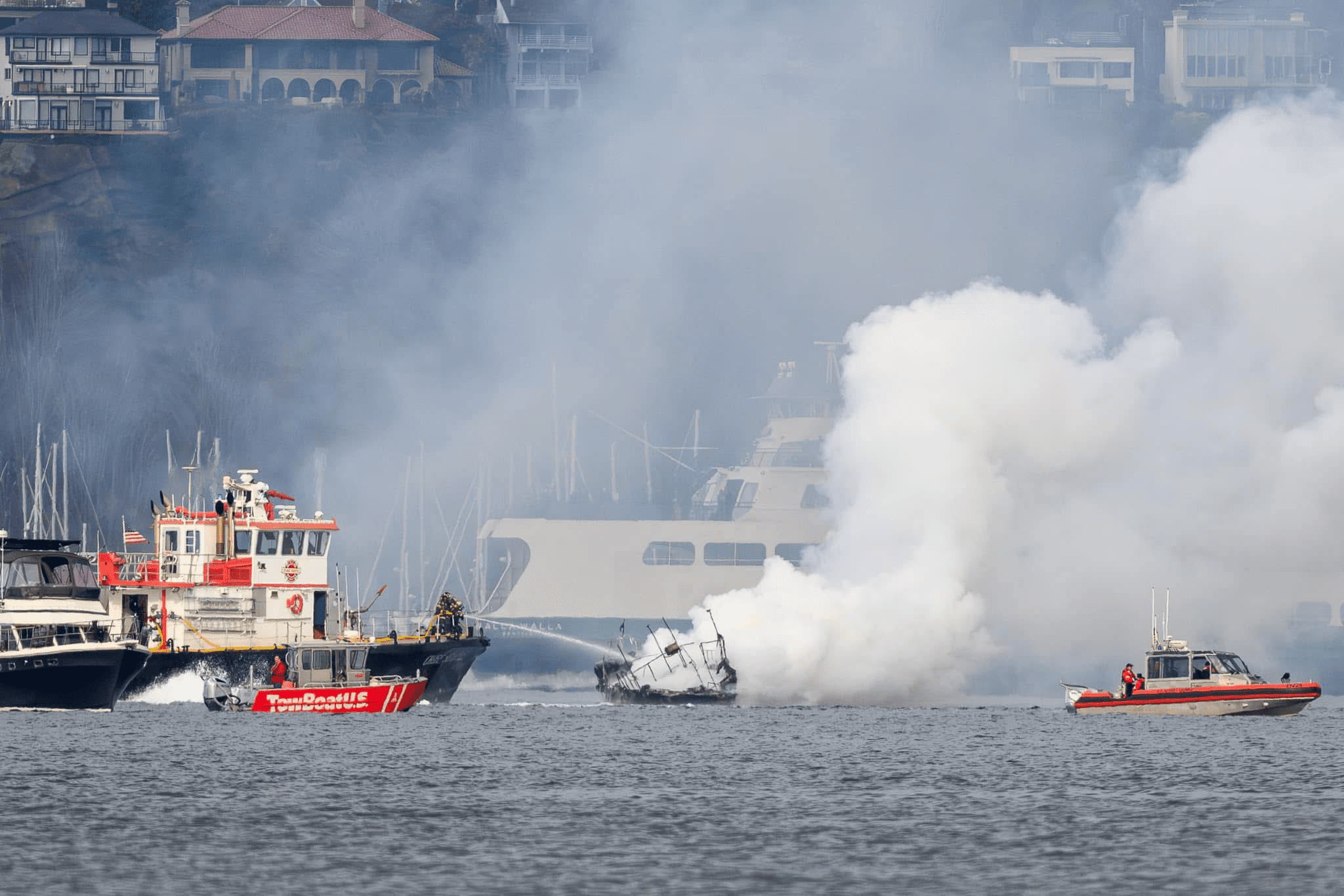
When a container ship carrying electric vehicles caught fire in the North Atlantic last year, killing one crew member and forcing the abandonment of the vessel, it underscored a troubling reality: modern cargo is creating fire scenarios that traditional shipboard firefighting training never anticipated.
Lithium-ion battery fires can burn hotter and spread faster than conventional cargo fires. They can reignite days after being suppressed. They release toxic gases, particularly hydrogen, and produce oxygen making fixed firefighting systems ineffective. And they require suppression techniques, like controlled flooding or specialized extinguishing agents, that crews may have never practiced.
As the maritime industry pivots toward decarbonization, alternative fuels, and electric propulsion, fire safety experts warn that training standards, equipment specifications, and emergency response protocols are struggling to keep pace with evolving risks.
“We’re putting cargo and fuel systems on vessels that behave completely differently in a fire scenario than anything crews trained for a decade ago,” said Washington State Maritime Cooperative Executive Director Dan Smiley.
The Changing Fire Risk Profile
Traditional shipboard firefighting focuses on scenarios like engine room fires, galley fires, and cargo holds containing conventional materials. Crews train on ABC fire extinguishers, fixed CO2 systems, and standard boundary cooling techniques.
Today’s vessels present dramatically different challenges.
Lithium battery hazards: Electric vehicles, consumer electronics, electric propulsion systems, and energy storage systems can enter thermal runaway, a chemical reaction that rapidly releases heat, hydrogen, and oxygen-rich gases. The battery cells themselves don’t burn; instead, these gases ignite surrounding plastics, insulation, and other nearby materials, creating fast-moving secondary fires. Response tactics vary widely. Some lithium-ion chemistries worsen with water application, while others require prolonged water cooling, leaving crews to identify the battery type under highly challenging visibility and access conditions.
Alternative fuel systems: LNG, methanol, ammonia, and hydrogen introduce fire and explosion risks with different characteristics than traditional marine fuels. Each requires specialized detection, suppression, and crew protection measures.
Automated systems: Unmanned engine rooms and reduced crew sizes mean fewer personnel available for firefighting, placing greater reliance on fixed systems that may not be designed for new fire types.
Complex vessel architecture: Ro-ro vessels, mega-containerships, and cruise ships create massive, interconnected spaces where fires can spread rapidly and where traditional boundary cooling strategies may be inadequate.
The Training Gap
International maritime training standards (STCW) require basic and advanced firefighting courses, but critics argue the curriculum hasn’t kept pace with operational reality.
Some progressive training centers have begun incorporating electric vehicle fire simulators and alternative fuel scenarios, but these remain exceptions rather than standards. Meanwhile, shore-based fire departments who respond when vessels reach port often lack maritime-specific training and may not understand vessel systems, fixed suppression equipment, or the unique challenges of fighting fires in confined spaces with limited access.
“Shipboard fires endanger lives and disrupt critical supply chains posing a significant threat to the Marine Transportation System. The National Harbor Safety Conference is a great opportunity to connect with first responders and port leaders from around the country and learn more about their efforts to improve readiness in the event of major shipboard fires,” said CAPT Mark McDonnell, Captain of the Port of USCG Sector Puget Sound.
Regulatory and Industry Response
Maritime regulatory bodies are beginning to respond. The International Maritime Organization has issued interim guidelines for firefighting on ships carrying electric vehicles. Classification societies are developing enhanced fire safety standards for vessels with alternative fuel systems. Port authorities are updating their emergency response protocols.
But implementation remains inconsistent across fleets and regions, and some safety advocates argue the pace of regulatory change lags dangerously behind the pace of technological adoption.
These challenges, along with broader questions about crew training, equipment standards, joint operations between shipboard and shore-based responders, and crisis management protocols, will be addressed at the National Harbor Safety Conference, scheduled for March 24-25, 2026, in Seattle.
Hosted by the Puget Sound Harbor Safety Committee and administered by the Marine Exchange of Puget Sound, the biennial gathering brings together Coast Guard officials, maritime training experts, port operators, vessel owners, and emergency response agencies to address evolving threats to maritime safety.
“Fire safety has always been fundamental to maritime operations, but we’re in a period of rapid change,” said Patrick Gallagher, Executive Director of the Marine Exchange of Puget Sound and Chair of the Puget Sound Harbor Safety Committee. “The 2026 conference will focus on how we maintain the highest safety standards while embracing the technological transitions the industry needs.”
A Call for Proactive Investment
Maritime safety experts emphasize that effective shipboard firefighting requires more than updated equipment. It demands a comprehensive approach that includes realistic training, regular drills with shore-based responders, vessel design that considers new fire risks, and industry-wide information sharing about incidents and lessons learned.
The alternative of waiting for catastrophic incidents to drive regulatory change has proven costly in both lives and assets. Maritime Fire & Safety Association Executive Director Curtis Cannizzaro stated, “We can either invest in training and equipment now, or repeat hard lessons learned at too great a cost later. The industry has always chosen safety first. We need to make sure that commitment extends to these new challenges.”The National Harbor Safety Conference is accepting registrations and sponsorships through early 2026. More information is available at marexps.com/national-hsc-2026.
Tags:
Editorial Standards · Corrections · About gCaptain

 Join The Club