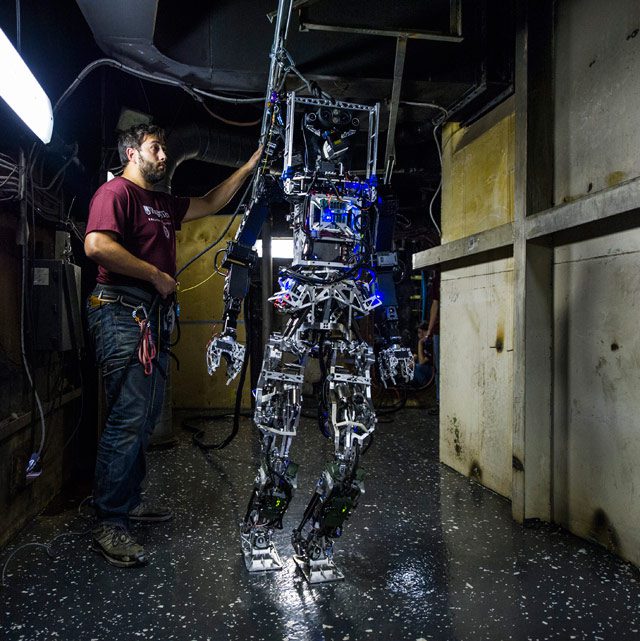
MOBILE, Ala. (Nov. 6, 2014) John Seminatore, a graduate student at Virginia Tech, secures the Office of Naval Research-sponsored Shipboard Autonomous Firefighting Robot (SAFFiR) during testing aboard the Naval Research Laboratory’s ex-USS Shadwell in Mobile, Alabama. The bipedal humanoid robot, developed as a test bed for autonomous firefighting and damage control operations, was tethered to a power source for demonstrations aboard the Navy’s fire test platform. (U.S. Navy photo by John F. Williams/Released)
Scientists and researchers from Virginia Tech and the Office of Naval Research (ONR) unveiled the Shipboard Autonomous Firefighting Robot (SAFFiR) at the Naval Future Force Science & Technology EXPO in Washington, D.C. this week.
“We set out to build and demonstrate a humanoid capable of mobility aboard a ship, manipulating doors and fire hoses, and equipped with sensors to see and navigate through smoke,” said Dr. Thomas McKenna, ONR program manager for human-robot interaction and cognitive neuroscience. “The long-term goal is to keep Sailors from the danger of direct exposure to fire.”
SAFFiR stands 5 feet 10 inches and weighs 143 pounds. It is equipped with infrared stereo vision and a rotating laser for light detection and ranging (LIDAR) which enables it to see through dense smoke.
“We have taken a look at other kinds of sensors that you can put on these robots,” said McKenna. “For instance, a bipedal robot could be configured to take shipboard measurements, scan for corrosion and leaks, and identify changes to the shape of the room from its original configuration. By taking on these time-consuming tasks, SAFFiR could free up Sailors for jobs that more fully take advantage of their training and technical skillsets.”
The robot will, of course, be commanded via a human interface with a fire team leader and will enable a “hybrid force,” where robots such as SAFFiR supplement an existing fire team.
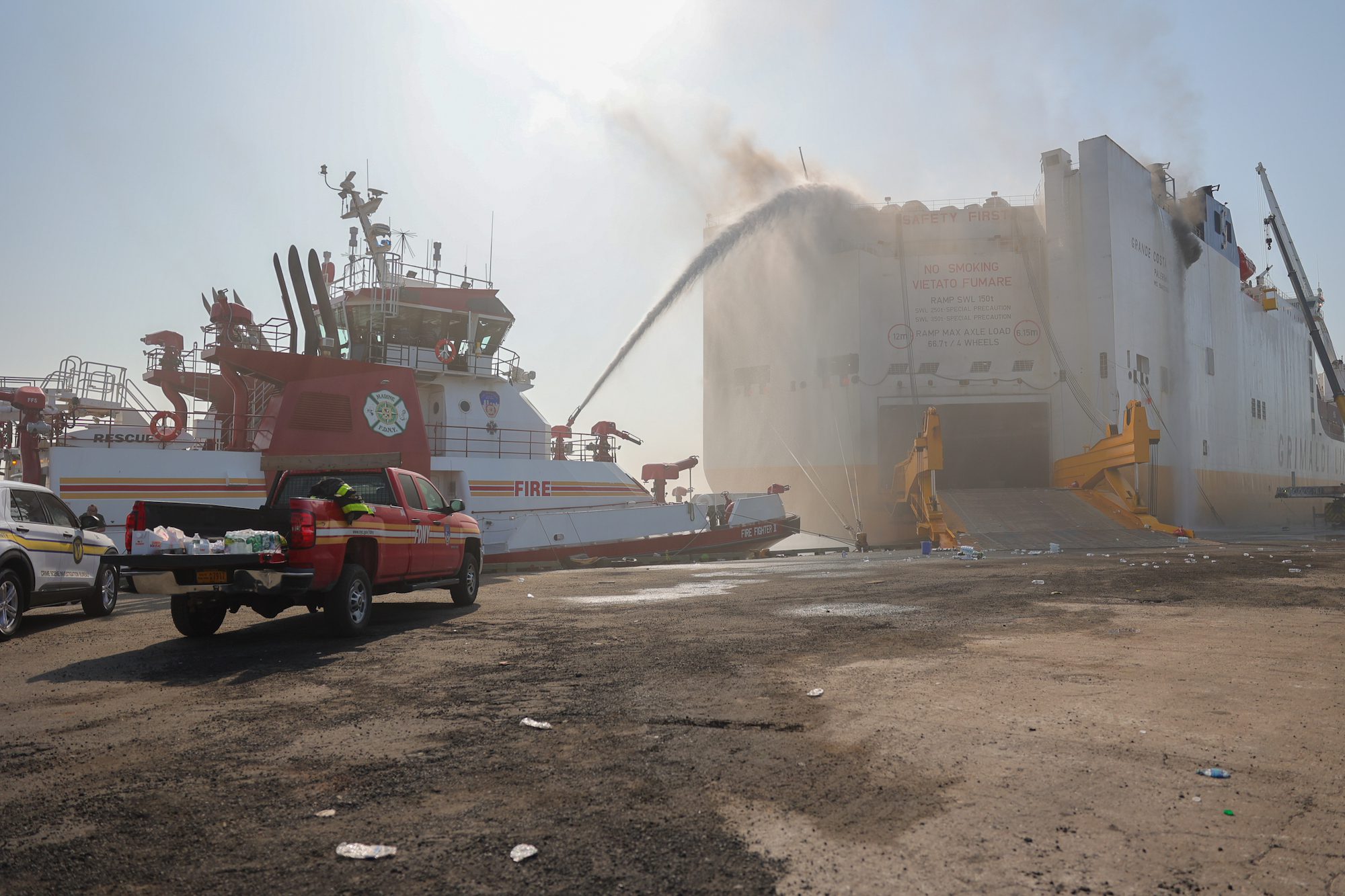
A new federal watchdog report says gaps in training, coordination and emergency planning continue to complicate the response to ship fires at U.S. ports, three years after two firefighters were...
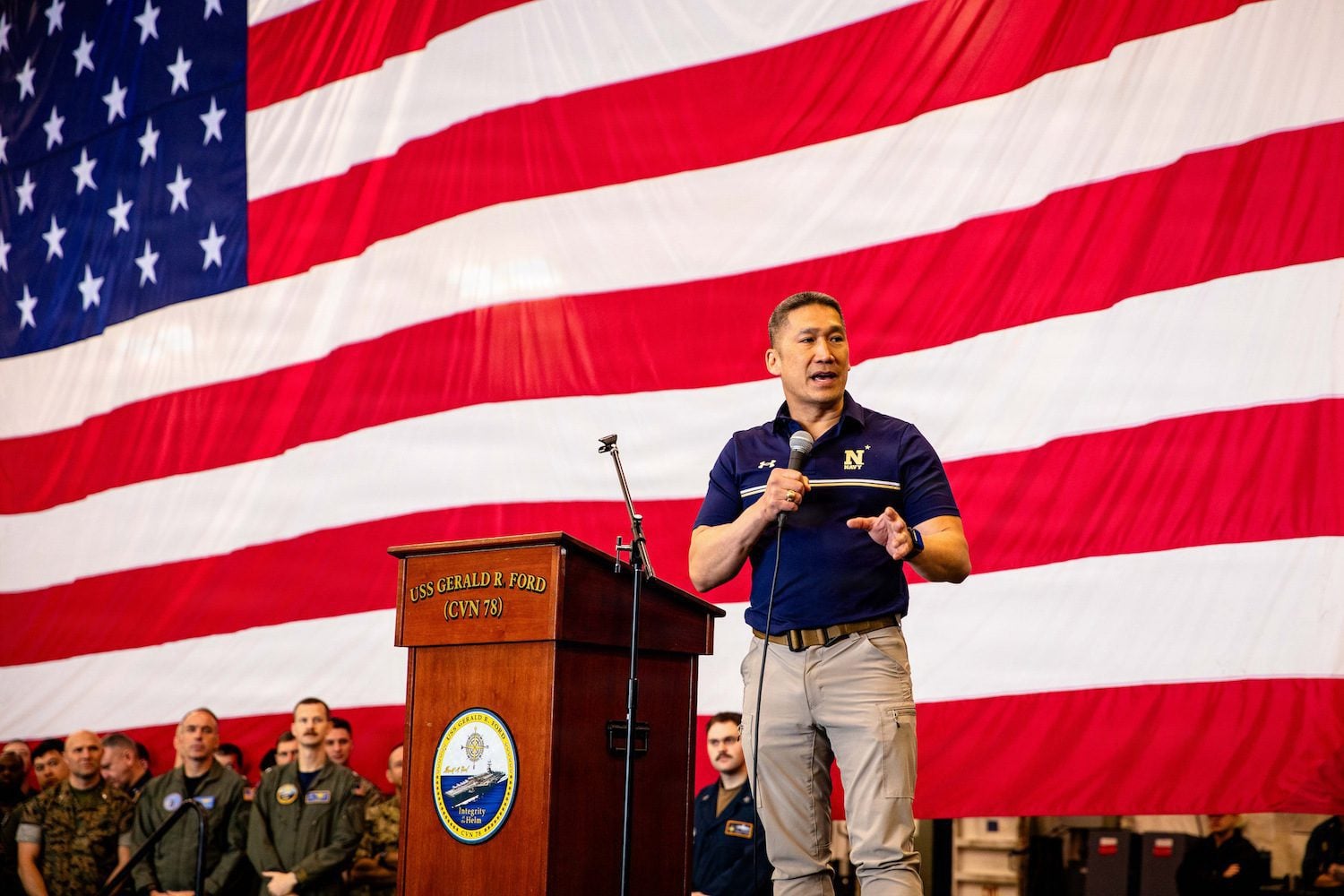
What (Acting) Secretary Hung Cao’s First Five Months Tell Us About the Job Ahead By Bruce Kimbrell (Policy Op-Ed) President Trump has nominated the Honorable Hung Cao to become the...
Anthropic says it disrupted an Iran-linked user that used its Claude artificial intelligence models to track U.S. naval forces, compile targeting material and research vulnerabilities in shipboard systems. The activity...
September 11, 2026
Total Views: 4613
Get The Industry’s Go-To News
Subscribe to gCaptain Daily and stay informed with the latest global maritime and offshore news
— just like 107,009 professionals
Secure Your Spot
on the gCaptain Crew
Stay informed with the latest maritime and offshore news, delivered daily straight to your inbox
— trusted by our 107,009 members
Your Gateway to the Maritime World!
Essential news coupled with the finest maritime content sourced from across the globe.

 Join The Club