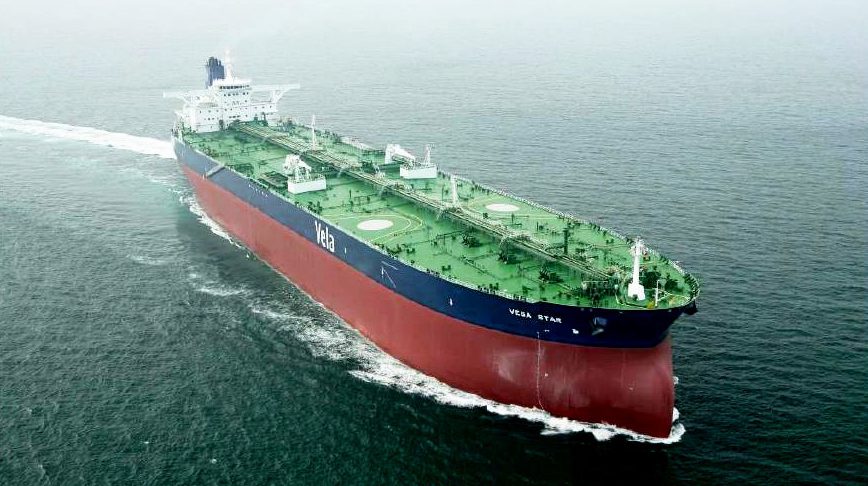
The Vega Star, a 319k DWT VLCC owned by Vela International. Image: VELA
(Bloomberg) — Saudi Arabian Oil Co., the world’s biggest state-owned crude producer, increased the number of supertankers it hired to haul oil to the U.S.
The company chartered at least seven very large crude carriers to load a total of about 14 million barrels in October, compared with about four a month so far this year, according to data from Athens-based Optima Shipbrokers Ltd. Brokers report tanker bookings when the deals are provisional and charters are then sometimes canceled.
Saudi Aramco, as the company is known, may be shipping more oil before a Texas refinery it owns with Royal Dutch Shell Plc resumes full output, Sverre Bjorn Svenning, an Oslo-based shipping analyst at Fearnley Consultants A/S, said by phone. The extra cargoes could also be because Saudi Arabia is compensating for reduced supplies from Iran, he said.
Motiva halted a crude unit in June at its 600,000 barrel-a-day refinery, the largest in the U.S., following contamination that caused cracks in stainless steel pipes and other areas. The plant will resume early in 2013, the refinery said the following month. Oil exports from Iran, once the second-largest producer in OPEC, have plunged by more than 50 percent compared with 2011 because of western sanctions targeting its nuclear program.
Nesa Subrahmaniyan, a spokesman for Saudi Aramco in Riyadh, didn’t immediately reply to an e-mail and phone call today outside of regular office hours. Saudi Aramco hires vessels through its Vela International Marine Ltd. unit.
A one-way journey to the U.S. Gulf from Saudi Arabia takes about 40 days to complete, according to Optima. That implies the cargoes will probably be discharged in the second or third week of December.
Vela chartered 11 VLCCs in March to haul crude to the U.S. from the Persian Gulf, according to Omar Nokta, a New York-based analyst at investment bank Dahlman Rose & Co.
VLCCs hauling Middle East crude to the Gulf Coast are losing $22,842 a day, according to the London-based Baltic Exchange.
What (Acting) Secretary Hung Cao’s First Five Months Tell Us About the Job Ahead By Bruce Kimbrell (Policy Op-Ed) President Trump has nominated the Honorable Hung Cao to become the...
Commodity trading giant Trafigura is launching a new tanker company with plans to raise about $500 million and list the business in Oslo, opening its growing VLCC fleet to outside...
The cost of hiring an oil tanker on the industry’s benchmark trade route topped $1 million a day for the first time, as the Iran war leaves too few ships willing to cross the Strait of Hormuz to collect cargoes.
September 14, 2026
Total Views: 1370
Get The Industry’s Go-To News
Subscribe to gCaptain Daily and stay informed with the latest global maritime and offshore news
— just like 107,344 professionals
Secure Your Spot
on the gCaptain Crew
Stay informed with the latest maritime and offshore news, delivered daily straight to your inbox
— trusted by our 107,344 members
Your Gateway to the Maritime World!
Essential news coupled with the finest maritime content sourced from across the globe.

 Join The Club