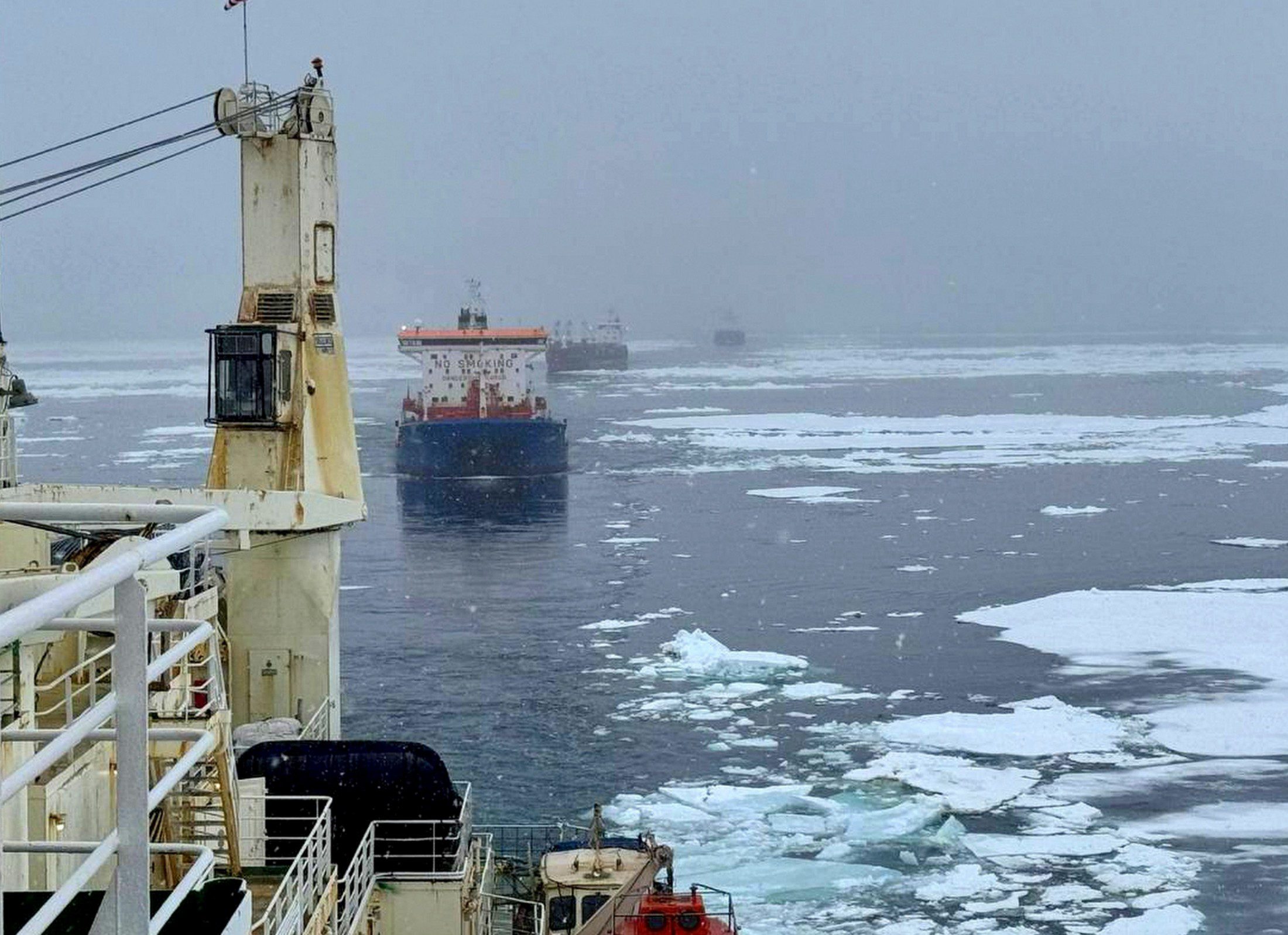
A non ice-class Suezmax oil tanker has been forced to wait several days due to ice conditions before proceeding along Russia’s Northern Sea Route. The Oman-flagged 274-meter Lynx is carrying around a million barrels of oil from Murmansk, Russia to China. Its exact destination currently remains unknown. It is one of several oil tankers without ice protection shuttling Moscow’s crude to buyers in China via the Arctic.
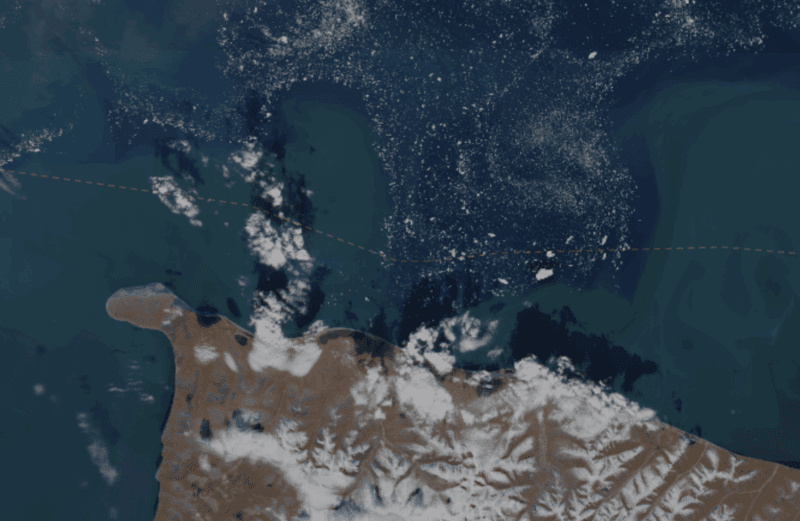
The vessel encountered late-season sea ice highlighting the navigational challenges for ships without ice protection in Arctic waters. Lynx came to a stop at 72° northern latitude in the High Arctic on September 6 waiting several days before proceeding at very slow speeds in close proximity to the shoreline to find a route through the ice.
Overlay of Lynx’s AIS track and satellite image showing ice conditions along the eastern section of the Northern Sea Route. (Source: MagicPort Maritime Intelligence and Sentinel 2)
The vessel does not hold a mandatory Arctic shipping permit and Russian authorities did not list it in their daily logs of active traffic on the route, an increasingly common practice to obscure sanction-busting shipping activity. Lynx has been sanctioned by the US, UK, EU and others for violating the G7 oil price cap and engaging in irregular high-risk shipping practices.
It is the second time in as many weeks that a non ice-class ship has run into difficulties in the East Siberian Sea. In early September the LNG carrier Arctic Metagaz was delayed in the area around Pevek for more than a week. Neither vessel had arranged for icebreaker escorts ahead of time as would have been required by navigational rules. Non ice-class vessels are not permitted to operate independently even in light ice conditions, according to the rules set by the Northern Sea Route administration.
Both vessels eventually proceeded with the assistance of nuclear icebreakers operating in the area. Another LNG carrier, La Perouse, also without ice-class, turned around in the waters off Western Siberia and elected to instead take the long way around Africa.
Russia has promoted the Northern Sea Route as a faster alternative to the Suez Canal for shipments between Europe and Asia, but a shortage of ice-class vessels has forced it to increasingly use ships without protection and stretching navigational rules.
French naval forces intercepted and diverted the Russian-linked oil tanker Grinch on Thursday in the western Mediterranean between the southern coast of Spain and northern Morocco, in the first known case of a crude oil shipment loaded in Russia’s Arctic being seized under Western sanctions.
In a first for Germany and a potential turning point in the battle over so-called “shadow fleet” tankers, German authorities refused the Russian-linked oil tanker Tavian entry into their territorial waters in the Baltic Sea on January 10.
Drones struck two oil tankers in the Black Sea on Tuesday, including one chartered by U.S. oil major Chevron, the companies involved said, as they sailed toward a terminal on the Russian coast.
January 13, 2026
Total Views: 2070
Get The Industry’s Go-To News
Subscribe to gCaptain Daily and stay informed with the latest global maritime and offshore news
— just like 107,510 professionals
Secure Your Spot
on the gCaptain Crew
Stay informed with the latest maritime and offshore news, delivered daily straight to your inbox
— trusted by our 107,510 members
Your Gateway to the Maritime World!
Essential news coupled with the finest maritime content sourced from across the globe.

 Join The Club