Don’t Miss Your Daily Briefing for the Maritime Industry
Join the leading maritime news network
— trusted by our 106,509 members
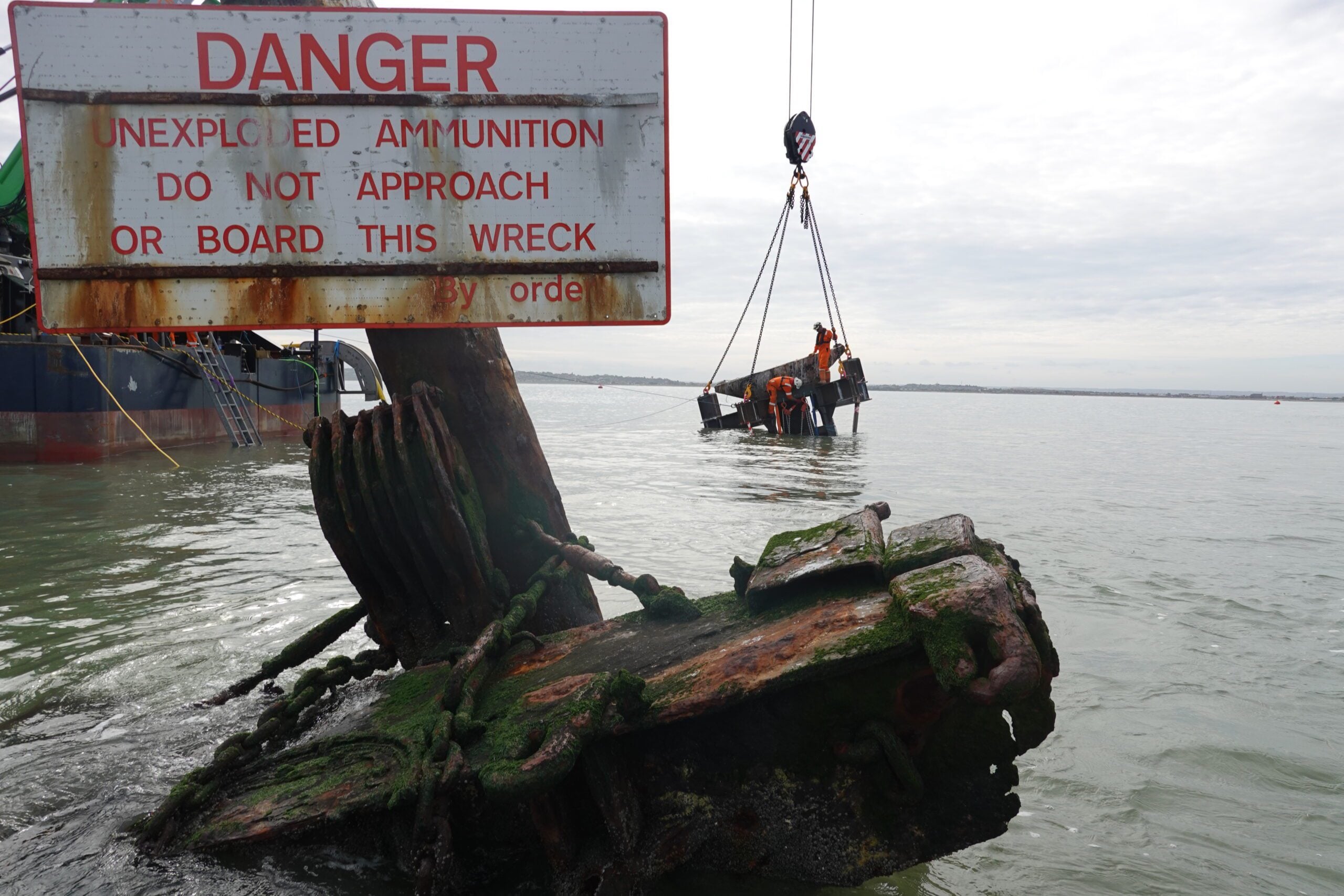
Salvage crews work around the wreck of the SS Richard Montgomery in the Thames Estuary as part of an operation to remove the World War II Liberty ship’s remaining masts. The wreck still contains roughly 1,400 tons of unexploded munitions. (Photo: Resolve Marine)
Salvage Work Begins on WWII ‘Time Bomb’ Wreck in Thames Estuary
More than 80 years after the SS Richard Montgomery sank in the Thames Estuary with roughly 1,400 tons of explosives still aboard, marine contractors have begun one of the most delicate interventions yet on the notorious World War II wreck.
Florida-based Resolve Marine has started work to remove the Liberty ship’s three remaining steel masts, which still rise above the water near Sheerness, Kent. Engineers and divers will cut and lift the structures under closely controlled conditions intended to avoid disturbing the deteriorating wreck and its explosive cargo. SSRM press release 0926_2
The work marks a significant step in the UK government’s long-running effort to reduce risks associated with the wreck without attempting to remove its remaining munitions.
The Richard Montgomery ran aground on a sandbank in August 1944 while carrying thousands of tons of ammunition for Allied forces in Europe. Salvage crews removed roughly half of the cargo before the hull flooded and broke apart, forcing the operation to be abandoned. About 1,400 tons of explosives remain inside the forward holds today, according to the UK Maritime and Coastguard Agency. GOV.UK
The wreck sits close to the Medway Approach Channel and is surrounded by a legally enforced exclusion zone.
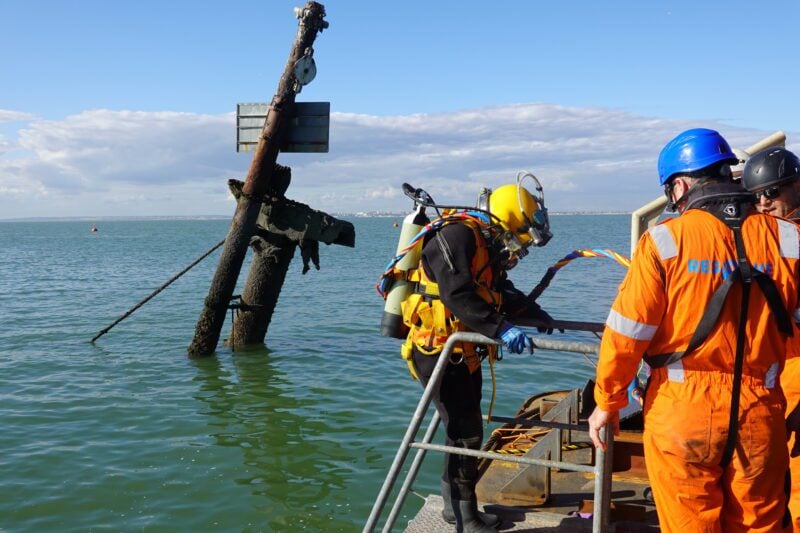
Resolve Marine divers prepare to work on the SS Richard Montgomery wreck in the Thames Estuary as part of the operation to remove the World War II Liberty ship’s remaining masts. (Photo: Resolve Marine)
Removing the masts
The UK government announced the mast-removal project in July, saying the operation would involve construction of an underwater working platform from which specialists could dismantle the three structures below sea level. The £9.5 million project followed years of surveys, engineering studies and explosives-risk assessments.
Removing the masts has been under consideration for years because their weight places additional strain on the wreck’s aging deck structure. The MCA has said reducing that load would also eliminate the possibility that a mast could eventually collapse into one of the cargo holds.
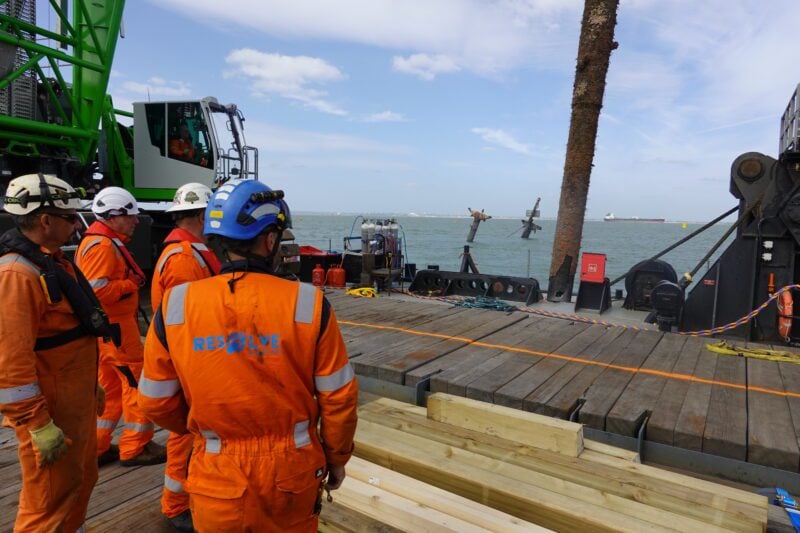
Resolve Marine crews work from a crane barge beside the SS Richard Montgomery wreck in the Thames Estuary during the operation to remove the Liberty ship’s remaining masts. (Photo: Resolve Marine)
Resolve Marine said the operation was developed following technical assessments and independent expert review focused on maintaining the wreck’s stability and protecting workers, nearby communities and maritime traffic. SSRM press release 0926_2
“The removal of the SS Richard Montgomery’s masts is a unique and highly specialized marine engineering project that requires meticulous planning, rigorous risk management and exceptional technical expertise,” Resolve Marine Director of Projects Sam Adams said. SSRM press release 0926_2
UK officials have stressed that the work does not involve removing the explosives themselves. Independent assessments concluded the mast operation could proceed without increasing the risk posed by the ammunition remaining aboard, according to the Department for Transport.
Once removed, the masts are expected to be taken to the Historic Dockyard Chatham for conservation before eventually going on public display in Kent.
A wreck under constant watch
The Richard Montgomery has long been among Britain’s most closely monitored wrecks.
Annual surveys have documented the ship’s continuing structural deterioration, including movement of the forward section and localized deck collapse. The MCA maintains an archive of survey reports dating back decades and says the government’s broader strategy is aimed at progressively reducing the risks posed by the wreck.
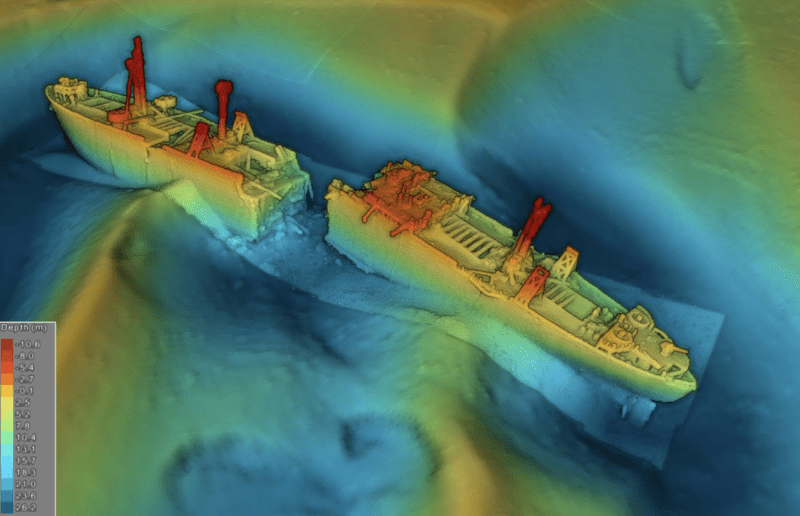
Overview picture of SS Richard Mountgomery. Point cloud data, including lidar, overlaid on a digital terrain model of the surrounding seabed. Image courtesy SSRM
Despite its dramatic reputation — and occasional predictions about the potential consequences of a large explosion — authorities continue to describe the likelihood of a major detonation as remote.
The exclusion zone around the wreck will remain in place after the masts are removed.
Resolve Marine said the operation forms part of the UK government’s longer-term management strategy for the site, preserving a piece of Anglo-American maritime history while addressing one of the most unusual salvage challenges still lingering from World War II.
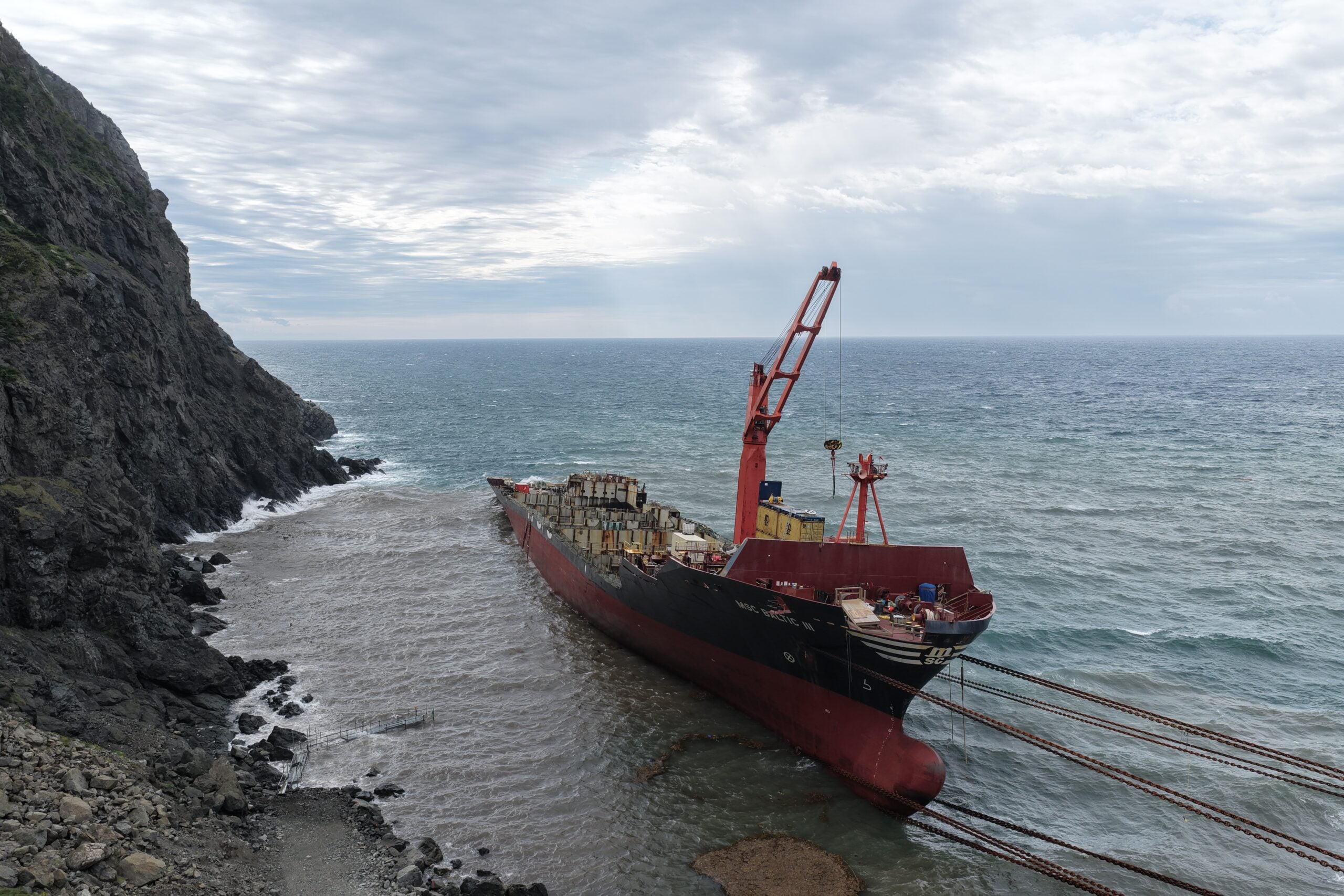
Wreck removal crews have now pulled the grounded containership MSC Baltic III about 53 meters toward shore in Newfoundland and Labrador as salvage teams continue dismantling the vessel and removing steel from...
Tampa-based marine services provider Isla Maritime has expanded into Panama through a strategic partnership with J.A.M. Marine Dockyard, establishing a rapid-response salvage and emergency services capability along one of the...
Salvage crews have successfully removed approximately 85% of the heavy fuel from the grounded containership MSC Baltic III, according to the latest update from the Canadian Coast Guard released today. The...
July 9, 2025
Total Views: 10374
Get The Industry’s Go-To News
Subscribe to gCaptain Daily and stay informed with the latest global maritime and offshore news
— just like 106,509 professionals
Secure Your Spot
on the gCaptain Crew
Stay informed with the latest maritime and offshore news, delivered daily straight to your inbox
— trusted by our 106,509 members
Your Gateway to the Maritime World!
Essential news coupled with the finest maritime content sourced from across the globe.

 Join The Club