Don’t Miss Your Daily Briefing for the Maritime Industry
Join the leading maritime news network
— trusted by our 107,141 members
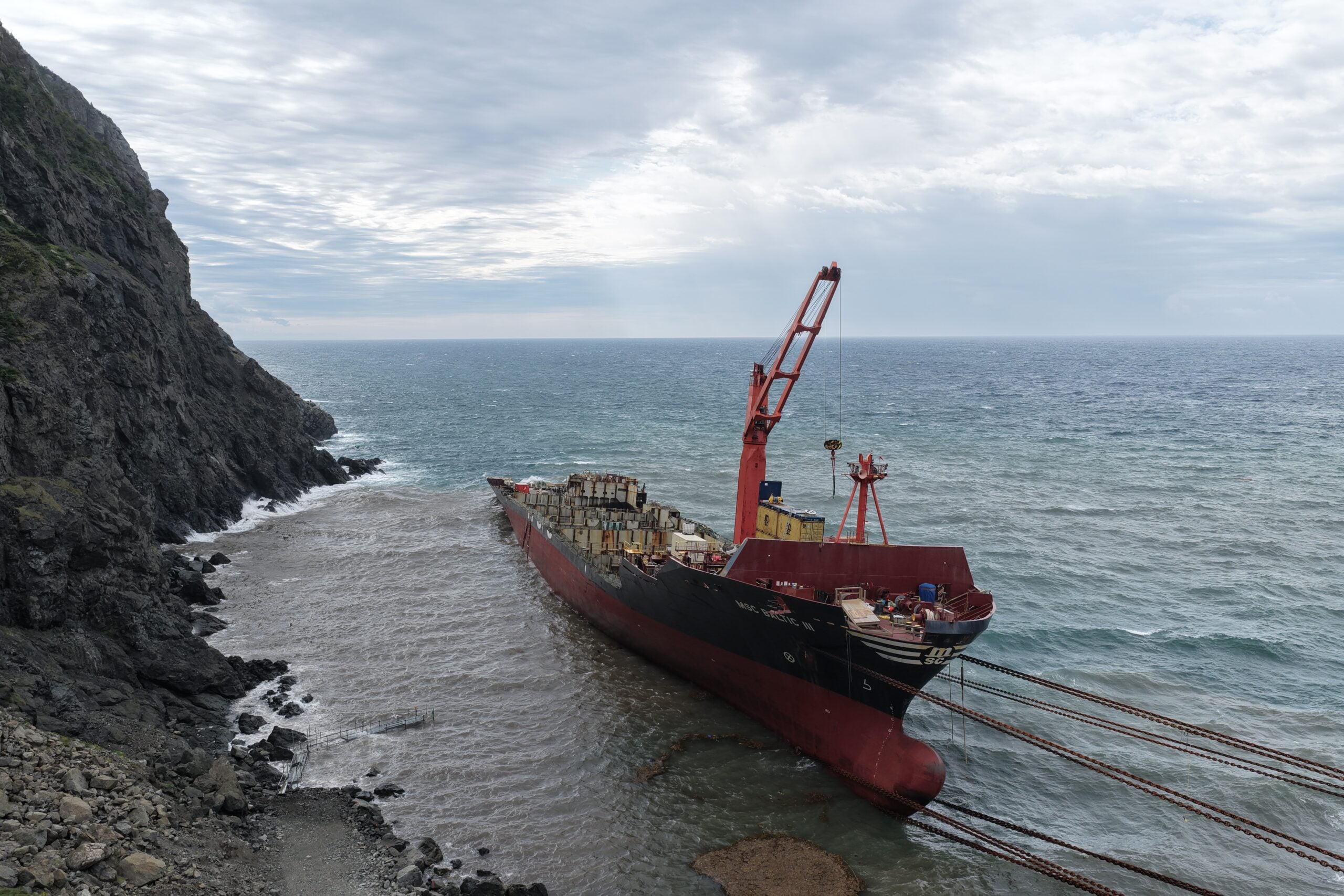
The grounded MSC Baltic III during wreck removal operations near Wild Cove, Newfoundland and Labrador. Crews have pulled the vessel about 53 meters toward shore as cutting and lightering work continues. Photo courtesy Canadian Coast Guard
MSC Baltic III Wreck Pulled Toward Shore as Removal Advances
Wreck removal crews have now pulled the grounded containership MSC Baltic III about 53 meters toward shore in Newfoundland and Labrador as salvage teams continue dismantling the vessel and removing steel from the wreck.
The Canadian Coast Guard said Resolve Marine plans to continue pulling the vessel during high tides, when added buoyancy can help move the wreck closer to shore.
Cutting and lightering operations are continuing aboard the vessel. Crews have removed about 4,200 tonnes of material so far, equal to roughly 40% of the wreck’s total tonnage, according to the Coast Guard.
The operation marks further progress in a lengthy salvage effort near Wild Cove on Newfoundland’s west coast, where the MSC Baltic III grounded in February 2025 after losing power during severe weather.
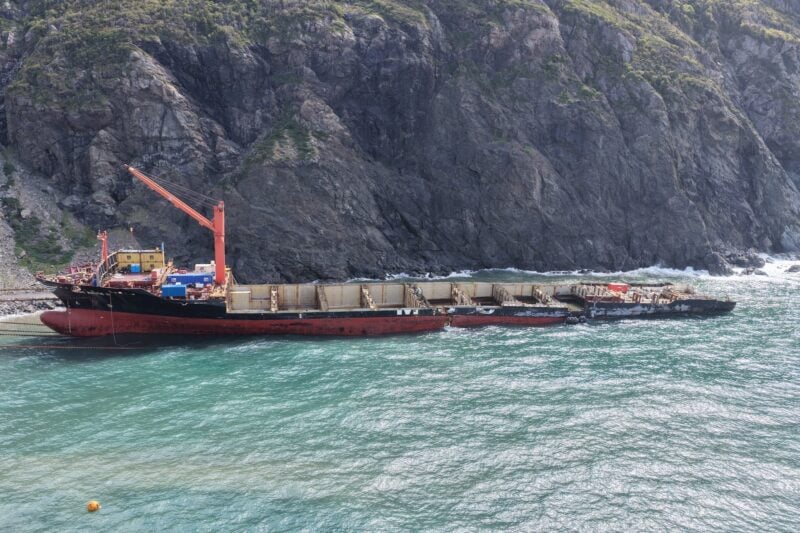
Resolve Marine began pulling the wreck toward shore on July 31 after months of cargo removal, site preparation and dismantling work. The vessel is being deconstructed as it is brought ashore rather than refloated.
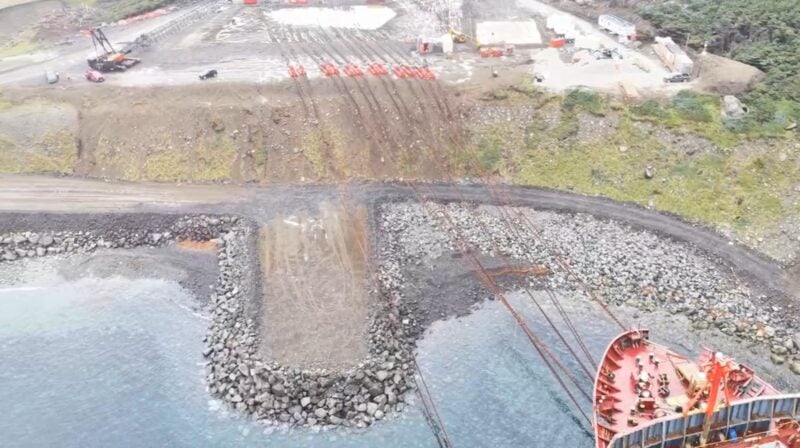
The partially dismantled MSC Baltic III alongside the rocky shoreline near Wild Cove, Newfoundland and Labrador, as wreck removal operations continue. Photo courtesy Canadian Coast GuardHeavy chains used to pull the wreck of the MSC Baltic III ashore run from the vessel to a prepared work area near Wild Cove, Newfoundland and Labrador. Photo courtesy Canadian Coast Guard
Of the 472 containers originally aboard, 471 were previously removed. One badly damaged container that could not be safely extracted is expected to remain with the wreck until it reaches shore.
Crews are also changing how workers access the vessel. A cableway system built earlier in the operation is now being dismantled, with personnel instead using a temporary gangway from shore.
A scrap pad has also been completed along the shoreline to support a crane being used for lightering operations.
Pollution monitoring remains a major part of the response.
The Coast Guard said limited numbers of tar balls and oily coatings continue to be found during daily shoreline inspections and are being cleaned up as conditions allow.
A slight sheen has also recently been observed outside the wreck.
Authorities said some pollution is expected during dismantling because residual fuel remains inside the vessel’s holds even though its bulk fuel was removed earlier in the response.
Absorbent boom has been placed inside the holds to help contain any releases, while pollution-response equipment and personnel will remain in place throughout the wreck-removal operation.
Earlier phases of the salvage also encountered hydrogen sulfide associated with submerged containers, requiring additional monitoring and safety measures for workers. Officials previously said the hazard did not pose a threat to the public.
The MSC Baltic III became firmly lodged against the shoreline after grounding and suffered extensive structural damage, eventually turning the response from a potential refloating operation into a large-scale wreck removal project.
All 20 crew members were safely evacuated by helicopter following the grounding.
The Canadian Coast Guard continues to oversee the response, including environmental monitoring and review of the wreck-removal work.
Authorities are again warning the public to stay away from the site while pulling, cutting and heavy-lifting operations continue.
“The safety of workers and the protection of the marine environment continue to be the main priorities,” the Coast Guard said.
Canada is committing C$1.2 billion (USD $843 million) to ocean protection and marine safety as the federal government prepares for a significant increase in commercial vessel traffic tied to new...
By Brendan Murray Sep 19, 2026 (Bloomberg) –The American Century often draws a crowd when the ship pulls into the Port of Duluth-Superior to load Minnesota iron ore. Kids cheer when the captain...
The Canadian Coast Guard has officially welcomed the CCGS Judy LaMarsh into its fleet, marking the first addition of a large vessel to its Great Lakes operations in more than three decades....
September 14, 2026
Total Views: 1375
Get The Industry’s Go-To News
Subscribe to gCaptain Daily and stay informed with the latest global maritime and offshore news
— just like 107,141 professionals
Secure Your Spot
on the gCaptain Crew
Stay informed with the latest maritime and offshore news, delivered daily straight to your inbox
— trusted by our 107,141 members
Your Gateway to the Maritime World!
Essential news coupled with the finest maritime content sourced from across the globe.

 Join The Club