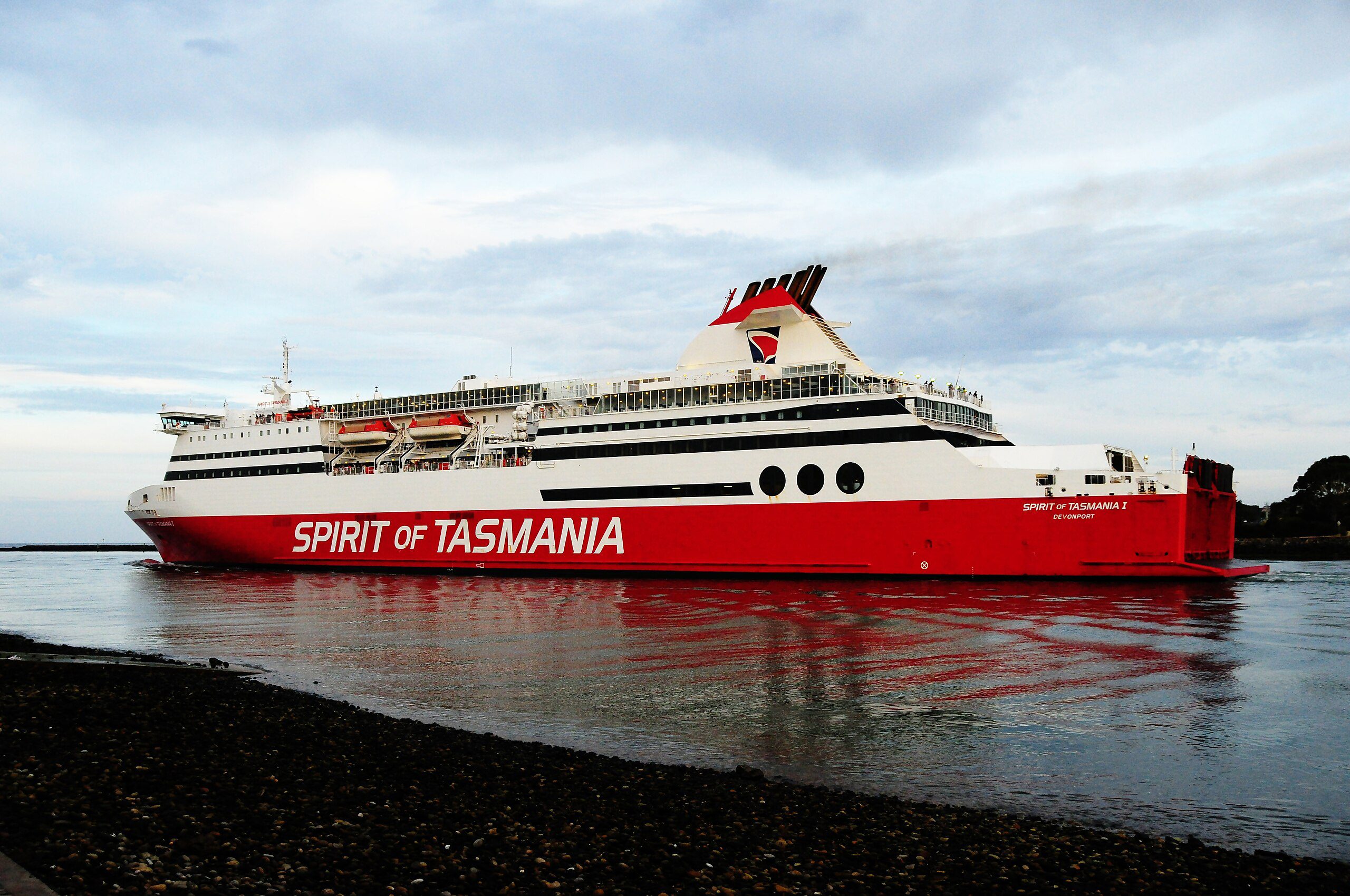
A second engineer aboard the Spirit of Tasmania I sustained serious injuries requiring surgery after falling during engine maintenance work in March, with an official investigation determining that safety management procedures were not properly followed during the incident.
The accident occurred on March 6, 2025, while the vessel was berthed in Geelong, Victoria, during what began as a routine oil change on one of the ship’s main engine turbochargers. However, complications during the work led the crew to decide to replace the turbocharger’s bearing housing cover plate, requiring multiple trips climbing on and off the engine.
While descending from the engine, the second engineer fell heavily and suffered a serious knee injury that later necessitated surgical intervention.
The Australian Transport Safety Bureau (ATSB) investigation uncovered several critical safety lapses. Despite regular access being required, no standard safe route to the top of the main engine had been defined or established.
“After working on top of the main engine, the second engineer walked along its rocker covers before stepping across to the opening in the railing, slipping off the cover and falling,” ATSB Director of Transport Safety Stuart Macleod said.
The investigation identified that the decision to replace the bearing housing cover plate represented a significant expansion of the originally planned work scope, yet existing safety protocols were not updated accordingly.
“Despite this significant change in scope, the existing Job Safety Analysis was not reviewed, nor was a new prestart safety checklist completed by those conducting the work,” Macleod said. “This was due to perceived time pressure, and a perception by those involved that the work was low risk. Consequently, the risk of slips and falls involved in the work was not properly considered.”
The ATSB’s broader findings revealed that the Spirit of Tasmania I‘s safety management system procedures for Job Safety Analyses were not effectively implemented at the time of the incident.
“This meant the JSA for replacing the main engine turbocharger bearing housing cover plate was not in place, and JSAs covering other work on top of the engine did not address the risks involved in accessing the work site,” Macleod said.
Following the accident, ship manager TT-Line implemented several corrective measures, including providing a removable work platform for safe access to the engine tops on both Spirit of Tasmania I and sister ship Spirit of Tasmania II. The company also updated JSAs related to turbocharger and exhaust manifold work to include access risks.
Macleod emphasized broader lessons from the investigation, noting that the ATSB has examined numerous incidents involving unsafe shipboard working practices.
“A recurring factor in such incidents is the people involved in the work not recognising the hazards involved and/or considering the work routine and low risk,” he said.
“This investigation highlights the importance of effective risk controls, which requires staff at all levels on board and ashore to contribute towards the effective implementation of the shipboard safety management system,” Macleod concluded.
The full report can be found on the ATSB website.

 Join The Club