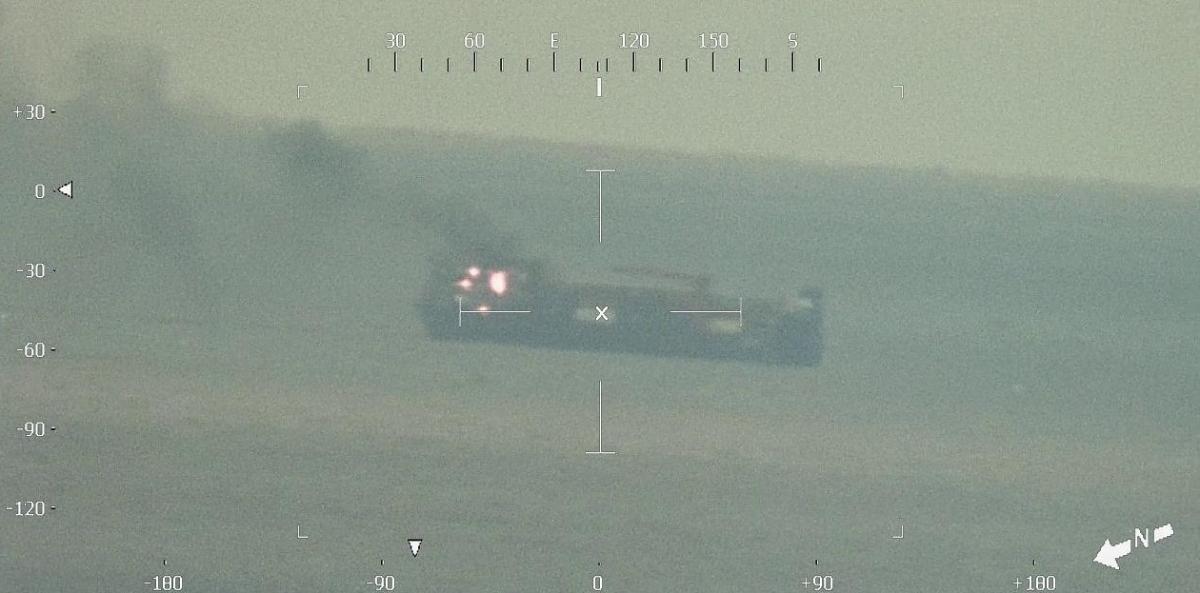
A Russian cargo ship linked to Moscow’s military logistics network caught fire after a drone strike in the Gulf of Finland on Saturday, drifting into Finnish territorial waters and triggering an emergency maritime rescue operation.
The Russian-flagged Sparta II, a sanctioned cargo vessel with a history of transporting military equipment, was struck in international waters west of Gogland Island, known in Finnish as Suursaari, according to Finland’s Ministry of Defence.
Finnish military authorities detected the attack at approximately 8:40–8:50 a.m. local time, when the vessel was roughly 50 kilometers west of the island. The damaged ship subsequently lost maneuverability and drifted into Finnish territorial waters, where the Finnish Border Guard assumed responsibility for coordinating rescue operations.
The incident took another turn shortly after midday when a Russian helicopter was suspected of entering Finnish airspace near Loviisa, reaching as far as 4.1 kilometers (2.5 miles) into Finnish territory.
Finland’s Defence Minister Antti Häkkänen said the suspected airspace violation may have been connected to rescue or surveillance operations involving the damaged cargo ship.
“The suspected airspace violation may be related to rescue or monitoring operations concerning the damaged cargo vessel in the Gulf of Finland,” Häkkänen said in a statement translated from Finnish.
The Finnish Border Guard is investigating the incident, which occurred at approximately 12:34 p.m. local time.
Fire Raises Fears of Explosions and Sinking
The Sparta II remained ablaze Saturday afternoon, with Finnish authorities warning that the uncontrolled fire could lead to further explosions or even the loss of the vessel.
The Finnish Border Guard said rescue vessels had reached the scene south of Loviisa, where authorities established a restricted area around the damaged ship.
An official update issued at 2:58 p.m. local time said the crew had not been forced to abandon the vessel and that no environmental damage had been detected. Finnish authorities were preparing to assist with firefighting, evacuate personnel if necessary, and respond to any marine pollution.
In a subsequent briefing reported by Yle, Finnish officials said the ship’s 16 crew members were evacuating into rescue craft. The vessel had anchored at approximately 3:45 p.m., and the anchor was holding.
Russian rescue vessels were expected to arrive later Saturday. According to Finnish officials, Russia intended to tow Sparta II back into Russian waters once rescue operations were completed.
The Finnish Border Guard emphasized that foreign vessels would require Finnish permission to participate in rescue operations within its area of responsibility.
Sanctioned Vessel With Russian Military Connections
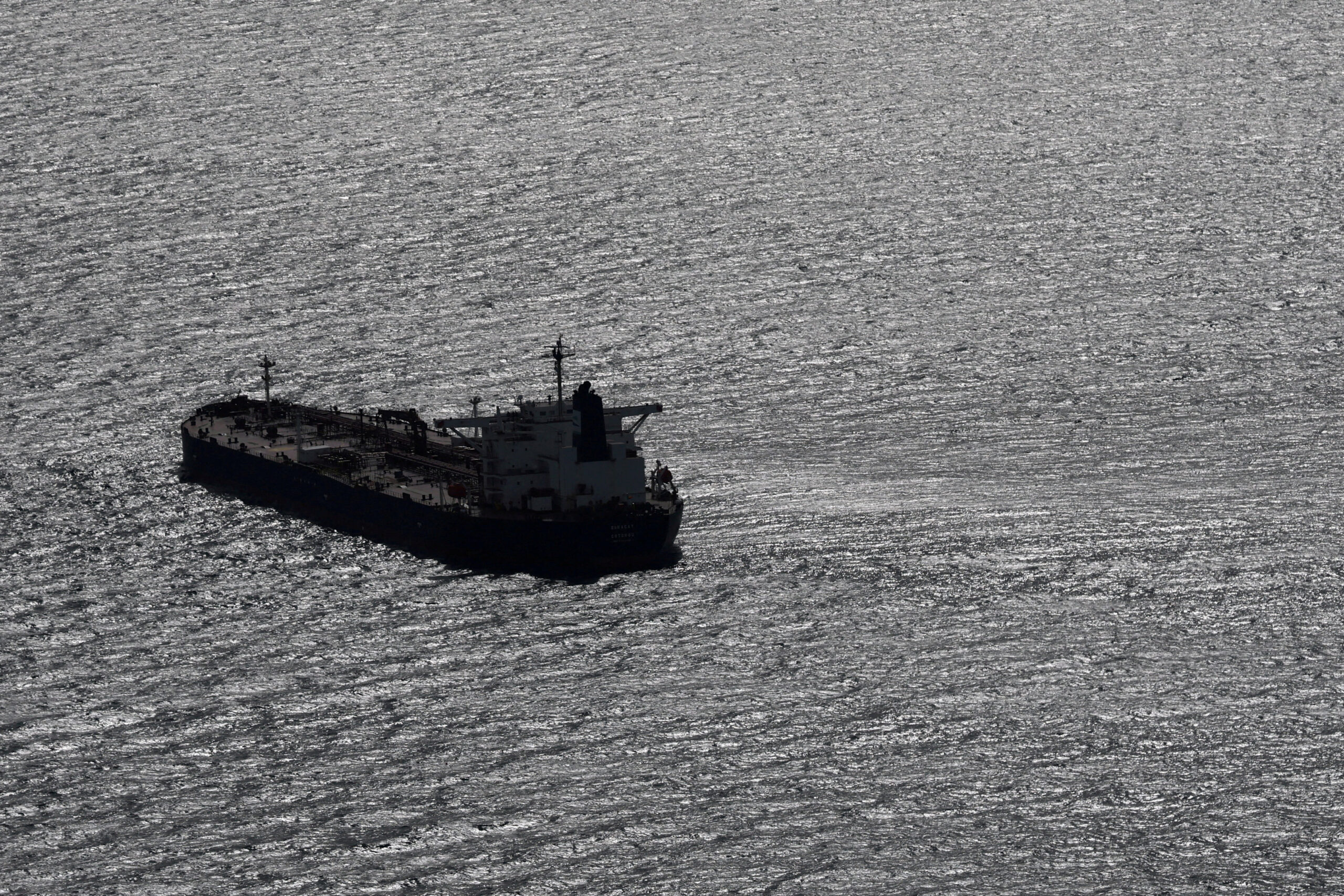
The roll-on/roll-off Sparta II, IMO 9160994, is associated with Oboronlogistika, a Russian state-linked logistics company that provides maritime transportation services supporting the Russian Ministry of Defence.
The vessel has previously been identified as part of Russia’s military logistics network, including operations involving the movement of military equipment between Russian ports and overseas locations.
Sparta II was sanctioned by the United States in 2022 over its connections to Oboronlogistika and has been linked to shipments of military equipment from Syria to Russia.
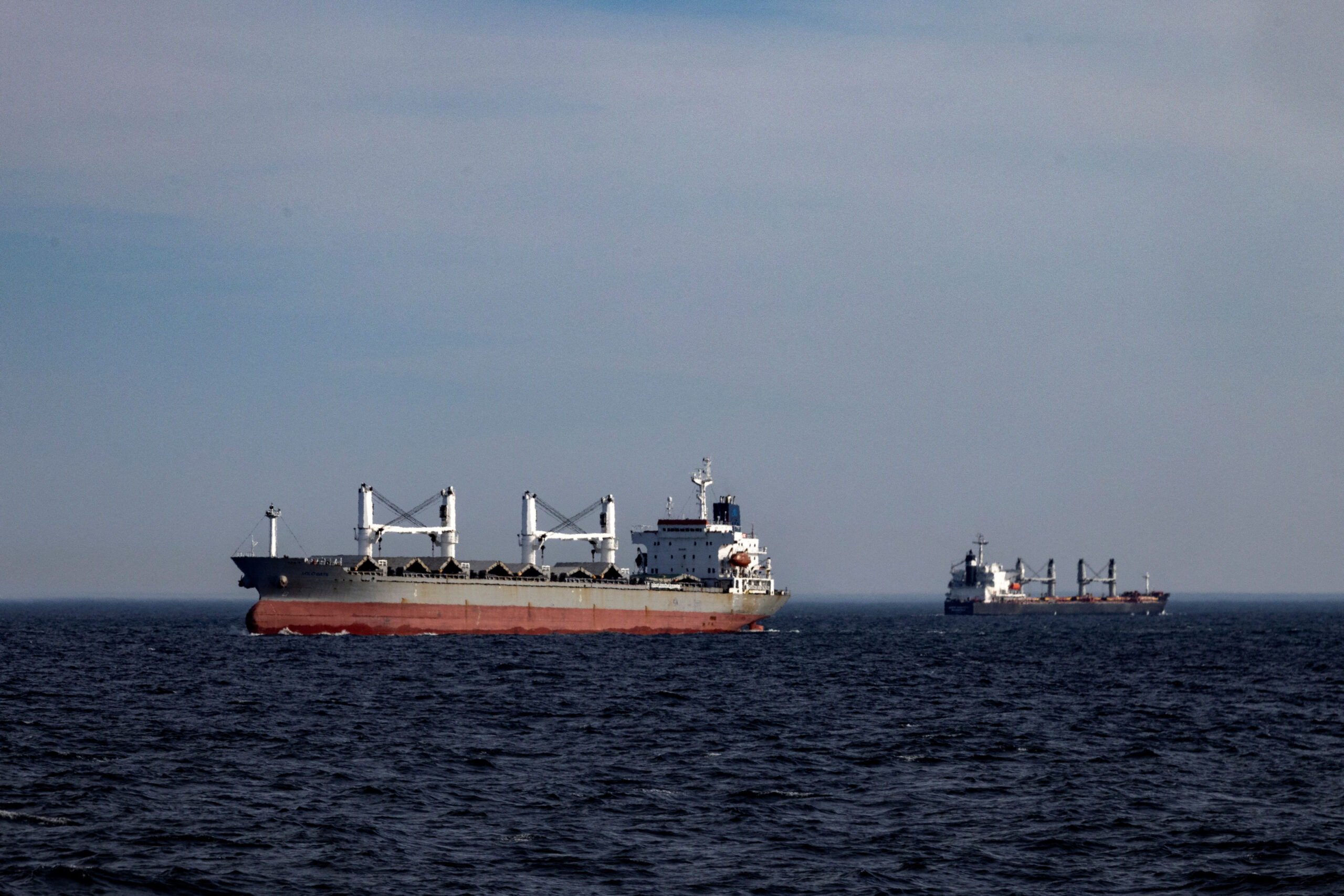
The ship has also operated cargo services connecting mainland Russia with its Baltic exclave of Kaliningrad, carrying vehicles, containers and other freight.
Despite its military connections, Finnish authorities said they could not confirm whether the vessel was carrying weapons or military equipment when it was attacked.
Finland Imposes Air and Maritime Restrictions
The drone strike prompted Finland to reintroduce temporary restrictions on aviation and maritime activity in the eastern Gulf of Finland.
The Ministry of Defence said the measures were intended to protect civilians and allow authorities to respond to any additional drone threats.
Finland also notified its allies of the incident, underscoring the security implications of a military attack taking place near the territorial waters of a NATO member.
Finnish authorities said they had received information about Ukrainian drone operations targeting Russia’s Leningrad region earlier Saturday and had taken precautions against drones potentially straying into Finnish territory.
Although Finnish officials linked the attack on Sparta II to Ukrainian drones, there was no independently verified confirmation of responsibility from Kyiv in the official statements reviewed.
Finland’s Defence Forces said the incident did not represent an immediate military threat to the country and that commercial shipping in the Baltic Sea had not been endangered.
War Reaches Another Baltic Shipping Corridor
The incident highlights the growing risks to commercial shipping as the war between Russia and Ukraine extends beyond the Black Sea.
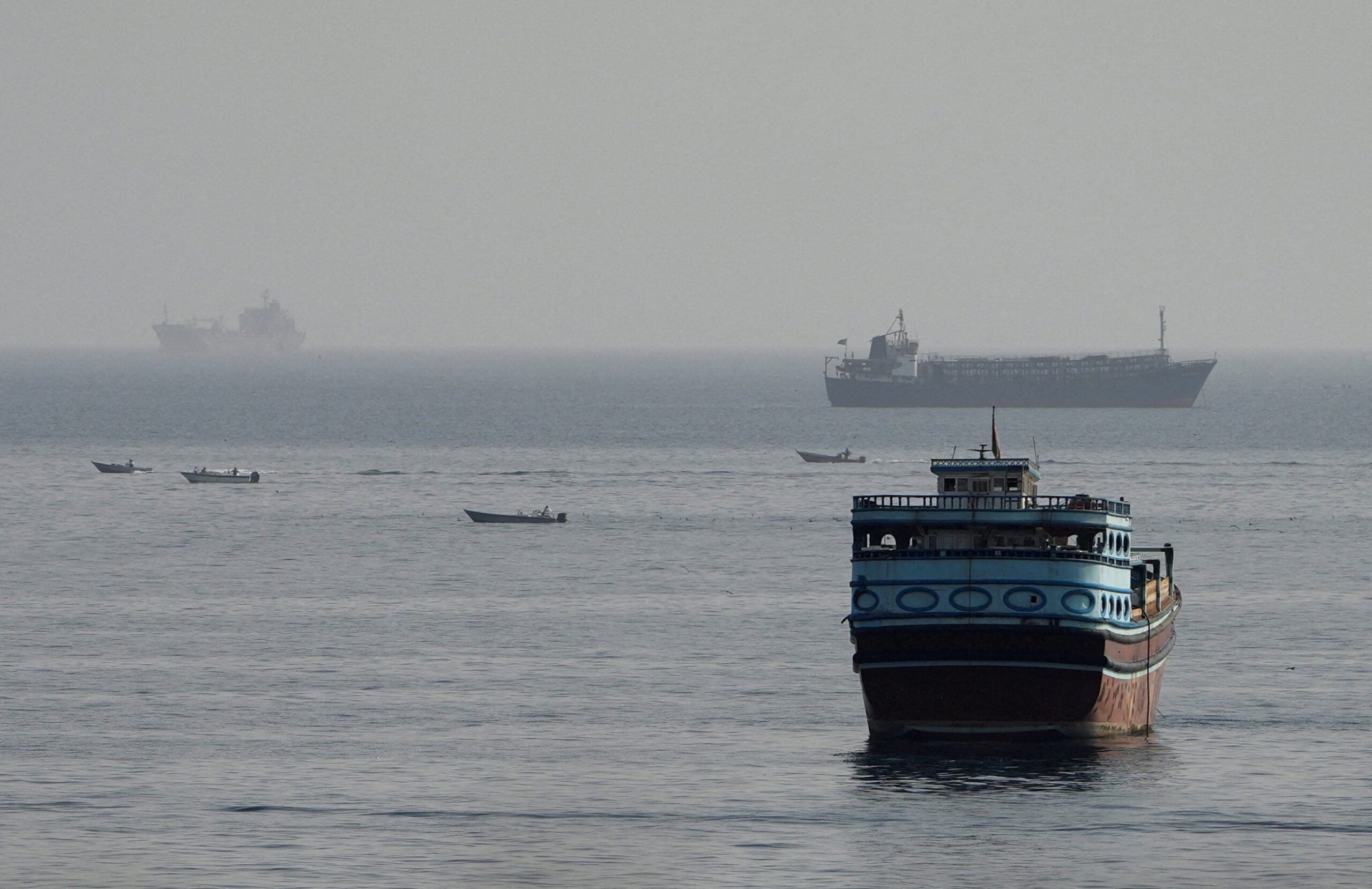
The Gulf of Finland is one of Russia’s most important maritime corridors, providing access to the Baltic Sea from St. Petersburg and the major oil and cargo terminals at Ust-Luga and Primorsk. It is also a heavily trafficked international shipping route bordered by NATO members Finland and Estonia.
Unlike the Black Sea, where merchant vessels have repeatedly been caught up in military operations, the Gulf of Finland has remained a major commercial shipping corridor despite heightened tensions and security concerns since Russia’s full-scale invasion of Ukraine in 2022.
The attack on Sparta II raises fresh questions about the vulnerability of Russian military-linked shipping in the Baltic and the potential consequences for neighboring countries when damaged vessels drift across maritime boundaries. It also illustrates the challenges facing coastal authorities when a military incident involving a sanctioned foreign vessel develops into a maritime rescue and potential pollution emergency.
The Finnish Border Guard said the situation did not pose a danger to other maritime traffic, while rescue and firefighting operations continued in coordination with other authorities.
The fate of Sparta II, including whether the damaged ship can be safely towed back to Russian waters, remains uncertain.

 Join The Club