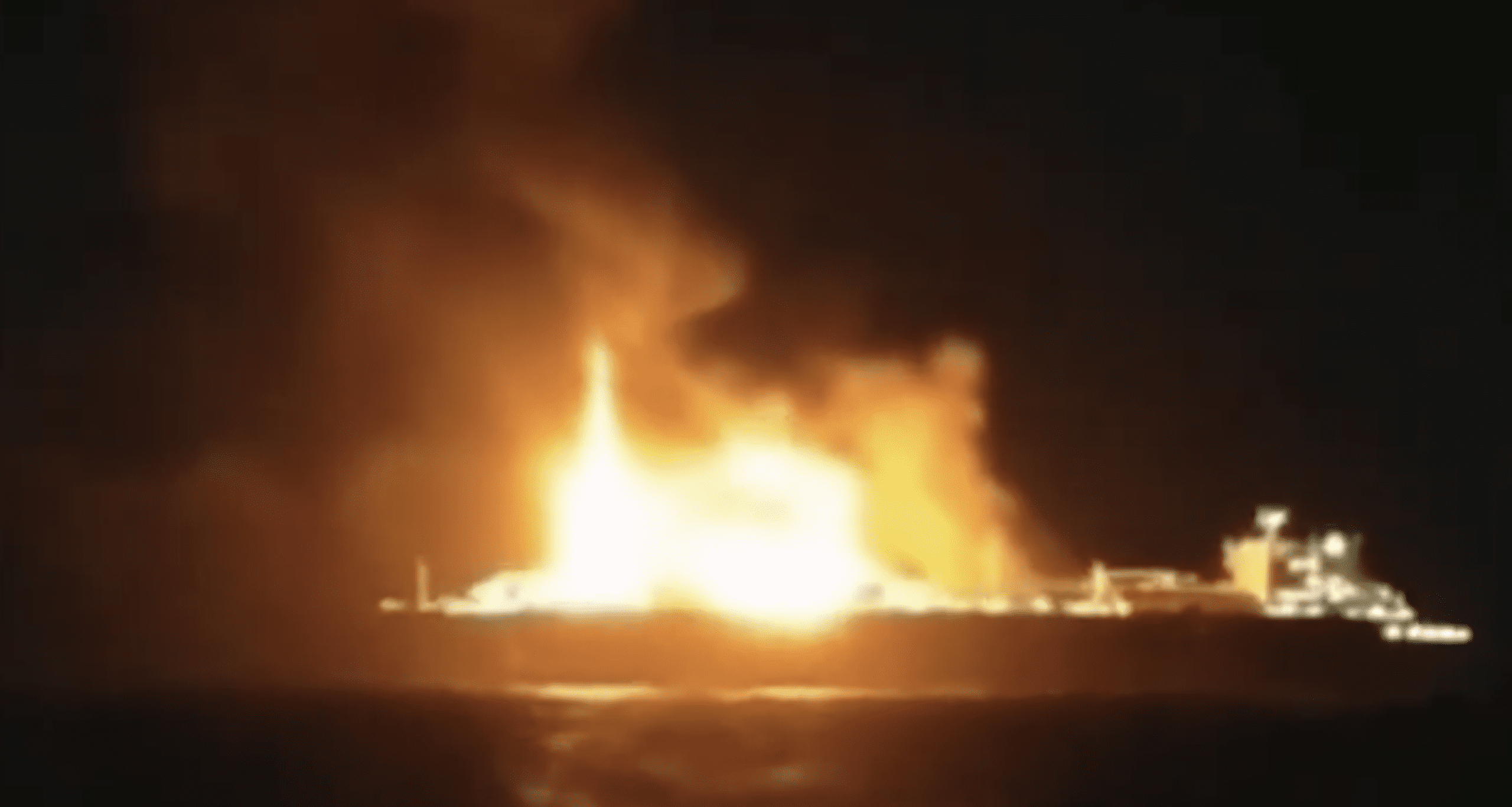
An LNG carrier identified as the Arctic Metagaz, part of Russia’s emerging shadow fleet transporting sanctioned liquefied natural gas, was reportedly on fire early Tuesday in the central Mediterranean off the coasts of Malta and Libya.
Footage circulating on the platform X appeared to show a large LNG carrier engulfed in flames following what several social media accounts described as explosions. The authenticity of the video could not immediately be verified. However, preliminary visual analysis suggests the imagery does not match previously documented LNG carrier fire incidents that have circulated online in recent years.
Mediterranean Sea emergency: The Russian gas tanker ARCTIC METAGAZ (IMO 9243148) is on fire off the coast of Libya. The vessel is under sanctions for illegally transporting LNG. A preliminary attack by naval drones and a series of explosions are reported. A massive fire is on… pic.twitter.com/Wh1Y8qIfZf
A representative of the Diaplous Group, a maritime security and risk management firm based in Greece, confirmed to gCaptain by phone that the vessel was indeed on fire. “We can confirm it happened, but we do not know any further details at this time,” the representative said.
EOS Risk Group and Bloomberg are now also reporting on the incident. EOS’ alert reads: “At approximately 0400LT a tanker, ARCTIC METAGAZ (IMO: 9243148) is reported to have suffered a drone attack while in transit eastbound in the Mediterranean, SE of Malta. Local reporting indicated a fire onboard. There was no distress signal by the vessel and no information on the status of the crew or cargo…. ARCTIC METAGAZ, which is under US and UK sanctions since 2024, had departed Murmansk, Russia, on 24 February after loading cargo at an FSU and was likely in transit toward Suez.
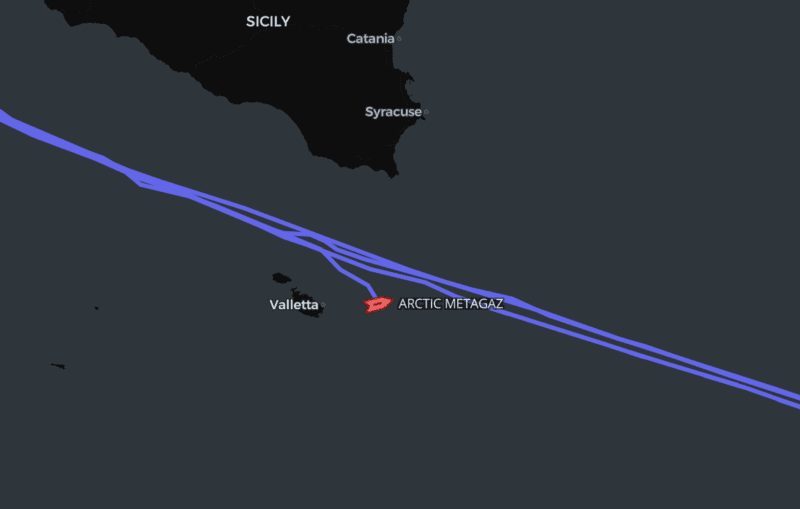
According to vessel tracking data, the Arctic Metagaz loaded LNG at the Saam floating storage unit (FSU) on February 18 before transiting around the United Kingdom and Spain into the Mediterranean. The vessel’s Automatic Identification System (AIS) signal was reportedly lost yesterday while it was approximately 30 nautical miles off Malta’s northeastern coast.
Arctic Metagaz’s recent AIS track off the coast of Malta (Source: MagicPort Maritime Intelligence)
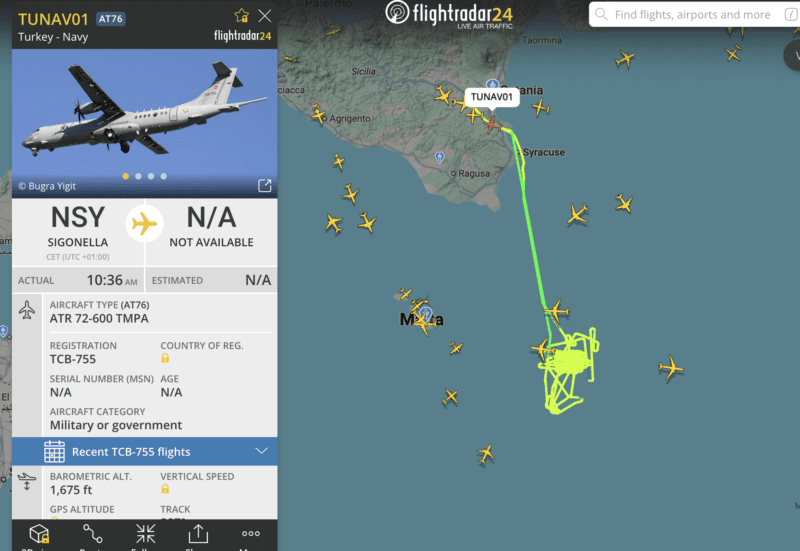
Data from Flightradar24 showed a Turkish Navy ATR 72-600 maritime patrol aircraft circling the area near the last known position of the vessel, suggesting regional authorities were actively monitoring the situation.
Screenshot of Turkish Navy patrol circling near Arctic Metagaz’s last known location. (Source: Flightradar24)
Greek media outlets reported that the sanctioned vessel may have been struck around 4:00 a.m. local time, followed by multiple explosions. These claims remain unconfirmed.
The Armed Forces of Malta (AFM) Maritime Squadron, the country’s primary maritime safety, law enforcement, and search and rescue entity, did not immediately respond to requests for comment.
It remains unclear whether the incident was the result of an accident, mechanical failure, or a deliberate attack by air or sea. There is also no confirmation at this stage whether the event is linked to escalating tensions involving Iran or represents a targeted Ukrainian operation.
The Arctic Metagaz is among roughly a dozen vessels used to transport sanctioned LNG from Russia’s Arctic LNG 2 facility to buyers at China’s Beihai Terminal. These vessels have drawn increased scrutiny amid Western sanctions targeting Russia’s energy exports.
Ukraine has previously demonstrated an ability to strike Russian naval and logistics assets far beyond the Black Sea. Ukrainian intelligence and special operations units have claimed responsibility for sabotage and explosive attacks against Russian-linked vessels and infrastructure in European waters.
The first confirmed Ukrainian attacks on a vessel in the Mediterranean occurred just over two months ago when the Qendil, an Omani-flagged “shadow fleet” tanker was struck between Crete and Malta.
French naval forces intercepted and diverted the Russian-linked oil tanker Grinch on Thursday in the western Mediterranean between the southern coast of Spain and northern Morocco, in the first known case of a crude oil shipment loaded in Russia’s Arctic being seized under Western sanctions.
In a first for Germany and a potential turning point in the battle over so-called “shadow fleet” tankers, German authorities refused the Russian-linked oil tanker Tavian entry into their territorial waters in the Baltic Sea on January 10.
Drones struck two oil tankers in the Black Sea on Tuesday, including one chartered by U.S. oil major Chevron, the companies involved said, as they sailed toward a terminal on the Russian coast.
January 13, 2026
Total Views: 2091
Get The Industry’s Go-To News
Subscribe to gCaptain Daily and stay informed with the latest global maritime and offshore news
— just like 107,166 professionals
Secure Your Spot
on the gCaptain Crew
Stay informed with the latest maritime and offshore news, delivered daily straight to your inbox
— trusted by our 107,166 members
Your Gateway to the Maritime World!
Essential news coupled with the finest maritime content sourced from across the globe.

 Join The Club