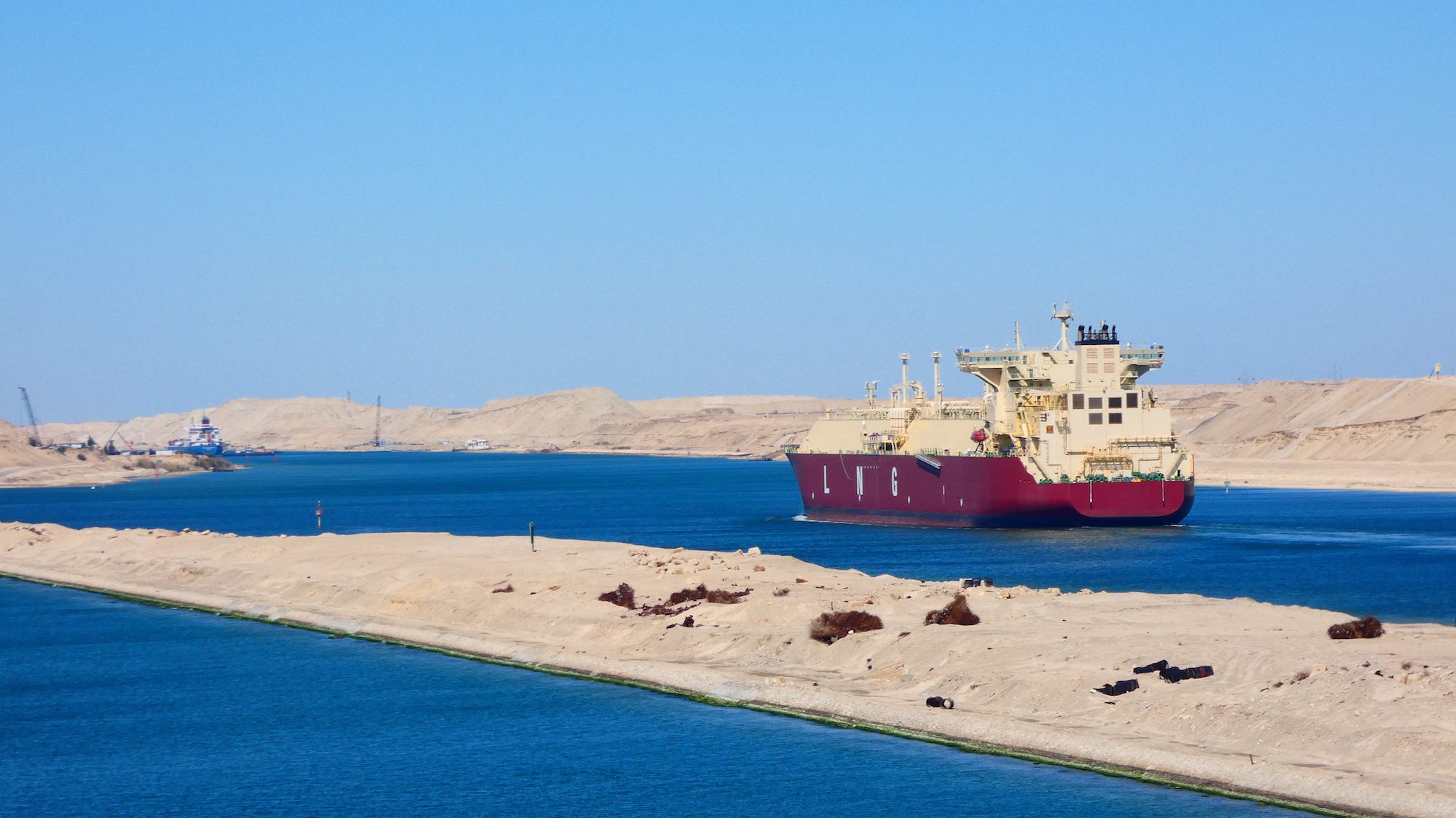
Russia’s Arctic LNG shadow fleet appears to be operating largely undeterred by escalating conflict in the Middle East, with at least seven tankers recently transiting or currently en route through the Red Sea and Bab el-Mandeb strait en route to and from Asia, even as many global shipping operators reroute to avoid the region.
While traffic through the Red Sea corridor has thinned amid rising tensions between the United States, Israel and Iran, vessels lifting Russian liquefied natural gas from the Arctic have continued to use the shortcut to Asia, ship-tracking data over the weekend show.
The movements contrast with mounting uncertainty over Qatari exports, which must pass through the Strait of Hormuz, a chokepoint that has seen slower traffic and heightened security concerns in recent days.
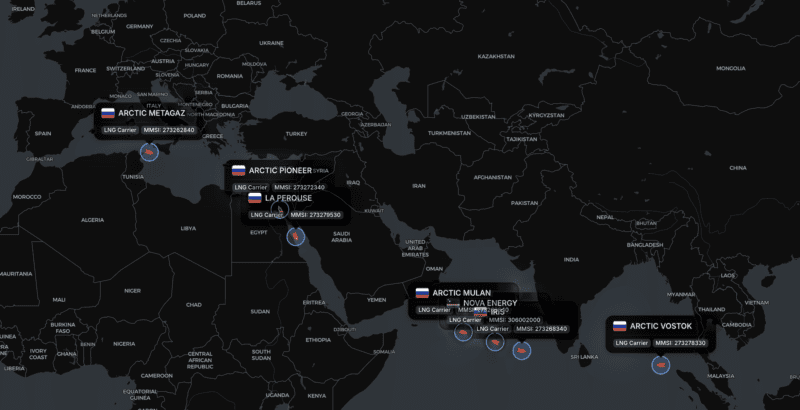
At least seven LNG carriers linked to Russia’s Arctic LNG trade have either recently passed through the Red Sea and the Bab el-Mandeb strait or are currently sailing toward the corridor en route to China, according to AIS data reviewed this week.
Southbound LNG carrier La Perouse has completed its transit of the Suez Canal and entered the Red Sea, while northbound Arctic Pioneer is approaching the canal after passing through the Red Sea.
Further south, Arctic Mulan and Iris are sailing east after clearing the Bab el-Mandeb strait. In the Indian Ocean, Nova Energy and Arctic Vostok remain on course for the Red Sea and Suez, while Arctic Metagaz is heading toward the canal from the Mediterranean.
Positions of Russia’s Arctic LNG shadow fleet on March 2, 2026. (Source: MagicPort Maritime Intelligence)
Several global container lines and LNG carrier operators, by contrast, have opted to divert vessels around the Cape of Good Hope in South Africa to reduce exposure to potential escalation.
Russia’s Arctic LNG 2 project, led by Novatek, has faced sweeping Western sanctions since last year, forcing it to rely on a limited pool of ice-class Arc7 carriers and a growing network of conventional LNG carriers operating outside mainstream Western financing and insurance channels. After loading in the Arctic, cargoes are typically transshipped onto conventional tankers for onward delivery to Asia.
Access to the Red Sea corridor significantly shortens the voyage to China compared with a detour around southern Africa, reducing sailing times and tonne-miles. For Novatek, whose fleet of conventional LNG carriers is limited, avoiding the longer Cape route is critical to maintaining cargo rotation and freeing vessels for additional liftings.
Major energy and container shipping companies have cited security risks in the region as grounds for rerouting. The Cape of Good Hope diversion adds roughly 10 to 15 days to voyages between Europe and Asia, depending on speed and weather, increasing fuel costs and tightening vessel availability.
In contrast, Russian-linked LNG carriers have so far continued to transit the Red Sea, suggesting that the shadow fleet – often operating with non-Western insurers, opaque ownership structures and flags of convenience – may face fewer commercial constraints than mainstream operators bound by stricter risk assessments and compliance policies.
Currently, China’s Beihai LNG terminal remains the only confirmed buyer receiving cargoes from Arctic LNG 2. The terminal has not been sanctioned by either the United States or the European Union more than six months after accepting its first cargo from the project, potentially easing concerns among counterparties about immediate secondary sanctions exposure.
Any prolonged disruption to traffic through Hormuz could reshape buying patterns in Asia. Qatar is one of the world’s largest LNG exporters, and sustained delays or perceived risks to its shipments could prompt Asian buyers to seek alternative volumes, including discounted Russian cargoes.
For now, Russia’s Arctic LNG flows appear operationally intact despite broader turmoil. Whether that resilience translates into expanded market access in the months ahead remains to be seen.
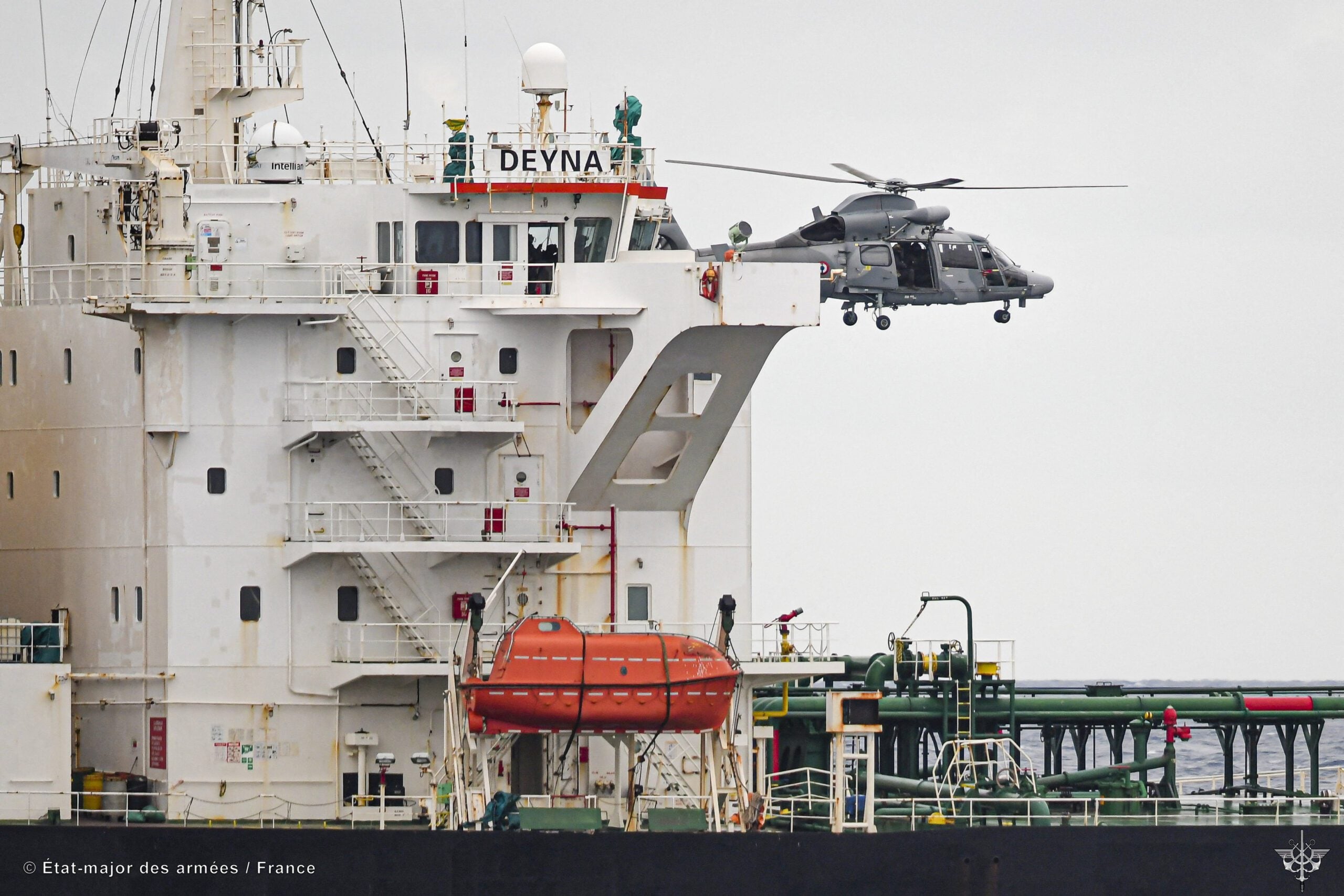
The French Navy seized an oil tanker on Friday in the Western Mediterranean that President Emmanuel Macron said belonged to Russia's shadow fleet, a network of vessels that enables Moscow to export oil despite Western sanctions.
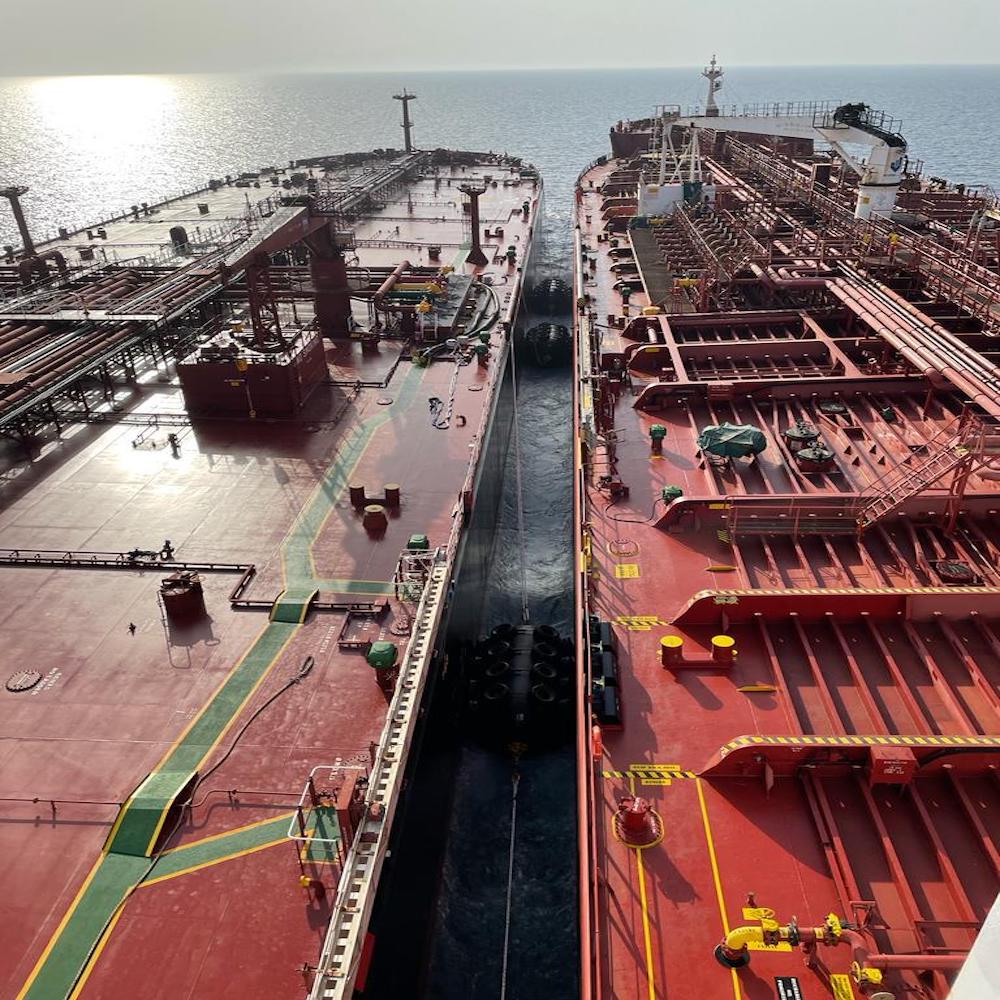
Saudi Arabia’s race to bypass the Strait of Hormuz has led to a buildup of oil supertankers waiting off the kingdom’s Red Sea coast to collect cargoes, as Riyadh tries to overcome unprecedented disruption caused by the Iran war.
In the past day or so, 11 very-large crude carriers reached the port of Yanbu and are now waiting nearby before starting loading, ship-tracking data compiled by Bloomberg show.
Energy export data shows South Korean jet fuel exports to the United States West Coast is dropping as countries around the world are holding onto the energy for its own self-preservation.
March 10, 2026
Total Views: 1252
Get The Industry’s Go-To News
Subscribe to gCaptain Daily and stay informed with the latest global maritime and offshore news
— just like 107,535 professionals
Secure Your Spot
on the gCaptain Crew
Stay informed with the latest maritime and offshore news, delivered daily straight to your inbox
— trusted by our 107,535 members
Your Gateway to the Maritime World!
Essential news coupled with the finest maritime content sourced from across the globe.

 Join The Club