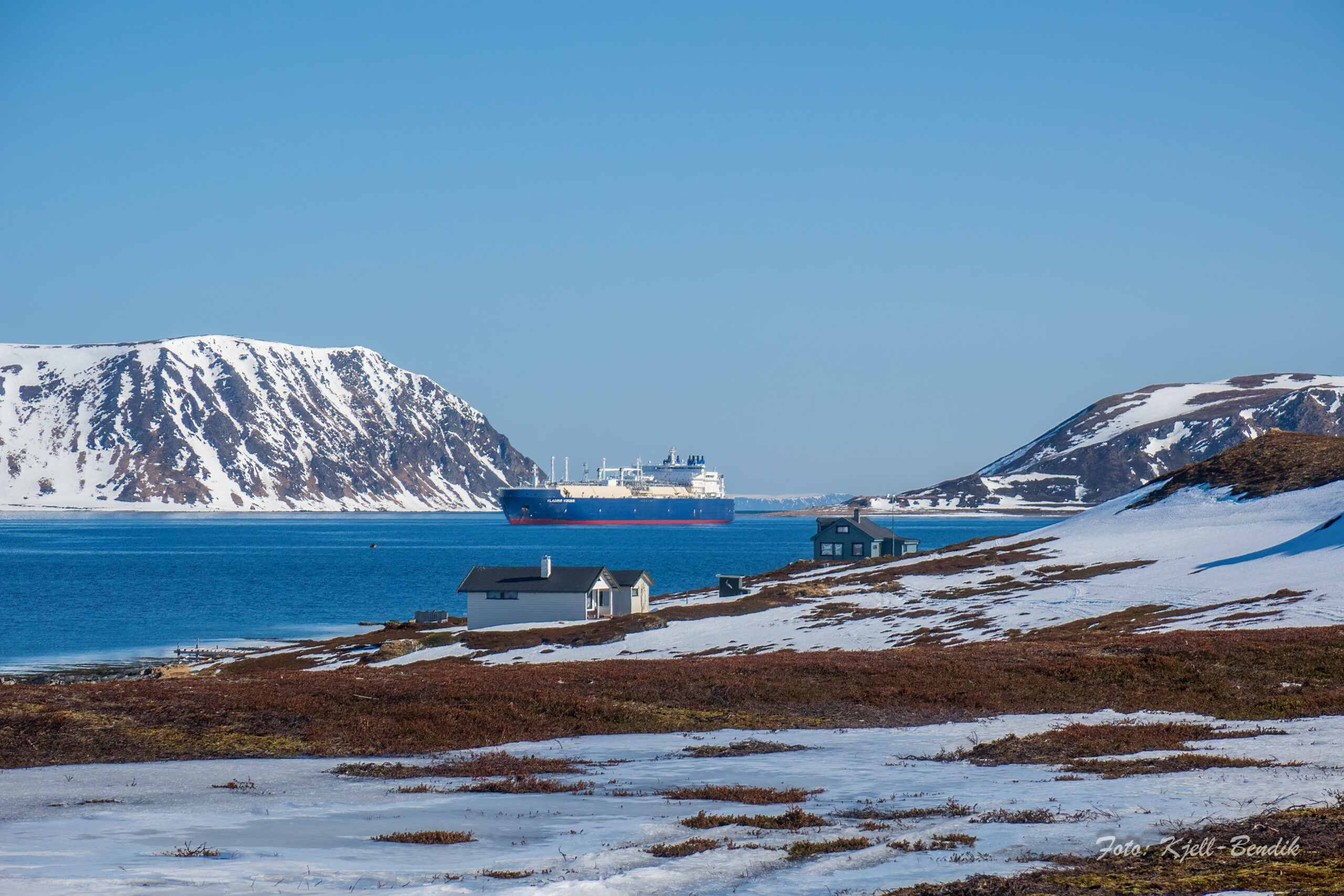
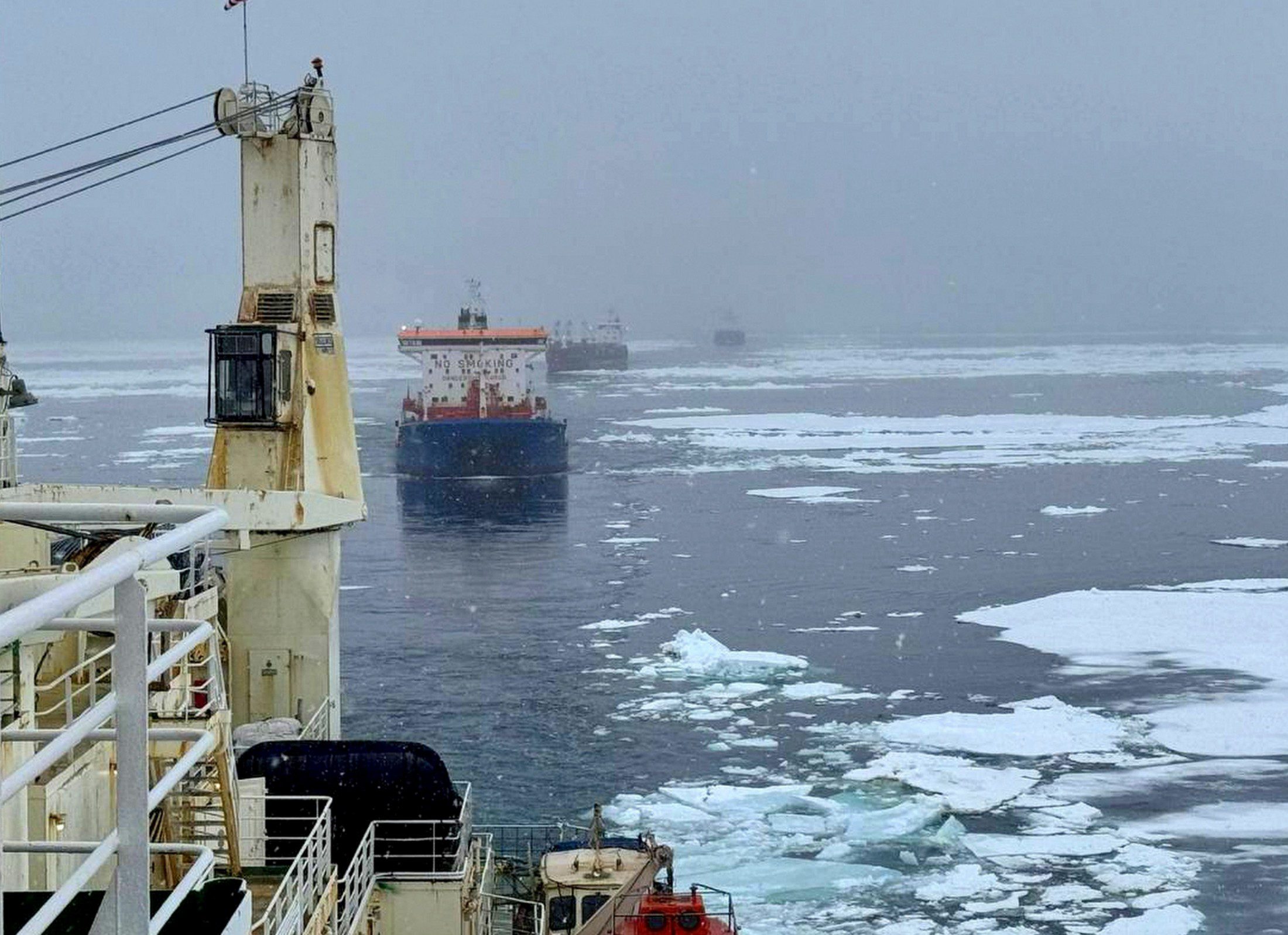
Energy giant Novatek uses the ship-to-ship transfer of LNG to optimize the utilization of its fleet of ice-capable carriers. Mounting Western sanctions have rendered parts of Novatek’s logistics network, including two floating LNG storage units, unusable.
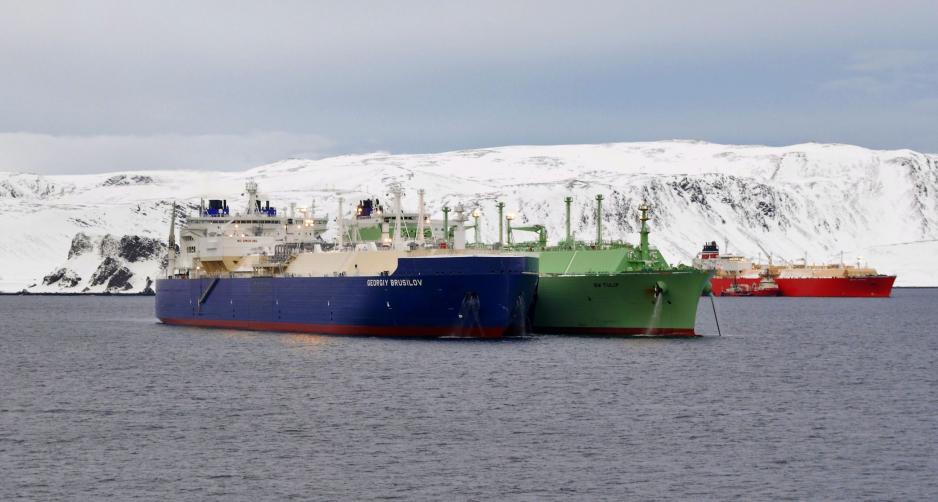
The first STS of the 2024/25 winter involves the Arc7 ice-class vessel Nikolay Urvantsev and Chinese newbuild Wen Cheng. Transfers routinely take around 48 hours.
Satellite images show Nikolay Urvantsev and Wen Cheng at East Kildin on November 18. Additional transfers can be expected with Singaporean carrier Gui Ying destined for Kildin and holding nearby after traveling up the Norwegian seaboard based on AIS information.
Sentinel 1 satellite image showing Nikolay Urvantsev and Wen Cheng at Kildin on November 18. (Source: Copernicus Sentinel)
The open water transfer of LNG will gain increasing importance in 2025 as the EU’s transshipment ban takes effect in March. Currently, around 20 percent of Russian Arctic LNG production from the Yamal project is re-exported via European terminals.
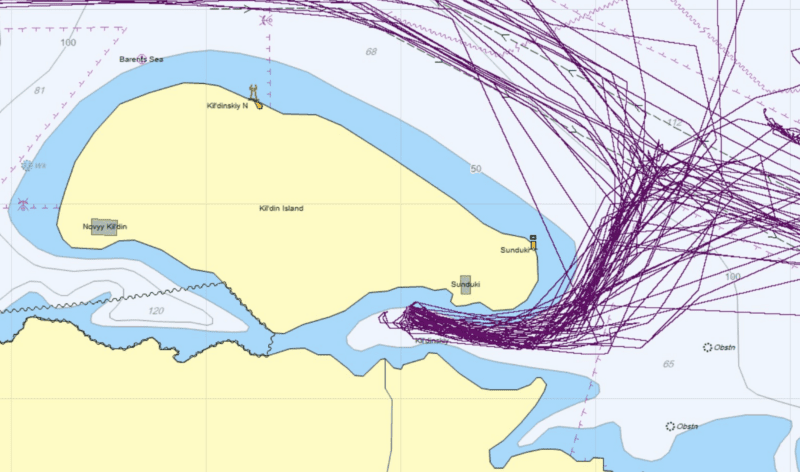
If Russia aims to transfer a similar volume via STS operations, the Kildin anchorage could see 55 additional reloadings throughout the next year. In a typical year the site sees around 20 transfers, primarily during winter when conventional LNG carriers can not travel to Yamal LNG.
AIS tracks of LNG carriers calling at Kildin anchorage in 2024. (Source: Vesselfinder)
Novatek previously relied on a transshipment point further west in sheltered Norwegian waters near the Nordkapp. It transferred several dozen cargoes near Honningsvåg between 2018 and 2020 before switching operations to Russian waters off Kildin Island in August of 2020.
The company abandoned transshipments in Norway as the results of significant “Western pressure,” Novatek stated at the time. Norway had also faced significant criticism from the United States for playing host to the transfer of Russian natural gas “undercutting Europe’s energy diversification efforts.”
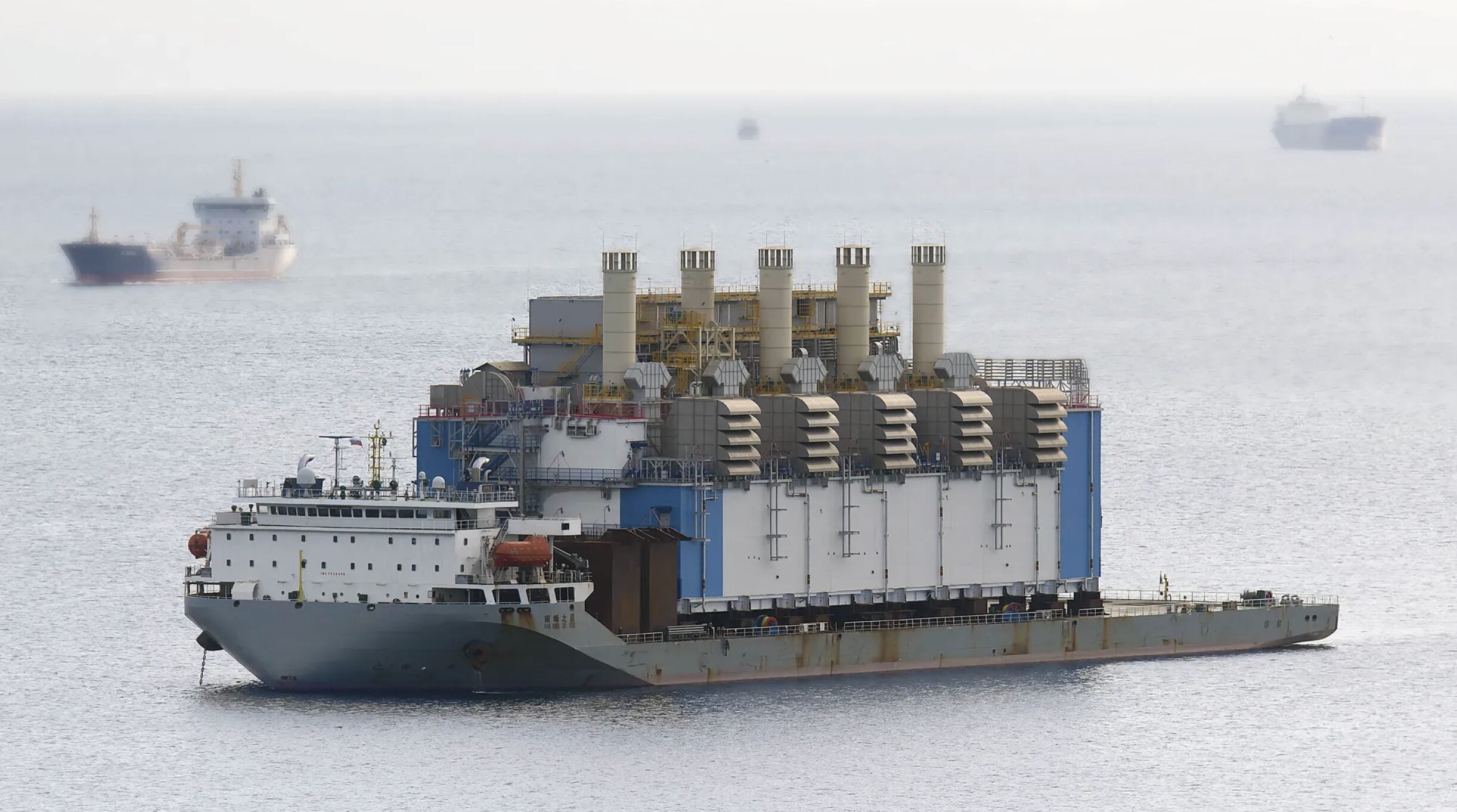
U.S. sanctions thwarted Novatek’s original plan to begin relying on the world’s largest floating LNG barge, Saam FSU, to transfer cargoes en route to Europe. It is off limits to products from Yamal LNG and remains largely unused except for a handful of test unloadings with sanctioned cargoes from Arctic LNG 2 earlier this summer.
Two U.S.-sanctioned heavy-lift vessels are carrying critical power-generation modules from China toward Russia’s Arctic LNG 2 project, according to satellite imagery and vessel-tracking data. The shipment is the latest sign that supply chains supporting the sanctioned liquefied natural gas project remain operational despite Western efforts to disrupt them.
Russia has almost doubled the fleet of tankers ferrying liquefied natural gas from its US-sanctioned Arctic project in less than a year, as the country pushes to boost lucrative exports of the super-chilled fuel in spite of Western restrictions.
Russia sent the first conventional, non-ice-class LNG carrier of the year to the sanctioned Arctic LNG 2 project on Wednesday as a growing fleet of crude oil tankers assembled nearby ahead of a summer push through the Northern Sea Route, underscoring Moscow’s expanding reliance on Arctic shipping to sustain energy exports despite Western sanctions.
July 29, 2026
Total Views: 2424
Get The Industry’s Go-To News
Subscribe to gCaptain Daily and stay informed with the latest global maritime and offshore news
— just like 107,005 professionals
Secure Your Spot
on the gCaptain Crew
Stay informed with the latest maritime and offshore news, delivered daily straight to your inbox
— trusted by our 107,005 members
Your Gateway to the Maritime World!
Essential news coupled with the finest maritime content sourced from across the globe.

 Join The Club