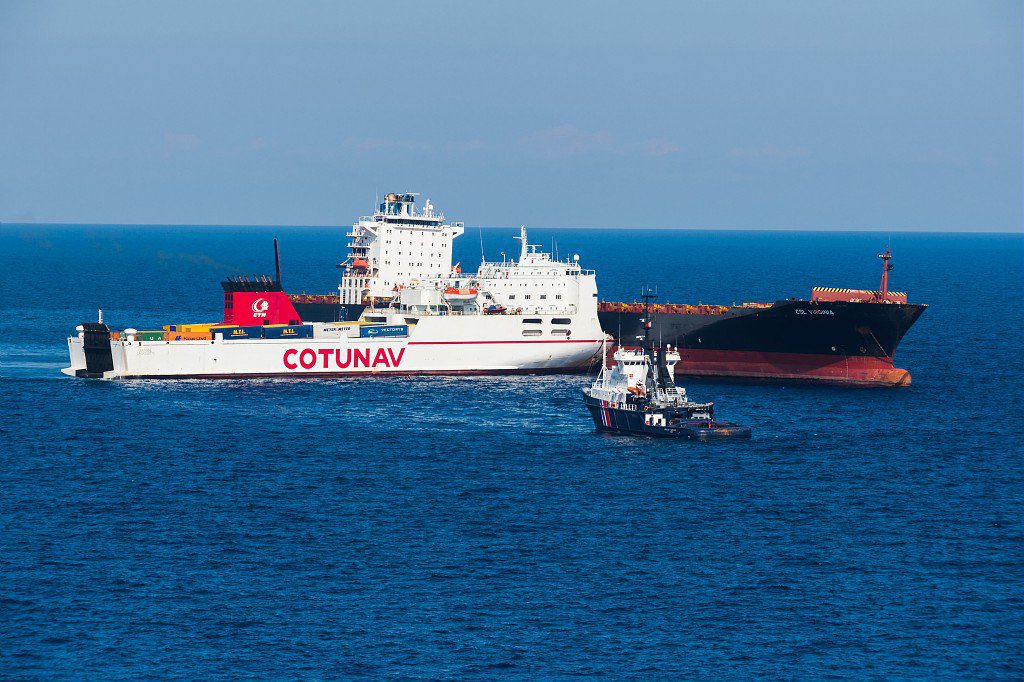
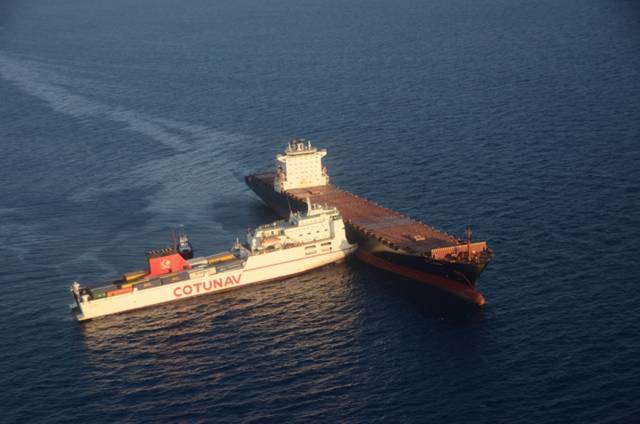
European authorities are continuing to respond to an oil spill after a ferry collided with an anchored containership off the coast of Corsica on Sunday morning.
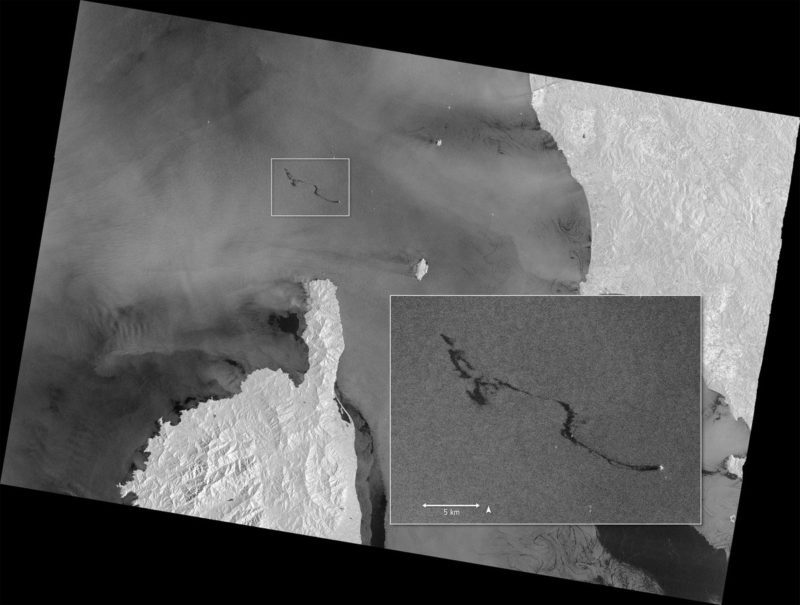
France’s Maritime Prefect reported Tuesday that the oil pollution now covers more than 15 miles (25km) and is broken up into 7 sections.
Weather in the area is reported as calm, with waves to 1.25 meters and winds to the west at an average of 20 km/hour.
Pollution response, which began Sunday night, is continuing and now involves seven anti-pollution vessels.
The Tunisian roll-on/roll-off passenger vessel Ulysse collided with the Cypriot-registered containership CSL Virginia approximately 17 miles (28 km) north of Cape Corsica before dawn on Sunday. The collision caused a large breach of the containership’s hull, resulting in the release of bunker fuel.
So far attempts to separate the ships have been unsuccessful, including one attempt by the response vessels Jason and Abeille Flanders.
Authorities said the RAMOGEPOL agreement has been activated in response to the incident. The agreement is an emergency response plan set up by France, Italy and Monaco in 1993 to combat incidences of accidental marine pollution in the Mediterranean.
Photo shows the size of the oil spill off the coast of Corsica. Credit: Prémar Méditerranée
Tags:
Subscribe for Daily Maritime Insights
Sign up for gCaptain’s newsletter and never miss an update
BRUSSELS, Sept 13 (Reuters) – Canada’s Prime Minister Mark Carney wants a closer relationship with the European Union and is exploring whether his country could become an “associate member” of the bloc,...
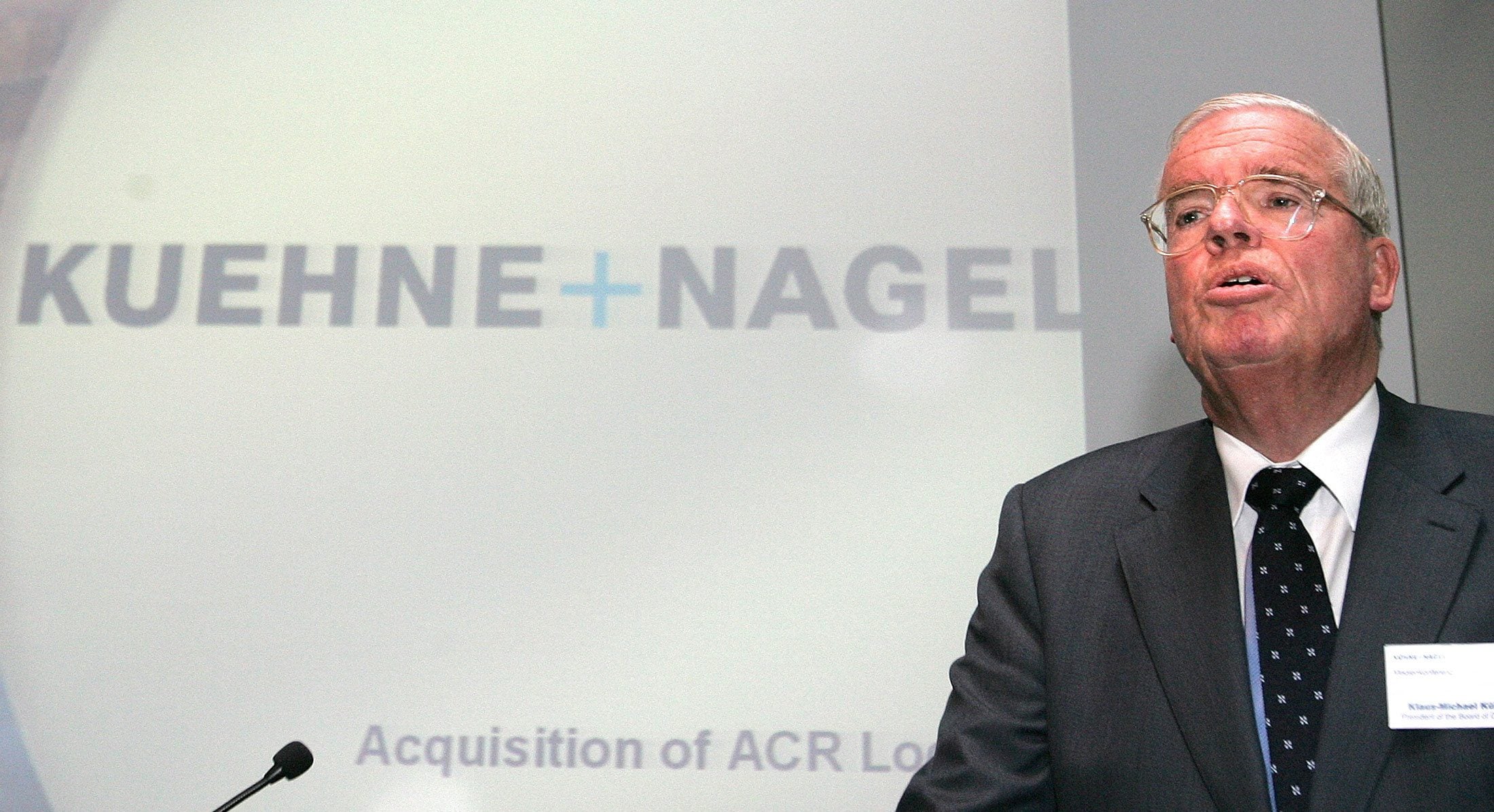
Klaus-Michael Kuehne, the shipping heir and Germany’s wealthiest individual, who expanded Kuehne + Nagel International AG into one of the world’s biggest sea and air freight forwarders, has died. He was 89.
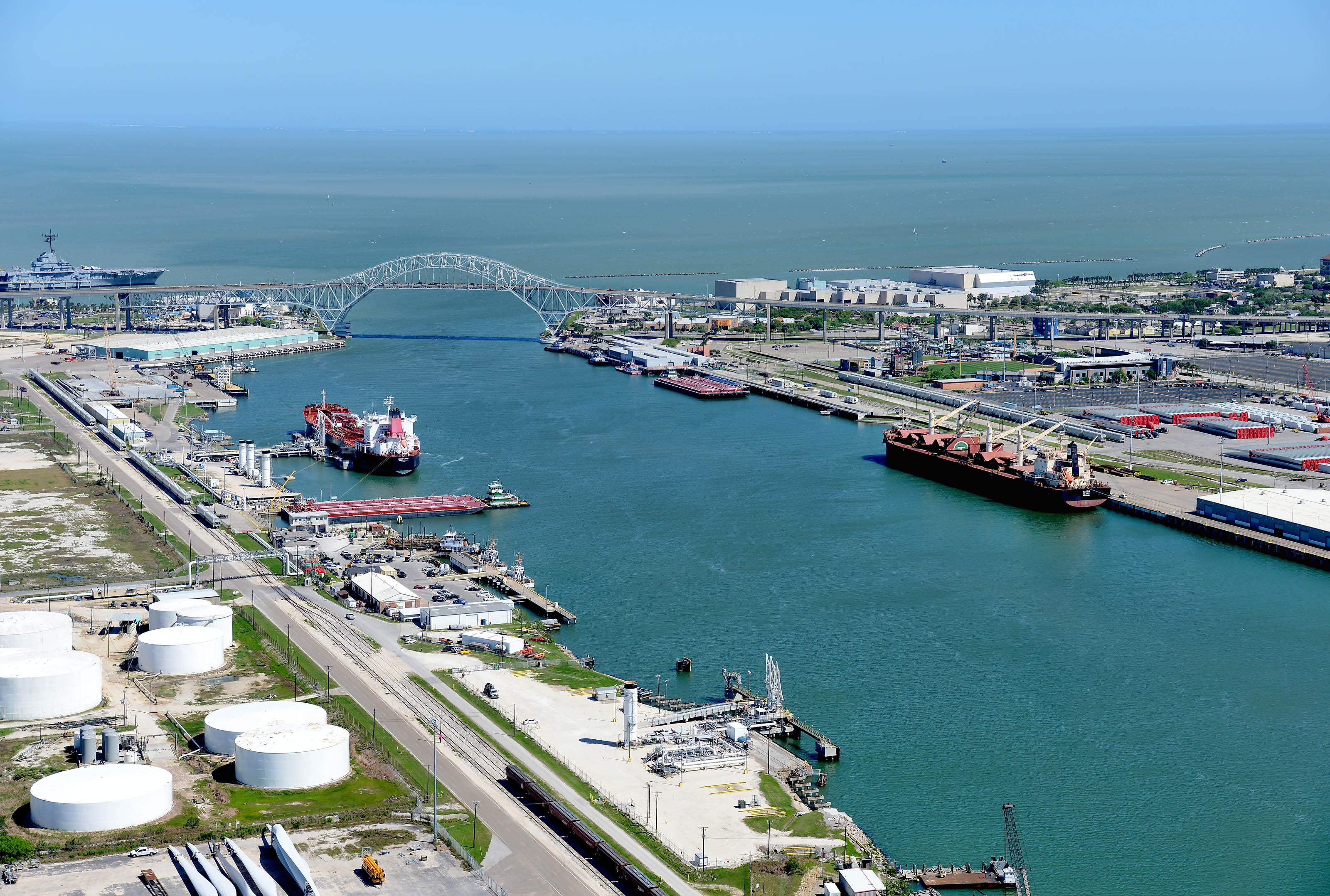
The Port of Corpus Christi has joined the Trump administration’s push to bring nuclear technology into the U.S. maritime sector, signing an agreement with the U.S. Maritime Administration to explore...
August 19, 2026
Total Views: 1123
Get The Industry’s Go-To News
Subscribe to gCaptain Daily and stay informed with the latest global maritime and offshore news
— just like 106,968 professionals
Secure Your Spot
on the gCaptain Crew
Stay informed with the latest maritime and offshore news, delivered daily straight to your inbox
— trusted by our 106,968 members
Your Gateway to the Maritime World!
Essential news coupled with the finest maritime content sourced from across the globe.

 Join The Club