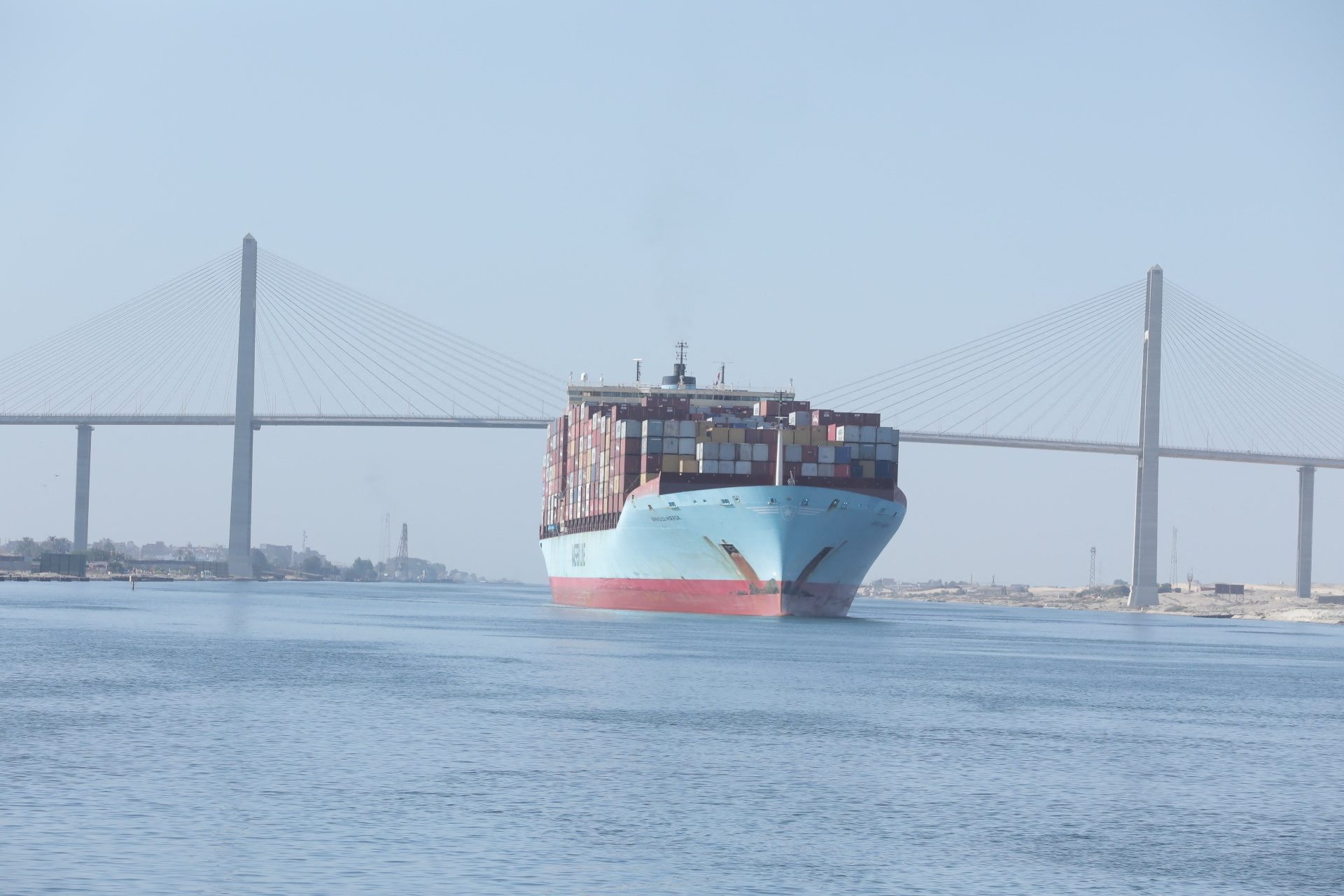
Less than a month after restarting limited Red Sea transits, Maersk is once again rerouting select services around the Cape of Good Hope, underscoring how fragile the industry’s return to the Suez corridor remains.
The Danish carrier said “unforeseen constraints arising from the wider operating environment in the Red Sea region” are creating delay risks, prompting diversions on upcoming sailings within its ME11 and MECL services. The affected voyages will bypass the Suez Canal and instead take the longer southern route around Africa.
The decision marks a significant setback for what had appeared to be a cautious but promising reopening of one of the world’s most critical maritime arteries. In early February, Maersk and partner Hapag-Lloyd announced the first structural return of their Gemini Cooperation’s ME11 service to the Red Sea, with westbound sailings resuming on February 4 and eastbound transits beginning February 3.
Update: Red Sea Corridor Slips Back Into Crisis as Houthi Threats Resurface
According to vessel schedules shared by the company, the westbound Maersk Houston (voyage 608W) and Astrid Maersk (voyage 609W) will route via Cape of Good Hope when departing Salalah on March 5 and March 12, respectively. On the eastbound side, the Maersk Hamburg (voyage 608E) and Maersk Huacho (voyage 610E) will also take the longer southern route.
For the MECL service connecting the Middle East and India to the U.S. East Coast, the westbound Maersk Detroit (voyage 609W) will similarly divert around the Cape when it departs Salalah on March 11.
“We have shared this information with you with the goal of allowing you to have as much time as possible to adjust your logistics moves and insurance, if necessary,” the company told customers, promising updated transport plans shortly.
The timing is particularly significant given the financial strain the industry is already facing. Maersk reported a $153 million loss in its Ocean division for Q4 2025, marking its first quarterly loss in years as it navigates the difficult transition between Cape diversions and Suez transits. The company issued wide 2026 guidance ranging from a $1.5 billion loss to a $1.0 billion profit, reflecting deep uncertainty around the pace of any sustained Red Sea reopening.
The operational benefits of the Red Sea route remain compelling—westbound ME11 sailings save 19 days via Suez, while eastbound voyages are seven days shorter.Maersk has consistently argued that the route “is the fastest, most sustainable and most efficient way for us to serve our customers.”
But the repeated reversals threaten something perhaps more valuable than time: predictability. As Xeneta senior analyst Destine Ozuygur warned when CMA CGM abruptly rerouted services back around the Cape in late January, “Unpredictability is toxic for supply chains.”
The Red Sea crisis began on November 19, 2023, when Houthi forces seized the Galaxy Leader off Yemen. More than 100 merchant vessels have since been targeted, with four ships sunk, one seized, and at least eight seafarers killed. Before the attacks, the Suez Canal processed roughly 80 containerships per week; by mid-January 2026, that figure had recovered to just 26.
Maersk stressed that today’s announcement represents “a temporary adjustment” and that the company continues to prioritize the Trans-Suez route for these services on all additional sailings. The carrier said it would “continue to keep you updated on the situation” and encouraged customers with questions to reach out to their local representatives.
For Egypt, the implications extend beyond logistics. Suez Canal tolls remain a critical source of foreign currency, and canal authority chairman Admiral Ossama Rabiee has forecast a return to normal traffic levels by the second half of 2026. After nearly 800 days of Cape diversions, that timeline now appears increasingly optimistic.
Updated: March 2, 2026 (Originally published February 27, 2026)
Editorial Standards · Corrections · About gCaptain

 Join The Club