The U.S. Navy on Thursday took part in the first recovery test of the NASA Orion spacecraft at Naval Station Norfolk as part of a partnership to develop procedures to recover the Orion capsule and crew after splashdown.
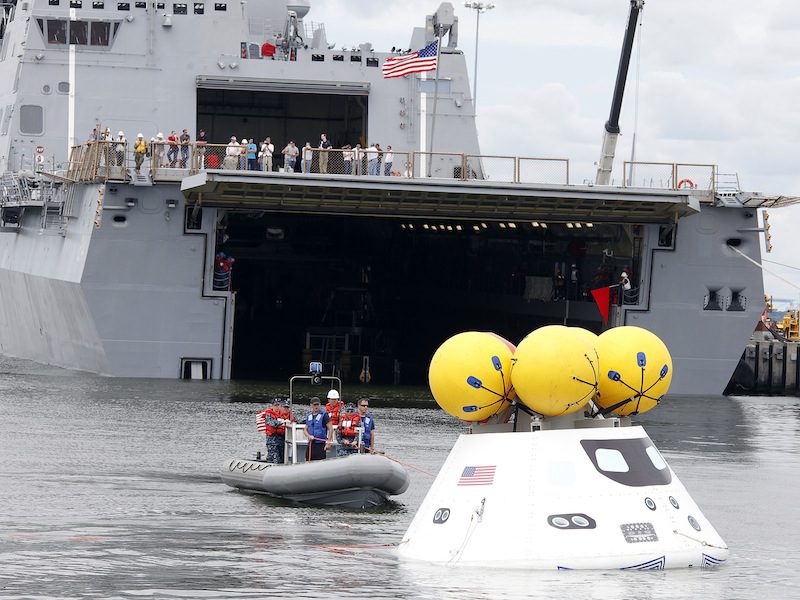
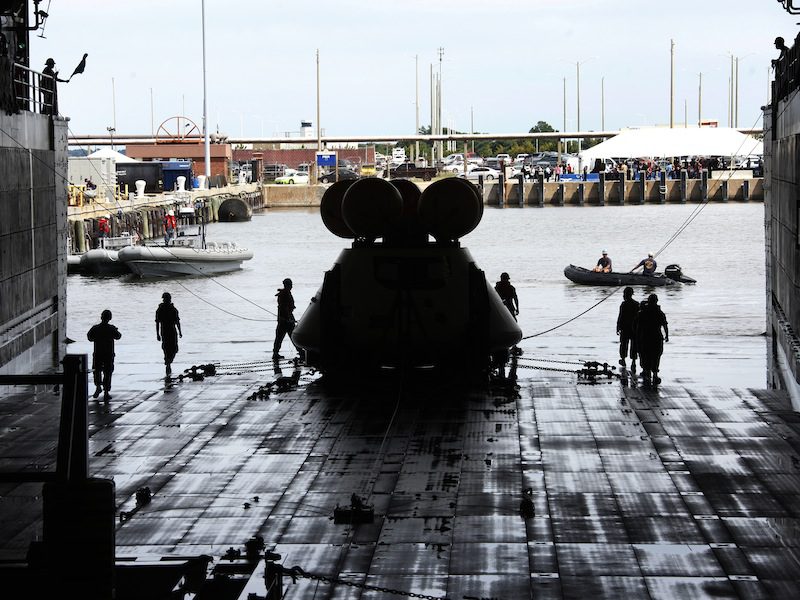
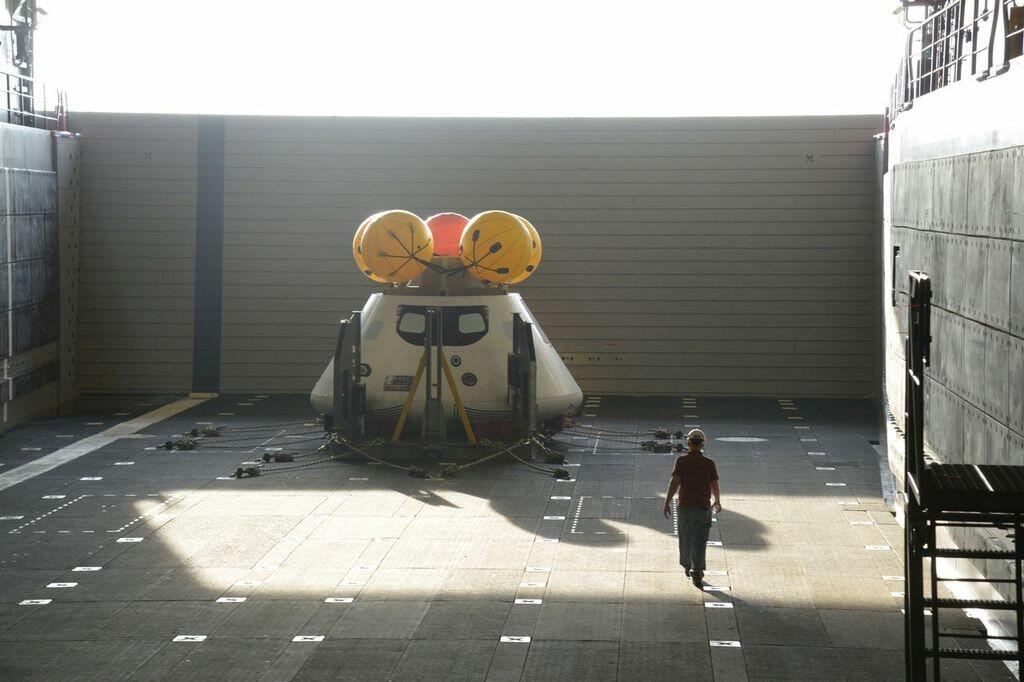
During the test, sailors assigned to the amphibious transport dock ship USS Arlington (LPD 24) used tow lines to recover a test version of NASA’s Orion crew module into the flooded well deck of Arlington. With the capsule in position over the recovery cradle, it then took 45 minutes for the water to drain and the capsule to settle.
Image Credit: NASA/Dave Bowman
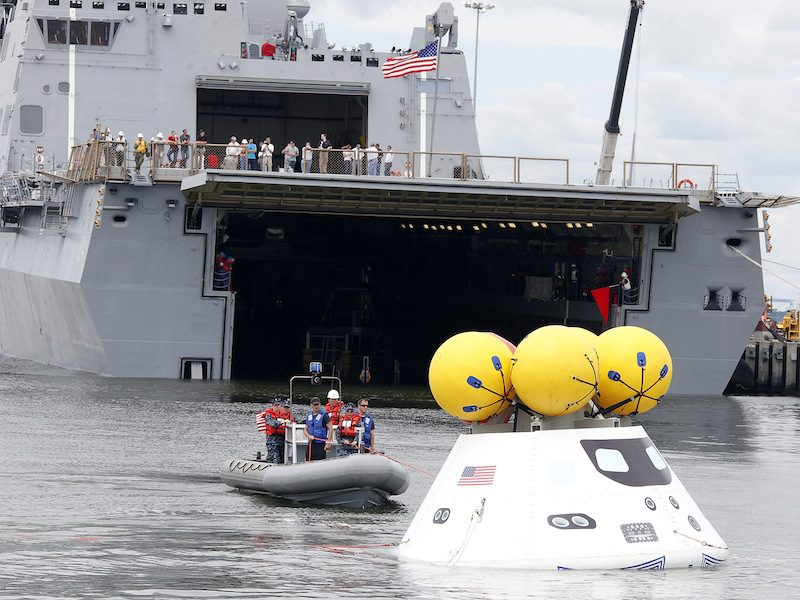
The stationary recovery test is helping to ensure that when Orion returns from deep space missions and splashes down in the Pacific Ocean, the methods used to recover the spacecraft and obtain critical heat shield data are sound.
Image Credit: NASA
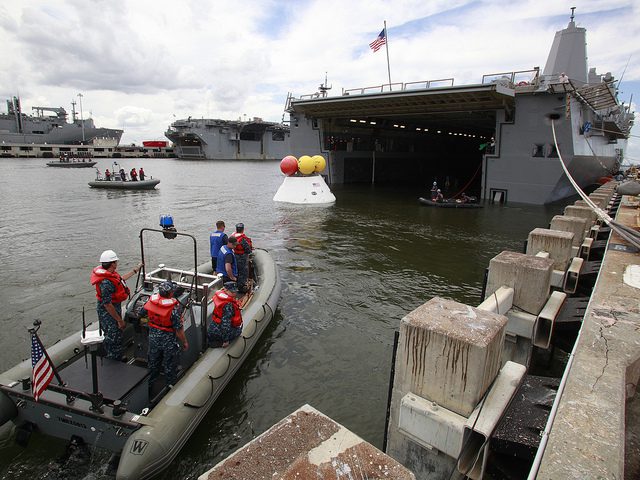
Navy divers prepared for the recovery test in Norfolk by training in the 6.2 million gallon pool at NASA’s Neutral Buoyancy Lab in Houston.
Image Credit: NASA
An open water recovery test is scheduled for January 2014.
Image Credit: NASA
Orion’s first mission, Exploration Flight Test (EFT)-1, scheduled for September 2014, will send an uncrewed spacecraft 3,600 miles into Earth’s orbit before returning to Earth at a speed of approximately 20,000 mph for a splashdown in the Pacific Ocean off the Baja Coast.
Image Credit: NASA/Dave Bowman
The flight test will provide engineers with critical data about Orion’s heat shield, flight systems and capabilities to validate designs of the spacecraft before it begins carrying humans to new destinations in the solar system, including an asteroid and Mars.
Image credit: Orion Spacecraft on Twitter (@NASA_Orion)
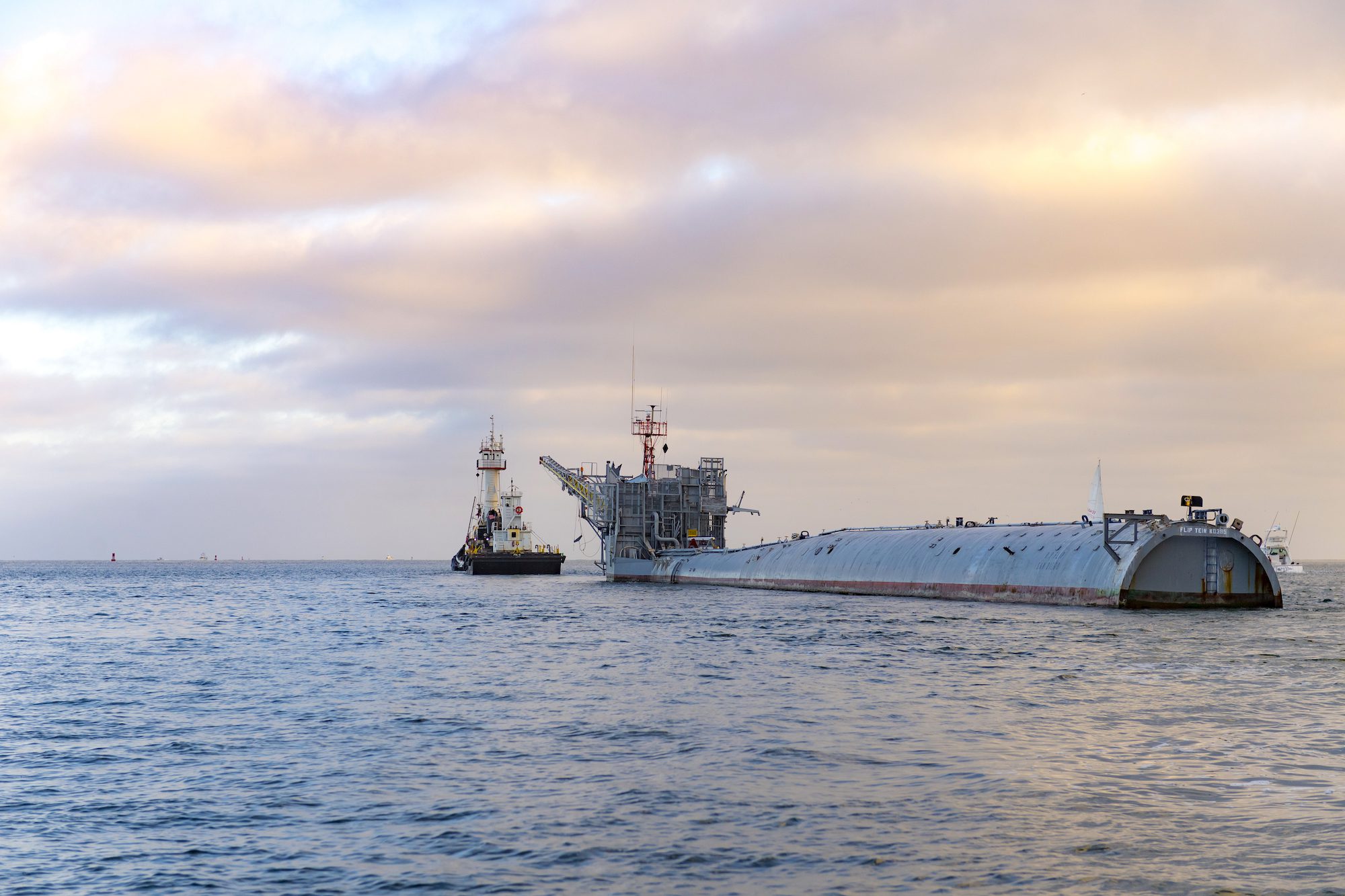
In a quiet corner of the Pacific last August, a vessel unlike any other was making what many thought was its final voyage. R/P FLIP (Floating Instrument Platform), the U.S....
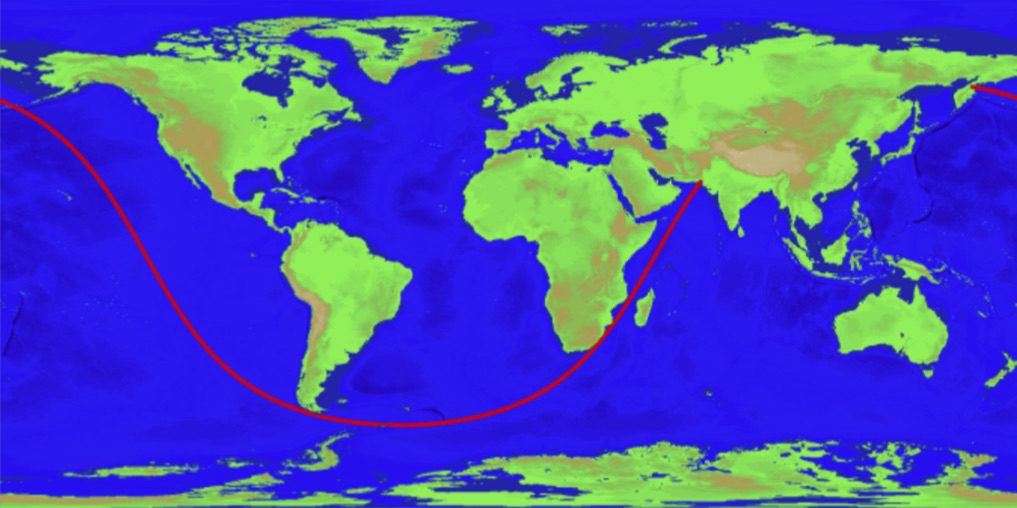
In 2012, reddit user kepleronlyknows posted a map claiming to show the longest straight line a vessel could theoretically sail on earth without hitting land. The map showed a route...
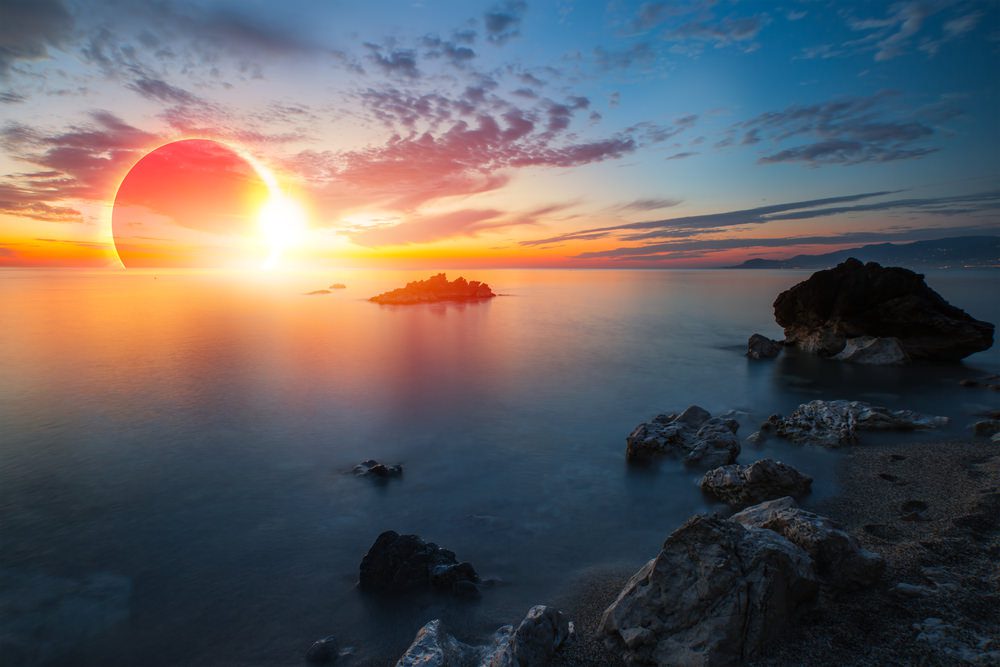
In August 2017 the “Great American Eclipse” crossed the Pacific Ocean and the continental United States. Most Americans witnessed a spectacular view but MIT a few scientists witnessed much more. MIT researchers found...
January 30, 2018
Total Views: 77
Get The Industry’s Go-To News
Subscribe to gCaptain Daily and stay informed with the latest global maritime and offshore news
— just like 107,009 professionals
Secure Your Spot
on the gCaptain Crew
Stay informed with the latest maritime and offshore news, delivered daily straight to your inbox
— trusted by our 107,009 members
Your Gateway to the Maritime World!
Essential news coupled with the finest maritime content sourced from across the globe.

 Join The Club