Updated: November 13, 2020 (Originally published February 4, 2014)
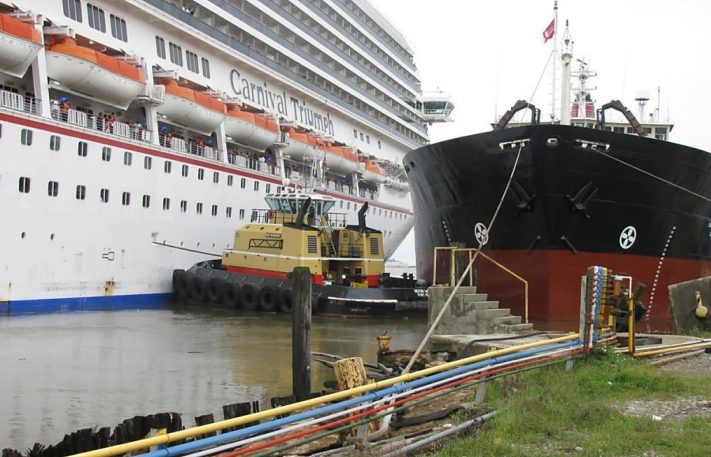
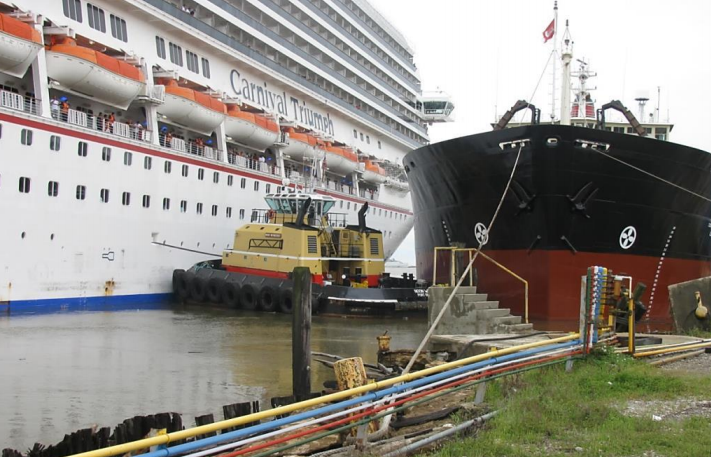
This image, taken by Coast Guard investigators from the bulkhead of the Signal Ship Repair facility shortly after the collision, shows the positions of (from left to right) the Carnival Triumph, Noon Wednesday, and Wheeler. Photo: NTSB
The National Transportation Safety Board says that BAE Systems knew about the poor condition of multiple mooring bollards at its Mobile shipyard prior to when the Carnival Triumph broke free from the companies Pier K in April 2013, causing almost $3 million in damage.
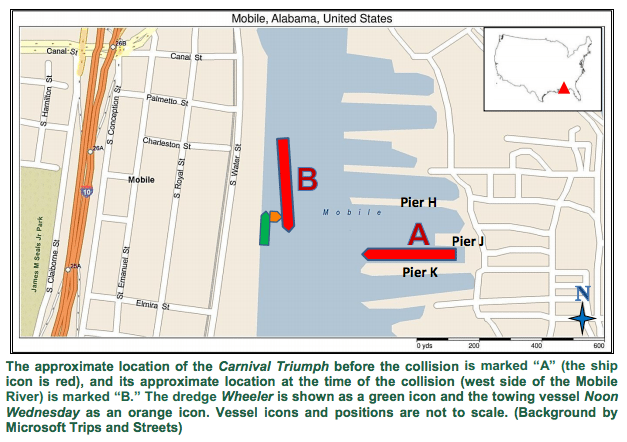
On April 3, 2013, about 1328 local time, the cruise ship Carnival Triumph was moored and undergoing repairs at the BAE Systems shipyard in Mobile, Alabama following the February 2013 power outage in the Gulf of Mexico, when the Port of Mobile experienced a period of high wind with gusts up to 65 m.p.h.
The high winds caused the Carnival Triumph to break free from its moorings and drift across the Mobile River, where it collided with the moored dredge Wheeler. A responding towing vessel, Noon Wednesday, also became pinned between the cruise ship and the dredge. The storm resulted in the death of one shipyard employee and another was injured, although not directly related to the Carnival Triumph breaking free.
The total damage amount was estimated to be more than $2.9 million, including $200,000 in damage Wheeler and $3,000 in damage to Noon Wednesday.
In their report, the NTSB determined that the probably cause of the ship breaking free was the successive failure of multiple mooring bollards, which were known by BAE Systems to be in poor condition with an undetermined mooring load capability.
The report reveals that in June 2010, BAE Systems had contracted an engineering firm to determine the general condition of Pier K, where Carnival Triumph was moored, and the adjacent Pier H. The engineering firm concluded that most of the mounting hardware was poorly attached to Pier K, that many fasteners holding the bollards to the deck had evidence of corrosion, and that the remaining capacity of those fasteners was suspect. A recommendation in the report stated, “conduct an analysis of the mooring capacity of the pier with consideration for heavy weather mooring conditions.” The overall condition of Pier K was deemed “poor.”
The NTSB report said that despite the assessment, BAE Systems did not perform any further engineering analysis on the mooring hardware on Pier K before the accident and BAE also did not disclose to Carnival Triumph personnel that Pier K was deemed to be in poor condition.
A catastrophic collision between two tankers in the South China Sea in 2024 has revealed a troubling chain of failures involving crew fatigue, disabled safety systems, and inadequate watchkeeping—ultimately claiming...
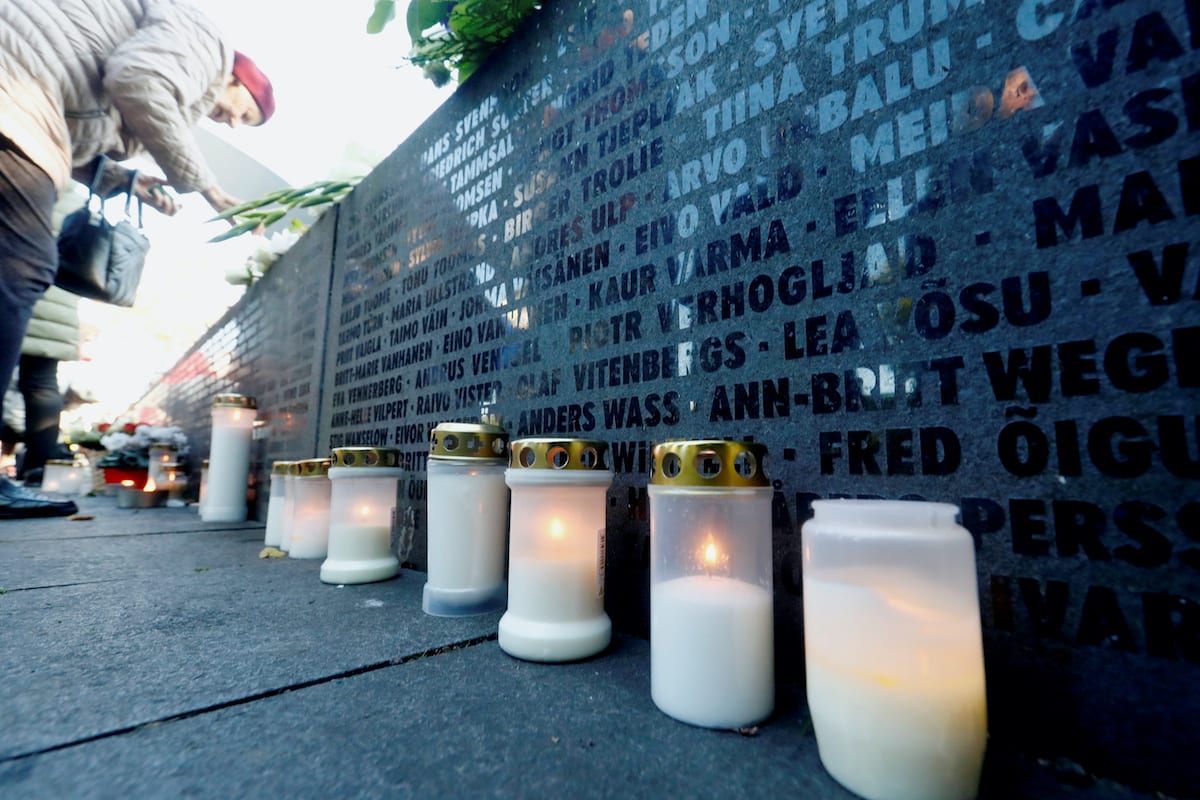
The sinking of the Estonia ferry in 1994 was caused by the failure of its bow section, not an explosion or collision as claimed by some, authorities said on Tuesday in a report aimed at finally closing the case on Europe's worst civil maritime disaster since World War Two.
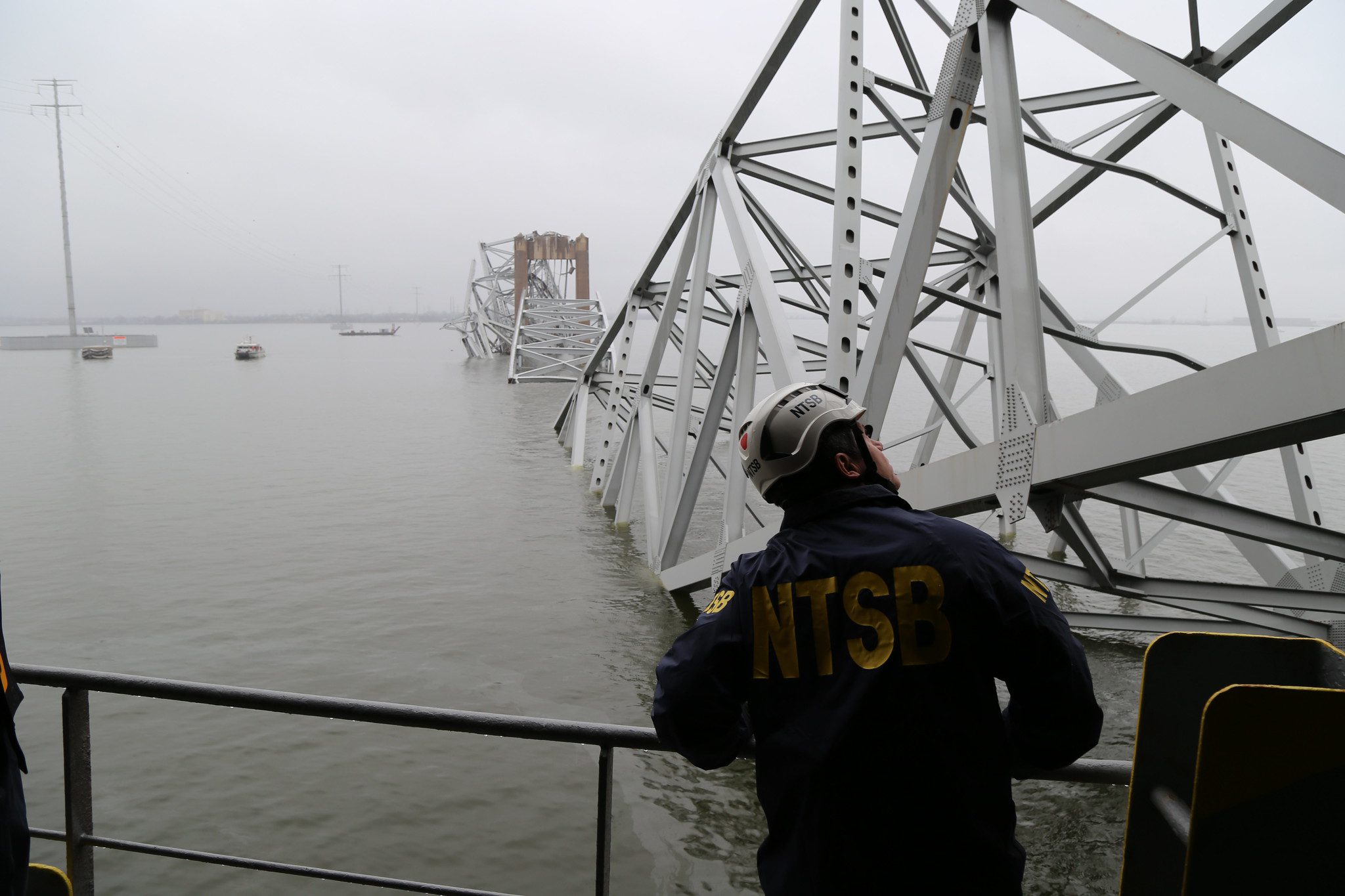
The National Transportation Safety Board has concluded that the March 2024 collapse of Baltimore’s Francis Scott Key Bridge—which killed six highway workers and severed a vital transportation artery—stemmed from an...
December 12, 2025
Total Views: 2033
Get The Industry’s Go-To News
Subscribe to gCaptain Daily and stay informed with the latest global maritime and offshore news
— just like 107,166 professionals
Secure Your Spot
on the gCaptain Crew
Stay informed with the latest maritime and offshore news, delivered daily straight to your inbox
— trusted by our 107,166 members
Your Gateway to the Maritime World!
Essential news coupled with the finest maritime content sourced from across the globe.

 Join The Club