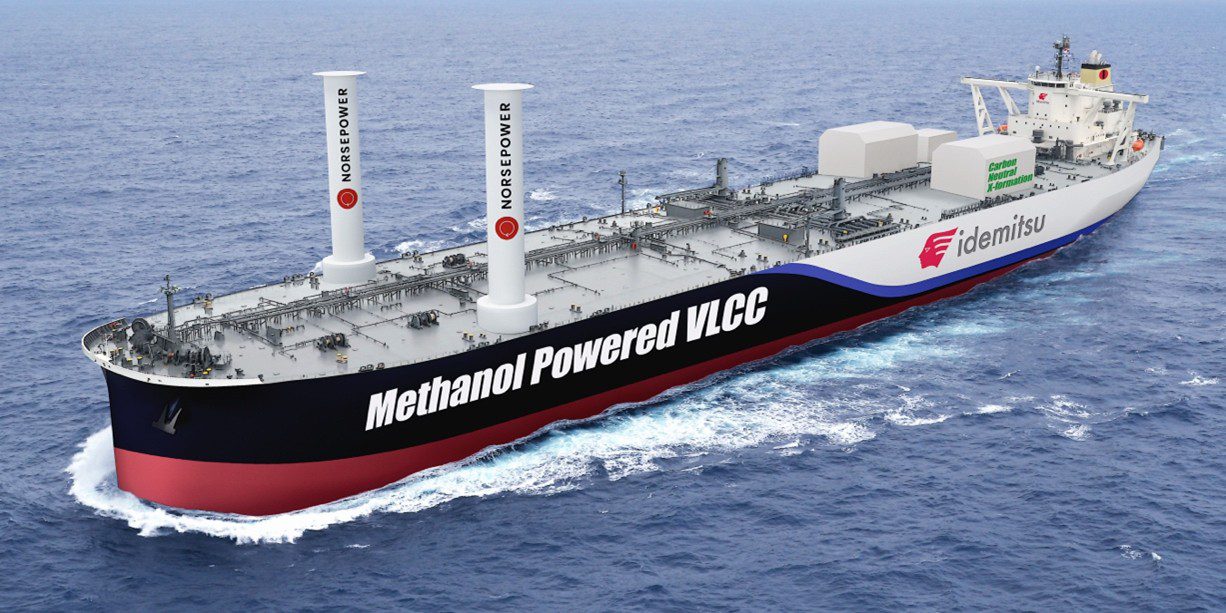
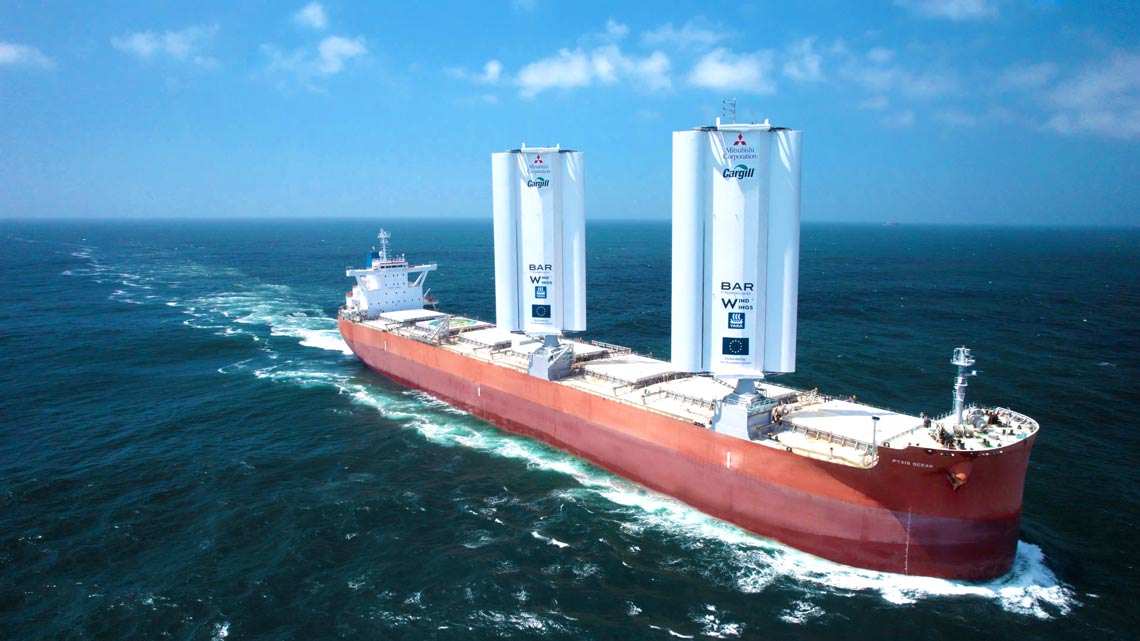
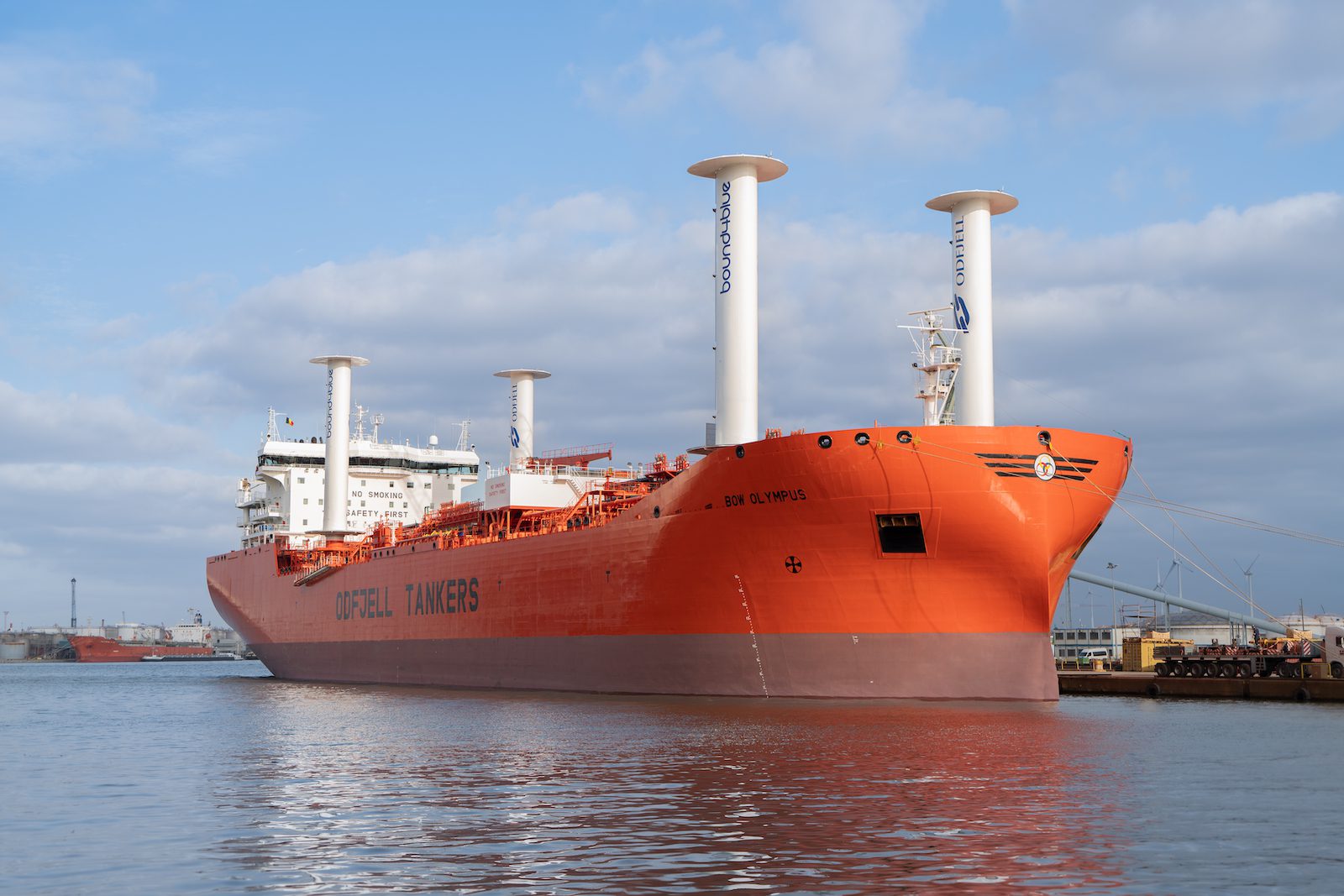
Norsepower and Idemitsu Tanker Co., Ltd. have partnered to equip two Very Large Crude Carriers with advanced wind-assisted propulsion technology, marking the first time the world’s largest crude oil tankers will harness mechanical sail power to reduce emissions.
The vessels, currently under construction by Japan Marine United Corporation and Nihon Shipyard Co., Ltd., will each be fitted with two 35x5m “explosion-proof” Norsepower Rotor Sails when the first VLCC is delivered in late 2028. The technology represents a modernized application of the Magnus Effect, using spinning cylinders to capture wind energy and generate clean propulsion.
The announcement reflects Idemitsu’s broader commitment to sustainable shipping infrastructure. Beyond the rotor sails, both VLCCs have been designed with advanced energy-saving technologies and prepared for future low-carbon fuels including methanol.
“Idemitsu Tanker is accelerating the implementation of new technologies and is committed to realizing a carbon-neutral society by achieving both a stable energy transportation and a reduced environmental impact,” representatives from Idemitsu Tanker stated. “By equipping our new VLCCs with the Norsepower Rotor Sail, we are not only investing in fuel savings and emission reductions but also taking a decisive step towards the decarbonisation of long-haul shipping. This project reflects our philosophy of combining reliable operations with innovation to serve global energy needs responsibly.”
The deal underscores Norsepower’s growing dominance in the tanker segment, where the company now operates 22 rotor sail units across vessels ranging from chemical tankers and LCO? carriers to medium-range and large-range tankers. The VLCC installation represents both a technical milestone and market validation for wind propulsion at the largest scale of crude oil transport.
For Norsepower, the agreement also marks significant geographic expansion. “This is a defining moment for Norsepower and for wind propulsion in global shipping,” said Heikki Pöntynen, the company’s CEO. “Partnering with Idemitsu Tanker and JMU on the first VLCCs with rotor sails and doing so as our first newbuild project in Japan, is a tremendous step forward. Japan has already become the single biggest market for Norsepower projects, and this collaboration confirms both the trust in our technology and its relevance across all tanker segments.”
The rotor sail technology delivers measurable performance gains. Each installation includes digital control systems that optimize operation in real time, adjusting to wind conditions and routing to maximize efficiency. According to Norsepower, the systems typically reduce fuel consumption by 5 to 25 percent, with potential for even greater savings under favorable wind conditions.
As shipping companies face increasing pressure to reduce greenhouse gas emissions and comply with evolving environmental regulations, wind-assisted propulsion technologies are gaining traction as commercially viable decarbonization tools. The VLCC project demonstrates how traditional fossil fuel transport can integrate clean energy solutions without compromising operational capacity or reliability.
Editorial Standards · Corrections · About gCaptain

 Join The Club