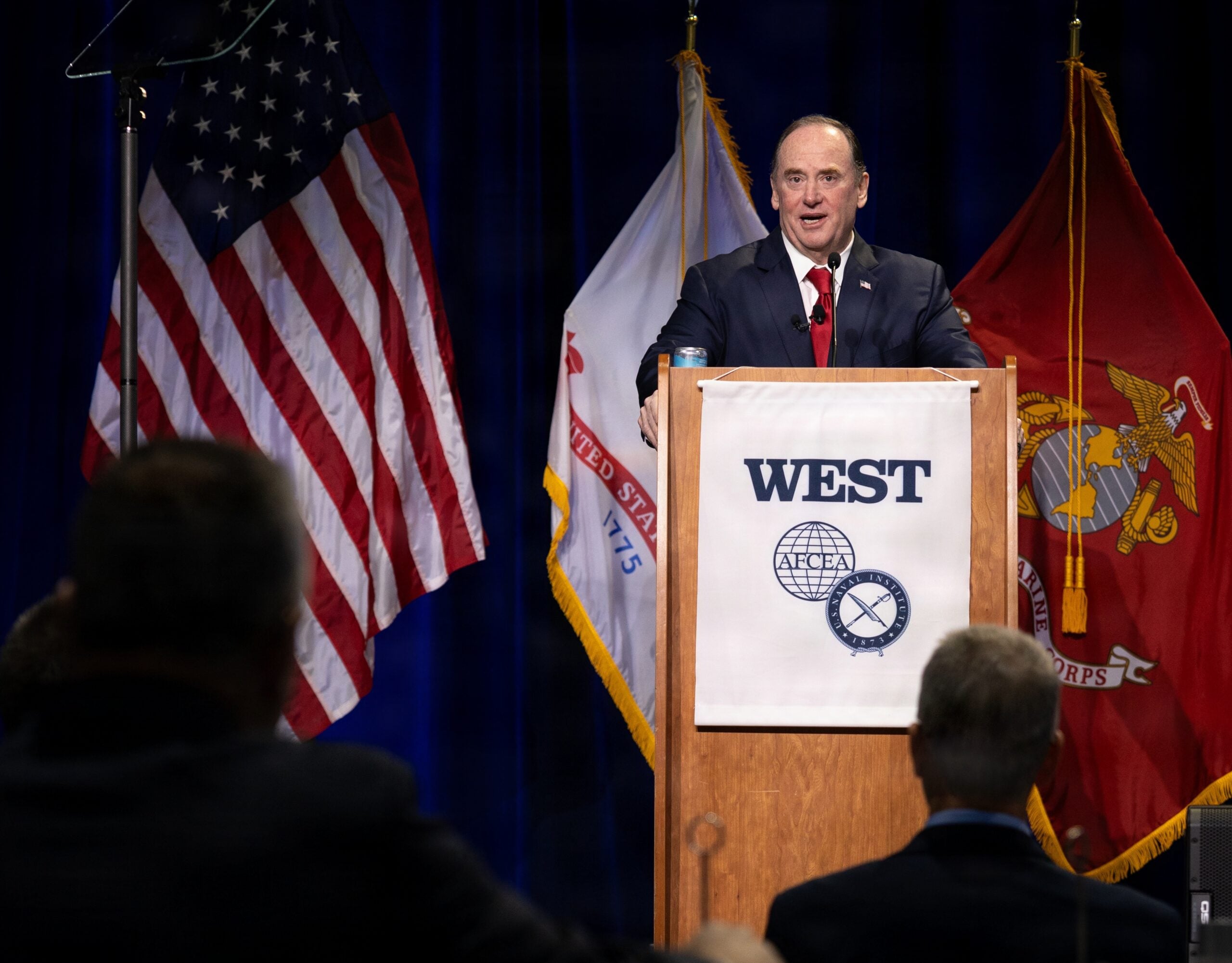
In a surprise Pentagon shakeup, John C. Phelan is departing the administration effective immediately, the Department of War announced Wednesday, abruptly ending a turbulent tenure defined by ambitious shipbuilding plans, efforts to revive the maritime industrial base, and bold—at times controversial—visions for restoring American sea power.
Chief Pentagon spokesman Sean Parnell disclosed the move in a brief statement on social media, offering no explanation for the abrupt departure. Hung Cao, the former Navy EOD officer and current undersecretary, will assume the role of acting Navy secretary effective immediately.
The Wall Street Journal is reporting that Phelan was fired amid simmering tensions within the Pentagon and Trump Administration.
His departure comes as the U.S. Navy continues to enforce a maritime blockade on Iran as part of the U.S. and Israeli conflict with Iran.
Financier-Turned Secretary
Phelan arrived as an unconventional pick for Navy secretary — a financier and outsider tasked with shaking loose a bureaucracy struggling with maintenance backlogs, delayed ship programs, and a shrinking maritime industrial base.
He made shipbuilding his signature issue. Under his tenure, calls for a maritime industrial resurgence moved from niche debate into the center of Pentagon messaging. Phelan pushed to frame shipyards, workforce shortages, logistics, and sealift not as support functions, but as strategic weapons in great-power competition.
Phelan’s tenure also became associated with the administration’s “Golden Fleet” vision and the headline-grabbing proposal for so-called Trump-class battleships, which reignited debate over capital ship design and naval firepower.
The sudden exit comes just one day after Phelan appeared publicly at the Navy League’s Sea-Air-Space symposium, where shipbuilding and industrial capacity were again central themes. He also spoke of the new battleships, dubbed the BBG(X). “The next-generation battleship anchors the high end of the Fleet of the Future and delivers decisive combat power from the 2030s into the next century,” Phelan said.
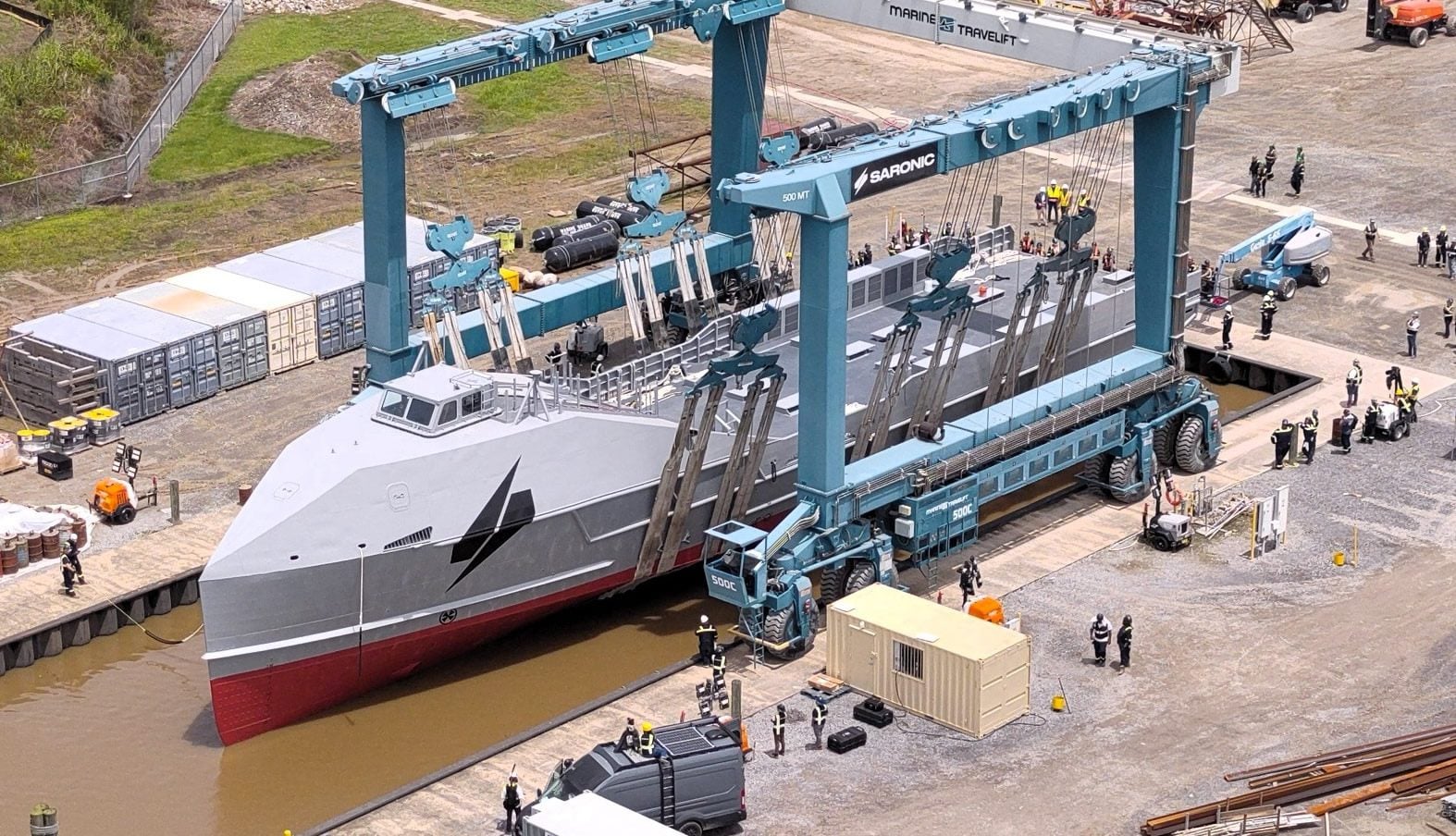
Among Phelan’s more concrete marks on Navy shipbuilding was his backing of the new FF(X) frigate program and the Medium Landing Ship (LSM), both of which reflected his push for simpler, more producible vessels delivered faster and in greater numbers. Together, the programs embodied Phelan’s broader effort to steer Navy procurement toward scalable production and industrial resilience.
Just yesterday, Phelan tweeted about strengthening maritime dominance and working with Congress on Golden Fleet appropriations. “@POTUS historic FY27 budget delivers $65.8B for Navy shipbuilding—+46% over FY26, +123% over FY25. To be a superpower, a nation must be a seapower—and this is the opening move to strengthen American maritime dominance. We look forward to working with Congress to execute—topline into tonnage, appropriations into readiness and the Golden Fleet Initiative into the Fleet of the Future,” Phelan wrote.
Hung Cao Tapped for Interim Role
As a retired Navy captain, explosive ordnance disposal diver, and outspoken advocate for shipbuilding, salvage readiness, and the merchant marine, Cao has repeatedly warned that America’s maritime decline is not simply an industrial problem, but a national security emergency.
Cao has pushed themes that resonate deeply with gCaptain readers: the erosion of U.S.-flag shipping, the shortage of sealift capacity, the disappearance of salvage assets, and the workforce crisis in American yards.
“This is a maritime nation,” Cao said in a December interview with gCaptain. “But we don’t act like one.”
The lack of explanation surrounding Phelan’s departure is likely to fuel immediate questions:
For now, the abrupt departure adds uncertainty at a moment when the Navy is wrestling simultaneously with Indo-Pacific shipbuilding competition, Middle East operational strain, and longstanding readiness gaps.

 Join The Club