The Department of the Navy has released its Fiscal Year 2027 Shipbuilding Plan, laying out a sweeping 30-year strategy to expand the fleet, overhaul naval acquisition, and revive the U.S. maritime industrial base under the Trump administration’s “Golden Fleet” initiative.
The plan calls for a $65.8 billion FY2027 shipbuilding investment and requests funding for 34 manned ships and five unmanned platforms in FY2027 alone. Across the five-year defense plan, the Navy is seeking 122 ships and 63 unmanned platforms, marking one of the most ambitious naval expansion plans in decades.
“The United States is at a strategic inflection point, and rebuilding American maritime dominance requires urgency, accountability, and sustained commitment,” Acting Secretary of the Navy Hung Cao said.
The plan frames the effort around three priorities: changing how the Navy buys ships, enhancing maritime dominance through a high-low fleet mix, and revitalizing the industrial base. Cao described the Golden Fleet as a modern successor to Theodore Roosevelt’s Great White Fleet, aimed at restoring America’s position as a seapower state.
The Navy says it currently operates 291 battle force ships, well below the statutory requirement of 355. The report also offers a blunt assessment of the service’s shipbuilding record, noting that the shipbuilding budget has doubled over two decades while the fleet is no larger than it was in 2003.
A major focus is industrial reform. The Navy says only about 10% of shipbuilding work is now performed at distributed sites, with a goal of reaching 50% through modular construction, digital design and broader use of suppliers across the country.
The FY2027-FY2031 plan includes five Columbia-class ballistic missile submarines, 10 Virginia-class attack submarines, seven Arleigh Burke-class destroyers, four frigates, two LHAs, five LPDs, 23 Medium Landing Ships, seven fleet oilers, five ocean surveillance ships and a new class of next-generation battleships. The Navy also plans to accelerate procurement of the future CVN 82 aircraft carrier from FY2030 to FY2029.
The plan’s most eye-catching proposal is the new nuclear-powered Battleship, or BBGN, intended to provide long-range fires, survivable command and control, expanded power generation, advanced weapons capacity and room for future systems. The Navy says the ship is not a destroyer replacement, but a new high-end surface combatant intended to add combat mass above the Arleigh Burke-class destroyer fleet.
On the lower end, the Navy is moving toward a new frigate program designed to relieve destroyers of missions such as convoy escort, anti-submarine warfare, maritime interdiction, homeland defense and counter-drug operations.
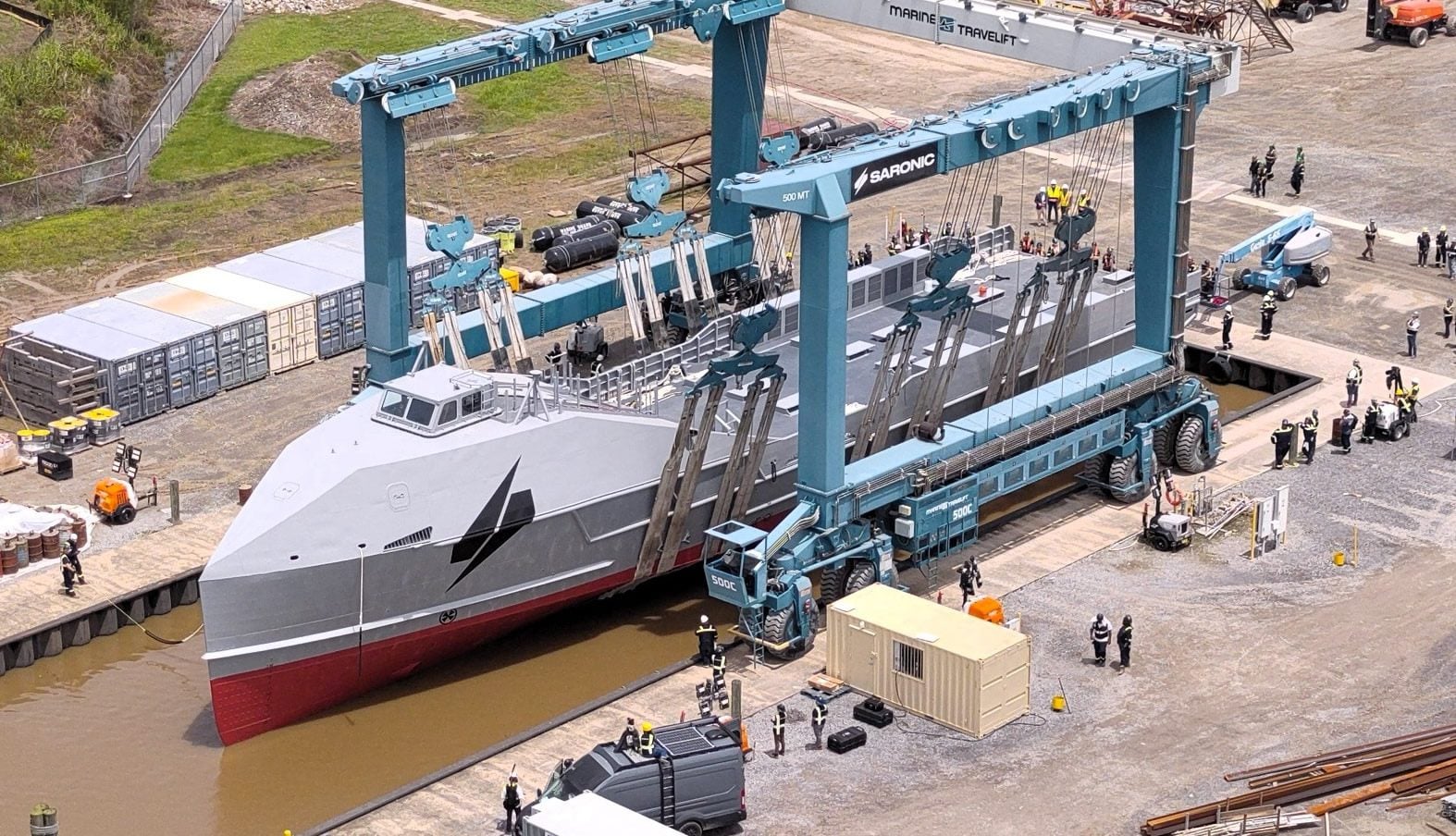
The Navy also puts new emphasis on unmanned systems, saying the FY2027 budget includes three Medium Unmanned Surface Vessels, while the five-year plan includes 47 MUSVs and 16 Extra Large Unmanned Underwater Vehicles.
The plan also seeks to hold industry more accountable. The Navy says it will provide stable requirements and long-term demand signals, but expects contractors to deliver on time and on budget. One example cited is Hadrian’s Factory 4 in Alabama, backed by $900 million in Navy investment and $1.5 billion in private capital.
The shipbuilding plan comes as the Navy faces persistent delays, strained submarine production, aging public shipyards and rising demand for naval forces across the Indo-Pacific, Middle East and Arctic. Its success will depend not only on congressional funding, but on whether U.S. shipyards and suppliers can expand capacity fast enough to turn the Golden Fleet from a slogan into steel.

 Join The Club