New academic research suggests reconstruction emissions from Gaza could rival weeks of global shipping emissions, raising questions about carbon accountability.
By Paul Morgan (Opinion) – The concrete and steel needed to rebuild Gaza, Lebanon and beyond will generate more CO? than the entire global shipping fleet produces in three weeks. Yet the nations responsible face no carbon liability whatsoever, while the ships that will deliver the cement and rebar to rebuild those ruins will be taxed, metered and penalised for every tonne they emit
The bombardment of Gaza, the systematic flattening of southern Lebanon and the relentless attrition of conflict across the wider Middle East have produced, among their many catastrophic consequences, one that the international community has conspicuously declined to price: a carbon debt of staggering proportions. While the maritime industry is now compelled to account for every tonne of CO? it emits, paying into carbon markets, submitting to the International Maritime Organization’s tightening regulatory framework, and facing full EU emissions trading scheme liability from 2026, the governments whose bombs and rockets reduced entire city districts to powdered concrete face no equivalent obligation whatsoever.
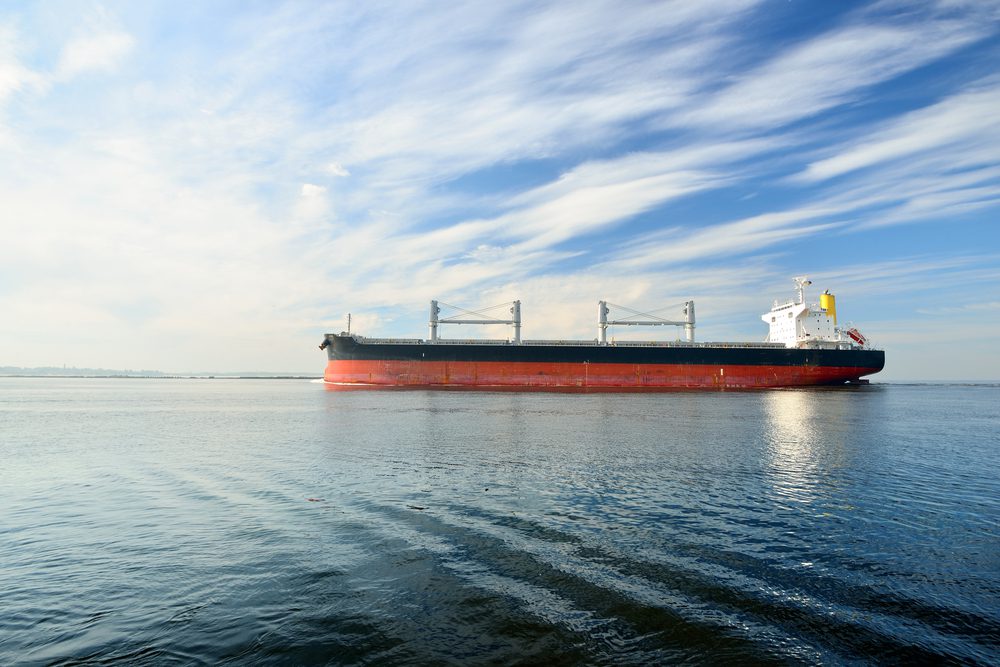
And in one of the more brutal ironies the climate crisis has yet produced, the ships that will carry the cement, the rebar and the aggregate needed to rebuild those ruins will themselves be taxed for making the delivery.
The numbers demand attention. A peer-reviewed study published in the journal One Earth in early 2026 calculated that total greenhouse gas emissions across all phases of the Israel-Gaza conflict, pre-war military construction, active warfare and post-conflict reconstruction, amounted to 33.2 million tonnes of CO? equivalent, a figure comparable to the entire annual emissions of Jordan. The reconstruction component alone dwarfs the others.
Researchers from Lancaster University and Queen Mary University of London estimated that rebuilding the damage caused in the first four months of active bombardment would generate between 46.8 million and 60 million tonnes of CO? equivalent, using a conservative assumption of 300 tonnes of embodied carbon per building. That single reconstruction programme, they concluded, would produce more CO? than the combined annual emissions of over 135 individual nations, placing it on a par with Sweden and Portugal.
Lebanon adds further weight to the ledger. The exchanges between the Israel Defense Forces and Hezbollah across the country’s south destroyed an estimated 3,600 homes; their reconstruction alone is projected to generate 881,433 tonnes of CO? equivalent. These are not trivial numbers. And if the wider regional picture — damaged ports, shattered road networks, disabled utilities and destroyed public institutions across multiple states — is eventually brought into the accounting, the combined reconstruction carbon obligation could become extraordinary.
To understand why reconstruction carries such an immense carbon burden, it is necessary to understand cement. Global cement manufacturing is responsible for approximately 7 to 8% of the world’s total CO? emissions, producing 1.6 billion metric tonnes in 2022 alone, placing the cement sector’s annual footprint above that of most individual nations. The root cause is thermochemical: to produce Portland cement, limestone must be calcined in kilns at temperatures approaching 1,450°C. That process burns vast quantities of fuel, but the deeper problem is that the limestone itself chemically releases CO? when converted into clinker. In other words, much of cement’s carbon footprint is embedded in the chemistry and cannot be avoided simply by switching to cleaner energy. This calcination process accounts for up to 50% of cement’s entire carbon output. No amount of renewable energy at the kiln eliminates the process emissions; they are a function of chemistry, not combustion.
Steel reinforcement, the rebar that gives modern concrete structures their tensile strength, compounds the problem. Steelmaking is one of the world’s heaviest industrial emitters, and the quantities required to restore a city’s worth of apartment blocks, hospitals, schools and infrastructure are considerable. Consider what a single destroyed tower block demands before the first family can move back in, thousands of tonnes of concrete, hundreds of tonnes of rebar, glass, copper wiring, HVAC systems, lifts, generators, and all the roads and drainage infrastructure that surrounds it. Multiply that by districts, cities and transport corridors, and the carbon liability becomes immense even before a ship has left port.
The World Bank estimated damage to Gaza’s infrastructure at $18.5 billion in the early months of the conflict alone, with destruction concentrated overwhelmingly in Gaza City, North Gaza and Khan Younis. That damage left behind approximately 26 million tonnes of rubble, concrete, steel and debris, which must be cleared before a single new foundation can be laid, adding its own processing, transport and disposal burden to the overall carbon account. Post-war reconstruction, in short, is not merely a humanitarian and economic challenge. It is a carbon event on a massive scale.
International maritime transport, which carries roughly 80 to 90% of world trade by volume, grain, fuel, medicines, vehicles, steel, timber, food, is the backbone of the global economy. It is also the sector most visibly targeted by climate regulators and, by the industry’s own reckoning, increasingly a soft target: easy to meter, easy to regulate, easy to tax.
Global maritime transport emitted approximately 973 million tonnes of CO? in 2024, according to OECD data, a 6% increase on the previous year representing the largest single-year surge since the post-pandemic rebound. Container shipping alone hit an all-time high of 240.6 million tonnes in 2024, a 14% year-on-year rise driven substantially by the rerouting of vessels around the Cape of Good Hope following the Houthi-driven collapse of Red Sea transits.
Against that backdrop, the arithmetic of the Middle East reconstruction burden is arresting. At a central estimate of 53 million tonnes of CO? equivalent, the reconstruction of Gaza alone represents approximately 5.4% of the entire global shipping industry’s annual emissions, concentrated in a territory of 365 square kilometres.
The world’s merchant fleet, moving the bulk of humanity’s traded goods across every ocean, would need to operate for roughly three weeks to generate an equivalent volume of carbon. The complete three-phase conflict carbon total of 33.2 million tonnes is equivalent to roughly 3.4% of annual global shipping output, or just under two weeks of the industry’s full operational emissions.
The regulatory contrast between these two sources of carbon is stark to the point of absurdity. Shipping companies operating vessels in European waters were required to surrender carbon allowances covering 40% of their EU emissions in 2024, rising to 70% in 2025 and 100% from 2026. The IMO has established binding fuel intensity reduction targets beginning in 2028, applied on a well-to-wake basis, with progressive tightening thereafter. Individual shipowners face financial penalties, reputational damage and market exclusion for non-compliance.
The total decarbonisation investment required for shipping between now and mid-century has been estimated at close to three trillion US dollars. And crucially, those obligations apply to the vessel making the delivery, including the bulk carriers transporting cement to a shattered port, the container ships carrying rebar for reconstruction, and the dredgers and marine contractors restoring harbours and terminals. Each must report fuel use, pay carbon charges and invest in cleaner technology.
No equivalent framework applies to the decisions that made those deliveries necessary. Militaries have been explicitly exempted from reporting obligations under the UN Framework Convention on Climate Change since the Kyoto Protocol negotiations of the 1990s, and that exemption has never been repealed. As Dr Benjamin Neimark of Queen Mary University of London observed in commentary accompanying the 2024 research: it is as though the tailpipe emissions of an F-35 fighter aircraft are considered carbon-free.
They are not, but they are unrecorded, unpriced and unaccountable. Military emissions have historically been excluded from many climate accounting systems; reconstruction emissions are then absorbed into civilian industry totals, masking their origin entirely. Nor is the active combat phase, significant as it is, the primary issue. The 420,000 to 652,000 tonnes of CO? equivalent generated by the first 120 days of the Gaza conflict, from jet fuel, bomb manufacture, armoured vehicle operations and naval activity, is dwarfed by the reconstruction footprint. War, it turns out, is most carbon-intensive not when the missiles are flying, but when the concrete mixers begin to turn.
A serious policy debate is beginning to take shape, though it has yet to acquire momentum commensurate with the scale of the problem. The polluter-pays principle is considered foundational to environmental law and is embedded in the regulatory frameworks that govern shipping, aviation and heavy industry. In conflict zones, it appears suspended. Should states responsible for large-scale wartime destruction be required to contribute to the carbon cost of reconstruction? Several possible mechanisms have been proposed in academic and policy circles, among them: climate reconstruction levies tied to the volume of destruction caused; mandatory funding for low-carbon cement and green steel in rebuilding programmes; formal carbon accounting for wartime destruction under UNFCCC frameworks; and UN-managed rebuilding funds with embodied-emissions conditions attached. At present, none exists at meaningful scale.
The IEA’s Breakthrough Agenda Report 2025 noted that total CO? emissions from global cement production remain higher today than they were in 2015, despite a decade of net-zero commitments, and that direct emissions intensity is unchanged. The sector needs both absolute production reductions and intensity improvements to approach a credible net-zero trajectory. Reconstruction of the scale now demanded in Gaza and Lebanon pushes firmly in the opposite direction, adding tens of millions of tonnes to the global cement sector’s ledger at precisely the moment the industry is supposed to be contracting its footprint.
There is an emerging scientific literature suggesting that concrete, over its operational lifetime, reabsorbs some CO? through a slow process of re-carbonation. MIT research published in late 2025 confirmed that the built environment acts as a meaningful carbon sink in this way. But this process operates over decades, not years, and does nothing to address the acute atmospheric loading of the reconstruction phase. On the climate timeline that matters, the next ten to twenty years, the carbon cost of rebuilding is real, large and essentially unmitigated.
Shipping companies increasingly make a pointed argument: that they are being made a soft target, easy to regulate and easy to meter while far larger, one-off carbon shocks from war, demolition and the subsequent reconstruction escape scrutiny entirely. That does not diminish shipping’s obligation to decarbonise. The industry’s contribution to global emissions is real, its regulatory treatment broadly proportionate, and the investment required to reach net zero is genuinely substantial. But it does expose an inconsistency of principle that is difficult to defend.
Countries and industries are directed to decarbonise, reduce cement use, electrify logistics and pay carbon taxes for the privilege of moving goods that sustain civilisation. Yet modern warfare can destroy decades of built infrastructure in weeks, forcing the manufacture of vast new quantities of the most carbon-intensive materials on Earth. The climate irony is brutal. If the world is serious about carbon accountability, it cannot matter only when emitted by merchant ships, factories and consumers. It must also matter when cities are turned to rubble and rebuilt with millions of tonnes of cement and steel.
The rubble of Gaza, the shattered streets of southern Lebanon and the long queue of bulk carriers and container ships that will be needed to deliver the materials to rebuild them represent a carbon event that existing international frameworks are wholly unequipped to price. The vessels making those deliveries will be metered, monitored, taxed and required to invest billions in cleaner technology for their contribution. The decisions that created the rubble in the first place, and with it the obligation to manufacture tens of millions of tonnes of new cement, steel and aggregate, will face no equivalent scrutiny. Until they do, the polluter-pays principle remains, in the context of war and its aftermath, a selective morality.
Opinion: The views expressed here are those of the author and do not necessarily reflect the views of gCaptain or its editorial staff.

 Join The Club