By Charlotte Goldstone (The Loadstar) – The conflict in the Middle East could significantly alter expectations of looming overcapacity in the container shipping sector.
The prolonged Red Sea disruptions are absorbing vessel capacity and keep freight markets tighter than anticipated.
Jonathan Roach, container market analyst at Braemar, said geopolitical developments were increasingly shaping the balance between supply and demand in container shipping.
He said current estimates suggested global container fleet expansion of around 4% this year, rising to around 8% in 2027 and, potentially, 12% in 2028 as the industry’s “large orderbook” is delivered– an influx of new tonnage that had fueled fears of overcapacity.
In its January market outlook, Braemar had expected carriers to begin
returning to Suez Canal transits H1 26, with normalisation by the second half. However, the escalation of regional conflict has cast doubt on that timeline.
“This scenario now appears unlikely, and it is possible that Red Sea diversions could remain in place throughout 2026,” Mr Roach said. “If this occurs, containerships may not return to regular transits through the Suez Canal until 2027.”
Longer sailing distances increase vessel utilisation and extend transit times, which in turn reduces effective fleet capacity and helps offset the impact of new deliveries.
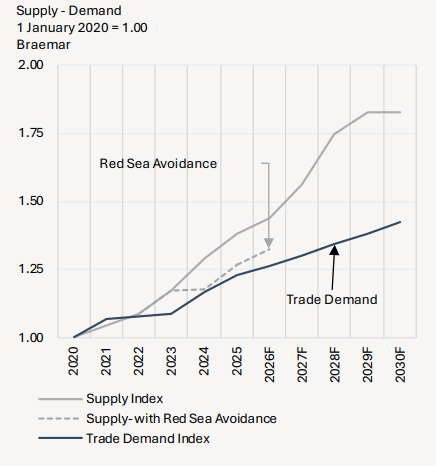
Under normal operating conditions, Braemar estimated industry overcapacity could reach about 14% this year, rising to 20% in 2027, and potentially 30% by 2028. But if the Suez Canal remains largely unused by container lines, the effective oversupply picture would be “materially altered”, it said.
A Braemar calculation estimated that rerouting around the Cape of Good Hope could reduce effective overcapacity to around 5% his year, 11% in 2027, and approximately 22% in 2028.
Source: Braemar
The surge in container vessel newbuilding orders following the pandemic may also prove more strategically useful than many expected, he added, as longer voyage cycles required more ships to maintain service frequency.
“This dynamic also helps explain the continued investment in newbuildings by liner operators,” he said. Mr Roach added that the conflict in the Middle East was likely to influence the “fortunes” of the container shipping sector through 2026.
Indeed, Peter Sand, chief analyst at Xeneta, told The Loadstar Podcast News in Brief the latest escalation of hostilities in the Middle East had already shifted market dynamics back in carriers’ favour.
“We got a complete reversal of fortunes with the strikes beginning in Middle East. Literally, the tables turned – carriers, now with the upper hand, are in no rush. They see rates elevated short-term more than anything in the foreseeable future.”
The Loadstar is known at the highest levels of logistics and supply chain management as one of the best sources of influential analysis and commentary.
China has completed the first season of regular weekly container shipping between China and Europe via the Northern Sea Route, with the operator completing all eight sailings planned for 2026 before ending departures slightly earlier than scheduled because of Arctic ice forecasts.
By Florence Tan SINGAPORE, Oct 5 (Reuters) – Crude oil exports from the Middle East rose above pre-war levels in four of the seven days of the final week of September, shipping data showed...
The tanker captain summoned his years of experience when he saw the blast in front of him. He veered his 300-meter-long ship around the vessel ahead and could see a fire had started. He called the US Navy to tell them of the attack.
October 2, 2026
Total Views: 3439
Get The Industry’s Go-To News
Subscribe to gCaptain Daily and stay informed with the latest global maritime and offshore news
— just like 107,080 professionals
Secure Your Spot
on the gCaptain Crew
Stay informed with the latest maritime and offshore news, delivered daily straight to your inbox
— trusted by our 107,080 members
Your Gateway to the Maritime World!
Essential news coupled with the finest maritime content sourced from across the globe.

 Join The Club