By Lori-Ann LaRocco – The strong undertow of political bluster, a lack of data, vessel attacks and the political calendar have transformed the flow of trade in the Middle East.
“Geopolitics is reshaping the maritime markets, and we are starting to price in a lengthy disruption,” said Richard Meade, editor-in-chief of Lloyd’s List.
The war between the U.S. and Iran has been going on for 173 days. Since the expiration of the Memorandum of Understanding, U.S. President Donald Trump has threatened economic pain for countries that help Iran.
“An off-ramp, meaning a conclusive agreement between the U.S. and Iran, is unlikely anytime soon,” said Dina Arakji, analyst at Control Risks. “Putting economic pressures on Iran is Trump’s way of trying to find an alternative way to leverage the U.S. position and not appear weak without resorting to a military escalation.”
Tehran has responded that the “economic warfare” will fail. The UAE, Iran’s second-largest trading partner, announced Wednesday it has suspended trade with Iran after coming under missile attack again.
Meade added, “Essentially any solution is going to have to appeal to the GCC, Gulf State countries, Iran, and the U.S. Nobody is expecting (for trade) to go back to February the 27th. We are still very far apart.”
Iran’s negotiation strategy, as explained by Arakji, is to play the long game. It involves letting higher energy prices in the United States create economic stress on U.S. consumers and build political pressure ahead of the U.S. midterm elections.
“It seems that military escalation for now has been dialed down a little bit,” said Arakji. “The risk remains credible, and we assess it would be periodic, temporary, and not at the level we saw in March and April.”
One reason for this decrease in military escalation, Arakji pointed out, is the depletion of the offensive and defensive arsenals of the U.S. and its Gulf allies.
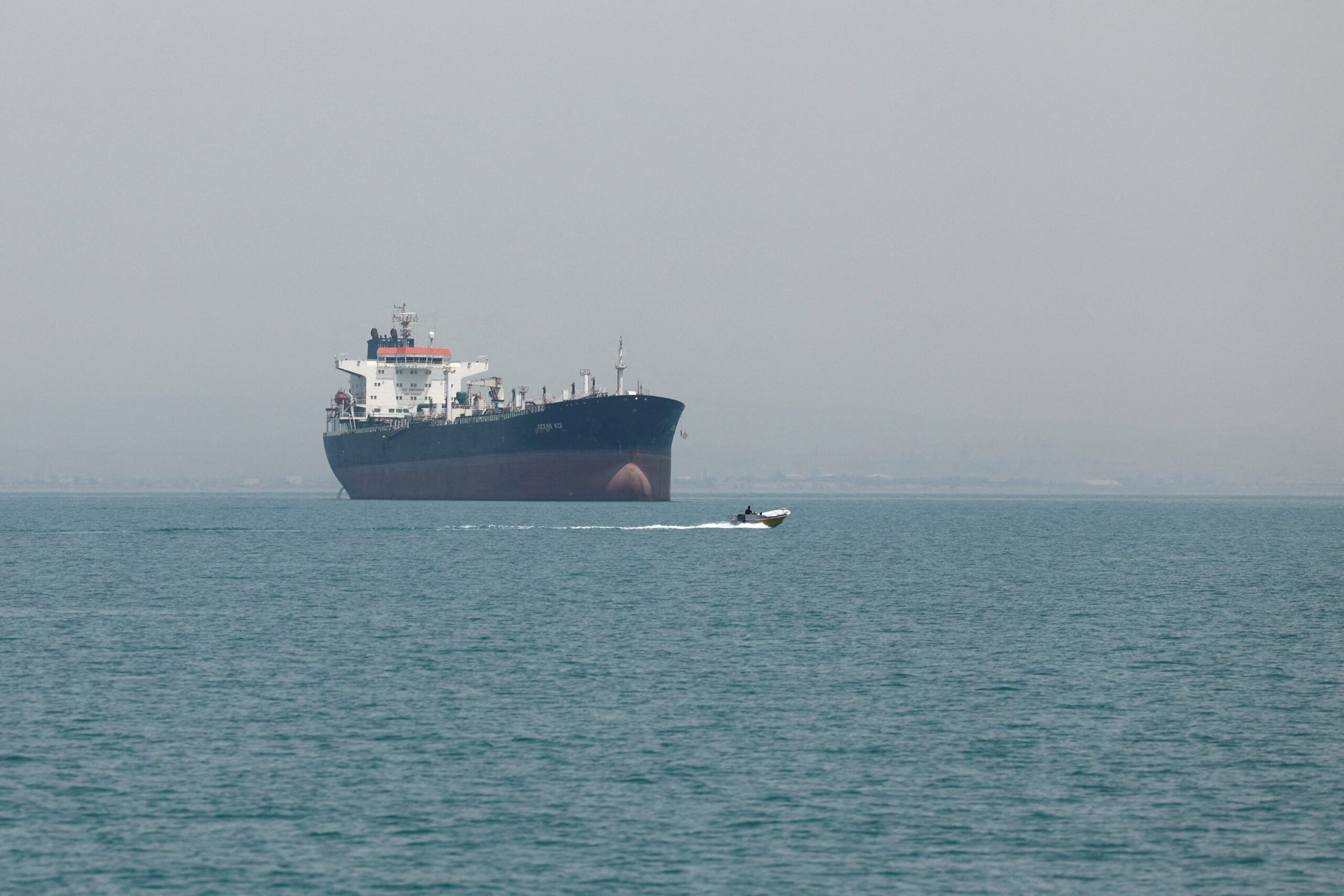
Meanwhile, the situation at the Strait of Hormuz is still the same. Both sides say they control their respective routes. No Iran-linked VLCC transits have been tracked for four consecutive weeks.
“There is a 50/50 split of vessels in and out of the Strait of Hormuz,” said Bridget Diakun, maritime intelligence and research director for Lloyd’s List Intelligence. “Tankers are leading (transits), some bulkers.”
In its weekly update on the Iran war, Lloyd’s List Intelligence tracked 39 tanker movements, down from 48 the week before. Diakun stressed the numbers will be revised because so many ships are transiting dark.
“There is a lack of solid information,” Diakun explained when asked about CENTCOM’s announcement that 10 million barrels of oil are being moved out daily through the Strait of Hormuz by the U.S. military.
“It is hard because the ships are transiting at night and satellite imagery is usually taken in the morning,” said Diakun. “There are a lot of unknowns. We know tankers are going through and we are confident in the data we have. I’d also like to point out that the Joint Maritime Information Center (run by the U.S. Navy) is not reflecting those numbers that the U.S. has stated. It’s a really difficult situation, and we are doing our best to provide what we 100 percent know.”
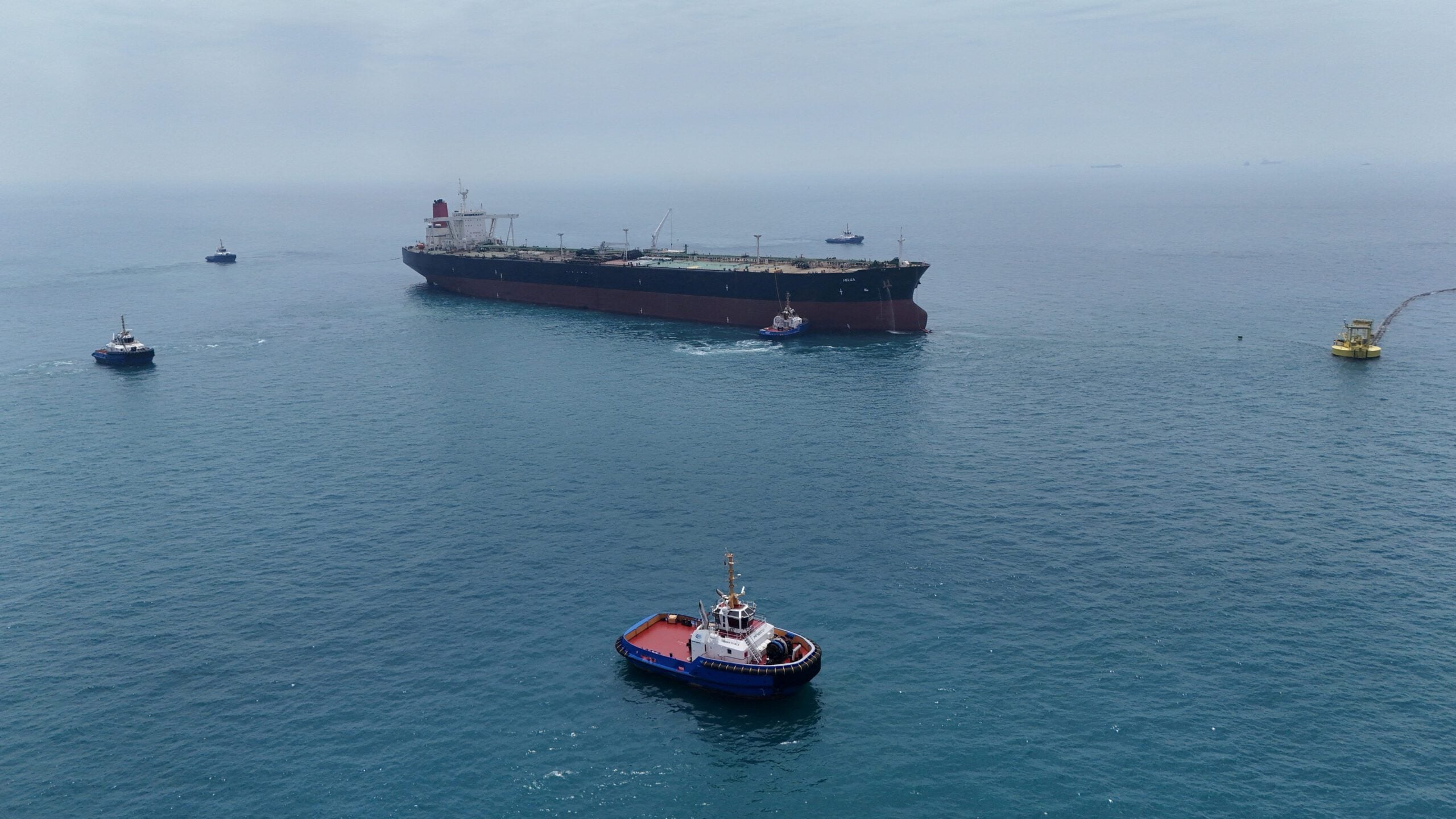
Tanker owners and operators continue to take different approaches to navigating the situation. Saudi Aramco and Adnoc are deploying ship-to-ship transfers and rerouting exports through Egypt’s Sidi Kerir Mediterranean terminal.
Cosco Shipping Energy Transportation and China Merchants Energy Shipping have pulled back and largely stopped sending tankers through both the Strait of Hormuz and Bab el Mandeb.
But that could soon change.
“This week I did hear talks about China reviewing that decision,” said Cichen Shen, maritime intelligence director for APAC at Lloyd’s List. “There are talks on the ground that the government is studying plans to resume the trade in the Persian Gulf or the Middle East Gulf.”
Shen said if that happened, crude imports would rise and could lead to more Chinese tankers returning to the Middle East to pick up cargoes.
“I’m not saying the Middle East is the only place where China can get its supply, but it still plays a very big role in terms of China’s crude imports,” said Shen. “So that’s something we need to keep an eye on from a forward-looking perspective.”
But geopolitics can play a part in this.
Chinese President Xi Jinping is scheduled to meet with Trump in the United States on September 24. Trump’s threat of economic consequences for any countries aiding Iran could affect trade negotiations.
“If China wants to send its ships back through the Strait of Hormuz, the likelihood is that they will go through the Iran-approved corridor,” said Shen. “And if they do, they will then need to negotiate with the U.S. in terms of getting clearance to get those ships out.”
Prior briefings have discussed that vessels traversing the Iranian-controlled route are most likely paying a toll to Iran for safe, approved passage.
But in the eyes of insurers, any payment would render the vessel’s insurance null and void if the ship was damaged.
Recently, a Chinese lessor-financed vessel, GasLog Shanghai, was attacked in the Middle East region.
“Chinese lessors seem to be more cautious about allowing their vessels to enter the region,” said Shen. “What I heard is they are more concerned about the safety of their assets, as well as insurance coverage.”
“Who is going to bear that loss?” Shen added. “The legal team, the compliance team, as well as the commercial team of the Chinese vessels, can now basically take a closer look at all the contracts to be more certain about the risk of the vessels operating in that region.”

 Join The Club