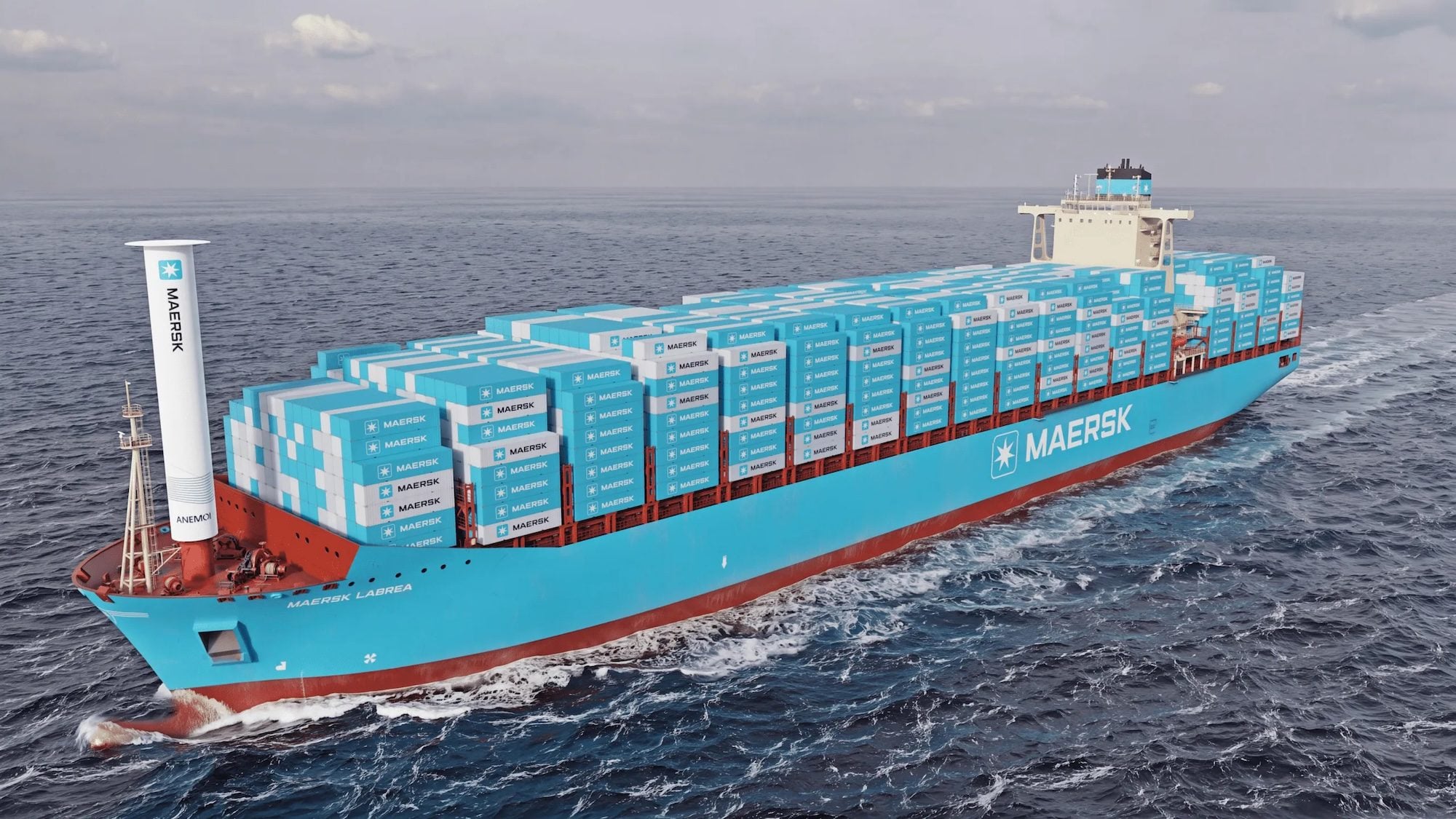
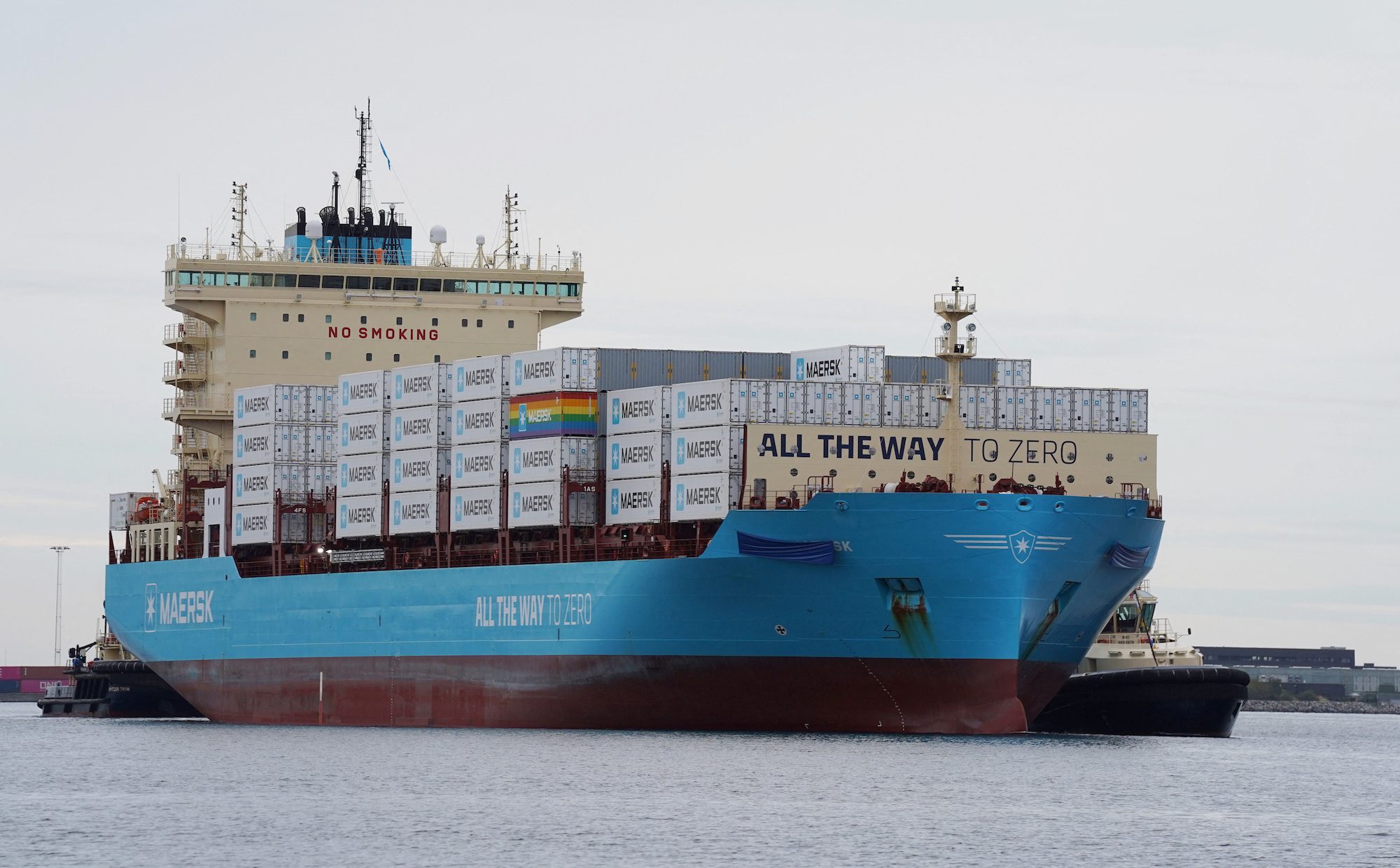
A.P. Moller-Maersk is preparing to test wind-assisted propulsion on one of its containerships, with plans to install a large Rotor Sail on an 8,700-TEU vessel next year.
UK-based Anemoi Marine Technologies will supply the system, which the companies say will mark the first installation of a Rotor Sail on a containership.
Under the agreement, Anemoi will design, manufacture and deliver a fixed Rotor Sail measuring 5 meters in diameter and 35 meters high. Installation is planned for mid-2027 on a vessel in Maersk’s Lima class.
The system will then be tested during normal commercial operations, with the vessel expected to operate on routes across the North and South Atlantic.
Rotor Sails, also known as Flettner rotors, use the Magnus effect to generate aerodynamic lift from the wind, producing additional forward thrust that can reduce the load on a ship’s main engine. Fuel and emissions savings depend heavily on vessel design, route and wind conditions.
Wind-assisted propulsion has attracted growing interest from shipowners looking for relatively near-term ways to improve vessel efficiency and cut emissions. Rotor Sails have already been installed on bulk carriers and other commercial vessels, but adoption in the container sector has been more limited.
“Wind-assisted propulsion is one of several promising maritime solutions with the potential to improve vessel efficiency and reduce emissions,” said Ole Graa Jakobsen, Maersk’s Head of Fleet Technology.
“It has already been tested in other parts of the shipping sector, and we see this pilot with Anemoi as a valuable opportunity to build practical experience and assess its relevance for our fleet and for container shipping more broadly.”
Anemoi said it will support Maersk through the engineering and installation process, including integration of the Rotor Sail with the ship’s existing systems.
“We’re delighted to be working with Maersk on this pioneering project,” said Clare Urmston, CEO of Anemoi. “It’s a strong example of how collaboration can support the adoption of wind-assisted propulsion.”
Founded in 2015, Anemoi designs and installs Rotor Sails for large commercial ships. The company says its installations typically involve three to five rotors per vessel, although the Maersk pilot will initially use a single unit.
According to Anemoi, each of its Rotor Sails can save approximately one tonne of fuel per day and about three tonnes of CO2 emissions, though actual performance varies depending on operating and weather conditions.
The Maersk project comes as the shipping industry continues to explore technologies capable of reducing fuel consumption while longer-term alternatives to conventional marine fuels are developed and scaled.
For Maersk, the trial will provide operational data on whether wind propulsion can be effectively integrated into containership operations, where deck arrangements, cargo handling and tight sailing schedules can present additional challenges compared with other vessel types.
The Rotor Sail is scheduled to enter service in mid-2027.

 Join The Club