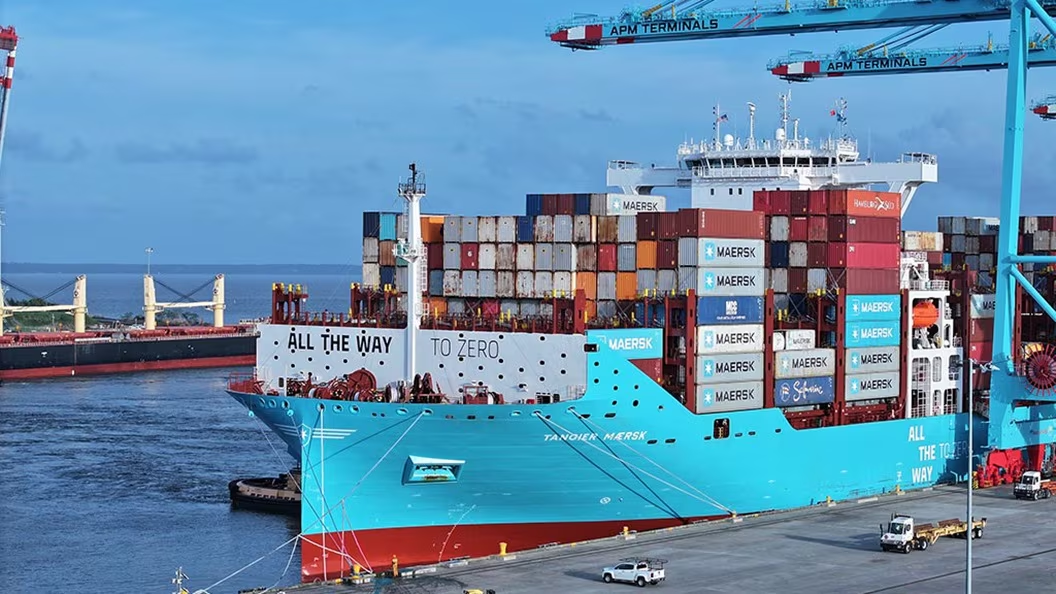
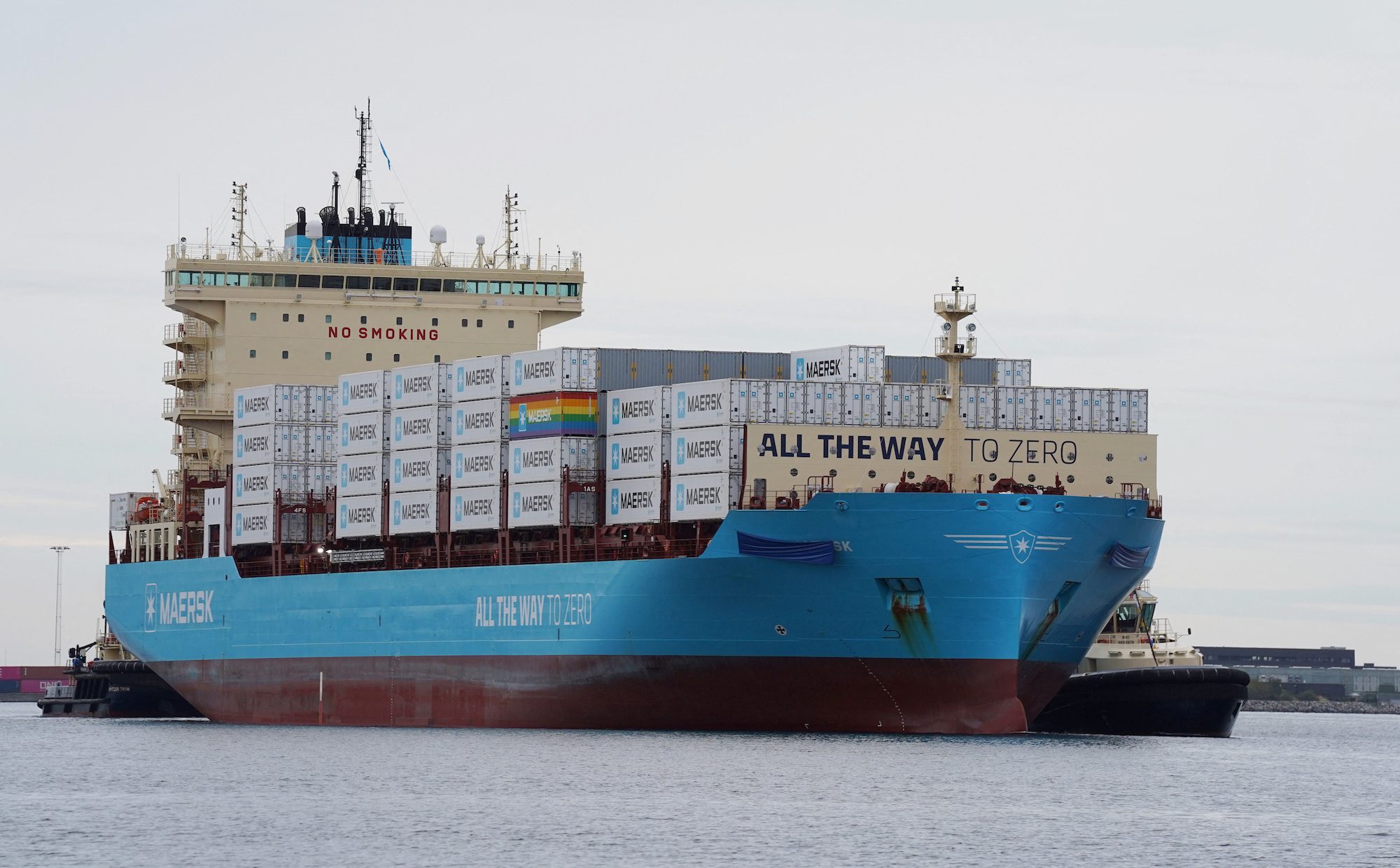
A.P. Moller-Maersk has bunkered one of its dual-fuel containerships with 100% U.S.-produced corn ethanol, marking what the company says is the first ship-to-ship commercial ethanol bunkering of a deep-sea container vessel in the United States.
The operation involved the Tangier Maersk, a 9,016-TEU containership delivered earlier this year and equipped with an alcohol-capable dual-fuel engine.
Bioethanol producer POET said it supplied the fuel and that the bunkering took place in Houston. The company described it as the first U.S. marine bunkering operation using 100% bioethanol.
For Maersk, the operation is less about committing to ethanol as a fuel and more about testing another option for its growing fleet of alcohol-capable ships.
Maersk said the bunkering provided practical experience with the infrastructure, sourcing, handling and supply-chain requirements involved in using ethanol at commercial scale. While ethanol already has a large production base and established distribution infrastructure, the company said wider use in shipping would depend on fuel availability, regulation and operational readiness.
“Achieving lower-emission logistics requires turning new technologies into practical, scalable solutions,” said Ditlev Blicher, Maersk’s regional president for North America. He said the operation would provide real-world experience with alternative fuels in commercial shipping.
The Houston bunkering follows earlier Maersk trials using ethanol aboard Laura Maersk and Antonia Maersk.
Maersk began testing ethanol aboard Laura Maersk in 2025, initially using a blend of 10% ethanol and 90% e-methanol. The company later moved to a 50-50 blend as it examined whether engines developed for methanol could also operate with higher concentrations of ethanol.
Both fuels are alcohols, giving Maersk the potential to add flexibility to vessels originally ordered around methanol propulsion.
The Tangier Maersk, built in 2026, has a nominal capacity of 9,016 TEU and is the first in a series of new mid-sized dual-fuel ships entering Maersk’s fleet.
The ethanol trial comes as Maersk broadens its approach to alternative marine fuels. After initially placing methanol at the center of its dual-fuel newbuilding program, the carrier is now examining a wider mix that includes ethanol and biomethane, while keeping other technologies such as ammonia under consideration. Maersk energy transition plan
Maersk has not said the Houston operation signals a shift away from methanol. Instead, the company has increasingly emphasized having multiple fuel options as shipowners face uncertainty over future fuel supplies, costs and global emissions regulations.

 Join The Club