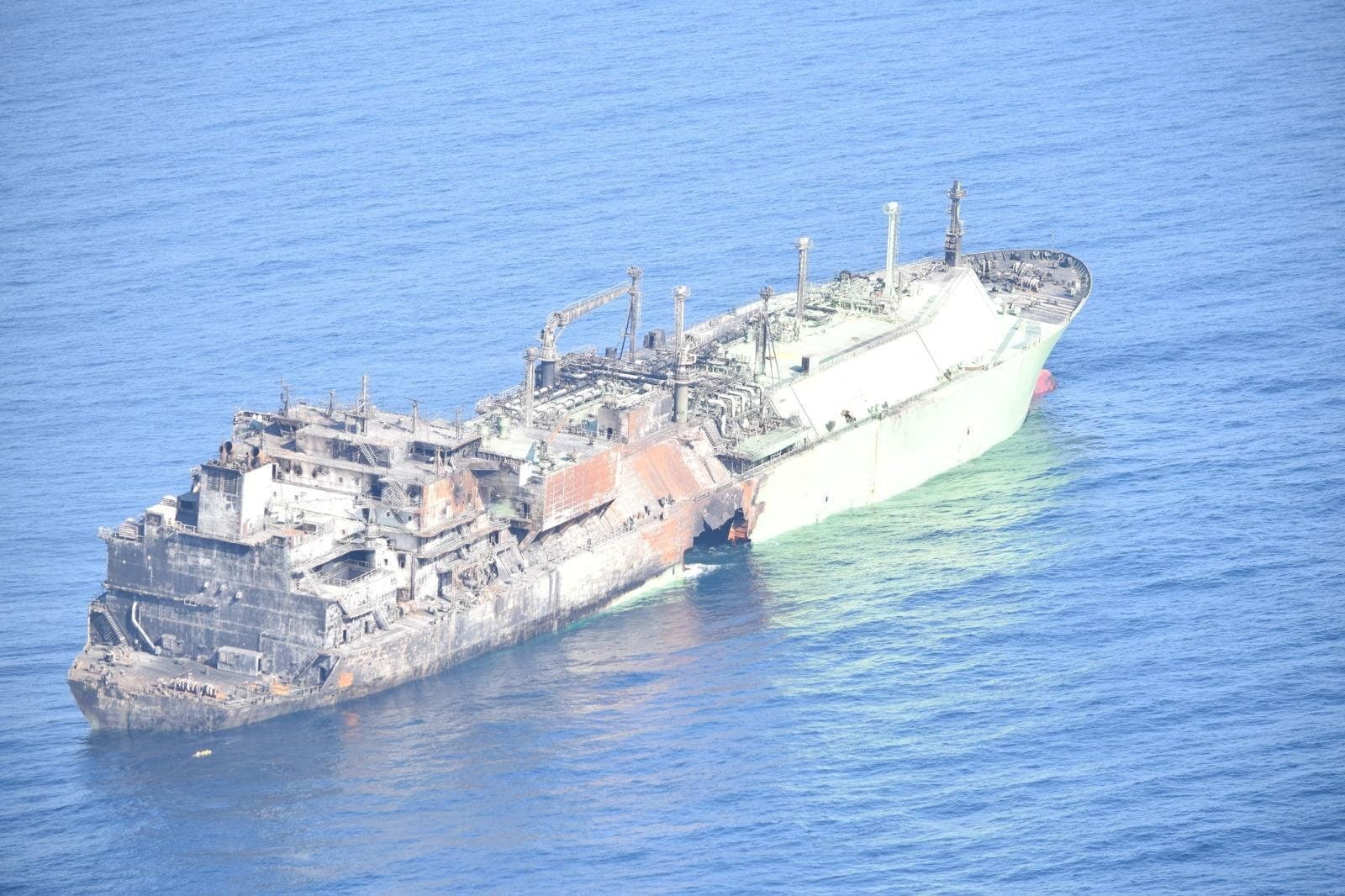
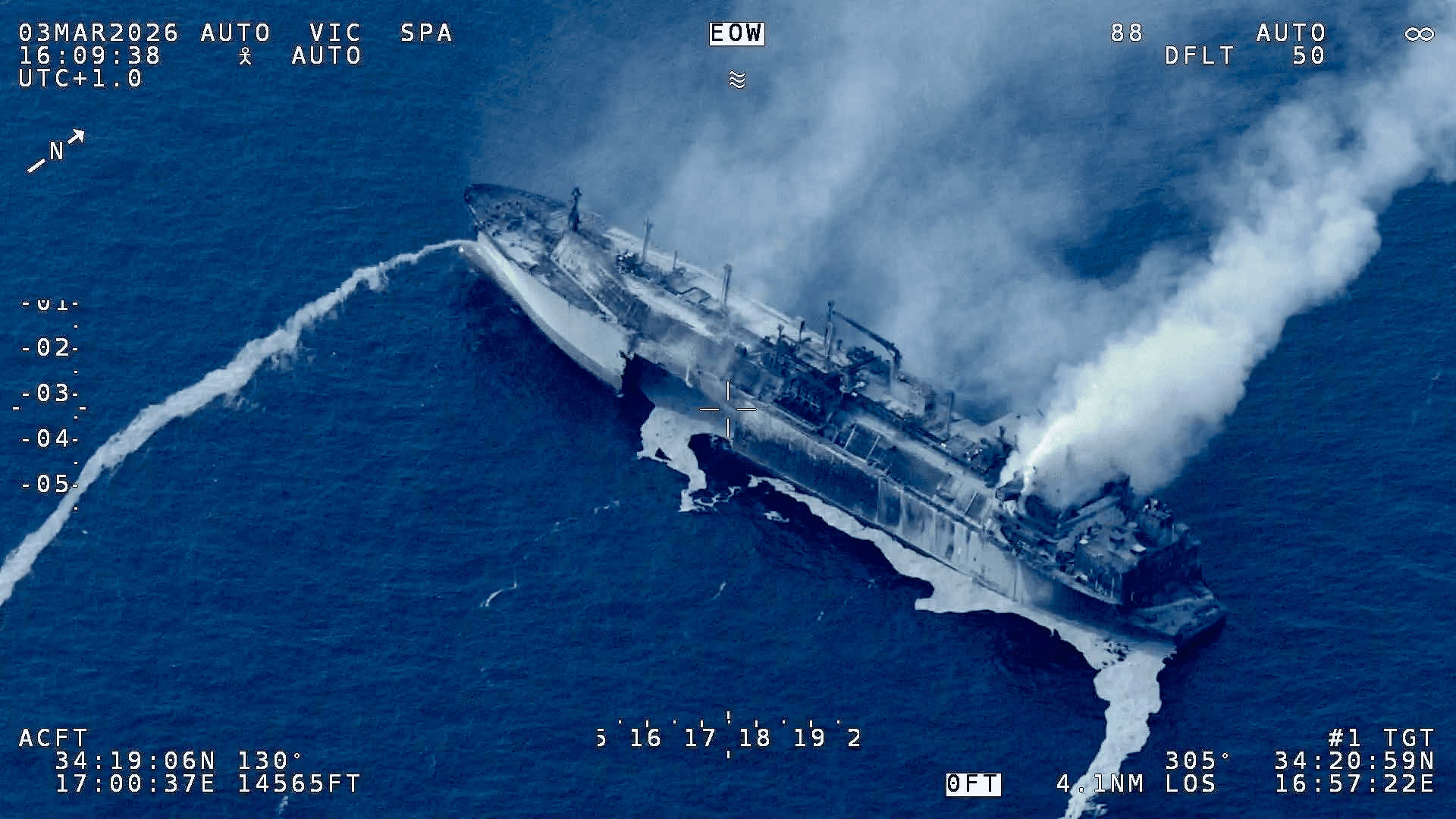
Libyan authorities have secured the damaged Russian LNG tanker Arctic Metagaz after weeks adrift in the central Mediterranean, taking decisive action that European coastal states had failed to undertake despite mounting environmental and navigational risks.
The Libyan government confirmed that the vessel, which had drifted more than 250 nautical miles since an explosion on March 3, is now under control and being towed away from sensitive offshore infrastructure, shipping lanes, and coastal areas.
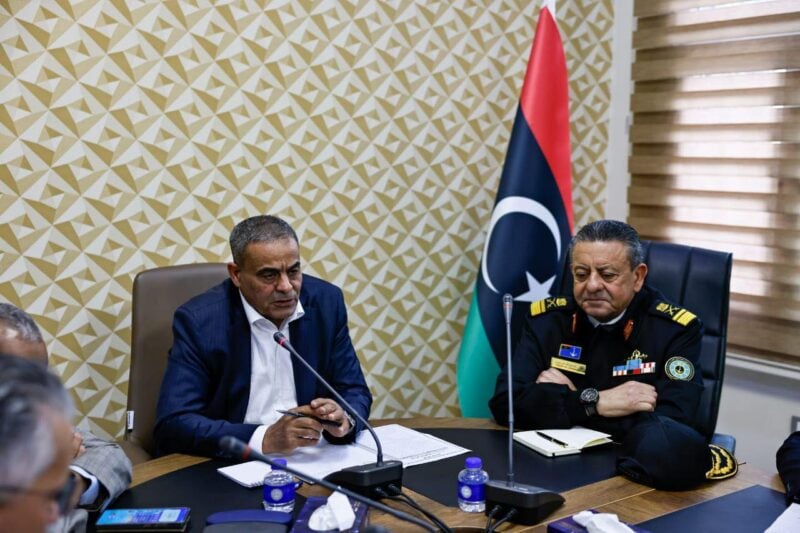
The recovery operation was ordered at the highest levels of government following an urgent cabinet meeting convened by Prime Minister Abdul Hamid Dbeibah and the Minister of Transportation. The meeting focused on the risks posed by the stricken tanker to Libya’s coastline, ports, and offshore oil facilities.
Arctic Metagaz situation being discussed during Libyan government meeting on March 24. (Source: Ministry of Transport)
Authorities tasked the National Oil Corporation (NOC) with coordinating an emergency response in cooperation with the Coast Guard, aiming to safeguard the marine environment and maintain the stability of maritime traffic along Libya’s coast.
The move marked a turning point after days of uncertainty as the tanker drifted through multiple search and rescue zones without being secured.
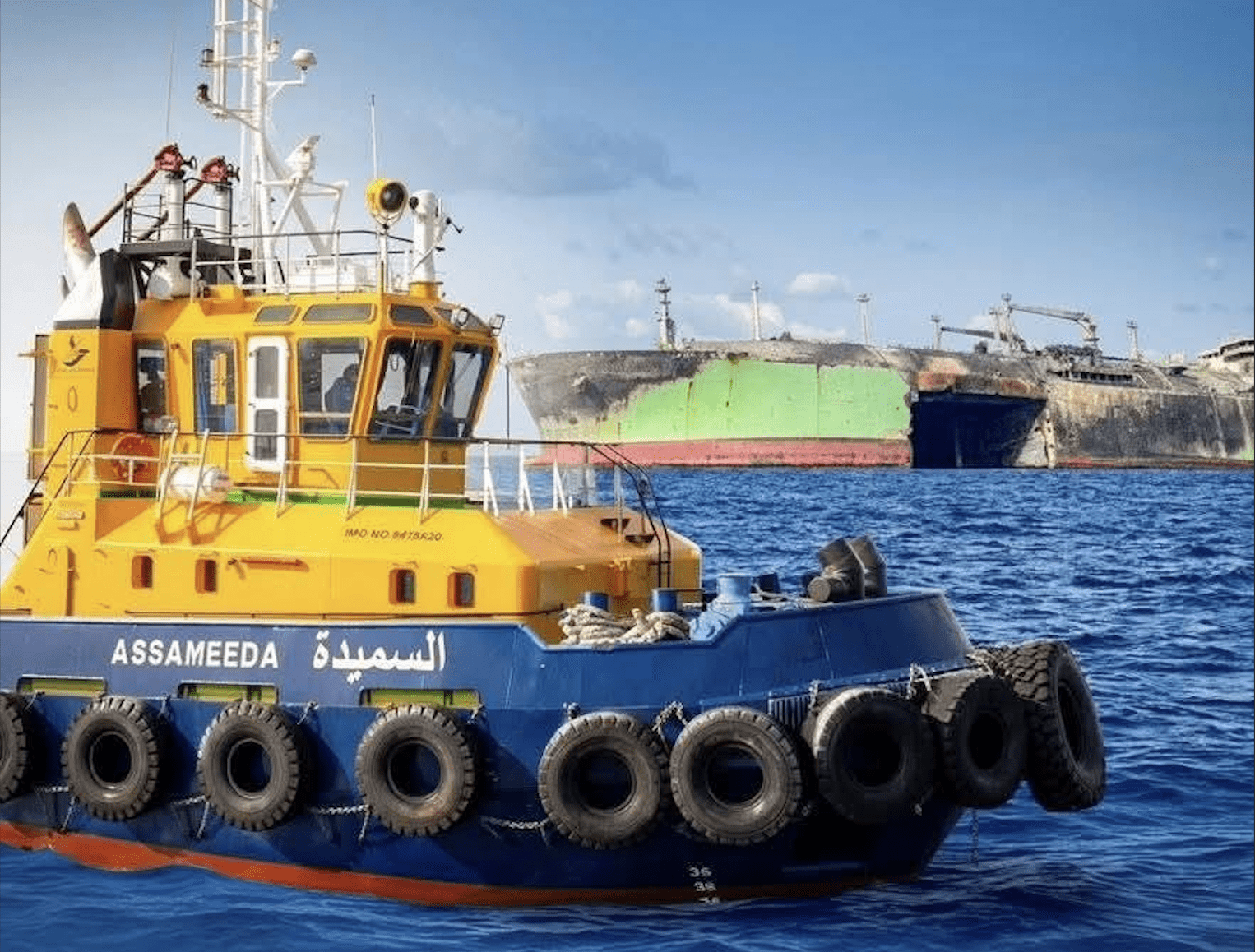
Video footage released by Libyan authorities showed workers boarding the vessel and attaching towing lines, while the tug Assameeda was deployed to bring the tanker under control. Satellite imagery confirmed the ship under tow roughly 15 nautical miles north of the coastal city of Zuara.
Arctic Metagaz (center) with tug at its stern and support vessels in the vicinity on March 24. (Source: Sentinel 2)
Libya’s Ministry of Defense said the Coast Guard’s Search and Rescue Coordination Center is overseeing the operation, including securing the vessel and preparing it for controlled towing under a plan designed to prevent it from drifting toward the coastline.
It remains unclear whether the Arctic Metagaz still carries liquefied natural gas cargo or where it will ultimately be taken.
The vessel had become an increasing concern for Libyan authorities as it drifted closer to key offshore assets, including the Bouri and Al-Jurf oil fields. Tugs had been placed on standby when the tanker approached within 10 nautical miles of the platforms, underscoring the potential risk to critical energy infrastructure.
The explosion that disabled the Arctic Metagaz has become a point of geopolitical tension. Russia has alleged that a Ukrainian sea drone attack caused the blast, while Ukraine has not publicly commented on the claim.
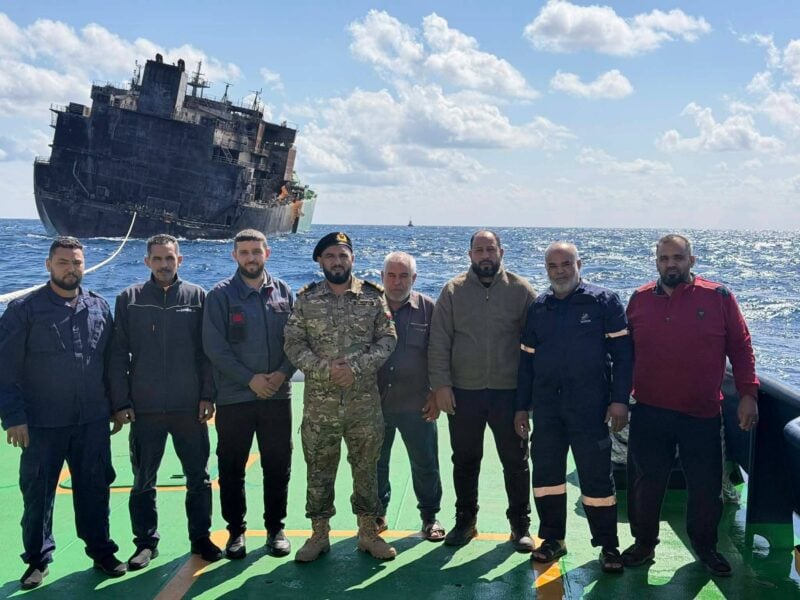
Libyan salvage crews showing Arctic Metagaz under tow. (Source: Ministry of Transport via Radio Radicale)
It remains unclear why no action was taken earlier, and why Libya ultimately assumed responsibility for resolving the hazard.
Libyan officials also signaled ongoing diplomatic coordination with Moscow. Acting Foreign Minister Taher al-Bawr met with Russian Ambassador Aydar Aganin to discuss both bilateral relations and the situation surrounding the tanker.
The incident has also had wider implications for Russia’s Arctic LNG 2 project. Several ice-class Arc7 LNG carriers are currently idling in the Barents Sea rather than loading cargo, as logistical disruptions ripple through the supply chain.
At the same time, longer shipping routes around the Cape of Good Hope have slowed cargo rotations, leaving the Saam floating storage unit at or near capacity. Conventional LNG carriers have been unable to relieve the backlog due to their extended voyages.
For now, Libyan authorities appear to have averted an immediate environmental and maritime risk, though questions remain over the vessel’s final destination and the broader consequences of the incident for Russia’s shadow fleet vessels operating in the Mediterranean and related maritime safety.
After two weeks as a “ghost ship” drifting across the Mediterranean, the abandoned Russian?flagged LNG carrier Arctic?Metagaz has returned to Libyan search?and?rescue waters, still leaking gas and still posing what Italian authorities call a “substantial hazard.”
Italian authorities are weighing how to deal with a Russian liquefied natural gas tanker left adrift in the Mediterranean after what Moscow described as a Ukrainian drone attack, sources said on Friday.
Malta's transport authority confirmed on Tuesday that the LNG tanker Arctic Metagaz is drifting in the Mediterranean, contradicting earlier reports from Libya that the vessel had sunk following the March 3 explosion southeast of the island.
March 11, 2026
Total Views: 7154
Get The Industry’s Go-To News
Subscribe to gCaptain Daily and stay informed with the latest global maritime and offshore news
— just like 107,443 professionals
Secure Your Spot
on the gCaptain Crew
Stay informed with the latest maritime and offshore news, delivered daily straight to your inbox
— trusted by our 107,443 members
Your Gateway to the Maritime World!
Essential news coupled with the finest maritime content sourced from across the globe.

 Join The Club