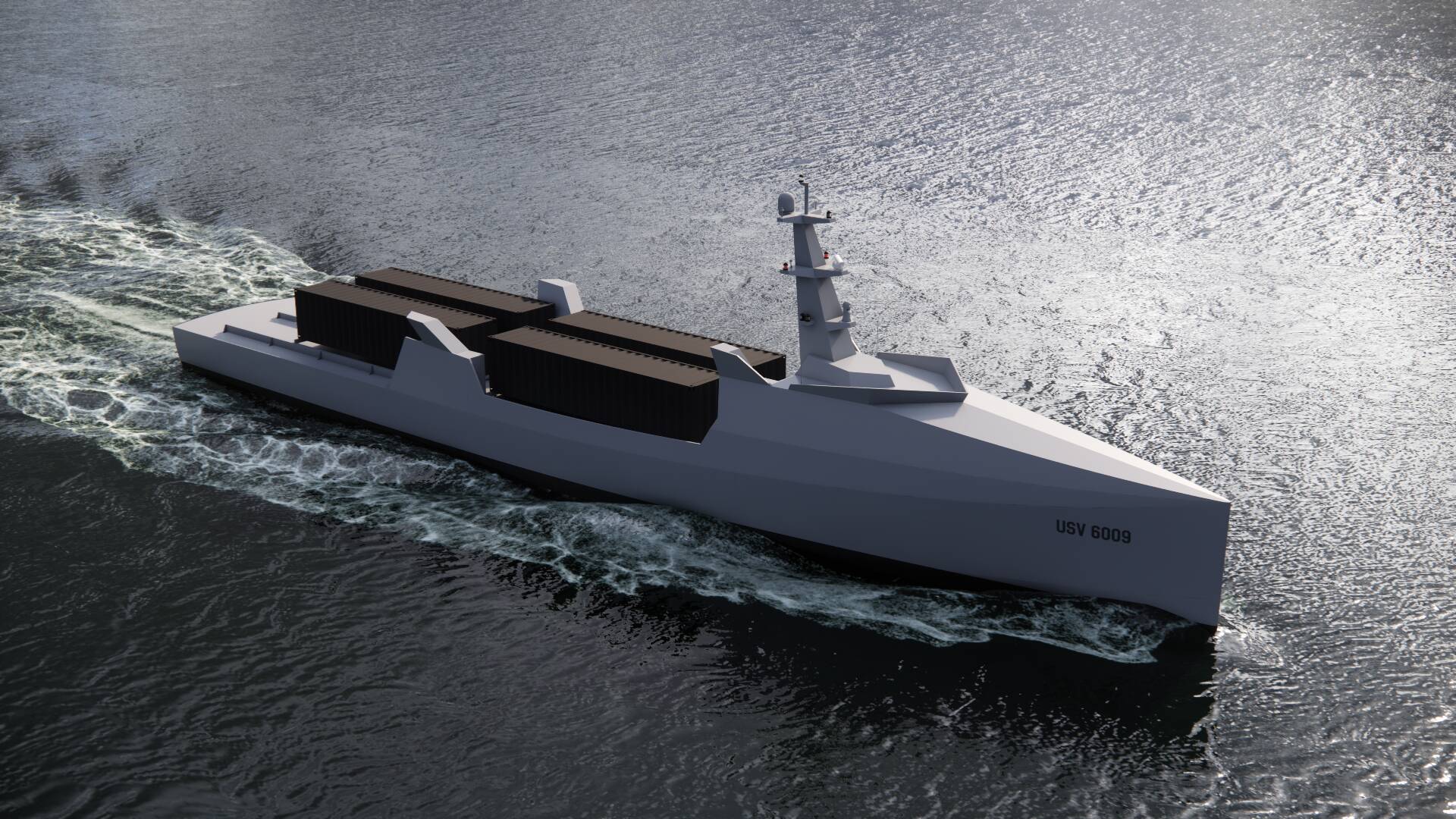
Boston-based shipbuilding startup Blue Water Autonomy has unveiled the Liberty Class, a 190-foot autonomous surface vessel designed for rapid, repeatable construction as the U.S. Navy looks for ways to grow fleet capacity while its traditional shipbuilding programs remain under pressure.
What sets the Liberty Class apart isn’t just the mission set, but how it was developed. The vessel was designed entirely with private capital, a rare approach for a full-sized Navy ship, but one the company says allowed it to move faster and avoid the long development timelines that have become common in major federal programs.
Rather than starting from a clean sheet, Blue Water developed the Liberty Class around proven commercial designs. The ship is based on Damen’s Stan Patrol 6009 hull, which features the company’s distinctive Axe Bow—a vertical bow intended to improve seakeeping by cutting through waves rather than slamming into them. More than 300 Axe Bow vessels are already operating worldwide, allowing Blue Water to focus its engineering effort on autonomy rather than hull development.
Blue Water Autonomy was founded in 2024 by Navy veterans and robotics experts to develop, build, and operate autonomous surface vessels for the U.S. Navy and commercial use.
“The Liberty Class was designed from the start for long-duration operations and repeat production,” said Blue Water Autonomy CEO Rylan Hamilton. “By adapting a proven hull and re-engineering it for unmanned operations, we’re delivering a ship that can operate for months without crew while being built at a pace the Navy needs.”
The vessel is designed to sail more than 10,000 nautical miles, carry over 150 metric tons of payload, and support a wide range of mission packages, including sensors, logistics systems, and weapons. That flexibility aligns with the Navy’s broader push to deploy unmanned vessels alongside crewed ships.
To support those missions, Blue Water redesigned the ship’s propulsion, mechanical, and electrical systems for automated control and fault management, minimizing the need for human intervention during extended deployments. The steel-hulled design is intended to support endurance profiles that would be difficult or impractical with a traditional crew.
Construction is scheduled to begin at Conrad Shipyard in Louisiana in March 2026, with the first vessel expected to be delivered later that year under a Navy program of record. After delivery of the first ship, Blue Water plans to ramp up production to between 10 and 20 vessels per year.
Co-founder and CSO Austin Gray said the company was not ready to share more details about its discussions with the Navy at this time. “Liberty Class meets or exceeds all requirements for the Navy’s Modular Attack Surface Craft program. Our primary focus today is the U.S. Navy, given the urgency of the mission, the pace of global competition, and the Navy’s need for scalable, autonomous maritime capability. That focus is intentional and shapes how we design, test, and deploy our systems. However, Liberty is a multi-market product and is already generating significant demand from additional customers.”
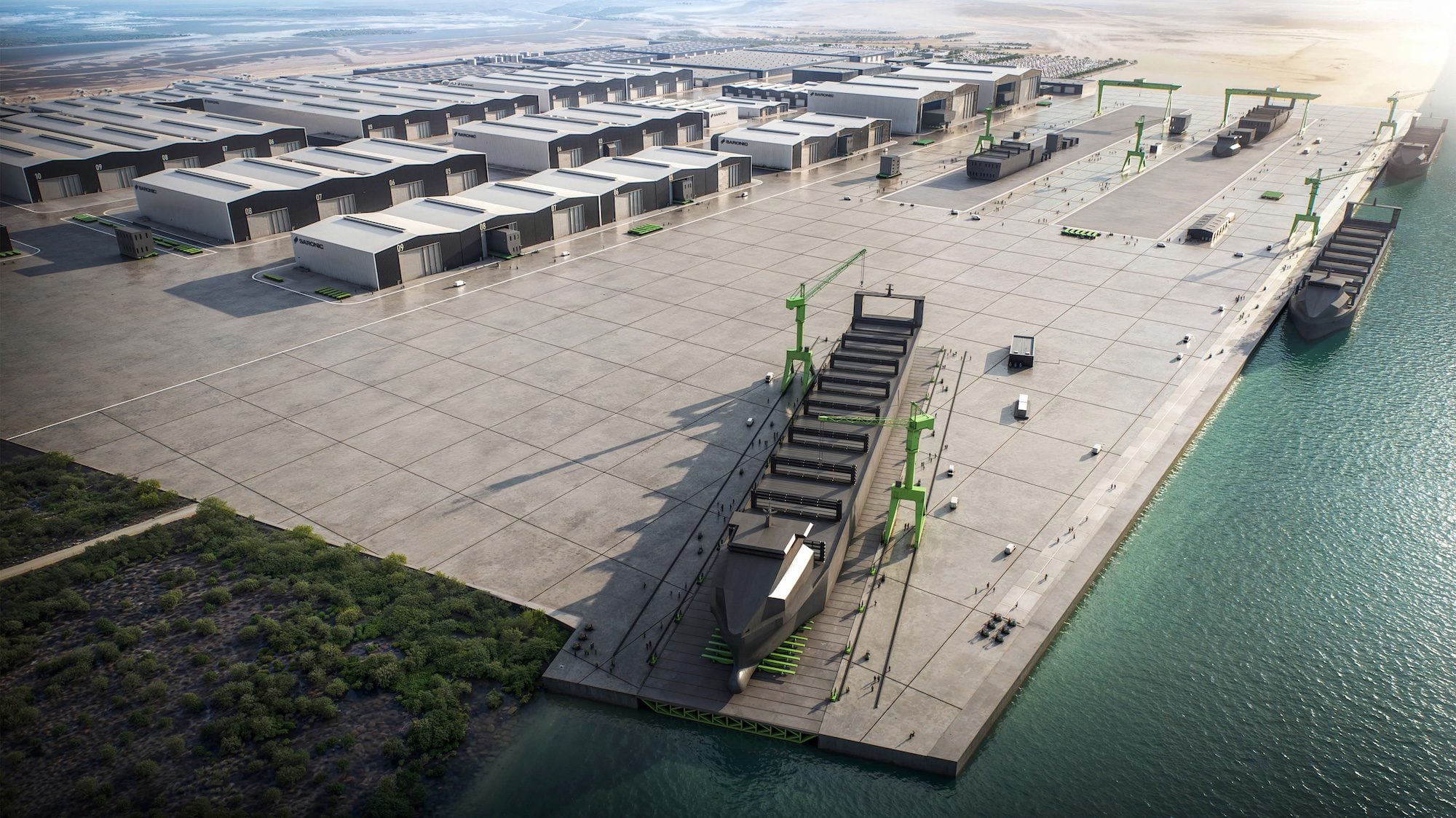
Conrad operates five shipyards and employs roughly 1,100 workers, producing more than 30 vessels annually using automated panel lines and parallel construction techniques. “Conrad has the infrastructure and workforce to support serial production,” said Conrad Shipyard President and CEO Cecil Hernandez. “That allows advanced designs to move from drawings to operational vessels without long delays.”
The Liberty Class name is a deliberate nod to the Liberty Ships of World War II—merchant vessels built quickly and at scale to meet wartime demand. The comparison reflects the company’s broader argument that fleet capacity challenges may require simpler designs, faster build cycles, and greater use of commercial shipbuilding practices.
The timing is notable. The Liberty Class arrives as the Navy continues to grapple with delays and cancellations across several major shipbuilding programs, raising questions about whether the current acquisition model can deliver ships at pace.
The Liberty Class also fits a broader shift underway inside the Navy toward proven, off-the-shelf designs as a way to accelerate fleet growth. In December, the Navy selected Damen’s LST-100 design for its Medium Landing Ship program, opting for an existing, in-service platform rather than a bespoke U.S. design as the service grapples with mounting delays and seeks faster alternatives for fleet expansion. The move followed the cancellation of four Constellation-class frigates and was framed by Navy leadership as a more disciplined approach to putting capability into the fleet on a realistic timeline—underscoring a growing preference for commercial designs that can be adapted and built quickly.
Whether the Liberty Class becomes a blueprint for future programs or remains a niche solution, it offers a real-world test of whether private funding, commercial design discipline, and serial production can help close the gap between naval ambition and industrial capacity.
Editorial Standards · Corrections · About gCaptain

 Join The Club