By Jake Lloyd-Smith
Sep 30, 2026 (Bloomberg) –Crude oil flows from the Middle East are returning toward pre-war levels despite continued risks to shipping, according to separate estimates from JPMorgan Chase & Co. and Goldman Sachs Group Inc.
“The Middle East’s oil export arteries are flowing again,” JPMorgan analysts including Natasha Kaneva said in a Sept. 29 note. That’s “a remarkable recovery for a region still at war,” although it’s been uneven, they said.
Shipments of crude oil have rebounded to 17.5 million barrels a day, or 98% of pre-war levels, while flows of products such as diesel and gasoline were at 3 million barrels a day, or 58%, according to JPMorgan.
The global oil market is zeroed in on the volumes of oil and products coming out of the region as the conflict between the US and Iran enters its eighth month. In addition to shipments going via the Strait of Hormuz, Saudi Arabia has managed to restore about half the flows on its East-West pipeline after damage earlier this month to the cross-country conduit, which feeds its Red Sea ports.
Flows through Hormuz have almost “returned to late-June highs of nearly 13 million barrels a day, led primarily by Saudi Arabia,” JPMorgan said. “But higher crossings should not be mistaken for improved safety — rather, they reflect the industry’s increasing ability to operate under sustained risk.”
Goldman Sachs, meanwhile, said oil exports from the Persian Gulf — including so-called dark flows moved clandestinely — had recovered to 23.3 million barrels a day over the last week, a level in line with the 2025 average.
“We estimate that the global oil market is roughly balanced in September,” Goldman analysts including Yulia Zhestkova Grigsby said in a Sept. 29 note.
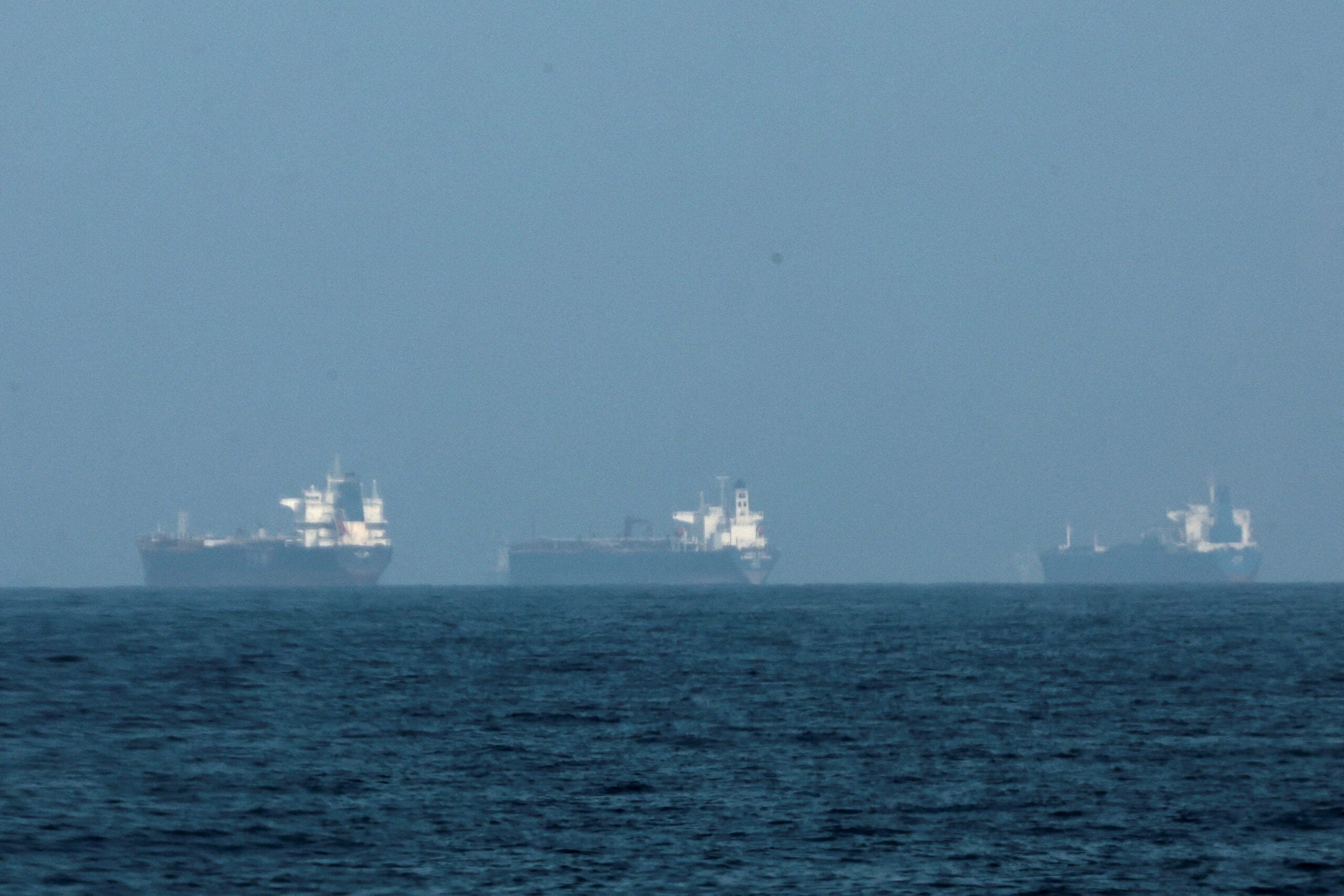
The waters around Hormuz — which links the Persian Gulf to global markets — have seen attacks on shipping for months as Tehran asserts its control over the waterway. That claim has been rejected by the US, which imposed a blockade of Iranian ports while also assisting transits by other nations’ vessels.
Read More: Abu Dhabi Crown Prince Is Spending Billions to Bypass Hormuz
“We note a divergence between the fall of Iranian exports and the rise of exports of other Persian Gulf producers,” Goldman said. “Saudi estimated exports more than doubled in September and rose above their 2025 average.”
US officials have repeatedly said elevated flows were being shipped through Hormuz, although estimates from others have been more conservative. This month, Treasury Secretary Scott Bessent said 17 million barrels of oil a day “sometimes” transited, while TotalEnergies SE Chief Executive Officer Patrick Pouyanne saw 10 million barrels a day of crude and products getting out.
Despite the uptick in cargoes, global crude benchmark Brent remains on course for a third monthly gain, of about 14%, in September. Front-month futures for November — which expires later on Wednesday — traded 0.8% higher at $103.43 a barrel at 11:40 a.m. in Singapore.
“Despite the recovery in gulf exports, crude prices remain relatively well-supported, and we still worry about renewed potential escalation that damages more energy infrastructure,” the Goldman analysts said.
© 2026 Bloomberg L.P.

 Join The Club