Don’t Miss Your Daily Briefing for the Maritime Industry
Join the leading maritime news network
— trusted by our 107,340 members
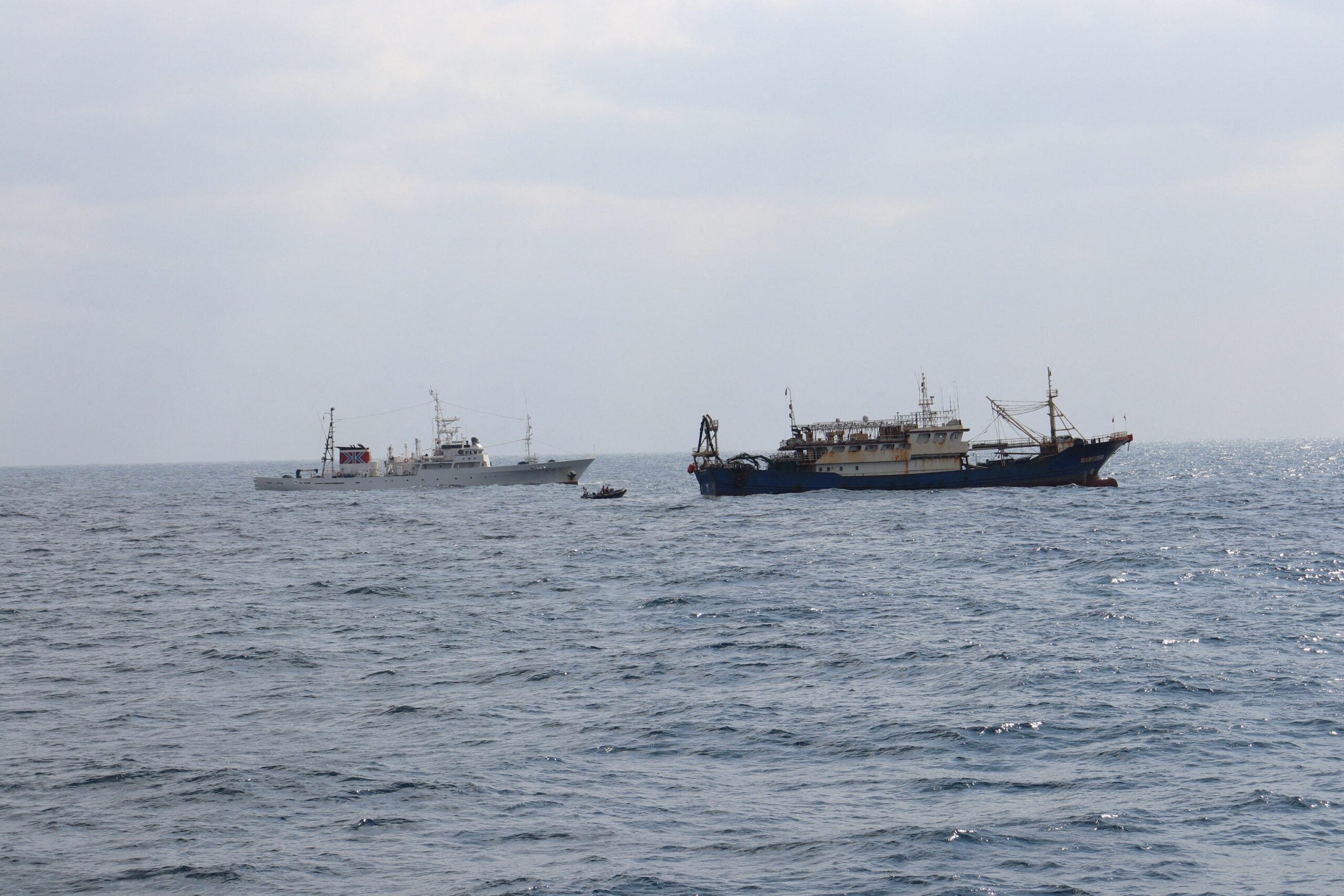
Japan's Fisheries Agency patrol vessel "Hakuo Maru" and Chinese fishing vessel "Qiong Dong Yu 11998" in waters off southwest Nagasaki Prefecture, Japan, February 12, 2026, in this handout photo provided by the Fisheries Agency of Japan. Fisheries Agency of Japan/Handout via REUTERS
(Bloomberg) – Japan said it seized a Chinese fishing vessel and arrested its captain after the ship entered the nation’s exclusive economic zone and sought to avoid inspection, adding a fresh complication to strained ties between the two Asian giants.
The captain was arrested around 12:23 p.m. on Thursday after the vessel entered Japan’s EEZ off the coast of Nagasaki prefecture and tried to flee to avoid questioning, Japan’s Fisheries Agency said in a statement. The seizure was the first of a Chinese fishing vessel since 2022, the agency said.
Japan’s top government spokesman said the details of the incident were under investigation. “To prevent and deter illegal fishing by foreign vessels, we will continue to engage in enforcement activities with a resolute stance,” Minoru Kihara said at a regular press conference.
A Chinese Foreign Ministry spokesman called on Japan to ensure the safety and rights of the crew. “The Chinese government has consistently required Chinese fishermen to conduct operations in accordance with laws and regulations, while firmly safeguarding their legitimate rights and interests,” Lin Jian said at a regular press briefing.
The arrest comes with ties between Beijing and Tokyo already in a tailspin after remarks made by Japanese Prime Minister Sanae Takaichi in November about Taiwan. China responded furiously after Takaichi said in parliament that a Chinese invasion of Taiwan by force could be an existential threat to Japan.
The remarks were significant because they imply Japan could deploy its military in response to such action. Beijing has demanded she retract the comments. China has also imposed export controls and advised citizens against travel to Japan.
Exclusive Economic Zone Enforcement
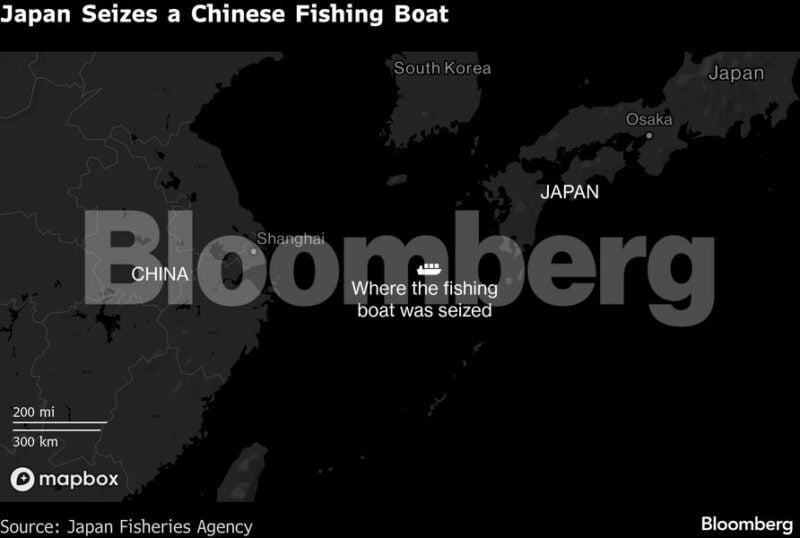
An EEZ is an expanse of ocean, generally extending 200 nautical miles (230 miles) from a nation’s coastline, that gives the country sole rights to explore and exploit natural resources. A map released by Japan’s Fisheries Agency showed the Chinese vessel entered Japan’s EEZ, but the captain’s arrest occurred after the ship had left the EEZ.
Ship seizures and arrests of crew members of foreign fishing vessels by Japan are relatively rare. In the five-year period through 2025, agency officials boarded foreign ships 30 times, including two Chinese vessels last year, according to agency data. During that period, only five ships were seized and only one of them was Chinese, in 2022.
The recent peak for detentions of Chinese fishing boats by Japan was in 2017, when four vessels were detained. Arrests of crew members are generally reserved for serious violations.
Takaichi has refused to withdraw the remarks, but after winning a national election in a landslide, she said on Monday that Japan was continuing to communicate with China at “various levels” and would respond “calmly and appropriately from the standpoint of Japan’s national interests.”
Since then, Chinese state media outlets have rolled out a series of commentaries warning against the potential impact on regional security from an emboldened Japanese leader. A Xinhua commentary said Takaichi is likely to unleash “three demons” that could unsettle regional peace in East Asia, citing her intention to revise the constitution, boost defense spending and pursue offensive weapons.
Worst Relations Since 1972
Wu Jianghao, China’s ambassador to Japan, told a Lunar New Year reception earlier this week that bilateral ties have “fallen to the most severe and difficult situation” since the two countries normalized diplomatic relations in 1972, according to the embassy’s official WeChat account.
The most serious clash between China and Japan over detained fishing boats came in 2010. The captain of a Chinese vessel was arrested and detained in Japan for 17 days after his trawler collided with two Japanese Coast Guard vessels near islands in the East China Sea that are controlled by Tokyo but also claimed by Beijing.
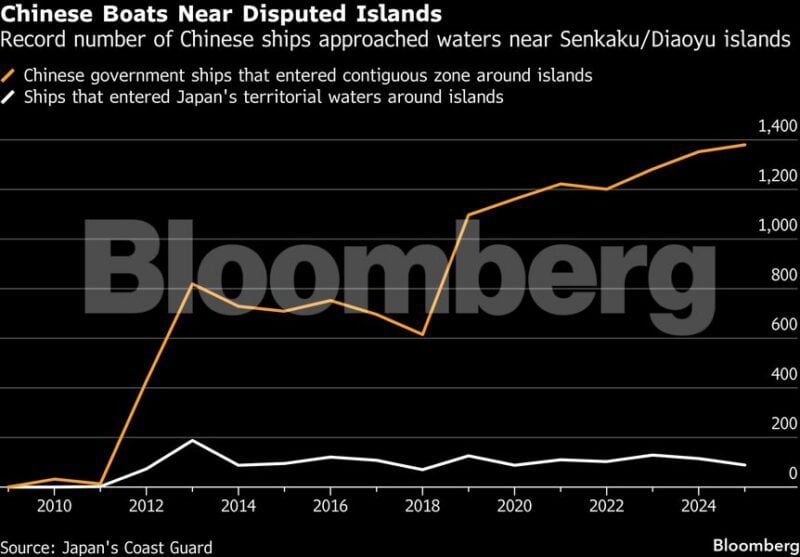
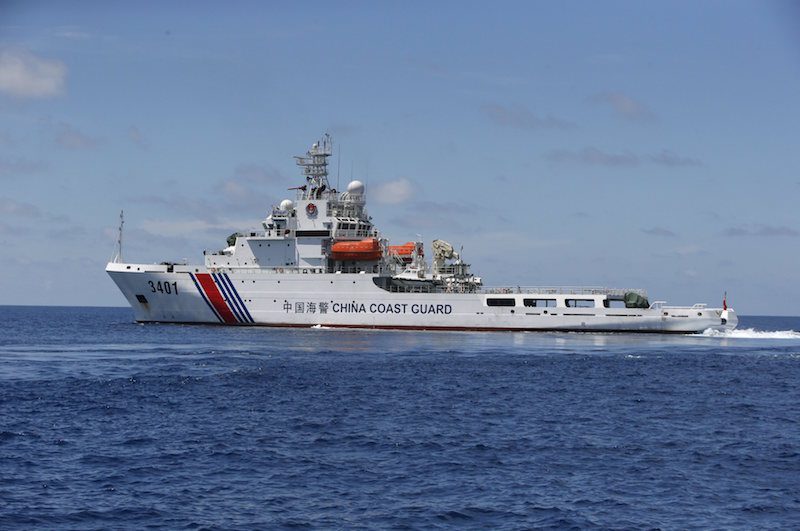
Tensions have been rising around those islands, known as the Senkakus in Japan and Diaoyu in China, as armed Chinese coast guard vessels have gradually raised the tempo of patrols in the vicinity. Last year, Chinese government ships appeared in the waters around the islands on 356 days, up from 355 days a year earlier, according to Japan’s coast guard.
By Milda Seputyte (Bloomberg) –Lithuania’s dispute with China escalated after local media reported that goods from some of its companies were barred from entering Chinese ports. Foreign Minister Gabrielius Landsbergis described...
MANILA, Nov 21 (Reuters) – The Philippines’ defense chief said on Sunday a military resupply mission for the country’s troops stationed on an atoll in the South China Sea will...
An Iranian security team proves once again that the best defense against pirate attack, is a well-armed security team in this undated video. 9 Somali pirates are captured by what...
January 27, 2013
Total Views: 131
Get The Industry’s Go-To News
Subscribe to gCaptain Daily and stay informed with the latest global maritime and offshore news
— just like 107,340 professionals
Secure Your Spot
on the gCaptain Crew
Stay informed with the latest maritime and offshore news, delivered daily straight to your inbox
— trusted by our 107,340 members
Your Gateway to the Maritime World!
Essential news coupled with the finest maritime content sourced from across the globe.

 Join The Club