By Weilun Soon
Apr 7, 2026 (Bloomberg) –Japan is relying on ship?to?ship oil transfers far from the Middle East to secure crude supplies while keeping its tankers out of a conflict zone that has become too risky for crews and vessels.
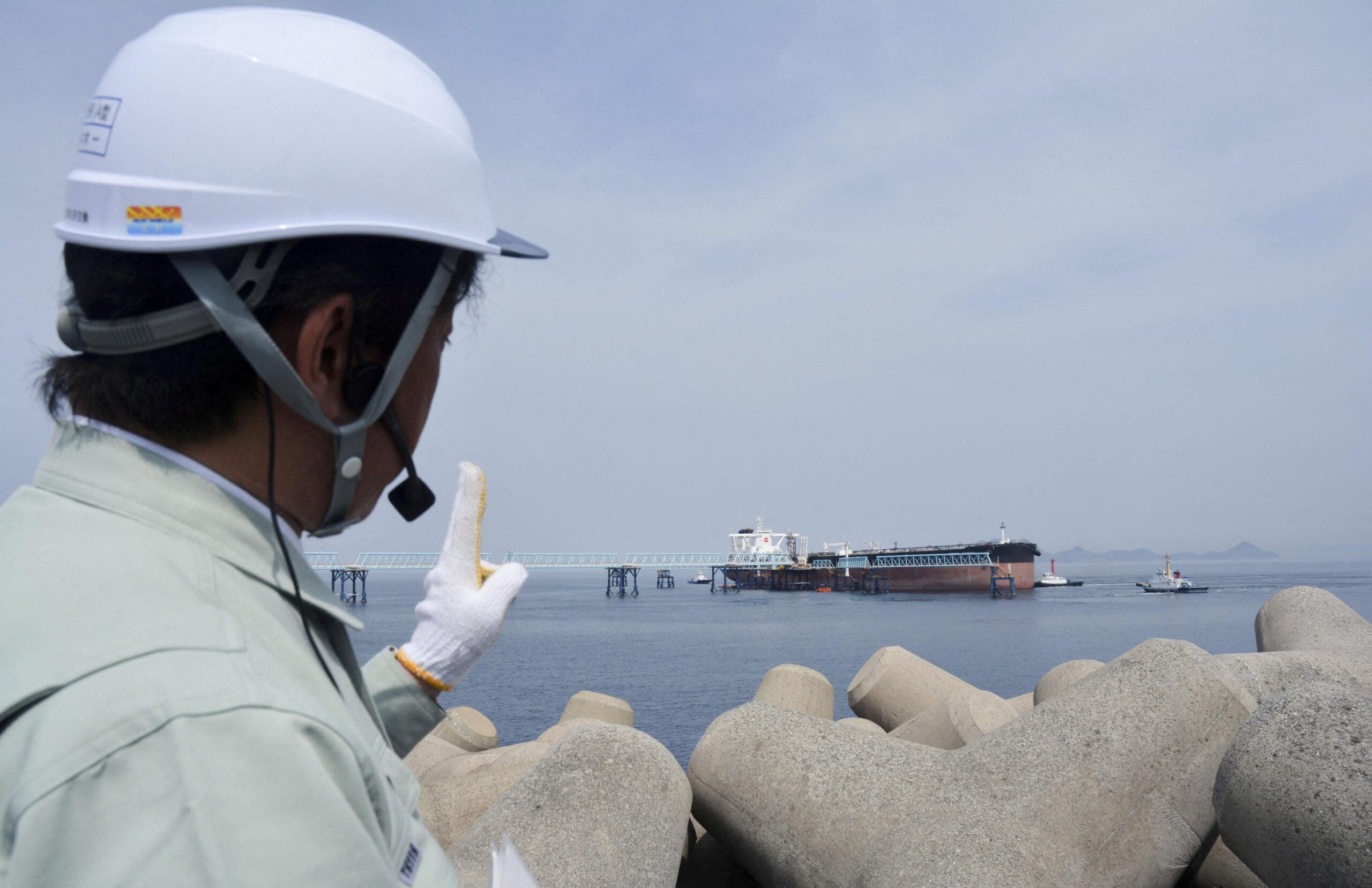
The Kisogawa, a very-large crude carrier, is en route to Hokkaido after receiving about 1.2 million barrels of Murban oil from Rio De Janeiro Energy while at sea off Linggi on Malaysia’s west coast on Sunday, ship-tracking data show. The operation comes just a week after another cargo of Murban was also moved at sea and is now bound for Japan.
The transfers are a rarity for Japanese carriers, and highlight the nation’s growing challenge of maintaining a steady flow of crude from the Middle East while avoiding direct exposure to a region gripped by conflict. Officials in Tokyo have said they are in talks with Iran and exploring alternate procurement, while emphasizing the need to ensure the safety of vessels and sailors. Major shipowners from the Asian nation have suspended operations through the Persian Gulf and instructed ships to remain in safe waters.
“Japan needs crude and buyers are scrambling,” said Rahul Kapoor, global head of shipping & metals at S&P Global Energy. “This shows that supply chains have been disrupted, and fungibility of shipping helps.”
Nearly all of the crude imported by Japan’s refineries comes from the Middle East, but escalating tensions and Iran’s growing control of the Strait of Hormuz have sharply disrupted exports from the region. At the same time, Japanese shipping companies have grown increasingly cautious after a series of Iranian attacks on vessels in the region that resulted in fatalities.
Since the conflict began, only two Japanese?owned tankers have directly lifted crude from the Middle East, both on March 1, ship?tracking data show. During a brief conflict last year, shipowners from the Asian nation were among the first to ask their fleets to avoid the Persian Gulf altogether.
Higher war?risk insurance premiums have added to the pressure. Coverage zones have expanded eastward to Pakistan’s coastline, raising costs for shipowners over a larger portion of voyages between the Middle East and Asia.
The Kisogawa’s journey reflects those concerns. After initially heading west in mid?March, suggesting a possible call at Fujairah in the United Arab Emirates, the tanker made a U?turn near Sri Lanka and returned toward the Strait of Malacca to meet the Rio De Janeiro Energy, which had earlier loaded the Murban cargo in Fujairah.
While ship-to-ship transfers aren’t uncommon in the oil industry, Japanese carriers typically employ direct sailings from Middle East export terminals to domestic refineries.
Kawasaki Kisen Kaisha Ltd., listed as Kisogawa’s owner and manager on maritime database Equasis, did not respond to a phone call for comment. Sinokor Maritime Co., listed as Rio De Janeiro Energy’s manager on Equasis, also did not respond to a phone call and emailed request for comment.
A spokesman for Idemitsu Kosan Co., which owns a refinery in the Hokkaido city of Tomakomai that Kisogawa is signaling as its destination, declined to comment.
The transfer comes after the VLCC Eneos Glory took around 1.8 million barrels of Murban from Olympic Luck in late March in waters off India’s Mumbai, an unusual transshipment spot. It’s now signaling Oita, according to ship-tracking data.
© 2026 Bloomberg L.P.
Editorial Standards · Corrections · About gCaptain
This article contains reporting from Bloomberg, published under license.

 Join The Club